Barcode Verification Systems Guide: Components, Functions, Accuracy, Standards and Industrial Uses
Barcode Verification Systems Guide topics explain how printed and digital barcodes are checked for readability, data accuracy, and compliance with defined technical standards. A barcode may look simple, but its bars, spaces, symbols, contrast, dimensions, and encoded information must work together so scanning equipment can interpret it correctly.
Context
Barcode Verification Systems Guide topics explain how printed and digital barcodes are checked for readability, data accuracy, and compliance with defined technical standards. A barcode may look simple, but its bars, spaces, symbols, contrast, dimensions, and encoded information must work together so scanning equipment can interpret it correctly.
Barcode verification developed from the wider use of automatic identification and data capture in manufacturing, logistics, retail, healthcare, packaging, and other industries. A barcode scanner determines what a symbol contains, while a barcode verifier performs a deeper assessment of the symbol itself. This distinction is important because a barcode may scan successfully in one situation while still having print or structural problems that could affect other scanning environments.
Modern Barcode Verification Systems can examine one-dimensional barcodes such as Code 128 and GS1-128, as well as two-dimensional formats such as Data Matrix and QR Code. Verification normally involves controlled lighting, imaging, decoding, measurement, and grading against a defined specification.
The main purpose is to identify problems before a barcode moves through a larger supply chain or production process. A verification system can examine factors such as symbol contrast, edge quality, dimensions, quiet zones, defects, and decoding performance.
Importance
Barcode quality affects many stages of industrial operations. Manufacturers may use barcodes to identify products, batches, components, cartons, pallets, or production stages. Warehouses can use them to associate physical items with digital records, while logistics operations can use identification codes for movement and tracking.
Poor barcode quality can create practical difficulties. A scanner may require repeated attempts, a label may be rejected by another scanning system, or encoded information may not match the intended product record. These issues can interrupt automated processes and create additional inspection work.
Why verification is different from scanning
A scanner primarily answers the question, “Can this symbol be read?” A verifier asks a broader question, including whether the symbol meets defined quality requirements.
Typical verification checks include:
- Decodability of the barcode
- Symbol contrast and reflectance
- Bar or module dimensions
- Edge and print quality
- Quiet-zone dimensions
- Defects, damage, or irregular printing
- Encoded data structure
- Overall symbol grade
This makes verification useful in production environments where consistent barcode quality is important across different scanners, printers, materials, and operating conditions.
Where barcode verification is used
Barcode verification systems appear across many industries. Common applications include:
- Product packaging and labeling
- Pharmaceutical and healthcare identification
- Automotive component tracking
- Food and beverage packaging
- Electronics manufacturing
- Warehouse identification
- Transport and logistics
- Industrial parts traceability
- Document and asset identification
The exact requirements vary according to the barcode type, application, printing method, substrate, and applicable standard.
Recent Updates
Barcode technology has continued moving toward higher information density, two-dimensional symbols, and more structured product identification. During 2024–2026, standards development has also focused on improving the consistency of barcode quality measurement and verification.
ISO/IEC 15415:2024 specifies print-quality testing methods for two-dimensional barcode symbols. It describes measurement and grading methods for attributes that affect the quality of these symbols.
For linear barcodes, ISO/IEC 15416:2025 provides a current specification for measuring barcode print-quality attributes and deriving an overall assessment of symbol quality.
Verification equipment itself is also covered by international standards. ISO/IEC 15426-2:2023 addresses conformance requirements for verifiers used with two-dimensional symbols, including testing methods and reference calibration standards. An updated fourth edition is currently under development.
Another continuing trend is the use of GS1 identification and data structures across supply chains. GS1 India describes standards covering product identification, locations, assets, QR Code, Data Matrix, GS1-128, and other identification technologies.
These developments reflect a broader shift toward connected identification systems in which a physical barcode links reliably with structured digital information.
Laws or Policies
In India, barcode use can intersect with product labeling, packaged commodity requirements, industry standards, and identification practices. The Legal Metrology Act, 2009 and the Legal Metrology (Packaged Commodities) Rules, 2011 establish requirements for specified declarations on pre-packaged commodities. The Department of Consumer Affairs also maintains related amendments and implementation information.
The relationship between a barcode and mandatory package information depends on the product and applicable rules. A barcode should therefore not be treated as a substitute for every required declaration.
Recent Indian regulatory developments have also recognized digital presentation of certain mandatory information through QR Code in specified circumstances. The Department of Consumer Affairs has described amendments allowing certain electronic products to provide specified declarations digitally through a QR Code when they are not printed on the package itself.
The Department's published records also show amendments to the Packaged Commodities Rules during 2025 and 2026.
For businesses using barcode identification, the relevant product category, packaging format, labeling requirements, and applicable industry rules should be considered together. GS1 standards can provide a structured framework for product and supply-chain identification, while legal requirements determine which declarations must appear or be accessible under applicable Indian rules. GS1 India provides standards documentation and implementation resources for this purpose.
Tools and Resources
Several resources can help readers understand barcode quality, identification, and verification.
Barcode verifiers
A dedicated barcode verifier uses controlled imaging and measurement to assess symbol characteristics. Unlike a basic scanner, it can generate quality measurements and grades according to applicable verification methods.
Barcode scanners
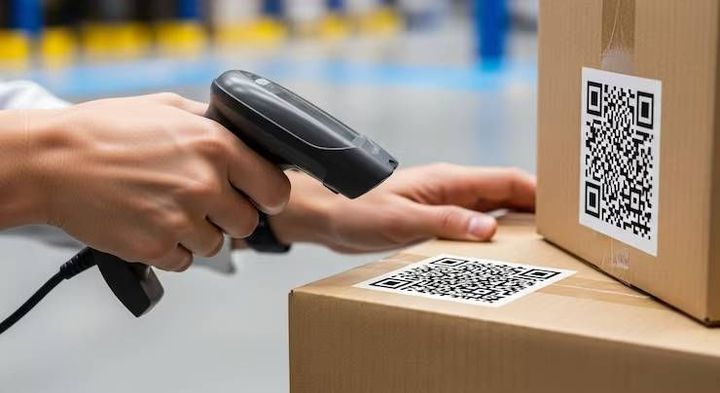
Handheld, fixed-mount, and camera-based scanners can be used to check practical readability. Scanner testing alone, however, does not provide the same detailed quality assessment as a dedicated verifier.
GS1 resources
GS1 India provides documentation covering barcode standards, GTIN identification, implementation guidance, QR Code, Data Matrix, GS1-128, and other identification technologies. Its standards library includes guides for barcode implementation and product identification.
ISO standards
ISO/IEC 15415:2024 is relevant to two-dimensional barcode print-quality testing, while ISO/IEC 15416:2025 addresses linear barcode print-quality testing. These standards describe measurement and grading approaches rather than simply determining whether a symbol can be scanned.
Common verification measurements
| Verification factor | What it examines | Why it matters |
|---|---|---|
| Symbol contrast | Difference between dark and light areas | Supports reliable decoding |
| Modulation | Variation in local contrast | Identifies uneven symbol quality |
| Defects | Spots, voids, or printing irregularities | Helps identify damaged symbols |
| Dimensions | Bars, modules, and symbol proportions | Supports correct structure |
| Quiet zone | Clear area around the symbol | Helps scanning equipment locate the symbol |
| Decode result | Whether encoded information can be interpreted | Confirms readable data |
| Overall grade | Combined quality assessment | Provides a standardized quality indication |
Verification results should be interpreted according to the relevant barcode specification and application requirements. A particular grade does not automatically mean that a symbol is suitable for every scanning environment.
FAQs
What is a Barcode Verification System?
A Barcode Verification System is equipment that examines barcode quality using controlled imaging, measurement, decoding, and grading methods. It can identify issues that may not be apparent from a simple successful scan.
How does barcode verification measure accuracy?
Barcode verification assesses several measurable characteristics, including contrast, dimensions, defects, modulation, quiet zones, and decoding behavior. The exact measurements depend on the barcode type and applicable standard.
What are ISO barcode verification standards?
ISO barcode verification standards define methods for measuring and assessing barcode quality. ISO/IEC 15415:2024 applies to two-dimensional symbols, while ISO/IEC 15416:2025 addresses linear barcode print quality.
Where are Barcode Verification Systems used?
They are used in manufacturing, packaging, logistics, healthcare, automotive production, electronics, food packaging, warehouses, and other environments where machine-readable identification is part of an operational process.
What is the difference between a barcode scanner and a verifier?
A scanner primarily reads encoded information, while a verifier performs structured measurements of the barcode and evaluates its quality against defined requirements. A barcode can sometimes scan successfully even when its measured quality is not suitable for a particular application.
Conclusion
Barcode Verification Systems help assess whether machine-readable symbols meet defined quality and data requirements. Their role extends beyond simple scanning by measuring characteristics such as contrast, dimensions, defects, and decoding performance. Recent developments in ISO standards and GS1 identification practices reflect the continued use of barcodes and two-dimensional symbols across connected supply chains. In India, barcode practices may also need to be considered alongside Legal Metrology and product-labeling requirements.