Autonomous Vehicle Guide: Technology, Sensors, Automation Levels, Features and Applications
An autonomous vehicle is a vehicle that uses cameras, radar, LiDAR, software, computing systems, and other technologies to understand its surroundings and perform some or all driving tasks. The technology developed from earlier vehicle safety and driver-assistance systems, including electronic stability control, adaptive cruise control, lane assistance, and automatic emergency braking.
The main purpose of vehicle automation is to allow computer-controlled systems to support or perform driving functions such as steering, acceleration, braking, lane positioning, and object detection. The degree of control depends on the automation level. A vehicle with advanced driver assistance should not automatically be considered fully autonomous.
How Autonomous Vehicle Technology Works
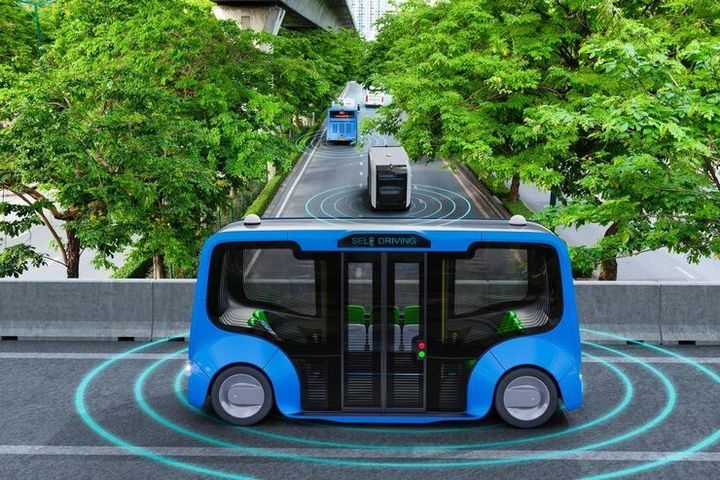
An autonomous vehicle generally follows a cycle of sensing, interpretation, decision-making, and control. Sensors collect information about nearby vehicles, pedestrians, road markings, traffic signals, obstacles, and road conditions. Computing systems then process this information to determine what the vehicle should do.
The main technologies can include:
- Cameras for recognizing lanes, signs, traffic lights, vehicles, and pedestrians.
- Radar for detecting objects and estimating their distance and movement.
- LiDAR for creating three-dimensional information about surrounding objects.
- Ultrasonic sensors for detecting nearby objects, particularly at lower speeds.
- Global navigation systems for positioning and route information.
- High-performance computers for processing sensor information and controlling vehicle functions.
- Digital maps and positioning data for supporting navigation in defined areas.
Different systems may use a combination of these technologies because each sensor has different strengths and limitations. Camera systems can interpret visual information, while radar can measure distance and relative movement. LiDAR can provide detailed spatial information, but its usefulness can vary with environmental conditions and system design.
Why Automation Levels Matter
Automation levels provide a common way to describe how much driving responsibility belongs to the vehicle system and how much remains with the human driver. The widely used SAE classification ranges from Level 0 to Level 5.
| Automation Level | General Description | Human Role |
|---|---|---|
| Level 0 | Warnings or momentary assistance | Driver performs driving |
| Level 1 | Steering or speed assistance | Driver remains responsible |
| Level 2 | Steering and speed assistance together | Driver continuously monitors |
| Level 3 | System drives under defined conditions | Driver must be available to take over |
| Level 4 | System drives within a defined operating area | Human driving may not be required |
| Level 5 | System drives under all designed conditions | No human driving role |
The distinction between Level 2 and higher automation is particularly important. Level 2 systems can control steering and acceleration or braking at the same time, but the driver remains responsible for monitoring the driving environment. NHTSA describes Level 3 through Level 5 as higher forms of automated driving, while noting that these technologies are not widely available in consumer vehicles.
Importance
Autonomous vehicle technology matters because road transportation involves complex environments where drivers must continuously observe traffic, road layouts, pedestrians, signs, and unexpected events. Driver-assistance systems are designed to support some of these tasks through electronic sensing and automated control.
The technology also has potential applications beyond private passenger vehicles. Research and development can involve public transportation, logistics, industrial transportation, controlled campuses, mining areas, warehouses, and other environments where vehicle movement can be managed within defined conditions.
Everyday Driving Challenges
Human drivers can experience reduced attention because of fatigue, distractions, poor visibility, unfamiliar roads, or changing traffic conditions. Automated systems can monitor specific aspects of the driving environment and provide warnings or interventions when their operating conditions are met.
However, automation does not remove all driving risks. Sensors can have difficulty with blocked views, unusual objects, poor weather, road construction, faded lane markings, or situations that differ from the conditions for which a system was designed.
Role of Sensors
Sensors are central to autonomous vehicle technology because software needs information about the surrounding environment. Sensor data can be combined through a process commonly called sensor fusion.
For example, a camera may identify a pedestrian while radar estimates the pedestrian's distance and movement. Combining different information sources can help the vehicle system build a more detailed representation of its surroundings.
The vehicle also needs systems for localization and decision-making. Localization determines where the vehicle is in relation to a road or mapped area, while decision-making software determines actions such as slowing down, maintaining a lane, changing direction, or stopping.
Applications
Autonomous vehicle applications vary according to the automation level and operating environment. Examples include:
- Passenger vehicles with advanced driver assistance.
- Automated shuttles operating in controlled areas.
- Automated delivery vehicles for defined routes.
- Industrial vehicles used in structured environments.
- Agricultural vehicles supporting automated field operations.
- Mining vehicles operating within controlled sites.
- Research vehicles used to study automated driving.
- Mobility systems designed for specific campuses, airports, or logistics areas.
These applications usually depend on clearly defined operating conditions. A vehicle designed for a controlled environment may not have the same capabilities as a system intended for mixed public-road traffic.
Recent Updates
From 2024 through 2026, autonomous vehicle development has continued to focus on driver assistance, testing, validation, cybersecurity, software management, and regulatory frameworks.
Advances in ADAS and Testing
In India, the Automotive Research Association of India has expanded work involving advanced driver assistance systems and validation for Indian traffic conditions. ARAI lists Indian standards covering technologies such as advanced emergency braking, lane-departure warning, blind-spot information, moving-off information, and automated commanded steering functions.
ARAI also announced the readiness of an ADAS Test City in Pune in 2025. The facility is designed to reproduce different Indian road situations in a controlled environment so that ADAS technologies can be tested and validated.
International Regulatory Development
International regulatory work has also continued. The United Nations adopted Regulation No. 171 on Driver Control Assistance Systems in 2024. It covers systems corresponding to SAE Level 2 and emphasizes that the driver remains responsible for monitoring the vehicle and surroundings.
In 2025, UNECE published guidelines and recommendations concerning safety requirements, assessments, and testing methods for automated driving systems. These materials are intended to support the development of future regulatory requirements.
Cybersecurity and software updates have also become important parts of vehicle regulation. UNECE work during 2025 and 2026 included continued consideration of cybersecurity, software-update management, and driver-assistance regulations.
Development in India
India's research ecosystem is also working on autonomous navigation and intelligent transportation. Government information on the National Mission on Interdisciplinary Cyber-Physical Systems describes autonomous vehicle research and dedicated testing infrastructure, including work at IIT Hyderabad and other institutions.
These developments indicate that the current direction is not limited to completely driverless vehicles. Considerable attention is also being given to intermediate automation, sensor validation, road-scenario testing, cybersecurity, and systems designed for specific operating environments.
Laws or Policies
In India, autonomous vehicle technology operates within the broader framework of the Motor Vehicles Act, Central Motor Vehicle Rules, vehicle type-approval requirements, safety standards, and rules issued by the Ministry of Road Transport and Highways.
Indian Vehicle Safety Framework
India has standards for several advanced driver assistance functions. ARAI identifies standards such as AIS-162 for advanced emergency braking, AIS-188 for lane-departure warning, AIS-186 for blind-spot information, AIS-187 for moving-off information, and AIS-193 for automated commanded steering functions.
Government notifications have also continued to introduce or modify requirements involving vehicle safety technologies. A 2025 notification and subsequent corrigendum addressed sensors used with certain ADAS functions and specified advanced emergency braking and vehicle stability requirements for particular categories of larger vehicles from future manufacturing dates.
These requirements should not be interpreted as approval for unrestricted driverless operation on Indian public roads. Vehicle automation remains dependent on applicable vehicle regulations, testing requirements, road conditions, and the specific capabilities of the system.
Automated Testing
India has also developed a regulatory framework for Automated Testing Stations. Government information states that rules governing recognition, regulation, and control of these testing stations were introduced under the Central Motor Vehicle Rules framework, with subsequent amendments in 2024.
For readers researching autonomous vehicle technology, it is useful to distinguish automated vehicle functions from automated vehicle testing. Automated testing stations assess vehicle fitness, whereas autonomous driving research concerns automated control of vehicle movement.
Tools and Resources
Several technical and public resources can help readers understand autonomous vehicle technology.
Vehicle Technology Resources
The Automotive Research Association of India provides information on vehicle testing, ADAS validation, Indian standards, and technology development. Its ADAS resources also describe the use of camera, LiDAR, and radar data for Indian-specific testing scenarios.
The Ministry of Road Transport and Highways is a useful source for Indian vehicle rules, notifications, and transport regulations. Government publications can help readers distinguish proposed requirements from rules that have already taken effect.
NHTSA provides educational material explaining the different automation levels and the distinction between driver assistance and automated driving systems. Its resources are useful when comparing terminology used internationally.
UNECE provides information about international vehicle regulations covering automated driving, cybersecurity, software updates, and driver assistance. These materials are particularly useful for understanding how international regulatory frameworks are developing.
For technical learning, common resources include sensor-data visualization tools, simulation platforms, digital maps, vehicle testing tracks, and software-development environments. Their usefulness depends on the specific research or testing objective.
FAQs
What is an autonomous vehicle?
An autonomous vehicle uses sensors, computing systems, software, and vehicle controls to perform some or all driving tasks. The amount of automation depends on its defined automation level.
What sensors are used in autonomous vehicles?
Autonomous vehicles can use cameras, radar, LiDAR, ultrasonic sensors, navigation systems, and other positioning technologies. Sensor fusion can combine information from multiple sources.
What are the automation levels in autonomous vehicles?
The automation levels range from Level 0 to Level 5. Level 0 involves no sustained driving automation, while Level 5 represents full driving automation across the conditions covered by the classification.
Are Level 2 vehicles fully autonomous?
No. Level 2 systems can provide simultaneous steering and speed control, but the human driver remains responsible for monitoring the driving environment and vehicle operation.
How is autonomous vehicle technology regulated in India?
India regulates vehicle safety and related technologies through the Motor Vehicles Act, Central Motor Vehicle Rules, Ministry of Road Transport and Highways notifications, and technical standards such as applicable AIS requirements. Advanced driver assistance functions are being addressed through standards, testing, and regulatory development.
Conclusion
Autonomous vehicle technology combines sensors, software, computing systems, navigation, and automated vehicle controls. Automation levels help explain the difference between driver assistance and systems designed to perform more of the driving task. From 2024 through 2026, development has increasingly focused on ADAS validation, testing, cybersecurity, software management, and regulatory frameworks. In India, autonomous driving research and vehicle safety standards continue to develop alongside broader transportation regulations.

You May Also Like