Autonomous Cars Guide: Driving Levels, Sensors, AI Systems and Navigation Methods
Autonomous cars are vehicles that use sensors, computer systems, artificial intelligence (AI), and navigation technology to perform some or all driving tasks. An autonomous cars guide explains how these vehicles detect their surroundings, interpret road conditions, select driving actions, and follow routes. The technology developed from early experiments in automated steering and robotics into modern systems that combine cameras, radar, digital maps, and advanced computing.
Context
Autonomous cars are vehicles that use sensors, computer systems, artificial intelligence (AI), and navigation technology to perform some or all driving tasks. An autonomous cars guide explains how these vehicles detect their surroundings, interpret road conditions, select driving actions, and follow routes. The technology developed from early experiments in automated steering and robotics into modern systems that combine cameras, radar, digital maps, and advanced computing.
Traditional vehicles require drivers to control steering, acceleration, and braking. Driver-assistance systems can perform selected tasks, such as maintaining a set speed or helping a vehicle remain within a lane. Fully automated driving aims to handle the entire driving task within its defined operating conditions, including monitoring the road and responding to relevant events.
However, not every vehicle described as autonomous can drive independently in every situation. Automation depends on the vehicle's technical capabilities, road environment, weather, software, and applicable legal permissions.
Understanding Autonomous Driving Levels
The Society of Automotive Engineers (SAE) defines six driving automation levels, from Level 0 to Level 5. These classifications describe how driving tasks and responsibility are divided between the human driver and the automated system.
| SAE level | Automation type | Main characteristic |
|---|---|---|
| Level 0 | No driving automation | The driver performs driving tasks |
| Level 1 | Driver assistance | The system assists with steering or speed control |
| Level 2 | Partial driving automation | The system can control steering and speed together under defined conditions |
| Level 3 | Conditional driving automation | The system drives under specific conditions but may request human intervention |
| Level 4 | High driving automation | The system performs driving tasks within a defined operating area or situation |
| Level 5 | Full driving automation | The system is designed to drive under all conditions that a human driver could reasonably manage |
Levels 1 and 2 require the driver to remain attentive and responsible for the driving task. At Level 3, the automated system handles driving within its approved conditions, but a fallback-ready user may need to respond to a takeover request. Levels 4 and 5 differ mainly in their operating scope: Level 4 is limited to defined conditions, while Level 5 aims to operate across the full range of driving conditions.
Main Technologies in Autonomous Cars
Autonomous vehicles combine several technologies because no single sensor or computer system can reliably interpret every road situation on its own. The main components work together to create an understanding of the vehicle's surroundings and guide its movements.
Cameras: Capture images of lanes, traffic signs, pedestrians, traffic lights, and other road users.
Radar: Uses radio waves to estimate the distance and relative speed of nearby objects.
LiDAR: Uses laser pulses to measure distances and create three-dimensional representations of surroundings.
Ultrasonic sensors: Detect nearby objects at short range and can support low-speed manoeuvres.
Positioning systems: Use satellite navigation and other location inputs to estimate the vehicle's position.
Onboard computers: Process sensor information, predict possible movements, and calculate suitable driving actions.
Some vehicles use detailed digital maps, while others rely more heavily on real-time sensor interpretation. The specific combination depends on the vehicle design and its intended driving environment.
Importance
Autonomous driving matters because road transportation involves complex tasks that require continuous attention. Drivers must monitor traffic, judge distances, recognize signs, anticipate the actions of other road users, and respond to unexpected events. Automation research aims to perform some of these tasks through computer-based perception, planning, and control.
Potential applications include passenger transport, freight movement, controlled industrial sites, and mobility options for people who have difficulty driving. The practical benefits depend on system capability, accessibility, reliability, and how the technology is used.
Safety and Everyday Driving Challenges
Autonomous car technology is designed to address driving situations such as maintaining distance from other vehicles, recognizing lane markings, adjusting speed, and identifying nearby obstacles. Driver-assistance features can support these tasks, but their effectiveness depends on road conditions and the limitations of the system.
Important challenges remain. Cameras may have difficulty with glare, heavy rain, fog, or obscured lane markings. Roadworks, unusual traffic patterns, emergency vehicles, and unpredictable pedestrian movements can also create situations that are difficult for automated systems to interpret.
Comparing Automation and Driver Assistance
Understanding the difference between driving assistance and autonomous driving helps prevent confusion when evaluating vehicle capabilities.
| Feature | Driver-assistance system | Higher-level autonomous system |
|---|---|---|
| Lane support | Helps maintain lane position | May manage lane position within its operating conditions |
| Speed control | Maintains or adjusts speed | Integrates speed control with broader driving decisions |
| Object detection | Detects selected road users and hazards | Combines perception with prediction and driving planning |
| Human supervision | Generally required | Depends on the automation level |
| Operating conditions | Feature-specific limits | Defined conditions or a broader driving scope |
| Responsibility | Human driver remains responsible | Depends on the level and applicable legal framework |
The presence of several automated features does not automatically make a vehicle self-driving. Drivers need to understand the exact capabilities and restrictions described in the vehicle's manual.
Recent Updates
Developments in autonomous cars from 2024 through 2026 have focused on improving perception systems, expanding controlled deployment, developing AI-based driving models, and strengthening vehicle testing. Progress differs between manufacturers and regions, and the availability of particular capabilities depends on technical approval and local regulations.
AI Systems and Sensor Integration
Modern autonomous driving systems increasingly use AI to interpret camera images, recognize road users, estimate how nearby objects may move, and select driving actions. Some research systems combine several driving functions into larger neural-network models, while other systems retain separate modules for perception, prediction, planning, and control.
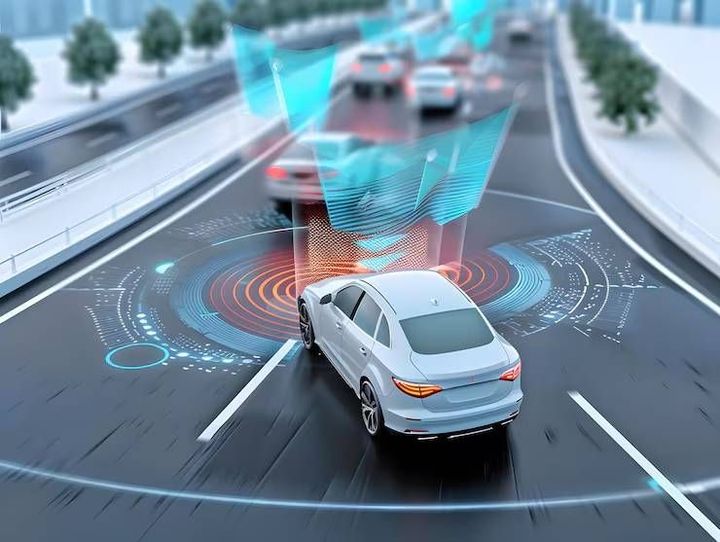
Sensor fusion combines information from cameras, radar, LiDAR, and other inputs where available. This can provide a more complete view of the environment than relying on one sensor alone. However, conflicting readings, damaged sensors, poor visibility, and computing limitations can still affect system performance.
Navigation and Real-World Testing
Autonomous navigation combines positioning, route planning, local path planning, and vehicle control. Satellite navigation helps identify a general location, while onboard sensors help determine the vehicle's immediate position relative to lanes, road edges, and obstacles.
Testing increasingly examines how vehicles handle complex intersections, temporary road changes, vulnerable road users, and uncommon events. Simulation allows developers to test many scenarios in virtual environments, while closed-course and public-road testing help assess behavior under physical conditions. Neither method alone establishes that a system is suitable for every road environment.
Laws or Policies
Autonomous car rules vary by country and region. Governments may regulate vehicle approval, road testing, safety equipment, driver responsibility, insurance, data collection, and the conditions under which automated driving systems can operate. Permission to test a vehicle does not necessarily mean that it can be used for unrestricted public transportation.
Autonomous Vehicle Rules in the United States
In the United States, the National Highway Traffic Safety Administration (NHTSA) oversees federal motor vehicle safety standards and investigates vehicle safety issues. State governments generally determine many rules concerning driver licensing, vehicle registration, insurance, and road operation.
Manufacturers and operators must consider applicable federal and state requirements when developing or deploying automated vehicles. The precise obligations depend on the vehicle, automation capability, location, and intended use.
Rules in the European Union
In the European Union, vehicle safety and type-approval frameworks establish requirements for vehicles and relevant automated driving technologies. International technical regulations, including those developed through the United Nations Economic Commission for Europe (UNECE), also influence vehicle approval and automated driving requirements.
Approval for a particular automated driving function does not mean that every vehicle can operate without a human driver in all locations. National traffic rules and the approved operating conditions remain important.
Responsibility, Insurance, and Data Protection
Questions about responsibility can arise when an automated system contributes to a collision. The relevant framework may involve vehicle safety requirements, product liability, traffic law, insurance rules, and evidence about how the system was used.
Autonomous cars may process camera images, location information, and other data about their surroundings. Privacy obligations depend on the jurisdiction and the type of data collected. Rules concerning personal data, cybersecurity, retention, and access may apply to manufacturers and operators.
Tools and Resources
Several technical and public resources help explain autonomous driving systems, assess their capabilities, and follow regulatory developments. Their usefulness depends on whether the reader is a vehicle owner, student, researcher, or transportation professional.
Vehicle and Safety Information
The NHTSA website provides information about vehicle safety, driver assistance, automated driving, recalls, and relevant federal requirements in the United States. The European Commission and UNECE publish information about vehicle regulations and international technical frameworks.
Vehicle manuals are also important resources. They describe the specific operating limits of driver-assistance features, explain warning messages, and outline circumstances in which the driver must take control.
Mapping, Simulation, and Research Tools
Digital mapping and navigation applications can help explain route planning, positioning, road networks, and traffic conditions. They should not be confused with autonomous driving systems, since an ordinary navigation application does not independently control a vehicle.
Developers and researchers may use simulation platforms such as CARLA to model roads, traffic participants, sensors, and automated driving behavior. Simulation supports controlled experiments, but simulated performance may not fully reflect real-world conditions.
Practical Evaluation Checklist
When reviewing an autonomous car or driving feature, useful questions include:
Which SAE driving automation level applies?
Under what road, speed, and weather conditions can the system operate?
Must the driver supervise continuously or respond to a takeover request?
Which sensors and navigation methods support the system?
What happens if a sensor, communication link, or onboard computer fails?
Is the intended use permitted under local vehicle and traffic regulations?
These questions help distinguish the capabilities of a specific system from general claims about autonomous driving.
FAQs
What are the six levels of autonomous driving?
The six SAE levels range from Level 0, with no driving automation, to Level 5, which aims to provide full driving automation. The levels describe how the driving task and supervision are divided between the system and a human.
Which sensors are used in autonomous cars?
Autonomous cars may use cameras, radar, LiDAR, ultrasonic sensors, satellite positioning, and other vehicle inputs. The combination depends on the vehicle's design and operating requirements.
How do AI systems help autonomous cars navigate?
AI systems interpret sensor data, identify road users, estimate possible movements, and help plan driving actions. Navigation systems estimate location and calculate routes, while local planning determines how the vehicle moves through its immediate surroundings.
Are Level 2 autonomous cars fully self-driving?
No. Level 2 systems can control steering and speed together in certain conditions, but the human driver must continue supervising the driving task and remain responsible for responding to the road.
Are autonomous cars legal everywhere?
No. Rules differ across countries, states, and regions. A vehicle or automated driving function may be permitted under specific conditions without being authorized for unrestricted operation everywhere.
Conclusion
Autonomous cars combine sensors, AI systems, navigation methods, and vehicle controls to perform defined driving tasks. The SAE automation levels explain the differences between driver assistance and systems designed to operate with less human involvement. Technical progress continues, but weather, unusual road situations, safety validation, and legal restrictions remain important considerations. The capabilities and permitted uses of each system depend on its design and operating environment.