AI Factory Automation Explained: Technologies, Applications, Benefits and Industry Challenges
AI factory automation combines artificial intelligence (AI), industrial machinery, sensors, software, and control systems to improve how manufacturing operations are monitored and managed. It builds on traditional factory automation, which uses machines and programmed controls to perform repetitive tasks, such as assembling components, moving materials, inspecting products, and controlling production equipment.
Context
AI factory automation combines artificial intelligence (AI), industrial machinery, sensors, software, and control systems to improve how manufacturing operations are monitored and managed. It builds on traditional factory automation, which uses machines and programmed controls to perform repetitive tasks, such as assembling components, moving materials, inspecting products, and controlling production equipment. The addition of AI allows certain systems to analyze data, recognize patterns, and adjust their responses to changing conditions.
Factory automation developed through several stages, from mechanical production equipment to electrically controlled machines, programmable logic controllers (PLCs), industrial robots, and connected manufacturing systems. AI adds capabilities such as image recognition, predictive maintenance, production forecasting, and automated quality inspection. These technologies do not make every factory fully autonomous; many systems still require human supervision, engineering controls, and clearly defined operating limits.
How AI Factory Automation Works
An AI-enabled factory collects information from equipment, production lines, cameras, and environmental sensors. Software processes this information to identify patterns or detect conditions that may require attention. Depending on the system, the results may support an operator's decision or trigger an approved adjustment to a machine's settings.
For example, a camera-based inspection system can examine manufactured components for visible defects. A predictive maintenance model may analyze vibration, temperature, or operating history to identify signs of possible equipment deterioration. In both cases, the system relies on suitable data, correctly configured equipment, and regular performance checks.
Main Technologies Used in Smart Factories
Several technologies work together in AI factory automation:
Machine learning: Uses historical and current data to identify patterns, classify information, or estimate likely outcomes.
Computer vision: Analyzes images from industrial cameras to inspect products, identify objects, and monitor production activities.
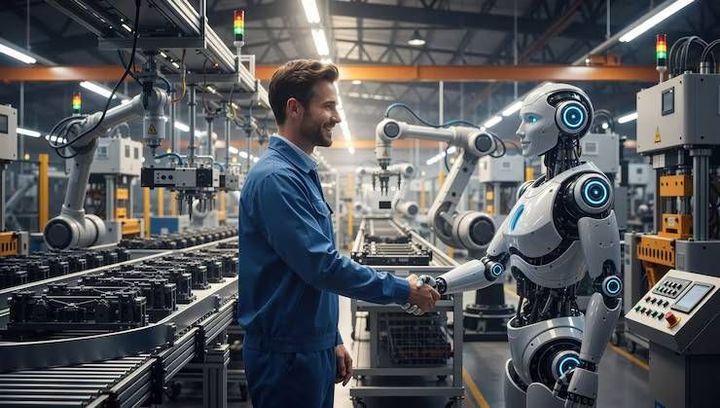
Industrial robots: Perform programmed physical tasks, with AI sometimes supporting object recognition, movement planning, or adaptation to changing inputs.
Industrial Internet of Things (IIoT): Connects sensors, machines, and software so that operating information can be collected and shared.
Digital twins: Virtual representations of physical equipment or processes that can support simulation, monitoring, and engineering analysis.
Edge computing: Processes data close to the equipment, which can reduce dependence on sending every data point to a distant computing system.
Predictive analytics: Examines operating data to estimate equipment conditions, production requirements, or potential disruptions.
These technologies have different purposes. A factory may use one technology independently or combine several according to its production needs, equipment, and technical capabilities.
Importance
AI factory automation matters because manufacturers must manage product quality, equipment reliability, production schedules, material use, and workplace safety. Manual inspection and fixed automation remain useful in many settings, but they may struggle with certain complex tasks, rapidly changing product designs, or large amounts of operational data. AI can help identify patterns that are difficult to detect through simple rules alone.
The effects extend beyond factory owners and engineers. Consistent production can influence product availability, delivery schedules, and manufacturing waste. Workers may also experience changes in their daily responsibilities as automated inspection, robotic handling, and data-based monitoring become part of routine operations.
Applications Across Manufacturing Industries
AI factory automation can support a range of manufacturing activities. Its usefulness depends on the production process, the quality of available data, and the consequences of an incorrect system decision.
Automotive manufacturing: Robots and vision systems can assist with component placement, weld inspection, surface checks, and assembly monitoring.
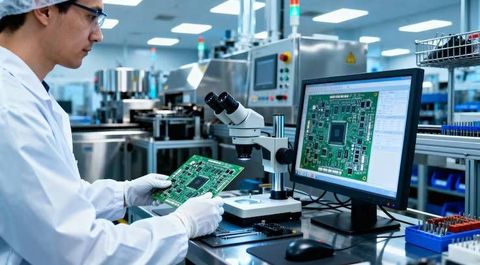
Electronics production: Automated inspection can identify certain soldering defects, component placement errors, and irregularities on circuit boards.
Food processing: Vision systems can classify products, detect visible defects, and monitor selected packaging processes.
Pharmaceutical manufacturing: Automated monitoring and inspection can support controlled production processes, subject to applicable quality and regulatory requirements.
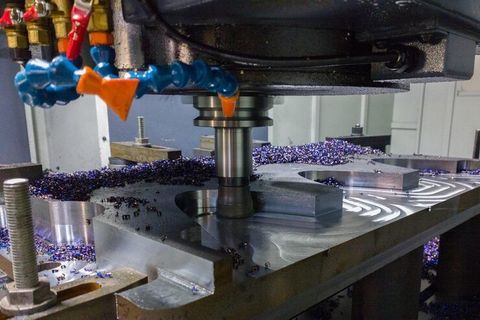
Metalworking and machinery: Sensor analysis can help monitor machine condition, tool wear, vibration, and production consistency.
Warehousing within factories: Autonomous mobile robots can transport materials between designated areas, with navigation and movement governed by site-specific safety controls.
Potential Benefits and Practical Limitations
AI factory automation can help manufacturers detect defects earlier, plan maintenance, analyze production delays, and reduce some repetitive manual tasks. It may also improve visibility into energy use, equipment performance, and material consumption. However, these outcomes are not automatic, and they depend on the suitability of the system and how it is implemented.
Common limitations include:
Data quality: Incomplete, inconsistent, or incorrectly labeled data can reduce model accuracy.
Integration: Older machinery may require additional sensors, interfaces, or control-system changes.
Technical skills: Employees may need training in data interpretation, robotics, system maintenance, and cybersecurity.
Operational risk: An incorrect prediction or control decision can interrupt production or affect product quality.
Workforce adjustment: Changes in task allocation may require retraining and revised operating procedures.
Cybersecurity: Connected equipment can introduce risks if networks, accounts, software, and remote access are not adequately protected.
AI is therefore one part of a broader manufacturing system, rather than a replacement for sound engineering, quality management, or worker expertise.
Comparing Traditional Automation and AI Automation
| Feature | Traditional factory automation | AI-enabled factory automation |
|---|---|---|
| Main operating method | Programmed rules and sequences | Programmed controls combined with data-driven models |
| Inspection | Fixed sensors and defined checks | Can include image classification and anomaly detection |
| Maintenance | Scheduled or reactive procedures | Can include condition-based predictions |
| Process changes | Often requires rule or program updates | Some models can adapt within validated operating limits |
| Human involvement | Setup, monitoring, maintenance, and intervention | Similar duties, plus model oversight and data review |
| Main limitation | May be less flexible for variable inputs | Depends on data quality, validation, and reliable integration |
The categories can overlap. Traditional automation often provides the real-time control and safety functions on which AI applications depend.
Recent Updates
Developments from 2024 through 2026 have included wider experimentation with AI-assisted manufacturing, connected production data, computer vision, and robotics. Manufacturers have also shown growing interest in systems that can interpret complex instructions, coordinate tasks, and support production planning. The pace of adoption varies by industry, factory size, investment priorities, and technical readiness.
Generative AI and Industrial AI
Generative AI can help workers search technical documentation, summarize maintenance records, interpret operating instructions, and prepare reports. Some industrial systems are being developed to connect language-based interfaces with factory data, although any machine-control action requires appropriate authorization, testing, and safeguards.
Industrial AI is also being used to combine information from equipment sensors, production records, and quality checks. Rather than relying on a single measurement, these systems may examine multiple signals to identify unusual conditions. Their results still need to be evaluated against real operating conditions, especially when a mistaken conclusion could affect safety or product quality.
Robotics, Digital Twins, and Edge AI
Advances in vision systems and robotic planning are expanding the range of tasks that can be considered for automation. Collaborative robots can work in shared environments when the equipment, layout, risk assessment, and operating procedures are designed for that purpose.
Digital twins can help engineers examine process changes in a simulated environment before applying them to physical equipment. Edge AI can process selected information near machines when rapid responses or limits on network connectivity make local processing useful. Neither technology removes the need for physical testing, maintenance, and monitoring.
Laws or Policies
AI factory automation is shaped by industrial safety rules, product-quality requirements, environmental regulations, employment laws, and data-protection obligations. Applicable rules depend on the country, industry, equipment, and intended use of the technology. AI software may be subject to additional requirements when it affects safety, regulated products, or decisions involving people.
Manufacturing and AI Regulations in India
In India, factories must comply with applicable occupational safety, health, and working-condition requirements, along with relevant state rules and sector-specific regulations. The Occupational Safety, Health and Working Conditions Code, 2020, forms part of the country's labour-law framework; its application depends on the provisions and commencement arrangements in force. Electrical safety, machinery safeguards, fire prevention, and other technical requirements may also apply.
Manufacturers in regulated industries must consider additional obligations. For example, food production is subject to applicable food safety requirements, while pharmaceutical manufacturing must follow relevant quality and regulatory standards. AI-based inspection or monitoring does not remove the manufacturer's responsibility to meet these requirements.
Data Protection and Cybersecurity
AI factory systems may process employee information, camera footage, equipment records, and production data. Where personal data is involved, India's Digital Personal Data Protection Act, 2023, and associated rules and commencement arrangements may be relevant, depending on the provisions in force and the circumstances.
Cybersecurity measures can include network separation, controlled access, software updates, backup procedures, and monitoring for unusual activity. Manufacturers should also consider the security of connected devices, external integrations, and remote maintenance access. The exact controls required depend on the equipment, operational risks, and applicable standards or regulations.
Tools and Resources
A range of industrial software platforms, technical standards, and assessment tools can help organizations understand and evaluate AI factory automation. Their suitability depends on existing equipment, technical expertise, production requirements, and the level of risk associated with the application.
Industrial Software and Development Platforms
Platforms such as Siemens Industrial Edge, Microsoft Azure IoT, and AWS IoT provide capabilities for connecting industrial data, developing applications, or managing selected connected-device workloads. Availability and functionality differ by platform and configuration. Organizations should assess compatibility, data handling, security, and ongoing operational requirements before selecting a system.
Machine-learning development frameworks such as TensorFlow and PyTorch can support model development and experimentation. Industrial engineering teams may also use computer-aided design software, simulation tools, and digital-twin environments to examine equipment behavior and production layouts.
Standards and Assessment Resources
The International Organization for Standardization (ISO) publishes standards relevant to industrial robots, quality management, and risk management. The International Electrotechnical Commission (IEC) publishes standards addressing industrial control systems, electrical equipment, and industrial cybersecurity. NIST also provides cybersecurity guidance, including material relevant to operational technology.
A practical assessment may record the production problem, available data, expected performance measures, safety implications, integration needs, and method for checking results. Useful measures can include defect rates, unplanned downtime, production throughput, energy consumption, and the frequency of incorrect alerts. Each measure should be defined consistently before and after a system change.
FAQs
What is AI factory automation?
AI factory automation uses artificial intelligence with industrial machines, sensors, and software to support manufacturing tasks such as quality inspection, predictive maintenance, process monitoring, and production planning.
What technologies are used in AI factory automation?
Common technologies include machine learning, computer vision, industrial robots, IIoT sensors, edge computing, digital twins, and predictive analytics. The combination depends on the factory's requirements.
What are the benefits of AI in smart manufacturing?
AI can help detect defects, identify equipment problems, analyze production data, and improve process visibility. Results depend on data quality, system design, and effective human oversight.
What are the main challenges of AI factory automation?
Challenges include poor data quality, integration with older equipment, cybersecurity risks, technical training needs, and the possibility of inaccurate predictions. Safety checks and ongoing monitoring remain important.
Is AI factory automation regulated in India?
Manufacturers must follow applicable industrial safety, labour, environmental, data-protection, and sector-specific rules. Additional requirements depend on the equipment, application, and regulations currently in force.
Conclusion
AI factory automation combines industrial equipment and established control systems with data-driven technologies that support inspection, maintenance, and production planning. Its applications span many manufacturing industries, but results depend on reliable data, suitable integration, worker training, and effective safety controls. Current developments include industrial AI, connected equipment, digital twins, and more adaptable robotics. Regulatory compliance and human oversight remain important parts of responsible manufacturing automation.