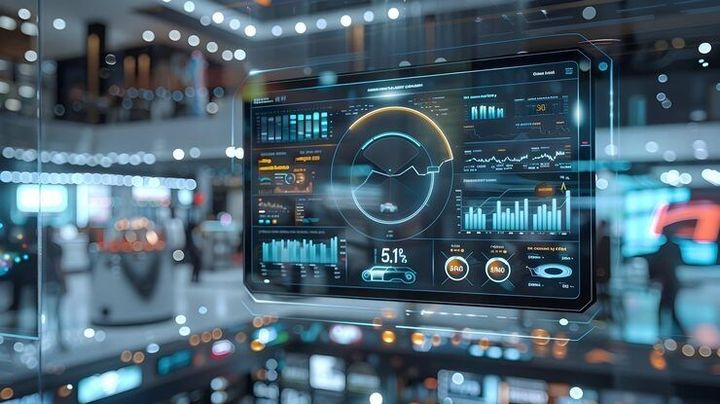
AI-Based Quality Monitors Facts: AI Inspection, Anomaly Detection, Sensors and Applications
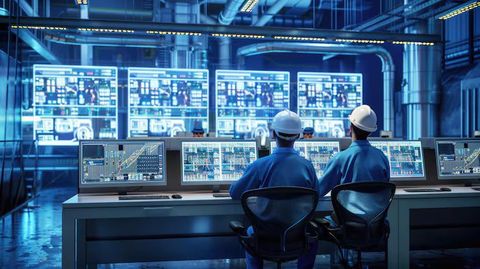
AI-based quality monitors are digital systems that use artificial intelligence, cameras, sensors, and data analysis to observe products, machines, and production processes. AI inspection can identify visible defects, while anomaly detection can recognize unusual patterns in sensor readings or production data. These technologies are increasingly connected with manufacturing equipment, industrial automation, and quality-control processes to help people understand what is happening during production.
What Are AI-Based Quality Monitors?
Traditional quality monitoring often depends on visual inspection, measurement instruments, predefined limits, and statistical process control. These methods remain important, but modern factories can generate much larger amounts of information from cameras, temperature sensors, vibration sensors, pressure sensors, acoustic devices, and machine controllers.
An AI-based quality monitor processes some of this information using machine-learning models or other forms of artificial intelligence. Instead of examining only one measurement, the system can compare patterns across multiple readings or images and identify conditions that differ from expected behavior.
AI inspection commonly uses cameras to examine surfaces, shapes, dimensions, labels, assemblies, or other visible characteristics. A trained model can classify images or locate unusual areas that may require human review. The exact capabilities depend on the quality of images, training data, lighting, camera position, and the characteristics of the inspected product.
How Anomaly Detection Works
Anomaly detection focuses on identifying unusual behavior. For example, a machine may normally operate within a particular range of temperature and vibration. If several sensors begin changing together, an AI model can identify the pattern as unusual even when individual readings have not crossed a traditional alarm limit.
This approach can be useful when problems are difficult to describe with a single fixed threshold. Research in semiconductor manufacturing has explored AI methods that analyze large groups of process measurements to identify anomalies and investigate possible sources.
Role of Sensors
Sensors are an important source of information for AI-based quality monitors. Depending on the application, a monitoring system may use:
- Temperature sensors to track heating and cooling conditions.
- Pressure sensors to observe fluid or gas behavior.
- Vibration sensors to identify unusual mechanical patterns.
- Cameras to examine surfaces, shapes, and assemblies.
- Acoustic sensors to detect changes in machine sounds.
- Current and voltage sensors to monitor electrical behavior.
- Flow sensors to observe movement of liquids or gases.
The AI system analyzes the collected information according to its design. Sensor data can be processed continuously or at selected intervals, while camera-based inspection may examine individual products as they move through a production area.
Importance
Why Quality Monitoring Matters
Quality problems can affect manufacturers, workers, distributors, and people who eventually use manufactured products. A defect may result from material variation, incorrect assembly, machine changes, environmental conditions, software settings, or other process factors.
Quality monitoring helps organizations identify these conditions and document what happened. AI-based systems can add another layer of analysis by examining large volumes of images and measurements that may be difficult for people to review continuously.
The technology can also support consistency. A human inspector may experience fatigue or differences in concentration, while an automated monitoring system can apply the same programmed analysis repeatedly. However, AI results still depend on system design, data quality, environmental conditions, and appropriate human review.
Where AI Quality Monitors Are Used
Applications vary across industries. Common examples include:
- Automotive manufacturing for component and assembly inspection.
- Electronics production for circuit-board and component inspection.
- Semiconductor manufacturing for process monitoring and defect analysis.
- Food processing for visual checks and process measurements.
- Pharmaceutical manufacturing for controlled production monitoring, subject to applicable regulatory requirements.
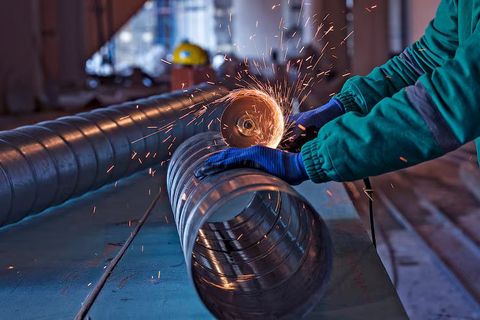
- Metalworking for surface, dimensional, and process monitoring.
- Packaging for checking labels, seals, shapes, and package conditions.
- Energy equipment for monitoring temperatures, vibration, pressure, and other operating conditions.
The same AI model is not necessarily suitable for every application. A system designed to identify surface defects on metal parts may require different cameras, data, training examples, and evaluation methods from a system monitoring vibration in rotating equipment.
AI Inspection and Human Review
AI inspection does not automatically establish that a product is safe or compliant. Its output is an analytical result that needs to be interpreted within the relevant quality-control process.
Human specialists may review uncertain images, investigate unusual sensor patterns, verify measurements, and determine whether an identified condition represents an actual defect. This combination can be particularly important when inspection results affect safety, regulatory compliance, or production decisions.
Recent Updates
Growth of AI-Based Inspection
From 2024 through 2026, AI quality monitoring has increasingly focused on combining machine vision, sensor information, machine learning, and production data. Research and industrial development have also moved toward systems that can analyze multiple related signals rather than relying only on isolated measurements. IBM Research, for example, has described AI approaches for identifying defects and process inefficiencies in semiconductor manufacturing.
Recent industrial developments have also included automatic defect classification and computational inspection. Siemens reported machine-learning-based automatic defect classification tools for semiconductor mask inspection as part of its 2025 developments.
More Real-Time Monitoring
Another developing trend is real-time anomaly detection. Instead of waiting until a production batch has been completed, systems can analyze sensor streams while equipment is operating.
NVIDIA described an anomaly-detection approach for semiconductor manufacturing that can identify changes such as spikes, level shifts, sensor failures, and other unusual patterns across sensor streams.
Easier Deployment
AI inspection systems are also being designed with simpler deployment and operation in mind. In 2025, Siemens described an AI-enabled machine-vision system intended to simplify implementation of visual quality inspection.
At the same time, organizations are paying more attention to AI governance, data quality, transparency, security, and human oversight. IndiaAI's responsible-AI guidance emphasizes documentation, transparency, explainability, and accountability across the AI lifecycle.
Laws or Policies
Indian Standards and Quality Requirements
In India, AI-based quality monitors operate within existing product, manufacturing, safety, data, and conformity requirements rather than under one single law specifically governing AI inspection.
The Bureau of Indian Standards explains that manufacturers seeking applicable BIS certification need appropriate manufacturing infrastructure, process controls, quality-control capabilities, and testing arrangements according to the relevant Indian Standard.
For some products, compliance with Indian Standards becomes mandatory through government-issued Quality Control Orders. BIS maintains information about products covered by compulsory certification and related conformity requirements.
Machinery and Electrical Equipment
India has also developed product-specific conformity frameworks covering certain machinery and electrical equipment. BIS information includes guidelines for categories such as metal-cutting machines and machinery used for rubber and plastics, while relevant Quality Control Orders can specify applicable standards and testing requirements.
An AI monitoring system does not replace the underlying technical standard or required testing procedure. Where a product is subject to a particular standard, organizations need to consider the requirements of that standard separately from the AI system used for monitoring.
Data Protection
AI quality monitors may sometimes process information that relates to workers, visitors, or other identifiable individuals, particularly when cameras are used in production areas. India's Digital Personal Data Protection Act and the Digital Personal Data Protection Rules, 2025 provide a framework for processing digital personal data. The 2025 Rules were notified with a phased commencement structure.
Organizations therefore need to distinguish industrial machine data from personal data and consider applicable privacy, security, access-control, and data-retention requirements.
Tools and Resources
Several types of tools can help readers understand AI-based quality monitoring and its applications.
Standards and Reference Resources
The BIS “Know Your Standard” portal allows users to search Indian Standards by standard number or product keyword. It also provides access to related documents, amendments, testing information, and conformity details.
For AI governance, IndiaAI publishes material covering responsible AI principles, transparency, explainability, accountability, and related topics. These resources can help organizations understand broader considerations when AI systems are introduced into operational environments.
Monitoring and Analysis Tools
Common technical resources used in quality-monitoring projects include:
- Industrial cameras for image-based inspection.
- Sensor gateways for collecting equipment measurements.
- Time-series databases for storing sensor readings.
- Machine-learning platforms for developing anomaly-detection models.
- Statistical process-control software for comparison with traditional monitoring methods.
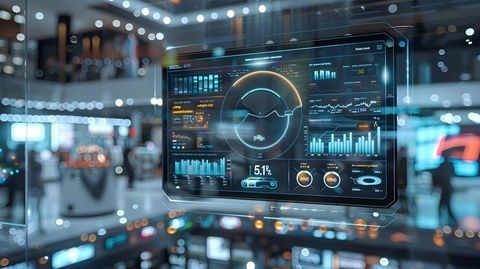
- Dashboards for displaying inspection results and sensor trends.
- Data-labeling tools for preparing images and records for model development.
The appropriate tool depends on the production process, data type, inspection objective, environmental conditions, and applicable quality requirements.
Example Data Types
| Monitoring Method | Main Data | Example Application |
|---|---|---|
| AI vision | Images or video | Surface and assembly inspection |
| Temperature sensing | Temperature readings | Thermal process monitoring |
| Vibration sensing | Vibration signals | Rotating equipment monitoring |
| Pressure sensing | Pressure readings | Fluid or gas process monitoring |
| Acoustic sensing | Sound patterns | Equipment condition analysis |
| Electrical sensing | Current and voltage | Electrical equipment monitoring |
| Combined monitoring | Multiple data types | Process anomaly detection |
FAQs
What is an AI-based quality monitor?
An AI-based quality monitor is a system that uses artificial intelligence to analyze images, sensor readings, or other production information. It can identify patterns, classify conditions, or flag unusual results for further review.
How does AI inspection detect defects?
AI inspection usually analyzes images captured by cameras. A model trained with relevant examples can recognize visual patterns associated with acceptable and unusual conditions, although accuracy depends on image quality, training data, model design, and operating conditions.
What is anomaly detection in manufacturing?
Anomaly detection identifies patterns that differ from expected process behavior. It can analyze measurements such as temperature, vibration, pressure, flow, or electrical signals and flag unusual combinations or changes.
What sensors are used with AI quality monitors?
AI quality monitors can use temperature, pressure, vibration, acoustic, flow, current, voltage, and optical sensors. The selection depends on what needs to be observed and measured.
Are AI quality monitors regulated in India?
There is no single Indian regulation that governs every AI quality-monitoring system. Depending on the application, organizations may need to consider BIS standards, Quality Control Orders, machinery or electrical-equipment requirements, data-protection rules, and other sector-specific regulations.
Conclusion
AI-based quality monitors combine artificial intelligence with cameras, sensors, and production data to identify defects and unusual process behavior. AI inspection is particularly associated with visual analysis, while anomaly detection can examine changing patterns across sensor and machine data. Developments from 2024 through 2026 show increasing interest in real-time monitoring, automatic defect classification, and responsible AI governance. In India, the technology operates alongside existing standards, conformity requirements, machinery rules, and data-protection frameworks rather than replacing them.