Agricultural Equipment Explained: Machinery Types, Farm Applications, Uses and Selection Guidelines
Agricultural equipment includes the machines, tools, implements, and technologies used to perform farming activities more efficiently and consistently. The category ranges from basic hand tools and small powered machines to tractors, harvesters, irrigation equipment, planting machinery, and digitally controlled systems.
Context
Agricultural equipment includes the machines, tools, implements, and technologies used to perform farming activities more efficiently and consistently. The category ranges from basic hand tools and small powered machines to tractors, harvesters, irrigation equipment, planting machinery, and digitally controlled systems. Agricultural mechanization has developed over centuries as farmers have looked for ways to prepare soil, plant crops, manage fields, harvest produce, and handle materials with less physical effort.
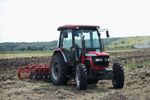
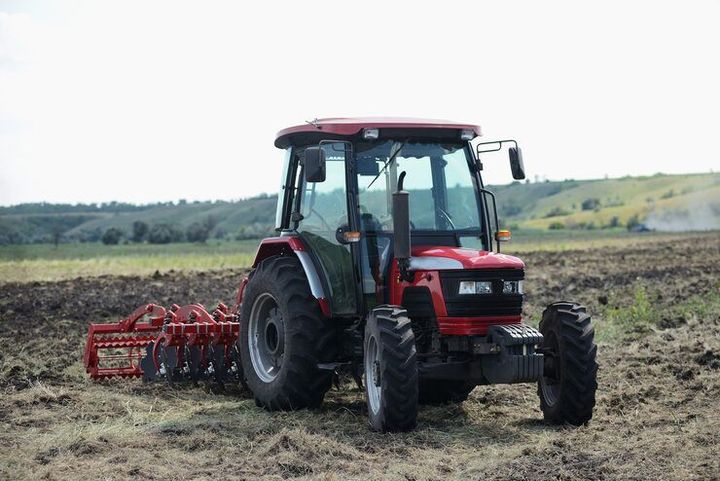
Modern agricultural equipment is closely connected with the type of farming operation being performed. A tractor may provide pulling power for several implements, while a seeder places seeds at controlled intervals, a sprayer distributes agricultural inputs, and a harvester collects mature crops. Equipment can therefore be classified according to its function rather than simply its size or engine power.
The concept of agricultural mechanization now extends beyond conventional machinery. FAO describes sustainable agricultural mechanization as covering technologies ranging from basic hand tools to sophisticated motorized equipment, with applications across land preparation, planting, crop management, harvesting, storage, processing, and transport.
Main categories of agricultural equipment
Farm machinery can be grouped according to the stage of production in which it is used. Common categories include:
- Soil preparation equipment for ploughing, tilling, harrowing, and leveling
- Planting and seeding equipment for placing seeds at controlled depths and spacing
- Crop-care equipment for irrigation, spraying, fertilization, and weed management
- Harvesting equipment for cutting, picking, threshing, separating, and collecting crops
- Material-handling equipment for moving agricultural products, inputs, and residues
- Post-harvest equipment for cleaning, drying, sorting, processing, and storage
This classification helps explain why a machine designed for one agricultural task may not be appropriate for another.
Importance
Agricultural equipment matters because farming involves many time-sensitive operations. Soil preparation, planting, crop protection, irrigation, and harvesting often need to occur within particular periods determined by weather, crop development, and field conditions.
Mechanization can reduce physical workload and help complete certain operations within shorter working periods. FAO notes that sustainable mechanization can improve the timeliness of agricultural operations, resource use, and working conditions when equipment is appropriate for the local context.
Farm applications and uses
Different agricultural machines address different stages of production. Their usefulness depends on crop type, field conditions, available power, operator skills, and the scale of the operation.
| Equipment category | Typical agricultural application | Main function |
|---|---|---|
| Tractor | Field preparation and transport | Provides power and traction |
| Plough | Soil preparation | Turns and loosens soil |
| Harrow | Seedbed preparation | Breaks soil clods and levels the surface |
| Seeder | Crop establishment | Places seeds at selected spacing and depth |
| Sprayer | Crop management | Applies liquids across targeted areas |
| Irrigation equipment | Water management | Delivers water to crops |
| Harvester | Crop collection | Cuts, gathers, separates, or collects crops |
| Thresher | Post-harvest processing | Separates grain from harvested material |
Matching machinery with farm conditions
Equipment selection involves more than identifying the machine's advertised capacity. A tractor with substantial power, for example, may not be appropriate for a small field with narrow access routes, while a compact machine may not have sufficient capacity for a large-scale operation.
Important factors include:
- Field size and shape
- Soil type and terrain
- Crop type
- Required working width
- Available power source
- Operating speed
- Fuel or energy requirements
- Operator training
- Storage conditions
- Maintenance requirements
- Compatibility with existing implements
FAO emphasizes that mechanization decisions should consider technical, economic, social, environmental, and cultural conditions rather than focusing only on machinery itself.
Recent Updates
Agricultural equipment has increasingly incorporated automation, digital controls, sensors, satellite positioning, data collection, and artificial intelligence. These developments are changing how some machines perform field operations and how farmers monitor machinery and crops.
FAO's recent work on sustainable agricultural mechanization identifies digital agriculture, artificial intelligence, precision agriculture, and other digital technologies as areas connected with the continuing development of agricultural mechanization.
Precision agriculture and automation
Precision agriculture uses location information, sensors, mapping, and data analysis to make field operations more targeted. Equipment may use positioning systems to guide movement across fields or adjust the application of inputs according to field conditions.
Automation is another developing area. Agricultural machinery can incorporate systems that assist with steering, implement control, obstacle detection, route planning, and other tasks. The level of automation varies considerably between machines.
A major recent standards development is ISO 18497-1:2024, which addresses design principles and terminology for agricultural machinery and tractors with partially automated, semi-autonomous, and autonomous functions. The standard replaced the earlier ISO 18497:2018 framework.
Electrification and resource efficiency
Electrification is also being explored for selected agricultural equipment, particularly smaller machines and applications where battery-powered operation can be practical. Hybrid systems and improved engine technologies are also part of wider efforts to reduce energy use and emissions.
These technologies do not apply equally to every agricultural operation. Machine size, operating duration, field conditions, available charging infrastructure, and the power required for the task all influence whether a particular technology is practical.
Laws or Policies
Agricultural equipment is affected by several types of rules, including machinery safety requirements, environmental regulations, road-use requirements, emissions standards, operator-safety provisions, and rules concerning agricultural inputs. The exact requirements depend on the jurisdiction and the type of equipment involved.
International standards can provide technical frameworks for machinery design and safety. For example, ISO 18497-1:2024 addresses safety principles for agricultural machinery with partially automated, semi-autonomous, and autonomous functions. Related standards address additional aspects of agricultural machinery safety and performance.
Machinery safety and compliance
Regulations may address areas such as:
- Guards around moving components
- Emergency stopping mechanisms
- Operator controls
- Visibility and warning systems
- Noise and emissions
- Electrical and mechanical safety
- Instructions and safety information
- Automated-machine operating conditions
Some jurisdictions also have specific requirements for machinery placed on their markets. For example, the European Union's Machinery Regulation establishes health and safety requirements for machinery and related products and is being implemented as the regulatory framework replacing the earlier Machinery Directive.
These rules illustrate why agricultural machinery should be assessed according to the regulations applicable to its intended market and operating environment.
Tools and Resources
Several resources can help farmers, researchers, students, and agricultural professionals understand machinery selection and mechanization.
Equipment databases
Equipment databases can help users compare machinery categories, power sources, applications, and technical characteristics. FAO maintains an agricultural equipment and manufacturer database as part of its sustainable agricultural mechanization resources.
Farm planning worksheets
A simple equipment-planning worksheet can organize information such as:
- Crop and field type
- Area to be cultivated
- Required operation
- Working width
- Available tractor power
- Expected operating hours
- Fuel or energy requirements
- Operator requirements
- Storage arrangements
- Maintenance schedule
This type of record can make comparisons more structured.
Precision farming tools
GPS or satellite-guidance systems, field-mapping applications, soil sensors, weather information, and crop-monitoring platforms can support precision agriculture. Their usefulness depends on the quality of the underlying data and whether the technology is appropriate for the particular farming system.
Machinery manuals and technical standards
Manufacturer manuals provide information about operating procedures, machine limits, maintenance intervals, compatible implements, and safety precautions. Technical standards provide additional frameworks for machinery design and safety, particularly for equipment incorporating automation.
FAQs
What is agricultural equipment?
Agricultural equipment refers to tools, machines, implements, and technologies used for farming activities. It includes tractors, tillers, seeders, irrigation equipment, sprayers, harvesters, and post-harvest machinery.
What are the main types of agricultural machinery?
Major agricultural machinery types include tractors, soil-preparation equipment, planting machinery, crop-care equipment, harvesting machines, irrigation systems, material-handling equipment, and post-harvest processing equipment. Each category addresses different stages of agricultural production.
How is agricultural equipment selected?
Selection depends on the farm's crop, field size, soil and terrain, required operation, available power, working capacity, operator skills, maintenance requirements, and compatibility with existing equipment. Regulatory and safety requirements should also be considered.
What are the latest trends in agricultural equipment?
Current developments include precision agriculture, automated guidance, sensors, digital monitoring, artificial intelligence, autonomous functions, and electrification for selected applications. ISO 18497-1:2024 also reflects the growing need for safety principles covering partially automated and autonomous agricultural machinery.
Why is agricultural mechanization important?
Mechanization can help reduce physical workload, improve the timing of farming operations, and support more precise use of certain resources. Its results depend on appropriate equipment, operating conditions, technical knowledge, and the wider agricultural system.
Conclusion
Agricultural equipment covers a broad range of machines and tools used for soil preparation, planting, crop management, harvesting, handling, and post-harvest activities. Modern agricultural machinery increasingly incorporates precision technologies, digital systems, automation, and new power technologies alongside conventional equipment. Appropriate selection depends on farm conditions, crop requirements, machine capabilities, operator skills, safety considerations, and applicable regulations. Sustainable mechanization therefore involves matching the right level of technology with the actual needs of the farming operation.