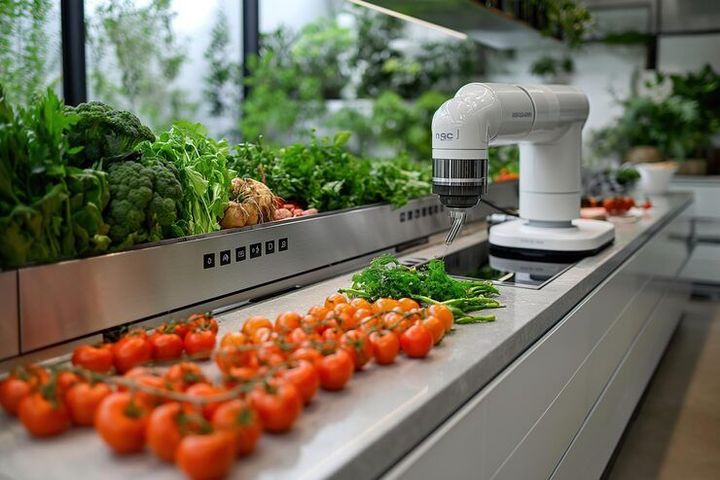
Vegetable Cutting Machines Guide With Food Processing Technology and Efficiency Insights
Vegetable cutting machines are food processing systems designed to prepare vegetables into consistent slices, strips, cubes, dices, or other shapes. They are used in food preparation facilities, restaurants, catering operations, institutional kitchens, and vegetable processing environments where repeated cutting is required.
Modern vegetable cutting machines combine mechanical cutting components with adjustable controls, safety features, and food-contact materials to make preparation more consistent. Understanding how these machines work, where they are used, and how food processing technology has developed can help general readers understand their role in modern food preparation.
Context
What Are Vegetable Cutting Machines
A vegetable cutting machine uses rotating blades, cutting discs, knives, or other mechanisms to divide vegetables into selected shapes and sizes. Depending on the design, a machine may handle tasks such as slicing potatoes, dicing carrots, cutting onions, shredding cabbage, or producing strips from various vegetables.
Manual vegetable preparation can require repeated cutting movements and careful attention to portion size. Machines were developed to make repetitive preparation more structured and to create greater consistency across larger quantities of ingredients.
Different vegetable cutting machines are designed around different cutting methods. Some systems use interchangeable blades, while others use fixed cutting assemblies designed for particular applications.
How Vegetable Cutting Technology Developed
Early food preparation equipment relied heavily on simple mechanical movement. As food processing technology developed, manufacturers introduced improved blade designs, adjustable settings, stronger drive systems, and more controlled feeding mechanisms.
Modern systems can combine mechanical components with electronic controls. Sensors, programmable settings, and automated feeding arrangements may also appear in more advanced equipment. These developments have made vegetable cutting more predictable while also placing greater emphasis on sanitation and operator safety.
Common Types of Vegetable Cutting Machines
Vegetable cutting equipment can be grouped according to the type of preparation it performs.
- Vegetable slicers produce relatively uniform slices.
- Vegetable dicers divide ingredients into cube-like pieces.
- Strip cutters produce elongated pieces or strips.
- Shredders create thin pieces suitable for salads and other preparations.
- Multi-function cutters can perform several cutting patterns through interchangeable components.
The appropriate configuration depends on the vegetable type, desired shape, production volume, and available workspace.
Importance
Why Consistent Cutting Matters
Uniform cutting can influence cooking time, appearance, texture, and portion consistency. When pieces have similar dimensions, heat can reach them more evenly during cooking or other preparation processes.
Vegetable cutting machines can therefore play a role beyond simply reducing manual cutting. Consistency is particularly relevant in environments where the same preparation needs to be repeated throughout the day.
Who Uses Vegetable Cutting Equipment
Vegetable cutting machines are found across several areas of food preparation and processing.
- Restaurants and commercial kitchens use equipment for repeated ingredient preparation.
- Catering operations may use machines when preparing ingredients in larger batches.
- Institutional kitchens can use vegetable cutters for routine meal preparation.
- Food processing facilities may integrate cutting equipment into larger preparation lines.
- Produce preparation operations can use specialized machines for washing, cutting, and packaging workflows.
The size and configuration of equipment can vary substantially between these environments.
Efficiency and Workflow
Food processing efficiency is influenced by several factors, including preparation time, equipment layout, ingredient handling, cleaning procedures, and operator movement. A vegetable cutting machine can fit into a workflow between washing and later stages such as cooking, packaging, or cold storage.
Efficiency does not depend only on machine speed. Feeding consistency, blade selection, maintenance, cleaning time, and proper operating procedures can also influence overall workflow.
Vegetable Cutting Machines and Food Safety
Food-contact equipment requires careful attention to hygiene. Vegetable pieces can leave moisture, plant material, and organic residue on blades, cutting surfaces, and internal components.
Equipment should therefore be designed so that food-contact areas can be inspected and cleaned appropriately. Operators also need procedures covering cleaning, sanitation, inspection, and safe handling.
Recent Updates
Automation and Digital Controls
Recent food processing technology has increasingly incorporated automation and electronic controls. Some vegetable cutting machines now include digital interfaces that allow operators to select or adjust operating parameters.
Automation can reduce the number of repeated manual actions involved in preparation. However, automated equipment still requires appropriate setup, supervision, cleaning, and inspection.
Improved Cutting Accuracy
Blade geometry and cutting assemblies continue to receive attention as manufacturers develop equipment for different vegetables and preparation styles. Adjustable cutting systems can allow users to produce different thicknesses or dimensions without changing the entire machine.
Some machines are also designed around modular components. This approach can make it easier to configure equipment for different preparation requirements.
Hygiene-Focused Design
Another current trend is greater attention to hygienic equipment construction. Smooth food-contact surfaces, accessible components, removable cutting parts, and designs that limit difficult-to-clean areas can support routine sanitation procedures.
Food processing technology increasingly considers the complete equipment lifecycle, including preparation, cleaning, inspection, and maintenance.
Data and Connected Equipment
More advanced processing environments may use sensors and digital monitoring to track equipment operation. Connected systems can provide information about operating conditions, production cycles, or equipment status.
These features are more common in integrated processing environments than in basic kitchen equipment. Their usefulness depends on the scale and complexity of the operation.
General Equipment Comparison
| Machine Type | Typical Cutting Task | Common Application | Control Level |
|---|---|---|---|
| Vegetable Slicer | Slices | Kitchens and preparation areas | Manual to electronic |
| Vegetable Dicer | Cubes | Food preparation and processing | Manual to automated |
| Strip Cutter | Strips | Salads and prepared foods | Manual to automated |
| Shredder | Thin pieces | Cabbage, carrots, and similar vegetables | Manual to electronic |
| Multi-Function Cutter | Several shapes | Commercial preparation | Electronic or mechanical |
The actual capabilities of individual machines vary by design, blade configuration, and manufacturer specifications.
Laws or Policies
Food Safety Requirements
Rules governing food processing equipment vary between jurisdictions, but common principles include hygiene, food-contact safety, equipment cleanliness, and protection against contamination. Facilities may need to follow national, regional, or local food safety requirements depending on their activities.
Vegetable cutting machines used in commercial food environments should be compatible with the applicable food-contact and sanitation requirements for that location.
Workplace Safety
Mechanical cutting equipment can involve moving blades and other components capable of causing injury if used incorrectly. Workplace safety frameworks commonly address guarding, operator training, equipment maintenance, emergency procedures, and safe cleaning practices.
Specific requirements depend on the jurisdiction and type of workplace. Operators should follow the instructions supplied with the equipment and the safety rules applicable to their facility.
Equipment Documentation
Documentation can include operating instructions, cleaning procedures, maintenance information, technical specifications, and replacement-part details. Keeping appropriate records can help organizations demonstrate that equipment is being operated and maintained according to established procedures.
Because regulations differ globally, organizations should consult the relevant authorities or qualified professionals when determining which requirements apply to a particular food processing environment.
Tools and Resources
Equipment Selection Guides
Technical equipment catalogs and manufacturer documentation can help readers understand blade configurations, capacity ranges, dimensions, electrical requirements, and cleaning arrangements. These resources can also explain which vegetables are appropriate for a particular cutting mechanism.
Comparing technical specifications is useful when different vegetable cutting machines appear similar but have different operating characteristics.
Maintenance Checklists
A basic maintenance checklist can include several routine areas:
- Blade condition and alignment
- Guards and safety components
- Food-contact surfaces
- Fasteners and removable parts
- Electrical connections
- Drive components
- Cleaning and sanitation procedures
The exact maintenance schedule should follow the equipment documentation and applicable workplace procedures.
Food Processing Calculators
Production-planning spreadsheets and food processing calculators can help estimate ingredient quantities, batch sizes, preparation cycles, and workflow requirements. These tools are particularly useful when planning how a cutting stage fits into a larger food preparation process.
Training Materials
Food hygiene manuals, workplace safety materials, equipment instructions, and food processing technology references can help operators understand proper handling practices. Training should address both normal operation and cleaning procedures.
FAQs
What are vegetable cutting machines used for?
Vegetable cutting machines are used to slice, dice, shred, strip, or otherwise divide vegetables into consistent shapes. They are used in kitchens, catering environments, institutional food preparation, and food processing operations.
How do vegetable cutting machines improve food processing efficiency?
They can reduce repetitive manual cutting and create more consistent pieces. Overall efficiency also depends on feeding, cleaning, maintenance, machine configuration, and the surrounding preparation workflow.
What types of vegetables can a vegetable cutting machine process?
The suitable vegetables depend on the machine and blade configuration. Common applications can include potatoes, carrots, onions, cabbage, cucumbers, and similar produce, although each machine has specific operating limitations.
Are vegetable cutting machines safe to use?
They can be used safely when appropriate guarding, operating procedures, cleaning practices, and training are followed. Moving blades require particular attention during operation, adjustment, inspection, and cleaning.
What should be considered when choosing vegetable cutting equipment?
Important factors include the required cutting shape, vegetable characteristics, preparation volume, available space, cleaning requirements, control system, food-contact construction, and applicable safety requirements.
Conclusion
Vegetable cutting machines have become an important part of modern food preparation and food processing technology. Their functions range from basic slicing and shredding to automated cutting systems integrated into larger processing workflows. Recent developments have emphasized automation, hygiene-focused construction, adjustable cutting systems, and digital monitoring. Understanding machine types, operating requirements, safety practices, and applicable food regulations provides a clearer view of how vegetable cutting equipment fits into modern food processing.