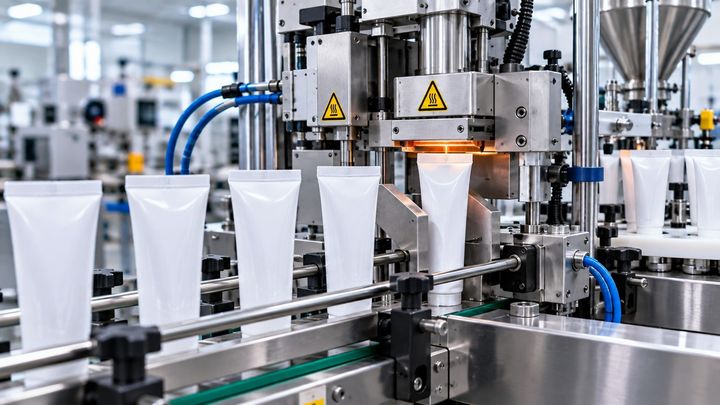
Tube Sealing Machines Guide With Packaging Technology and Production Insights
Tube sealing machines are packaging systems designed to close and secure the open ends of tubes used for products such as creams, gels, pastes, adhesives, food products, cosmetics, and industrial compounds. A tube sealing machine can combine tube positioning, filling, end sealing, coding, trimming, and inspection within a controlled production process.
Modern tube sealing technology has developed from basic manual and mechanical equipment into automated systems that support consistent packaging, controlled production, and improved handling of different tube materials.
Context
What Tube Sealing Machines Do
A tube sealing machine closes the open end of a filled tube so that its contents remain contained during handling, storage, and transportation. Depending on the machine design, sealing may involve heat, ultrasonic energy, mechanical folding, crimping, or other controlled methods.
Tube packaging generally begins with an empty tube being positioned in a holder or conveyor system. The tube can then move through filling, sealing, coding, trimming, and inspection stages. Some machines perform only sealing, while integrated equipment can manage several stages within one production line.
Development of Tube Sealing Technology
Earlier tube packaging processes often depended heavily on manual positioning and mechanical operations. As production requirements increased, manufacturers developed semi-automatic and automatic tube sealing machines capable of handling larger production volumes with less manual intervention.
The development of plastic and laminated tubes also influenced machine design. Different materials respond differently to heat, pressure, ultrasonic energy, and mechanical forming. As a result, tube sealing equipment is commonly configured according to tube material, diameter, product characteristics, sealing method, and required production conditions.
Common Tube Materials
Tube sealing machines can work with several packaging materials, although the appropriate sealing method depends on the tube construction.
Common materials include:
- Plastic tubes made from materials such as polyethylene or polypropylene
- Aluminum tubes used for products requiring metal packaging
- Laminated tubes combining several material layers
- Composite tubes designed for particular barrier and packaging requirements
Each material has different thermal, mechanical, and forming characteristics, so machine settings must correspond with the tube specification.
Importance
Why Tube Sealing Matters
A properly sealed tube helps maintain product containment and reduces the possibility of leakage caused by an inadequately formed closure. Consistent sealing is particularly important when tubes are handled repeatedly during packaging, transportation, storage, and consumer use.
Packaging consistency also affects the appearance and identification of packaged products. Controlled sealing can help maintain similar seal dimensions and positioning across production batches.
Industries Using Tube Sealing Machines
Tube sealing technology is used across several industries because tubes provide a convenient format for liquid, semi-liquid, viscous, and paste-like products.
Examples include:
- Personal care and cosmetic packaging
- Food and condiment packaging
- Household product packaging
- Adhesive and chemical compound packaging
- Industrial paste and lubricant packaging
- Certain healthcare and pharmaceutical packaging applications
The equipment configuration varies according to the product, packaging material, hygiene requirements, and applicable regulations.
Production Challenges
Tube packaging can involve several practical challenges. Variations in tube dimensions, product viscosity, filling levels, sealing temperature, pressure, or positioning may affect the final package.
Common issues include:
- Incomplete or uneven seals
- Product contamination around the sealing area
- Tube deformation
- Incorrect sealing temperature
- Misaligned coding or marking
- Excess material around the sealed end
- Inconsistent trimming
- Incorrect tube positioning
Modern equipment addresses these challenges through sensors, programmable controls, mechanical guides, temperature monitoring, and inspection systems.
Tube Sealing Machine Types
Different machine configurations are used according to production requirements and packaging materials.
| Machine Type | Typical Sealing Method | Common Application |
|---|---|---|
| Manual Tube Sealer | Mechanical or heated sealing | Small-scale packaging |
| Semi-Automatic Tube Sealer | Controlled heat or mechanical process | Moderate production |
| Automatic Tube Sealing Machine | Heat, ultrasonic, or mechanical sealing | Continuous production |
| Ultrasonic Tube Sealer | Ultrasonic energy | Plastic and laminated tubes |
| Hot Air Tube Sealer | Controlled hot air | Thermoplastic tubes |
| Aluminum Tube Sealer | Folding and crimping | Aluminum tube packaging |
The table provides a general classification. Actual equipment capabilities vary between machine designs and configurations.
Recent Updates
Automation and Digital Controls
Recent tube sealing equipment has increasingly incorporated programmable control systems, touchscreen interfaces, electronic sensors, and automated adjustment features. These technologies allow operators to monitor important machine parameters and make controlled changes during production.
Digital controls can also record selected operating information, helping production teams identify process variations and maintain repeatable settings.
Improved Inspection Systems
Machine vision and sensor-based inspection have become more relevant to automated packaging. Inspection systems can examine tube position, seal formation, coding, cap placement, and visible packaging defects.
Inspection does not replace proper machine setup, material testing, or routine quality checks. Instead, it provides another layer of process monitoring.
Flexible Packaging Formats
Packaging producers increasingly work with different tube sizes, materials, shapes, and closure formats. Tube sealing machines are therefore being developed with adjustable tooling and changeover arrangements that allow equipment to accommodate multiple packaging specifications.
Energy and Material Efficiency
Current equipment development also focuses on reducing unnecessary energy consumption and packaging waste. Controlled heating systems, improved sealing elements, optimized pneumatic systems, and more precise material handling can contribute to efficient machine operation.
Material efficiency also depends on the tube design, filling accuracy, trimming process, and production settings rather than the sealing machine alone.
Integration With Production Lines
Tube sealing equipment can be connected with upstream filling equipment and downstream systems such as coding, cartoning, labeling, weighing, and inspection units. Communication between machine controls can support coordinated production processes and provide production data for monitoring.
Laws or Policies
Packaging Requirements
Tube sealing machines are influenced by packaging, product safety, labeling, environmental, and workplace requirements applicable in the country where the equipment and packaged products are used.
Rules can vary according to the product category. Packaging for food, cosmetics, chemicals, and regulated healthcare products may have different requirements for materials, labeling, contamination control, traceability, and packaging integrity.
Product Contact Materials
When tubes are used for products that come into direct contact with packaging materials, applicable rules may specify requirements for material composition and suitability. Manufacturers and packaging operators generally need to verify that packaging materials are appropriate for their intended application.
Machine Safety
Industrial equipment is also subject to workplace machinery safety requirements in many jurisdictions. These requirements can cover guarding, emergency stops, electrical safety, moving components, operator access, and maintenance procedures.
Environmental Considerations
Packaging policies increasingly address material use, recyclability, waste management, and packaging design. Requirements differ between jurisdictions, and compliance depends on the materials and intended market.
Operators should consult the applicable national and regional authorities for current requirements because packaging and machinery rules can change over time.
Tools and Resources
Machine Specification Tools
Technical specification sheets are useful for comparing tube diameter ranges, sealing methods, production speeds, power requirements, dimensions, and compatible materials. These documents help establish whether a particular machine configuration corresponds with a planned packaging format.
Production Calculators
Production planning may use calculations for:
- Tubes processed per minute
- Production hours
- Expected output
- Material consumption
- Changeover time
- Equipment utilization
- Reject percentages
A simple production calculation can estimate theoretical output by multiplying machine cycles per minute by operating minutes. Actual output may be lower because of setup, cleaning, inspection, material changes, and interruptions.
Packaging Testing Equipment
Quality teams may use seal-strength testers, leak-testing equipment, dimensional measurement tools, temperature measurement devices, and visual inspection systems. These tools can help evaluate whether sealing parameters are producing consistent packaging.
Digital Documentation
Machine manuals, maintenance schedules, standard operating procedures, packaging specifications, inspection checklists, and production records are useful resources for controlled operation. Digital production-management platforms may also help organize equipment information and process records.
Training Resources
Technical training materials can help operators understand machine controls, sealing principles, material compatibility, cleaning procedures, inspection requirements, and basic troubleshooting. Training should correspond with the specific equipment and workplace procedures being used.
FAQs
What is a tube sealing machine?
A tube sealing machine is equipment used to close the open end of a filled or unfilled tube. Depending on its design, it can use heat, ultrasonic energy, mechanical folding, or crimping to create the closure.
How does an automatic tube sealing machine work?
An automatic tube sealing machine generally positions tubes, performs the required sealing process, and may also complete coding, trimming, and inspection. Sensors and programmable controls can coordinate these operations.
What materials can tube sealing machines handle?
Tube sealing machines may handle plastic, laminated, aluminum, and composite tubes. The appropriate machine and sealing method depend on the tube construction and the characteristics of the packaging material.
What is an ultrasonic tube sealing machine?
An ultrasonic tube sealing machine uses high-frequency mechanical vibrations to generate localized energy at the sealing area. This method is commonly associated with thermoplastic and laminated tube structures.
What factors affect tube sealing quality?
Tube material, sealing temperature, pressure, sealing time, ultrasonic settings, tube dimensions, product contamination, alignment, and equipment condition can all influence sealing quality.
Conclusion
Tube sealing machines are important components of tube-based packaging processes used across multiple industries. Their development has introduced greater automation, digital controls, inspection technologies, flexible formats, and improved process monitoring. Machine selection and operation depend on tube material, product characteristics, packaging dimensions, production requirements, and applicable regulations. Understanding these factors provides a foundation for evaluating tube sealing technology and its role in modern packaging operations.