Smart Water Distribution Tips: Monitoring Methods, Flow Management, Sensors and System Design
Smart water distribution refers to the use of meters, sensors, digital monitoring, automation, and structured system design to understand how water moves from a source to storage facilities and then through distribution networks. Traditional water networks rely heavily on physical pipelines, pumps, valves, tanks, and manual readings. Smart approaches add digital measurement so operators can observe flow, pressure, water levels, and selected quality indicators more consistently.
The concept has developed alongside urban growth, expanding piped-water networks, digital communication, and the need to manage limited water resources. A modern network may contain several connected stages, including water treatment, pumping, storage, transmission, district distribution, and household connections. Each stage can generate information that helps explain how the system is performing.
Smart water distribution does not necessarily mean that every component must be automated. A practical system can combine conventional infrastructure with selected sensors and digital tools. The purpose is to create useful information about water movement and system conditions while keeping the design understandable and manageable.
How a Distribution Network Works
A typical network begins with a water source such as a reservoir, river, groundwater system, or another approved source. Water may then pass through treatment facilities before entering storage tanks and distribution pipelines.
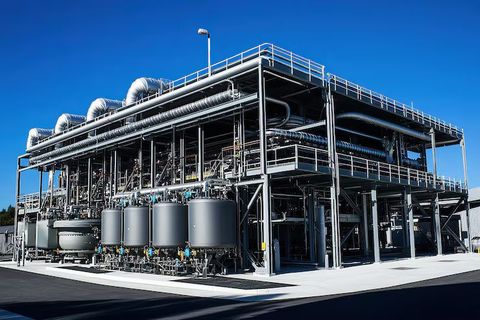
From there, pumps and valves help control movement through different parts of the network. Flow meters can measure the quantity moving through a pipe, while pressure sensors can show whether water is reaching different areas within an expected pressure range.
From Manual Monitoring to Digital Monitoring
Manual readings can still be useful, particularly for smaller systems. However, digital monitoring allows measurements to be collected more frequently and viewed from a central location.
A smart water distribution arrangement may combine flow meters, pressure sensors, tank-level sensors, water-quality instruments, communication equipment, and software dashboards. The exact combination depends on the size, purpose, and physical layout of the network.
Importance
Water distribution affects households, schools, hospitals, commercial buildings, farms, and industrial facilities. When a network has uneven pressure, hidden leakage, inaccurate measurements, or poorly coordinated pumping, some areas may receive insufficient water while other areas experience unnecessary flow.
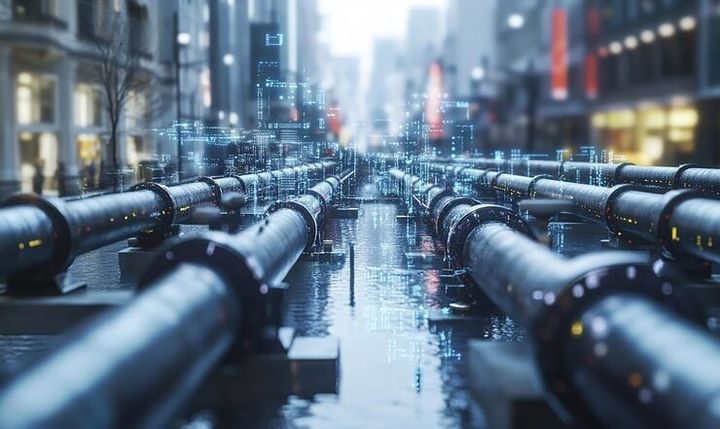
Smart monitoring can help identify these conditions by comparing measurements from different parts of the network. For example, if a major pipeline shows a particular flow level while downstream measurements indicate a substantial difference, the data can be examined for possible leakage, measurement errors, unauthorized use, or other system conditions.
Managing Flow and Pressure
Flow management involves controlling how much water moves through different sections of a network. Pressure management focuses on maintaining suitable pressure while avoiding unnecessary fluctuations.
Important measurements can include:
- Flow rate through major pipelines
- Pressure at selected network points
- Water level in storage tanks
- Pump operating status
- Valve position
- Daily or hourly water consumption
- Selected water-quality indicators
These measurements become more useful when viewed together rather than individually. A sudden pressure change combined with an unusual flow pattern may provide more information than either measurement alone.
Understanding Water Loss
Water can be lost through pipeline leaks, damaged fittings, overflowing tanks, inaccurate meters, and other conditions. Some losses are visible, while others may remain hidden underground.
District Metering Areas, commonly called DMAs, can divide a larger network into measurable zones. Water entering and leaving each zone can then be compared. This approach can help identify sections where further inspection or measurement may be appropriate.
Data Table for Common Monitoring Points
| Monitoring point | Typical measurement | Main purpose |
|---|---|---|
| Source | Volume or flow | Track available water |
| Pump station | Flow and pressure | Understand pumping conditions |
| Storage tank | Water level | Monitor storage status |
| Main pipeline | Flow and pressure | Observe transmission |
| Distribution zone | Flow and pressure | Compare local conditions |
| Household connection | Consumption | Understand usage patterns |
| Water-quality point | Selected quality parameters | Monitor water characteristics |
Smart water distribution can therefore support better visibility across a network. It does not replace physical inspections or technical assessment, but it can provide additional information for understanding changing conditions.
Recent Updates
From 2024 through 2026, water management in India has continued moving toward digital monitoring, metering, sensor-based measurement, and integrated data systems. Government programmes and municipal projects have included technologies such as SCADA, smart metering, GIS mapping, instrumentation, and digital dashboards.
AMRUT 2.0 project records show water-distribution projects incorporating SCADA, metering arrangements, distribution improvements, and related digital infrastructure in several urban areas. Current project records also show examples involving 24-hour water supply systems, instrumentation, and PLC-SCADA components.
Rural water management has also continued to emphasize measurement and monitoring. Jal Jeevan Mission materials describe sensor-based monitoring for water quantity, water levels, pumping conditions, and selected quality parameters, together with information systems and dashboards.
Another development is the continued refinement of national programme guidance. Jal Jeevan Mission published its Operational Guidelines 2.0 in 2026, while guidance related to rural water management continues to address monitoring, infrastructure, and community-level management.
Sensors and Connected Systems
Sensors are becoming an increasingly important part of water monitoring. Depending on the application, systems may measure flow, pressure, tank levels, conductivity, pH, turbidity, or other parameters.
Internet-connected devices can transmit measurements to a central platform. This creates the possibility of viewing network conditions without collecting every reading manually. However, reliable communication, calibration, power availability, data security, and appropriate sensor placement remain important parts of system design.
GIS and Digital Mapping
Geographic Information System, or GIS, technology can connect water-network information with physical locations. A digital map may show pipelines, valves, tanks, pumping stations, meters, and monitoring points.
When combined with measurement data, GIS can help users understand where particular readings originate. It can also support asset records and planning for network changes.
Laws or Policies
Water management in India involves national programmes as well as state and local authorities. The precise rules applicable to a particular water network can therefore depend on whether it is a rural scheme, municipal network, industrial installation, building-level system, or another type of infrastructure.
The Jal Jeevan Mission provides a national framework for rural drinking-water infrastructure, including household tap connections, source sustainability, water-quality monitoring, and system monitoring. Its published materials also describe the use of information systems, sensors, and dashboards for tracking water supply conditions.
For urban areas, AMRUT 2.0 supports water-supply improvements and related infrastructure. Approved project records demonstrate that municipalities are incorporating distribution networks, metering, SCADA, and instrumentation into some projects.
Water-quality requirements can involve applicable Indian Standards and local regulatory requirements. The Bureau of Indian Standards provides a searchable standards platform where users can examine relevant standards, amendments, testing information, and related documents.
Because requirements can differ according to location and application, a specific water project should be evaluated against the rules applicable to that project rather than relying on a general description.
Tools and Resources
Several types of tools can help readers understand smart water distribution and system monitoring.
Flow and Pressure Calculators
Online hydraulic calculators can help explain relationships between pipe diameter, flow rate, velocity, pressure, and related parameters. These tools are useful for learning and preliminary calculations, although detailed network design requires appropriate engineering methods.
Water-Monitoring Dashboards
Digital dashboards can combine information from meters and sensors. A dashboard may display current readings, historical trends, alarms, pump status, and water-level information.
GIS Platforms
GIS platforms can organize infrastructure information geographically. They can be useful for viewing pipeline routes, monitoring points, storage facilities, and network zones.
Government Resources
The Jal Jeevan Mission website provides guidelines, manuals, monitoring information, and documents concerning rural drinking-water systems. Its published material includes guidance on water-quality monitoring, measurement, and digital monitoring approaches.
The Ministry of Housing and Urban Affairs' AMRUT 2.0 platform provides information about approved urban water-supply projects and related infrastructure.
The Bureau of Indian Standards' Know Your Standard platform can be used to locate applicable Indian Standards by keyword or standard number.
FAQs
What is smart water distribution?
Smart water distribution combines conventional water infrastructure with meters, sensors, communication systems, and digital monitoring. It helps track conditions such as flow, pressure, water levels, and selected quality parameters.
How do sensors help with flow management?
Sensors can continuously or periodically measure conditions such as flow, pressure, and tank levels. These readings can help identify changes in water movement and provide information for operational decisions.
What is a smart water distribution system design?
A smart water distribution system design considers pipelines, pumps, tanks, valves, meters, sensors, communication equipment, and data platforms as connected parts of one network. The design also considers the physical layout and monitoring requirements.
How can smart water distribution help identify leakage?
Flow measurements from different network zones can be compared to identify unusual differences. District Metering Areas and pressure monitoring can provide additional information for investigating possible water losses.
Does India use sensors for water monitoring?
Yes. Indian water-management programmes include sensor-based measurement and digital monitoring approaches. Jal Jeevan Mission materials describe sensors, data systems, dashboards, and SCADA-related approaches for monitoring water-supply conditions.
Conclusion
Smart water distribution combines physical water infrastructure with measurement, sensors, digital communication, and data analysis. Flow monitoring, pressure measurement, tank-level tracking, and water-quality observation can provide a clearer picture of network conditions. In India, national programmes and urban projects are increasingly incorporating digital monitoring, metering, SCADA, GIS, and related technologies. Effective system design depends on the characteristics of the water network, monitoring requirements, applicable standards, and local conditions.