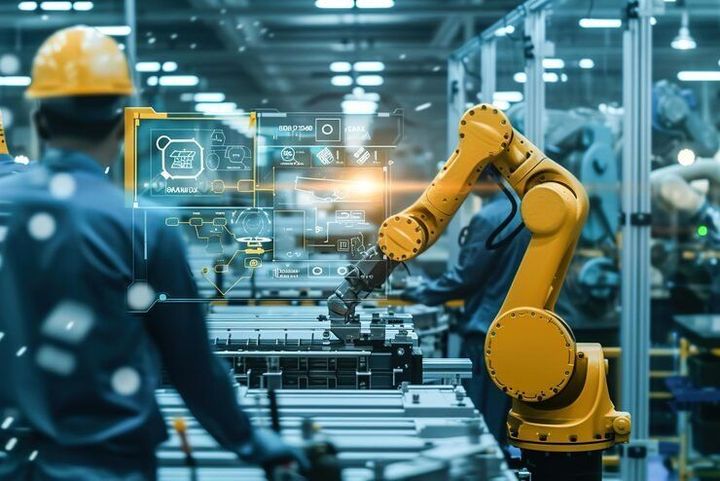
Smart Manufacturing Tools Guide: Technologies, Functions, Uses, Benefits and Selection Factors
Smart manufacturing refers to the use of connected machines, software, sensors, automation, data analysis, and digital systems to manage and understand manufacturing activities. It is closely associated with Industry 4.0, a term used to describe the integration of digital technologies with production environments.
Traditional factories often depend on separate machines, manual records, fixed production schedules, and periodic inspections. Smart manufacturing tools connect different parts of a production environment so that information can move between machines, operators, software platforms, and management systems.
The development of these technologies comes from advances in industrial automation, computing, networking, artificial intelligence, robotics, and sensor technology. The Industrial Internet of Things (IIoT), for example, allows machines and equipment to collect and exchange operational information.
Smart manufacturing does not refer to one specific machine or software application. It is a broad approach that can include Manufacturing Execution Systems (MES), Enterprise Resource Planning (ERP) systems, digital twins, machine vision, industrial robots, predictive maintenance tools, cloud platforms, edge computing, and industrial data analytics.
Main technologies used
Different technologies perform different functions within a smart manufacturing environment:
- Industrial IoT sensors collect information such as temperature, vibration, pressure, speed, and machine status.
- Manufacturing Execution Systems track production activities, work orders, materials, quality information, and equipment status.
- Digital twins create digital representations of physical machines, production lines, or processes for monitoring and analysis.
- Robotics and collaborative robots perform repetitive or precisely controlled physical activities.
- Machine vision systems use cameras and software to inspect products and identify visible characteristics.
- Predictive maintenance tools analyze equipment information to identify patterns that may indicate developing problems.
- Artificial intelligence and machine learning can analyze large datasets and support forecasting, anomaly detection, and process analysis.
Importance
Smart manufacturing tools matter because modern production environments generate large amounts of information. Without suitable systems, this information may remain separated across machines, spreadsheets, control systems, and different departments.
Connected tools can help organize operational information and make it easier to understand production conditions. For example, a sensor can record machine vibration while an analytics system examines changes in the readings. A manufacturing system can then connect that information with production records.
These technologies also address practical manufacturing challenges such as unplanned equipment interruptions, inconsistent inspection processes, disconnected data, material tracking difficulties, and limited visibility into production activities.
Who uses smart manufacturing tools?
Smart manufacturing can be relevant to many types of organizations, including automotive manufacturers, electronics producers, food-processing facilities, chemical plants, pharmaceutical manufacturers, metalworking facilities, packaging plants, and other industrial operations.
The level of technology can vary considerably. A small production facility may use sensors and a basic monitoring platform, while a large plant may connect robotics, MES, ERP, digital twins, machine vision, cloud systems, and industrial networks.
Functions and uses
The function of a smart manufacturing tool depends on its design and position within the production system. Common applications include:
- Production monitoring for tracking equipment and production conditions.
- Quality inspection for identifying visible defects or variations.
- Equipment monitoring for observing temperature, vibration, pressure, or operating conditions.
- Maintenance analysis for identifying patterns associated with equipment problems.
- Production planning for coordinating schedules, materials, machines, and workloads.
- Inventory tracking for monitoring materials and components as they move through production.
- Energy monitoring for examining electricity or other resource usage.
- Process simulation for studying possible changes before applying them to physical production equipment.
Recent Updates
From 2024 through 2026, smart manufacturing developments have increasingly focused on combining automation with artificial intelligence, digital twins, connected equipment, and cybersecurity. The trend is not limited to replacing manual activities; it also involves connecting information from production equipment with software systems used for analysis and planning.
Cybersecurity has received particular attention as factories become more connected. NIST has continued developing manufacturing-focused cybersecurity guidance, including work around responding to and recovering from cyber events affecting operational technology.
Another development is the continued movement toward standardized industrial communication. OPC UA is designed to support information exchange between industrial sensors, control systems, MES, ERP systems, and other connected environments. Its specifications also address interoperability and secure communication.
Artificial intelligence is also becoming more closely connected with manufacturing data. Possible applications include anomaly detection, quality analysis, production forecasting, machine monitoring, and analysis of complex process information. However, the usefulness of AI depends on data quality, system integration, appropriate controls, and the specific manufacturing process.
Smart manufacturing in India
India has continued developing Industry 4.0 infrastructure through government-supported initiatives. The Ministry of Heavy Industries' SAMARTH Udyog Bharat 4.0 initiative includes centers associated with C4i4 Pune, IIT Delhi, IISc Bengaluru, and CMTI Bengaluru, along with additional Industry 4.0 centers intended to expand access to technologies and knowledge.
Government information also describes activities involving digital twins, robotics, IIoT, machine systems, training, demonstration facilities, and smart manufacturing research. These initiatives indicate continued attention to digital manufacturing capabilities within India's industrial ecosystem.
Laws or Policies
Smart manufacturing in India is influenced by several areas of regulation and policy rather than one single smart manufacturing law. Industrial organizations may need to consider information technology, cybersecurity, personal data, workplace safety, environmental requirements, machinery rules, and sector-specific regulations depending on their operations.
The Digital Personal Data Protection Act, 2023 is relevant when a manufacturing organization processes digital personal data. This may include information connected with employees, visitors, customers, contractors, or other identifiable individuals. The Digital Personal Data Protection Rules, 2025 were notified by the Ministry of Electronics and Information Technology, with different provisions taking effect according to the specified implementation timeline.
Cybersecurity is another consideration for connected industrial environments. Organizations using networked operational technology can refer to recognized cybersecurity frameworks and technical guidance when developing security controls. NIST's manufacturing cybersecurity work discusses areas such as authentication, access control, monitoring, industrial control systems, and risk management.
India's broader manufacturing policy framework also supports industrial development and technology adoption. The National Manufacturing Policy provides a policy framework for strengthening the manufacturing sector, while SAMARTH Udyog Bharat 4.0 focuses specifically on Industry 4.0 awareness, demonstration, development, and adoption.
Regulatory requirements can differ according to the industry, equipment, location, data handled, and production process. Organizations therefore need to consider the rules that specifically apply to their activities.
Tools and Resources
Several resources can help readers understand smart manufacturing technologies and their practical functions.
| Tool or resource | Main purpose | Typical manufacturing use |
|---|---|---|
| IIoT sensors | Collect machine information | Equipment and process monitoring |
| MES | Manage production information | Production tracking and quality records |
| ERP | Coordinate business and production information | Materials, planning, and resource management |
| Digital twin | Represent a physical system digitally | Simulation and process analysis |
| Machine vision | Analyze camera images | Inspection and measurement |
| Predictive analytics | Examine equipment and process data | Maintenance and anomaly detection |
| OPC UA | Support industrial information exchange | Connecting industrial systems |
| Cybersecurity frameworks | Structure security activities | Protecting connected equipment and networks |
The Ministry of Heavy Industries provides information about SAMARTH Udyog Bharat 4.0 and related Industry 4.0 centers in India. These resources can help readers understand demonstrations, research activities, training initiatives, and smart manufacturing technologies.
NIST also provides manufacturing cybersecurity resources covering industrial control systems, operational technology, risk management, and security practices. Although NIST is a U.S. organization, its technical publications can provide general educational background for readers studying smart manufacturing cybersecurity.
When examining a smart manufacturing platform, useful selection factors include compatibility, data integration, cybersecurity controls, scalability, ease of use, reporting capabilities, equipment connectivity, data ownership, and the technical requirements of the production environment.
Selection factors
The appropriate technology depends on the specific manufacturing problem. Important factors include:
- Purpose: Identify the operational problem the technology is intended to address.
- Compatibility: Check whether it can communicate with existing machines and software.
- Data requirements: Understand what information the system collects and how it is stored.
- Security: Consider authentication, access controls, network protection, monitoring, and system updates.
- Scalability: Determine whether the technology can accommodate additional machines or production areas.
- Usability: Consider whether operators and managers can understand the information provided.
- Integration: Examine connections with MES, ERP, SCADA, PLCs, sensors, and other existing systems.
- Maintenance: Consider software updates, equipment support, system monitoring, and internal technical requirements.
FAQs
What are smart manufacturing tools?
Smart manufacturing tools are digital, automated, connected, or analytical technologies used to monitor, control, analyze, or coordinate manufacturing activities. Examples include IIoT sensors, MES, digital twins, robotics, machine vision, and predictive analytics.
How does Industry 4.0 relate to smart manufacturing tools?
Industry 4.0 describes a broader approach to connected and digital industrial production. Smart manufacturing tools are technologies that can support this approach by connecting machines, people, data, software, and production processes.
What functions do smart manufacturing technologies perform?
Smart manufacturing technologies can collect production data, monitor equipment, inspect products, analyze machine conditions, coordinate production information, simulate processes, and support maintenance planning.
Are smart manufacturing tools useful for small manufacturers?
They can be relevant to small manufacturers as well as larger industrial organizations. The technology used can range from individual sensors and monitoring systems to integrated production platforms. The appropriate scale depends on the production environment and the operational requirement.
Why is cybersecurity important in smart manufacturing?
Connected machines and industrial networks can create additional digital access points that need protection. Cybersecurity measures can help address risks involving unauthorized access, malicious software, data manipulation, and disruption of industrial systems.
Conclusion
Smart manufacturing combines connected equipment, software, automation, data analysis, and digital technologies within manufacturing environments. Tools such as IIoT sensors, MES, digital twins, robotics, machine vision, predictive analytics, and industrial communication standards serve different functions. Recent developments have placed greater attention on artificial intelligence, interoperability, digital twins, and cybersecurity. In India, government initiatives such as SAMARTH Udyog Bharat 4.0 are contributing to the development and demonstration of Industry 4.0 capabilities.