Smart Farming Guide: Methods, Sensors, Automation, Data Analysis and Crop Management
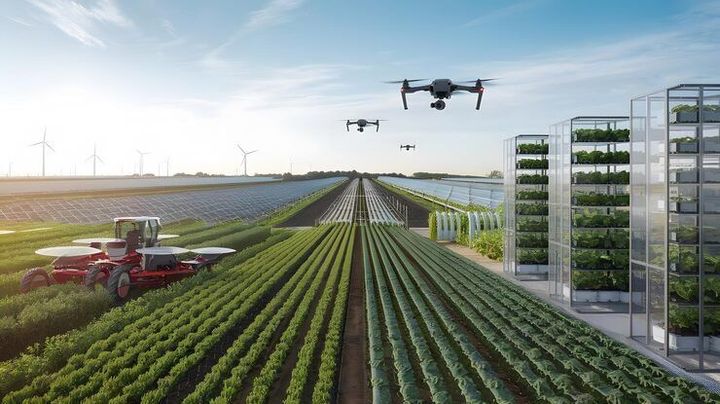
A Smart Farming Guide explains how modern agriculture uses sensors, automation, digital tools, and data analysis to manage crops and farm resources. Smart farming, also called digital agriculture or precision agriculture in certain contexts, combines traditional farming knowledge with technologies that help farmers monitor soil, weather, irrigation, crop growth, and machinery.
Context
A Smart Farming Guide explains how modern agriculture uses sensors, automation, digital tools, and data analysis to manage crops and farm resources. Smart farming, also called digital agriculture or precision agriculture in certain contexts, combines traditional farming knowledge with technologies that help farmers monitor soil, weather, irrigation, crop growth, and machinery. These methods have developed alongside advances in computing, satellite navigation, wireless communication, and agricultural equipment.
Traditional farming often relies on field observations, seasonal experience, and established cultivation practices. These remain important, but conditions can vary across a single field because of differences in soil, moisture, sunlight, and plant health. Smart farming technologies help collect more detailed information about these variations, allowing farmers to make decisions based on measured conditions rather than relying only on general observations.
Understanding Smart Farming Methods
Smart farming uses connected equipment and information systems to support daily agricultural activities. Depending on the farm's size, crops, and available infrastructure, a system may include soil sensors, weather stations, automated irrigation, satellite imagery, drones, and farm management software.
Common smart farming methods include:
Precision agriculture: Adjusting farming activities according to differences in soil, crop conditions, and field locations.
Smart irrigation: Using moisture readings and weather information to guide watering schedules.
Crop monitoring: Tracking plant growth, pests, diseases, and signs of environmental stress.
Farm automation: Using machines or control systems to perform selected activities with limited manual intervention.
Data-driven crop management: Combining farm records and sensor measurements to support decisions about planting, irrigation, and nutrient application.
These methods can be introduced individually or combined into a connected farming system. The appropriate arrangement depends on crop type, field conditions, technical skills, connectivity, and the resources available to the farmer.
Sensors and Automation in Agriculture
Agricultural sensors measure conditions that influence plant growth and farm operations. Soil moisture sensors estimate the amount of water present in the soil, while temperature sensors track changes in the surrounding environment. Other devices measure rainfall, humidity, soil temperature, electrical conductivity, or selected nutrient-related properties.
Automation systems use measurements or programmed instructions to control particular tasks. For example, an irrigation controller may activate a pump or valve when soil moisture falls below a selected threshold. Automated machinery can also assist with planting, spraying, harvesting, and greenhouse climate control, although the degree of automation differs considerably between systems.
Importance
Smart farming matters because agriculture must manage changing weather, limited water supplies, soil variability, pest pressure, and the need for reliable crop production. Farmers may work across large fields where inspecting every plant or measuring every section manually is difficult. Digital monitoring can help identify variations that would otherwise remain unnoticed until visible crop damage occurs.
These technologies affect farmers, agricultural workers, farm managers, irrigation planners, researchers, and food supply networks. Smaller farms may use a single soil moisture sensor or a basic weather station, while larger operations may combine satellite data, automated machinery, and centralized farm management systems.
Improving Water and Nutrient Management
Water management is an important application of smart farming. Irrigation decisions based on soil moisture, rainfall, crop growth stage, and weather forecasts can help farmers understand when and where watering may be necessary. However, sensor readings must be interpreted according to soil type, root depth, crop requirements, and local conditions.
Nutrient management can also use field measurements, soil tests, crop observations, and application records. These sources help farmers assess whether different parts of a field may require different treatment. Sensor data alone cannot always identify a nutrient deficiency accurately, so laboratory testing and agricultural expertise may still be needed.
Managing Crop Health and Farm Operations
Crop monitoring tools can help identify unusual plant growth, water stress, pest damage, and disease symptoms. Cameras, drones, and satellite images may reveal patterns across fields, allowing farmers to inspect areas that need closer attention. Image analysis can support detection, but lighting conditions, plant varieties, growth stages, and overlapping symptoms can affect accuracy.
Smart farming can also improve operational planning by recording planting dates, irrigation activity, machinery use, and crop observations. These records help farmers compare conditions across seasons and understand how management decisions relate to crop performance. Results depend on data quality, weather, farming practices, and other variables.
Recent Updates
During 2024–2026, smart farming has continued to develop through improvements in artificial intelligence, remote sensing, agricultural robotics, connected sensors, and digital farm management. These developments are part of a broader movement toward collecting field information more frequently and using it to support practical decisions. Availability and adoption vary by region, farm size, connectivity, and technical requirements.
Artificial Intelligence and Crop Monitoring
Artificial intelligence can analyze agricultural images, sensor readings, weather information, and historical records. Some systems identify patterns associated with crop stress, estimate growth stages, or help organize irrigation and field inspection schedules. The reliability of these outputs depends on the data used, local growing conditions, and the system's ability to account for differences between crops and regions.
Satellite imagery and drone-based observation are also used to examine crop development over time. Vegetation indices, such as the Normalized Difference Vegetation Index (NDVI), use reflected light measurements to estimate aspects of vegetation condition. An index is an indicator rather than a direct diagnosis, so additional field inspection may be needed to understand the cause of unusual readings.
Connected Sensors and Agricultural Robotics
Wireless sensor networks can transmit measurements from fields, greenhouses, and irrigation systems to dashboards or mobile applications. Some systems use cellular networks, Wi-Fi, or low-power communication technologies, while remote farms may need specialized connectivity arrangements.
Agricultural robots are being developed and deployed for selected tasks such as weeding, crop inspection, harvesting, and material movement. Adoption depends on terrain, crop layout, machine capability, maintenance requirements, and operating conditions. Automated equipment generally requires supervision, safe operating procedures, and arrangements for handling faults or communication failures.
Laws or Policies
Smart farming in India operates within a combination of agricultural policies, environmental rules, data-related requirements, and state-level regulations. The relevant provisions depend on the technology, crop, location, and activity being carried out. There is no single law covering every aspect of digital agriculture.
Agricultural Programs and Digital Initiatives
India's Digital Agriculture Mission provides a policy framework for developing digital infrastructure and data-driven agricultural capabilities. Related initiatives include the AgriStack framework, intended to support digital agricultural information systems, and the use of technology to improve agricultural planning and access to relevant information. Implementation and availability of particular facilities can vary by state and program.
The Pradhan Mantri Krishi Sinchayee Yojana (PMKSY) focuses on improving irrigation access and water-use efficiency through its applicable components. Depending on eligibility and current program rules, farmers may encounter relevant support arrangements for irrigation development or water-management improvements. Program benefits, application procedures, and coverage should be checked through official government sources.
Drone, Environmental, and Data Requirements
Agricultural drone operations in India are subject to applicable aviation rules and Directorate General of Civil Aviation requirements. Depending on the aircraft and operation, requirements may concern registration, pilot qualifications, operating areas, and permissions. Farmers and operators should verify the current rules before conducting aerial spraying or crop monitoring.
Water extraction, pesticide application, fertilizer handling, and wastewater disposal may also be governed by relevant central, state, or local requirements. Digital farm platforms can contain personal or operational information, making appropriate data handling important. The laws applicable to a particular dataset depend on its contents, how it is processed, and the circumstances of its use.
Tools and Resources
Smart farming tools range from simple measurement devices to integrated software platforms. Their usefulness depends on whether the information they collect addresses a real farming need and can be interpreted correctly.
Sensors and Monitoring Equipment
Common equipment includes soil moisture probes, temperature and humidity sensors, rain gauges, weather stations, flow meters, and irrigation controllers. Soil testing kits and laboratory analysis can provide additional information about pH, nutrients, salinity, and other soil properties.
The following table compares several technologies used in smart farming.
| Technology | Main function | Example application |
|---|---|---|
| Soil moisture sensor | Measures soil water conditions | Irrigation planning |
| Weather station | Records local weather measurements | Crop and watering schedules |
| Satellite imagery | Observes field conditions over time | Crop growth monitoring |
| Agricultural drone | Captures aerial field images | Crop inspection and mapping |
| Automated irrigation controller | Operates valves or pumps | Scheduled or sensor-based watering |
| Farm management software | Organizes farm records | Activity tracking and planning |
| GPS and GNSS equipment | Supports location-based guidance | Field mapping and machinery guidance |
Sensor placement, calibration, maintenance, and correct interpretation affect the usefulness of measurements. Equipment should be selected according to field size, crop requirements, power availability, and connectivity.
Digital Platforms and Agricultural Information
Farmers can consult the Indian Council of Agricultural Research (ICAR), state agricultural universities, and Krishi Vigyan Kendras for crop guidance and region-specific agricultural information. The India Meteorological Department provides weather information that can support agricultural planning.
Digital farm management platforms can help record planting activities, fertilizer applications, irrigation schedules, input use, and harvest information. Mapping tools and spreadsheets can also organize field boundaries, sensor readings, and crop observations. Records are more useful when measurements include dates, locations, units, and notes about unusual conditions.
Planning a Smart Farming System
A practical implementation often begins by identifying a specific challenge, such as irregular irrigation, uneven crop growth, or difficulty tracking field conditions. The farmer can then select a suitable measurement or monitoring method and compare its readings with direct field observations.
Before expanding a system, relevant considerations include installation requirements, data accuracy, maintenance, connectivity, training, equipment compatibility, and the process for responding to faults. A small pilot area can help determine whether the selected technology fits local farming conditions before it is used across a larger operation.
FAQs
What is smart farming and how does it work?
Smart farming uses sensors, connected equipment, automation, and data analysis to monitor agricultural conditions and support crop management decisions. It can help track soil moisture, weather, plant health, irrigation, and farm activities.
Which sensors are used in smart farming?
Common devices include soil moisture sensors, temperature and humidity sensors, rain gauges, weather stations, flow meters, and selected soil nutrient sensors. The choice depends on the crop, soil conditions, and the information required.
How does automation help with smart farming?
Automation can control irrigation, greenhouse conditions, and selected machinery operations using programmed instructions or sensor readings. Systems require appropriate setup, maintenance, and monitoring to operate safely and reliably.
How is data analysis used in smart farming?
Data analysis combines sensor measurements, weather records, field observations, and historical information to identify patterns. Farmers can use these findings to assess crop conditions and plan irrigation or other agricultural activities.
What government initiatives support smart farming in India?
Relevant initiatives include the Digital Agriculture Mission, AgriStack-related development, and applicable components of the Pradhan Mantri Krishi Sinchayee Yojana. Eligibility, implementation, and available support depend on current program rules and location.
Conclusion
Smart farming combines agricultural knowledge with sensors, automation, digital monitoring, and data analysis to support crop and resource management. Its applications include irrigation planning, crop health observation, machinery guidance, and farm recordkeeping. Successful implementation depends on accurate measurements, suitable equipment, reliable data, and awareness of applicable agricultural rules. The technologies and methods used vary according to local conditions, crop requirements, and farm resources.