Road Construction Machinery Guide: Equipment Types, Working Principles, Uses and Features
Road construction machinery includes the equipment used to prepare ground, move materials, build pavement layers, compact surfaces, and complete finishing work. Common examples include excavators, motor graders, asphalt plants, pavers, rollers, milling machines, loaders, and concrete equipment. These machines help organize different stages of road development, from initial earthwork to final surface preparation.
What Is Road Construction Machinery?
Road construction machinery refers to mechanical equipment designed for activities involved in building, repairing, and maintaining roads. Different machines perform different tasks because road projects involve several layers and materials, including soil, aggregates, asphalt mixtures, concrete, and drainage components.
The development of road construction machinery is closely connected with the growth of modern transportation networks. Earlier road work depended heavily on manual labor and basic tools. Mechanized equipment gradually became more common as roads became longer, wider, and more complex.
Today, machinery is selected according to the type of road, material, ground conditions, project design, and stage of construction. A highway project, for example, may use earthmoving equipment during site preparation and specialized paving and compaction equipment during pavement construction.
Main Stages of Road Construction
Road construction generally involves several connected stages:
- Site preparation involves clearing, excavation, grading, and preparation of the road foundation.
- Earthwork involves moving, spreading, and shaping soil or other materials.
- Base preparation involves placing and compacting aggregates or other foundation materials.
- Asphalt or concrete paving involves placing the selected pavement material.
- Compaction involves applying controlled pressure or vibration to achieve the required density.
- Surface finishing involves shaping, smoothing, marking, drainage work, and related activities.
Each stage requires equipment with specific operating characteristics.
Importance
Why Road Construction Machinery Matters
Roads connect residential areas, industrial zones, agricultural regions, ports, airports, and commercial centers. Their construction and maintenance affect transportation, logistics, public movement, and access to essential facilities.
Road construction machinery also helps manage repetitive physical tasks such as excavation, material movement, grading, paving, and compaction. Using equipment suited to each activity can make construction processes more consistent and organized.
The machinery also affects how different pavement layers are formed. For example, a grader shapes the road surface, while a roller applies pressure to compact the prepared layer. An asphalt paver distributes and initially shapes asphalt before rollers complete the compaction process.
Common Equipment and Their Functions
| Equipment | Main Function | Typical Application |
|---|---|---|
| Excavator | Digging and material handling | Earthwork and drainage |
| Wheel Loader | Loading and moving materials | Aggregate handling |
| Motor Grader | Shaping and leveling | Road foundation preparation |
| Asphalt Paver | Placing asphalt mixture | Pavement construction |
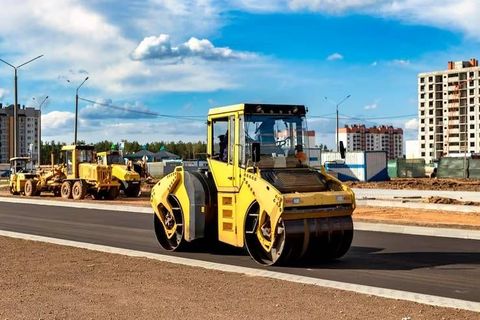
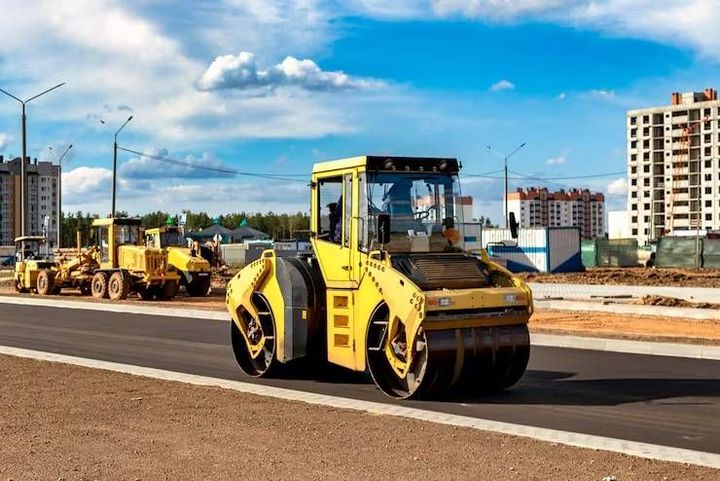
| Road Roller | Compacting materials | Base and asphalt layers |
| Cold Milling Machine | Removing pavement layers | Road rehabilitation |
| Asphalt Plant | Producing asphalt mixture | Asphalt pavement projects |
| Concrete Paver | Placing concrete pavement | Concrete roads |
| Water Sprinkler | Moisture control and dust reduction | Earthwork and compaction |
| Crushing Plant | Processing aggregates | Base and pavement materials |
Working Principles
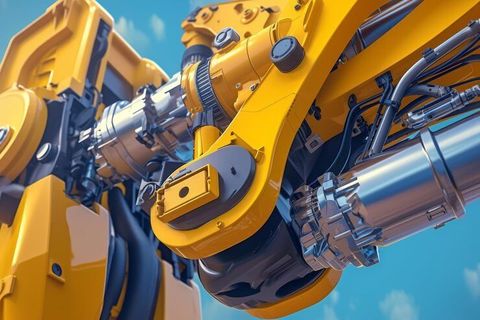
Different road construction machines use different mechanical principles. Excavators use hydraulic systems to move booms, arms, and buckets. Motor graders use a long adjustable blade to shape material across a road surface.
Road rollers use static weight, vibration, or both to compact soil, aggregate, and asphalt. Asphalt pavers receive a prepared mixture, distribute it across the required width, and use a screed to establish an initial surface profile.
Cold milling machines use rotating cutting drums to remove a controlled layer of existing pavement. The removed material can then be transported for processing or further use, depending on the project specifications.
Recent Updates
Emission and Equipment Changes
Road construction machinery has increasingly been affected by developments in emissions control, equipment safety, and alternative power technologies. In India, the Ministry of Road Transport and Highways has continued updating requirements related to construction equipment vehicles.
A 2024 government report recorded the postponement of certain Construction Equipment Vehicle Stage V emission requirements and related safety standards from April 2024 to January 2025.
In 2025, MoRTH also issued provisions concerning type approval and conformity of production for certain construction equipment vehicles using alternate or cleaner fuels.
These developments reflect a broader shift toward equipment with improved emissions control, greater attention to operator safety, and alternative power options.
Digital and Automated Equipment
Modern road projects are also incorporating electronic controls, machine guidance, sensors, positioning systems, and digital monitoring. These technologies can help operators understand machine position, grade levels, material quantities, and operating conditions.
Automation does not eliminate the need for trained operators or project supervision. Instead, electronic systems can support measurement, control, and documentation during specific construction activities.
Materials and Pavement Techniques
Recent road construction practices have also included greater attention to recycled and alternative materials. MoRTH guidance has addressed areas such as inert materials and the use of waste plastic in bituminous concrete for certain national highway construction and maintenance applications.
The selection of materials and machinery depends on pavement specifications, local conditions, traffic requirements, and project documents.
Laws or Policies
Construction Equipment Rules in India
In India, some construction equipment vehicles fall under provisions of the Central Motor Vehicles Rules, while equipment designed exclusively for off-road applications may fall outside particular road-use provisions. MoRTH regulations also address areas such as braking, steering, emissions, and noise for applicable construction equipment vehicles.
For equipment manufactured from applicable implementation periods, construction equipment vehicle requirements can include specified braking and steering performance. Noise requirements have also been established for relevant equipment, with Phase-II limits applying from April 2024 under the cited notification.
Highway Specifications
Road projects under national highway programs are also influenced by technical specifications issued or referenced by MoRTH. These specifications cover areas such as pavement materials, bitumen grades, construction procedures, quality control, and maintenance activities.
MoRTH published guidance in 2024 concerning recommended bitumen types and grades for different climate and traffic-loading conditions on national highways and expressways.
Project-specific requirements can vary, so machinery and operating procedures are generally selected according to the applicable technical documents, contract specifications, and regulatory requirements.
Tools and Resources
Government and Technical Resources
Readers researching road construction machinery can consult several established technical resources:
- Ministry of Road Transport and Highways for highway notifications, technical circulars, specifications, and construction guidance.
- Central Motor Vehicles Rules for applicable requirements concerning construction equipment vehicles.
- Bureau of Indian Standards for relevant Indian Standards covering equipment, materials, testing, and construction practices.
- Indian Roads Congress publications for technical guidance concerning road and pavement engineering.
- National Highways Authority of India resources for information related to national highway projects and implementation practices.
Equipment Documentation
Machine manuals, technical specifications, operator instructions, maintenance records, and inspection documents can also help explain how particular equipment works. Important specifications may include operating weight, engine or motor characteristics, working width, drum dimensions, bucket capacity, paving width, grade-control features, and operating range.
For general readers, manufacturer documentation can be useful for understanding the intended operating conditions and limitations of a particular machine.
FAQs
What is road construction machinery?
Road construction machinery is equipment used for activities such as excavation, grading, material handling, paving, compaction, milling, and surface preparation. Different machines are designed for different stages of road construction.
What are the main types of road construction equipment?
Common types include excavators, wheel loaders, motor graders, asphalt pavers, road rollers, milling machines, crushing plants, asphalt plants, concrete pavers, and material transport equipment.
How does road construction machinery work?
The working principle depends on the machine. Hydraulic systems are common in excavators and loaders, cutting drums are used by milling machines, adjustable blades shape material in graders, and rollers use weight, vibration, or both to compact pavement layers.
What equipment is used for asphalt road construction?
Asphalt road construction commonly involves an asphalt plant for mixture production, transport equipment for material movement, an asphalt paver for placement, and rollers for compaction. Additional equipment may be used for site preparation and surface treatment.
Are construction equipment vehicles regulated in India?
Yes. Applicable construction equipment vehicles are subject to provisions covering areas such as emissions, braking, steering, noise, and other vehicle requirements under relevant Indian rules and notifications. The exact requirements depend on the equipment category and its permitted road use.
Conclusion
Road construction machinery covers a wide range of equipment used for excavation, grading, material handling, paving, compaction, and pavement rehabilitation. Each machine has a specific working principle and role within the construction process. In India, equipment requirements are influenced by technical specifications, vehicle regulations, emissions standards, safety provisions, and project requirements. Understanding these equipment types and their functions provides a clearer view of how modern roads are constructed and maintained.