Pharmaceutical Production Machines: A Guide to Components, Functions and Operation
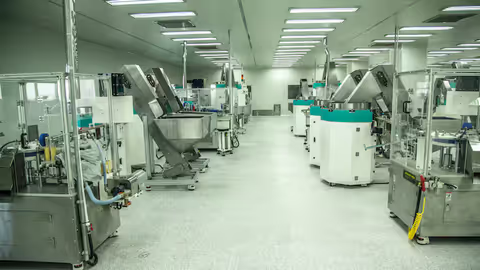
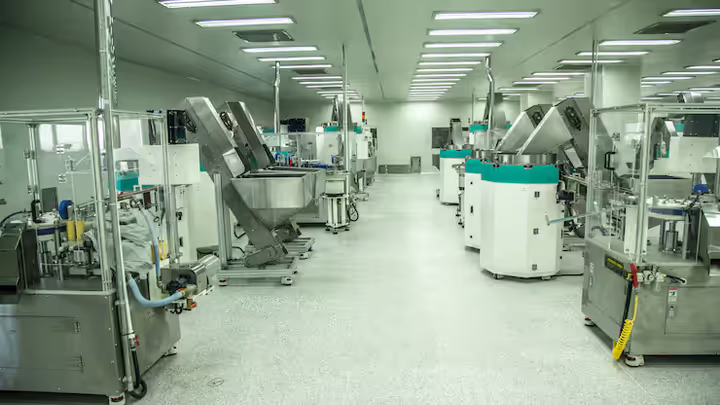
Pharmaceutical Production Machines are specialized equipment used to manufacture, process, fill, package, inspect, and label pharmaceutical products. They are used in controlled production environments where consistent processing, accurate measurement, cleanliness, and documentation are important.
Pharmaceutical manufacturing involves multiple stages. Depending on the product, these can include material dispensing, mixing, granulation, drying, tablet compression, capsule filling, coating, liquid preparation, sterile filling, inspection, packaging, and labeling.
Different machines are designed for different dosage forms and production stages. Equipment used for tablets can be very different from equipment used for injectable products, creams, inhalation products, or liquid medicines.
Main Categories of Equipment
Pharmaceutical Production Machines can be grouped according to their function. Common categories include:
- Material handling equipment: Used for weighing, transferring, and dispensing ingredients.
- Mixing equipment: Combines powders, granules, liquids, or other materials according to defined processes.
- Granulation equipment: Converts powders into granules with controlled physical characteristics.
- Tablet compression machines: Compress prepared granules or powders into tablets.
- Capsule filling machines: Place measured materials into suitable capsule shells.
- Coating machines: Apply controlled layers to tablets or other solid dosage forms.
- Liquid processing equipment: Used for mixing, heating, filtering, or holding liquid formulations.
- Filling machines: Transfer measured quantities into containers.
- Packaging machines: Prepare products for bottles, blister packs, cartons, or other packaging formats.
- Inspection equipment: Examines products or packaging for defined quality characteristics.
The equipment selected depends on the formulation, dosage form, production scale, facility design, and applicable regulatory requirements.
From Manual Processes to Automated Systems
Pharmaceutical production has developed from highly manual operations toward equipment with increasing levels of automation. Modern production lines can use sensors, programmable controllers, electronic records, machine vision, automated material handling, and integrated process monitoring.
Automation does not remove the need for human oversight. Operators, engineers, quality personnel, and other qualified staff remain involved in equipment setup, process monitoring, maintenance, documentation, and investigation of deviations.
Importance
Supporting Consistent Manufacturing
Pharmaceutical products need to meet defined specifications for identity, strength, purity, quality, and other characteristics. Production equipment contributes to maintaining controlled processing conditions.
For example, a tablet compression machine must control factors such as compression force, tablet weight, and production settings. A liquid filling machine needs to maintain accurate filling parameters within the limits established for the process.
Maintaining Controlled Conditions
Many pharmaceutical processes require controlled temperature, humidity, pressure, airflow, or cleanliness. Equipment therefore operates as part of a wider manufacturing environment rather than as an isolated machine.
Facilities may use cleanrooms, environmental monitoring systems, purified water systems, air-handling equipment, and controlled material flows alongside production machines.
Supporting Different Dosage Forms
The physical characteristics of a pharmaceutical product influence the equipment required. Tablets, capsules, liquids, creams, ointments, powders, and sterile preparations each involve different processing requirements.
| Dosage Form | Common Equipment | Key Process Consideration |
|---|---|---|
| Tablets | Granulator, dryer, tablet press, coater | Weight and physical properties |
| Capsules | Mixer, capsule filler | Fill accuracy and material flow |
| Liquids | Mixing tank, filter, filling machine | Mixing and volume control |
| Creams | Homogenizer, mixing vessel, filler | Uniformity and viscosity |
| Powders | Blender, mill, filling system | Particle characteristics |
| Sterile products | Sterile filling line, isolator | Contamination control |
The table provides general examples. Actual equipment configurations depend on formulation and manufacturing requirements.
Supporting Traceability
Pharmaceutical manufacturing generates extensive records. Equipment may record process parameters, batch information, alarms, cleaning activities, and operator actions.
Electronic systems can connect machine data with manufacturing records. Traceability allows production organizations to examine what occurred during a particular batch and investigate deviations when necessary.
Protecting Product Integrity
Equipment design can influence contamination control and material integrity. Surfaces that contact pharmaceutical materials may require suitable construction materials and cleaning procedures.
Equipment may also need to prevent cross-contamination between different products. Facility layout, equipment segregation, cleaning validation, and controlled material movement can all contribute to this objective.
Recent Updates
Greater Use of Automation
Pharmaceutical Production Machines are increasingly integrated with automated control systems. Sensors can measure variables such as temperature, pressure, flow, weight, speed, and other process conditions.
Programmable logic controllers can use these signals to control defined machine functions. Human-machine interfaces allow authorized personnel to monitor operating conditions and enter approved parameters.
Digital Manufacturing Records
Digital production systems are becoming more common across pharmaceutical facilities. Electronic batch records can connect manufacturing instructions, equipment information, process data, and review activities within controlled systems.
Digital records can also support data review and traceability. Their implementation requires appropriate access controls, validation, data integrity measures, and documented procedures.
Machine Vision and Automated Inspection
Machine vision systems can inspect tablets, capsules, containers, labels, seals, and other manufactured items. Cameras and image-processing software can identify defined characteristics such as shape, presence, position, or visible defects.
Inspection systems can operate alongside production machines, allowing potentially unsuitable units to be identified according to established criteria.
Robotics and Automated Material Movement
Robotic systems and automated guided vehicles are being used in some pharmaceutical facilities for material movement, packaging, loading, and other controlled tasks.
Automation can reduce unnecessary manual handling and support defined material flows. The appropriate level of automation depends on facility design, process requirements, validation needs, and operational complexity.
Increased Attention to Data Integrity
As equipment becomes more connected, pharmaceutical manufacturers are placing greater attention on reliable and traceable data. Systems may need controlled user access, audit trails, time synchronization, backup procedures, and documented changes.
These measures are important because production decisions and quality assessments can depend on recorded information.
Energy and Resource Management
Manufacturing facilities are also examining energy use, water consumption, compressed air, heating, ventilation, and other utilities associated with production equipment.
Process optimization can involve monitoring utility consumption and identifying equipment conditions that affect energy or resource use. Any changes to a validated pharmaceutical process require appropriate assessment and documented control.
Laws or Policies
Indian Pharmaceutical Manufacturing Framework
In India, pharmaceutical manufacturing is regulated through a combination of national laws, rules, standards, and regulatory requirements. The Central Drugs Standard Control Organisation, state drug control authorities, and the Ministry of Health and Family Welfare have important roles in pharmaceutical regulation.
The Drugs and Cosmetics Act, 1940, and Drugs Rules, 1945 form part of India's regulatory framework. Requirements vary according to the product, manufacturing activity, facility, and applicable regulatory category.
Good Manufacturing Practices
Good Manufacturing Practices, commonly known as GMP, establish principles for controlled pharmaceutical production and quality assurance. In India, Schedule M of the Drugs Rules contains requirements concerning premises, equipment, sanitation, production controls, documentation, and related manufacturing practices.
Manufacturing equipment must be suitable for its intended use and maintained under controlled procedures. Equipment qualification and process validation may also be required depending on the application.
Equipment Qualification
Pharmaceutical equipment can undergo stages such as design qualification, installation qualification, operational qualification, and performance qualification. These activities help establish that equipment has been appropriately designed, installed, operated, and shown to perform according to defined requirements.
The exact qualification approach depends on the equipment and its intended use. Documentation is an important part of the qualification process.
Cleaning and Cross-Contamination Control
Equipment used for pharmaceutical production requires defined cleaning procedures. Cleaning processes may need validation or verification to demonstrate that residues are controlled within established limits.
Cross-contamination controls can include equipment design, dedicated equipment, cleaning procedures, facility segregation, air-handling arrangements, and material-flow controls.
Data and Electronic Records
Where electronic systems are used for production or quality records, manufacturers need controls that support data integrity and appropriate record retention. The applicable requirements can depend on the system and regulatory context.
International manufacturers may also need to consider requirements from authorities such as the US Food and Drug Administration or the European Medicines Agency when products are intended for those markets.
Tools and Resources
Equipment Monitoring Systems
Industrial sensors can monitor variables such as temperature, pressure, flow, speed, vibration, humidity, and weight. These measurements can be displayed through control systems and recorded where required.
Monitoring allows operators and engineers to compare actual conditions with established process parameters.
Calibration Equipment
Scales, pressure gauges, temperature sensors, flow meters, and other measurement devices may require calibration against appropriate reference standards.
Calibration records can document the instrument identification, calibration date, reference equipment, results, and next scheduled assessment.
Manufacturing Execution Systems
Manufacturing execution systems can connect production instructions, equipment information, material records, personnel activities, and batch documentation.
Integration can provide a structured digital record of manufacturing activities. System access and electronic records need appropriate controls when used in regulated production.
Maintenance Management Systems
Maintenance software can help track inspections, preventive maintenance, equipment breakdowns, component changes, and maintenance history.
A structured maintenance record can contain:
- Equipment identification
- Maintenance activity
- Date and time
- Technician or authorized personnel
- Parts replaced
- Findings
- Follow-up requirements
- Equipment release status
Regulatory Resources
Manufacturers can consult regulatory publications from CDSCO, the Ministry of Health and Family Welfare, the World Health Organization, and other recognized authorities. International operations may require additional guidance from the relevant national regulator.
Technical standards from organizations such as ISO and the International Society for Pharmaceutical Engineering can also provide useful background for equipment and facility planning.
FAQs
What are Pharmaceutical Production Machines used for?
Pharmaceutical Production Machines are used for activities such as material preparation, mixing, granulation, tablet compression, capsule filling, liquid processing, sterile filling, inspection, packaging, and labeling.
What types of Pharmaceutical Production Machines are used for tablets?
Tablet manufacturing can involve equipment such as blenders, granulators, dryers, mills, tablet compression machines, dedusting equipment, metal detectors, and coating systems. The exact sequence depends on the formulation and manufacturing process.
How are Pharmaceutical Production Machines regulated in India?
Pharmaceutical manufacturing equipment operates within India's wider pharmaceutical regulatory framework, including the Drugs and Cosmetics Act, Drugs Rules, GMP requirements, and applicable CDSCO and state regulatory provisions.
Why is equipment qualification important in pharmaceutical manufacturing?
Equipment qualification provides documented evidence that equipment has been appropriately designed, installed, operated, and assessed for its intended purpose. The required qualification activities depend on the equipment and process.
How is contamination controlled around pharmaceutical equipment?
Controls can include suitable equipment design, cleaning procedures, facility zoning, controlled airflow, material segregation, validated cleaning processes, and defined operating procedures. The controls depend on the product and manufacturing environment.
Conclusion
Pharmaceutical Production Machines support numerous stages of pharmaceutical manufacturing, from material preparation and formulation through filling, inspection, and packaging. Their design and operation are closely connected with process control, contamination prevention, equipment qualification, documentation, and data integrity. Recent developments include greater automation, digital manufacturing records, machine vision, robotics, and connected monitoring systems. In India, pharmaceutical equipment operates within a regulatory framework that includes GMP and requirements established under applicable drug laws and regulatory authorities.