Material Handling Equipment Guide: Functions, Designs, Uses, Safety and Maintenance Requirements
Material handling equipment refers to the machines, devices, and systems used to move, lift, store, protect, and control materials within factories, warehouses, construction sites, distribution centers, and other workplaces. These materials may include raw materials, finished products, machine components, packaged goods, and heavy industrial items. Material handling equipment ranges from simple hand trucks and pallet jacks to forklifts, conveyor belts, overhead cranes, and automated storage systems.
Context
Material handling equipment refers to the machines, devices, and systems used to move, lift, store, protect, and control materials within factories, warehouses, construction sites, distribution centers, and other workplaces. These materials may include raw materials, finished products, machine components, packaged goods, and heavy industrial items. Material handling equipment ranges from simple hand trucks and pallet jacks to forklifts, conveyor belts, overhead cranes, and automated storage systems.
The need for material handling developed as manufacturing and trade expanded. Workers initially relied heavily on manual lifting, carts, ropes, and basic mechanical devices to move goods between different locations. As production volumes increased, businesses introduced powered machinery and organized material flow systems to manage heavier loads and more complex operations.
Today, material handling systems combine mechanical equipment, electrical controls, sensors, and computer-based monitoring. Their main purpose is to support the movement of materials through different stages of production, storage, and distribution while helping workplaces manage space, workflow, and physical handling risks.
Main Functions of Material Handling Equipment
Material handling equipment performs several connected functions throughout industrial and commercial operations.
Transportation: Moves materials between workstations, storage areas, loading docks, and production lines.
Lifting and lowering: Raises or lowers loads that cannot be moved conveniently at ground level.
Storage: Organizes goods on shelves, racks, platforms, and automated storage systems.
Positioning: Places materials accurately for assembly, packaging, inspection, or further processing.
Unit load handling: Groups individual items into pallets, containers, or other manageable units.
Material protection: Helps reduce damage caused by unsuitable handling, movement, or storage.
These functions may be performed by separate machines or by an integrated system. The equipment selected depends on the material's weight, dimensions, shape, movement frequency, and operating environment.
Importance
Material handling equipment plays an important role in modern manufacturing, logistics, construction, retail distribution, and food processing. These industries depend on the movement of materials between receiving, storage, production, packaging, and dispatch areas. When material flow is poorly organized, operations may experience delays, damaged goods, crowded workspaces, and additional physical strain on workers.
Equipment can also help address workplace safety challenges. Manual lifting, repetitive carrying, pushing, and pulling may contribute to musculoskeletal injuries, particularly when loads are heavy, awkward, or handled frequently. Mechanical lifting devices and properly designed transport systems can reduce some of these demands, although incorrect operation introduces other risks.
Who Uses Material Handling Systems?
Different industries use different equipment according to their operating needs.
Warehouses and distribution centers: Use forklifts, pallet trucks, conveyors, shelving, and automated storage systems to organize inventory.
Manufacturing facilities: Use conveyors, hoists, industrial carts, and robotic handling systems to transfer components between production stages.
Construction sites: Use tower cranes, mobile cranes, material lifts, and telehandlers to move building materials.
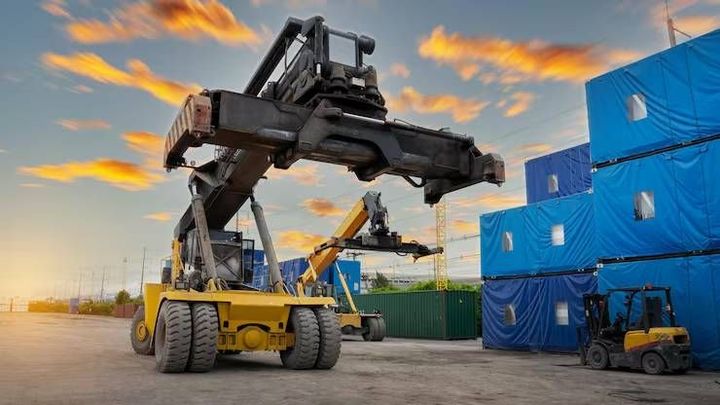
Ports and shipping terminals: Use container cranes, reach stackers, and specialized lifting equipment to handle cargo.
Retail and wholesale facilities: Use hand trucks, pallet jacks, and storage racks to move and organize packaged products.
Common Operational Challenges
Material handling operations require careful planning because different materials create different handling demands. Fragile goods may need protective containers, while bulky machinery components may require lifting attachments or specialized transport equipment.
Common challenges include limited storage space, uneven floors, narrow aisles, changing load sizes, equipment downtime, and congestion around loading areas. A suitable layout considers the entire movement path rather than the lifting machine alone. Clear routes, appropriate storage arrangements, and coordination between workers and machinery help maintain orderly operations.
Recent Updates
Material handling equipment is increasingly incorporating automation, connected sensors, electric power systems, and digital monitoring. These developments reflect the need to manage changing production requirements, warehouse activity, energy use, and workplace safety. Adoption varies according to facility size, infrastructure, operating conditions, and technical capabilities.
Automation and Robotics
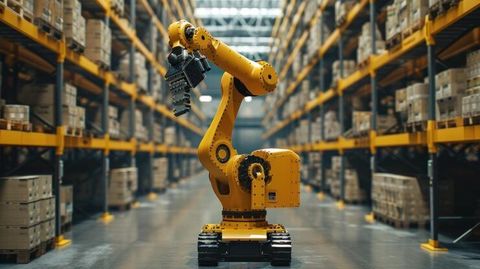
Automated guided vehicles (AGVs) and autonomous mobile robots (AMRs) are being used to transport materials through warehouses and manufacturing facilities. AGVs generally follow predefined routes or guidance systems, while AMRs can use sensors and onboard software to navigate around obstacles and adjust their paths.
Robotic arms and automated palletizing systems can also handle repetitive picking, stacking, and packaging activities. These systems require suitable floor layouts, reliable navigation, maintenance planning, and procedures for safe interaction between people and machines.
Electric Equipment and Energy Management
Electric forklifts and other battery-powered handling equipment are becoming more common in indoor facilities. Compared with combustion-powered equipment, electric models generally produce no exhaust emissions at the point of use and may operate with lower noise levels. Their overall environmental impact depends on electricity generation, battery production, charging practices, and equipment use.
Lithium-ion batteries are used in some modern industrial vehicles because of their charging characteristics and energy storage capacity. Battery selection requires consideration of charging infrastructure, operating temperatures, manufacturer instructions, and fire prevention procedures.
Sensors and Predictive Maintenance
Connected sensors can monitor factors such as temperature, vibration, operating hours, battery condition, and mechanical performance. Maintenance teams can use this information to identify unusual operating patterns and investigate potential faults before equipment becomes unavailable.
Digital inventory systems and warehouse management software also help coordinate storage locations, material movement, and equipment activity. These tools can improve visibility into operations, but their usefulness depends on accurate data, suitable integration, and regular system maintenance.
Laws or Policies
Material handling equipment is subject to workplace safety, machinery, electrical, and lifting regulations. The applicable requirements depend on the country, equipment category, workplace activity, and industry. In India, several laws, standards, and regulatory frameworks are relevant to industrial material handling.
Workplace Safety Requirements in India
The Occupational Safety, Health and Working Conditions Code, 2020, establishes a framework for occupational safety and health, subject to its commencement and applicable provisions. Relevant rules and requirements may also arise under applicable state regulations, factory-related provisions, and other legislation governing particular workplaces and activities.
Employers and facility operators need to consider safe equipment installation, appropriate operating procedures, worker training, inspections, and the prevention of foreseeable workplace hazards. The exact legal obligations depend on the applicable provisions and the nature of the establishment.
Machinery and Lifting Equipment Standards
The Bureau of Indian Standards (BIS) publishes standards covering different types of industrial machinery, lifting equipment, and workplace safety. Depending on the equipment, relevant standards may address design, testing, rated capacity, structural integrity, guarding, and operating conditions.
Important safety practices include:
Displaying and following the equipment's rated load capacity.
Inspecting lifting accessories, chains, slings, hooks, and brakes.
Preventing unauthorized operation of powered equipment.
Keeping pedestrians separated from moving vehicles where practical.
Using suitable protective equipment and following workplace procedures.
Maintaining inspection records and addressing identified defects.
International guidance from the International Labour Organization (ILO) and standards developed by the International Organization for Standardization (ISO) may also help explain established safety principles. However, international standards do not automatically replace applicable Indian legal requirements.
Tools and Resources
Material handling planning uses a combination of equipment specifications, workplace assessments, calculation tools, and maintenance records. These resources help facilities evaluate load requirements, select suitable equipment, organize storage, and monitor operating conditions.
Equipment Selection and Load Calculations
Before choosing material handling equipment, planners typically assess load weight, dimensions, travel distance, lifting height, movement frequency, floor conditions, and available space. These factors determine whether a hand-operated device, forklift, conveyor, hoist, crane, or automated system is appropriate.
Basic calculations can support initial planning. For example, a load of 500 kilograms moved 20 times represents 10,000 kilograms of cumulative load movement, although this figure alone does not determine the required machine capacity. Individual load limits, operating cycles, lifting height, and equipment-specific ratings must also be considered.
Useful Digital and Technical Resources
Bureau of Indian Standards (BIS): Provides information about Indian standards relevant to machinery and industrial safety.
Directorate General Factory Advice Service and Labour Institutes (DGFASLI): Provides occupational safety information and technical resources relevant to industrial workplaces in India.
International Labour Organization (ILO): Publishes guidance on occupational safety, manual handling, and workplace risk prevention.
International Organization for Standardization (ISO): Provides information about international standards for machinery, safety, and related technical subjects.
Warehouse management systems (WMS): Help track inventory locations, movement records, and warehouse activity.
Preventive maintenance checklists: Record inspection tasks, equipment condition, lubrication requirements, battery checks, and repair history.
Material Handling Equipment Comparison
The following table summarizes common equipment types and their typical applications.
Equipment | Main function | Common application |
|---|---|---|
Forklift | Lifting and transporting palletized loads | Warehouses and factories |
Pallet jack | Moving pallets over short distances | Storage and loading areas |
Conveyor system | Continuous or controlled material movement | Production and packaging lines |
Overhead crane | Lifting and positioning heavy loads | Industrial workshops |
Hoist | Raising and lowering suspended loads | Maintenance and assembly areas |
Automated mobile robot | Transporting materials along planned routes | Automated warehouses |
Industrial shelving and racks | Organizing stored materials | Distribution and inventory facilities |
Hand truck | Moving boxes and smaller loads | Retail and delivery operations |
Equipment suitability depends on the actual operating environment, load characteristics, and manufacturer specifications rather than equipment type alone.
FAQs
What are the main types of material handling equipment?
The main types include transport equipment, lifting equipment, storage systems, positioning devices, and automated handling systems. Examples include forklifts, pallet jacks, conveyors, cranes, hoists, industrial racks, AGVs, and AMRs.
How is material handling equipment used in warehouses?
Warehouses use material handling equipment to unload deliveries, move pallets, organize inventory, replenish storage locations, and prepare goods for dispatch. Forklifts and pallet jacks handle palletized loads, while conveyors and automated robots support movement between designated areas.
What safety precautions are important when operating material handling equipment?
Important precautions include checking equipment condition, observing rated load limits, securing loads, maintaining clear travel routes, and separating pedestrians from moving machinery. Operators should receive appropriate training and follow manufacturer instructions and workplace safety procedures.
How often should material handling equipment be maintained?
Maintenance frequency depends on the equipment type, operating intensity, environmental conditions, and manufacturer instructions. Routine inspections may occur before use or at scheduled intervals, while comprehensive maintenance follows the applicable maintenance plan and regulatory requirements.
How is automated material handling equipment different from manual equipment?
Manual equipment generally requires direct human effort to move or position materials. Automated equipment uses powered mechanisms, programmed controls, sensors, or navigation systems to perform some handling tasks. Automation may reduce repetitive manual work but requires appropriate safeguards, technical oversight, and maintenance.
Conclusion
Material handling equipment supports the movement, lifting, storage, and positioning of materials across warehouses, factories, construction sites, and distribution facilities. Its designs range from simple hand trucks to powered lifting machinery and automated transport systems. Equipment selection depends on load characteristics, operating conditions, space, and applicable safety requirements. Regular inspections, appropriate training, and planned maintenance are important parts of safe and organized material handling operations.