LSR Injection Molding: Complete Guide to Liquid Silicone Technology
Learn how LSR injection molding creates precision medical and consumer products. Discover material properties, equipment specifications, process advantages, and implementation best practices.
LSR injection molding represents a transformative manufacturing technology for producing complex silicone components with exceptional precision and consistency. Unlike traditional compression molding or manual mixing processes, LSR machines automatically dispense, mix, and inject liquid silicone rubber into heated molds at controlled pressures and temperatures. This process delivers superior dimensional accuracy, reduced material waste, faster cycle times, and the ability to create intricate geometries impossible with conventional methods. Industries ranging from medical device manufacturing to automotive sealing systems rely on LSR technology to meet stringent quality standards and production volume requirements.
Core Advantages and Practical Limitations of LSR Injection Molding
LSR injection molding delivers measurable performance benefits compared to alternative silicone processing methods. The automated dispensing and mixing system eliminates manual handling errors, reducing component defects by 40-60% in high-volume production. Material waste drops to 5-15% compared to 20-35% with compression molding, directly improving material cost efficiency. Cycle times typically range from 30 seconds to 3 minutes depending on component complexity and wall thickness, enabling production rates of 500-2,000 units per hour on modern equipment.
The process excels at producing components with tight tolerances (±0.1mm achievable), complex undercuts, thin walls (0.5mm minimum), and integrated features eliminating secondary assembly steps. LSR's inherent properties—biocompatibility, thermal stability from -60°C to +200°C, and chemical resistance—make it ideal for medical implants, pharmaceutical delivery systems, and automotive applications.
However, LSR injection molding requires significant capital investment ($150,000-$500,000+ for production equipment depending on specifications), specialized operator training, and rigorous process control. Mold design complexity increases compared to thermoplastic injection molding, with specific requirements for venting, gate placement, and thermal management. LSR materials cost 2-4 times more per kilogram than standard thermoplastics, making the process economically viable primarily for medium-to-high volume production (10,000+ units annually) or specialized applications where material properties justify the cost premium.
How LSR Injection Molding Machines Operate: Technical Process Flow
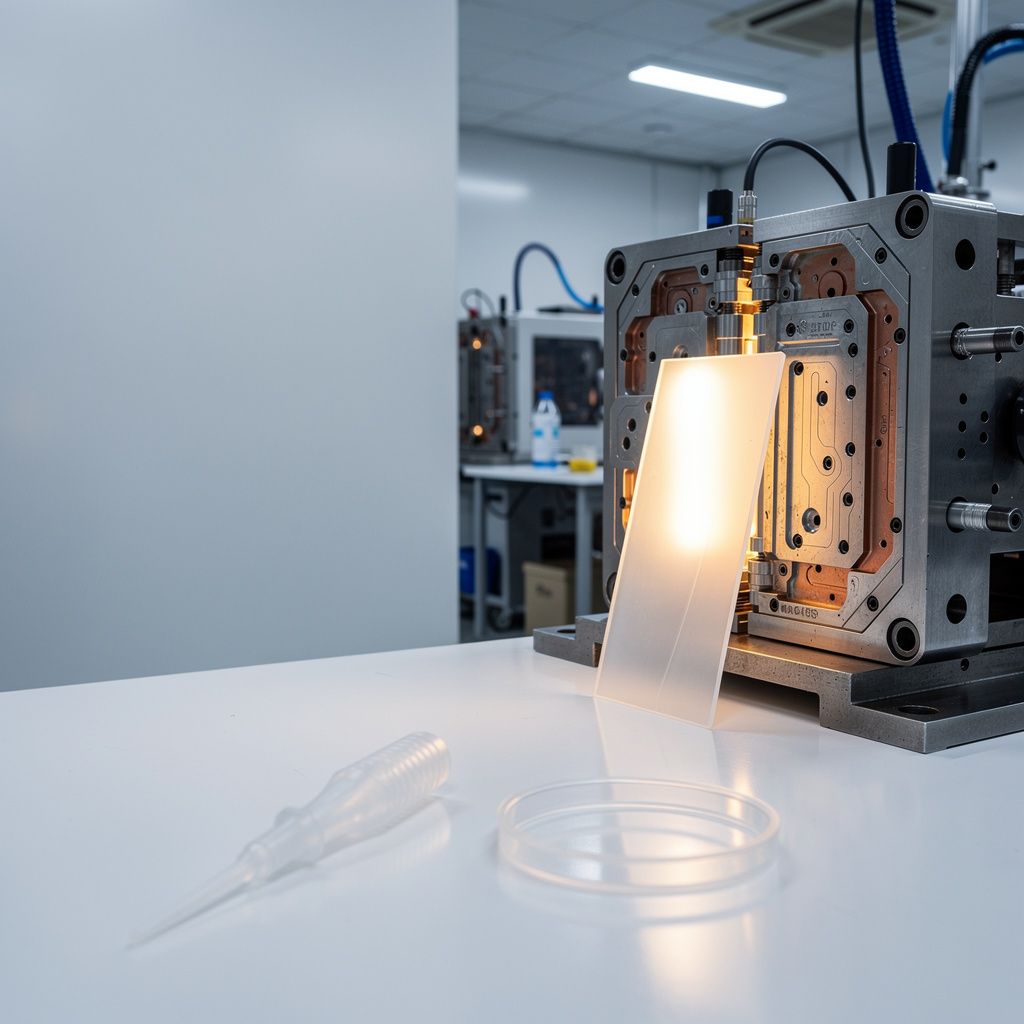
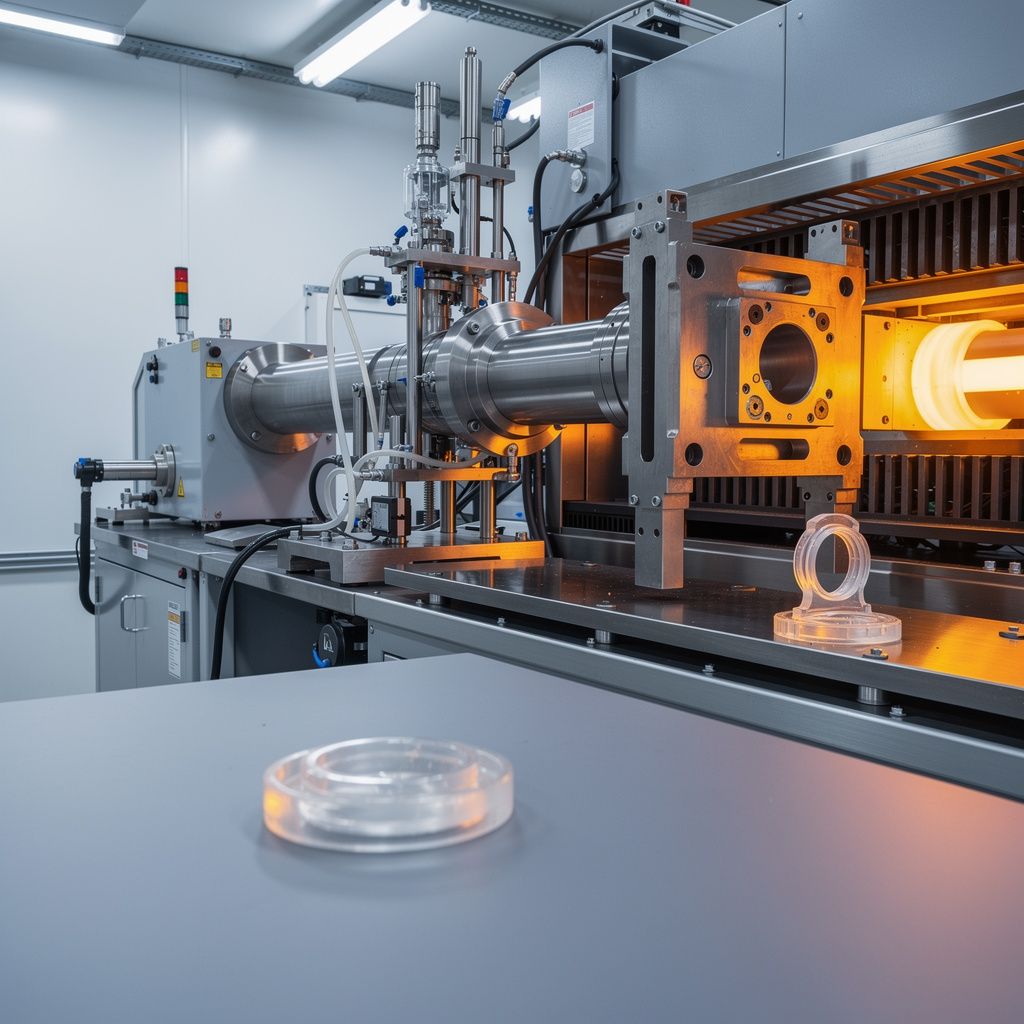
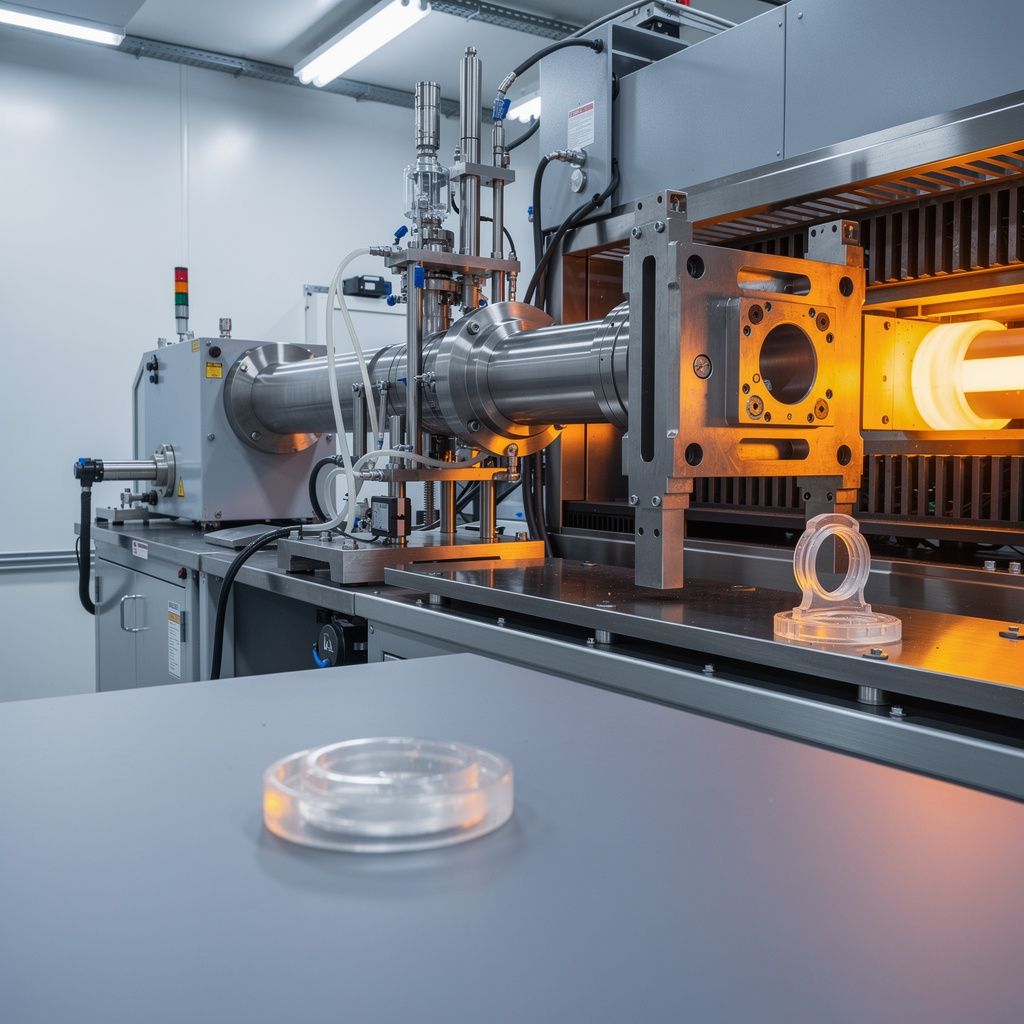
LSR injection molding equipment consists of three integrated systems: the material dispensing unit, the mixing and injection mechanism, and the mold clamping system. The process begins with two-part liquid silicone (Part A and Part B) stored in separate heated reservoirs maintained at 20-30°C to prevent premature crosslinking. Precision pumps dispense exact volumetric ratios (typically 1:1) of each component into a dynamic mixing chamber.
The mixing chamber uses rotating screws or static mixers to blend the two components thoroughly within 2-5 seconds, initiating the crosslinking reaction. Immediately after mixing, the homogeneous material enters the injection unit where a heated plunger forces the reactive mixture into the mold cavity at pressures ranging from 40-100 MPa. Mold temperatures are maintained between 140-180°C, accelerating the vulcanization process.
The curing phase occurs within the closed mold, typically lasting 30-90 seconds depending on component thickness and material formulation. Modern machines feature programmable logic controllers (PLCs) managing temperature profiles, injection speed, hold pressure, and cooling sequences with microsecond precision. Automated ejection systems remove cured components, and the mold resets for the next cycle. Advanced systems integrate in-mold assembly capabilities, allowing simultaneous molding of multiple components or bonding of inserts during the curing phase.
LSR Machine Types and Technical Specifications
LSR injection molding equipment varies significantly based on production volume, component complexity, and specialized requirements. Understanding machine categories helps manufacturers select appropriate equipment for their applications.
| Machine Type | Clamp Force (tons) | Injection Volume | Cycle Time Range | Ideal Applications |
|---|---|---|---|---|
| Compact/Benchtop | 10-30 | 1-10cc | 45-120 seconds | Small components, prototyping, low-volume specialty parts |
| Mid-Range Production | 50-150 | 10-50cc | 30-90 seconds | Medical devices, consumer electronics, moderate volumes |
| High-Volume Industrial | 200-500+ | 50-200cc | 20-60 seconds | Automotive seals, large medical components, 50,000+ units/year |
| Multi-Station Carousel | Variable | Scalable | Reduced per-station | Ultra-high volume production, 100,000+ units/year |
Compact benchtop machines suit prototyping and small-batch production, offering injection volumes of 1-10cc with clamp forces of 10-30 tons. These systems cost $80,000-$200,000 and require minimal floor space but limit component size and production speed.
Mid-range production machines (50-150 ton clamp force) represent the industry standard for medical device and specialty component manufacturing. These systems handle injection volumes of 10-50cc, achieve cycle times of 30-90 seconds, and cost $200,000-$400,000. They balance capital investment with production flexibility and component capability.
High-volume industrial machines deliver clamp forces exceeding 200 tons with injection capacities of 50-200cc, enabling production of larger components or multi-cavity molds at cycle times as low as 20-60 seconds. Capital investment ranges from $350,000-$600,000+, justified by production volumes exceeding 50,000 units annually.
Multi-station carousel systems rotate multiple molds through heating, injection, and cooling phases sequentially, effectively reducing per-cavity cycle times. These systems maximize throughput for ultra-high volume production but require significant floor space and capital investment ($500,000+).
Critical Machine Features and Specifications to Evaluate
Selecting appropriate LSR equipment requires evaluating specific technical capabilities beyond basic clamp force and injection volume. Temperature control precision directly impacts product quality; systems maintaining ±2°C accuracy across mold, material reservoir, and mixing chamber produce significantly more consistent components than systems with ±5°C tolerances. Dual-zone or multi-zone temperature control allows independent management of mold and material temperatures, optimizing for different silicone formulations.
Injection speed and pressure control capabilities determine the machine's ability to fill complex mold geometries without generating excessive shear heat that degrades material properties. Programmable multi-stage injection profiles enable slow initial filling (preventing air entrapment), followed by faster secondary filling and hold pressure phases. Machines offering injection speeds of 50-500mm/s with proportional valve control provide superior flexibility compared to fixed-speed systems.
Material dispensing accuracy directly correlates with component consistency and waste reduction. Systems maintaining ±1% volumetric accuracy between Part A and Part B prevent stoichiometric imbalances that cause incomplete curing, surface defects, or mechanical property variations. Advanced systems feature closed-loop feedback sensors monitoring actual dispensed volumes versus programmed targets.
Mold clamping force distribution and parallelism prevent flash (excess material at parting lines), dimensional variation, and mold damage. Machines with hydraulic or electric clamping systems offering ±0.5mm parallelism maintain consistent cavity pressures across multi-cavity molds. Automated mold position sensing and adjustment systems detect mold wear and maintain optimal clamping parameters throughout production runs.
Ejection force, speed, and stroke length must match component geometry and material properties. Silicone's elasticity requires controlled ejection preventing permanent deformation; systems offering variable ejection speed (10-200mm/s) and programmable stroke sequences accommodate diverse component designs.
Current Technological Innovations in LSR Injection Molding
The LSR equipment industry continues advancing with innovations addressing production efficiency, quality consistency, and manufacturing flexibility. Multi-shot molding technology enables sequential injection of different LSR formulations within single molds, creating components with distinct material properties in specific zones. Medical device manufacturers use this capability to combine rigid silicone cores with soft elastomeric outer surfaces in single molding cycles, eliminating secondary bonding operations.
In-mold assembly systems integrate metal inserts, electronic components, or pre-molded substrates during the LSR curing phase. Automated insert placement mechanisms position components with ±0.5mm accuracy, and the LSR curing process simultaneously bonds inserts without requiring adhesives or mechanical fasteners. This technology reduces assembly labor by 60-80% and improves product reliability by eliminating potential failure points at insert interfaces.
Real-time process monitoring using embedded sensors tracks cavity pressure, mold temperature, and material viscosity throughout injection and curing phases. Machine learning algorithms analyze this data to predict component quality, detect process drift, and automatically adjust parameters maintaining optimal conditions. Systems with predictive quality monitoring reduce defect rates by 30-50% compared to traditional statistical process control methods.
Hybrid electric-hydraulic clamping systems reduce energy consumption by 40-60% compared to fully hydraulic machines while maintaining precise pressure control. Electric servo motors power clamping functions, eliminating continuous pump operation required by traditional hydraulic systems. These machines reduce operating costs and heat generation in production facilities.
Advanced material handling systems integrate automated degassing chambers, material preheating optimization, and closed-loop material circulation. These innovations extend material shelf life, reduce volatile organic compound (VOC) emissions, and improve workplace safety by minimizing operator exposure to uncrosslinked silicone components.
Industry Applications and Real-World Implementation Examples
Medical device manufacturers represent the largest LSR injection molding market segment, utilizing the technology for implantable components, diagnostic equipment, and pharmaceutical delivery systems. Silicone's biocompatibility (meeting ISO 10993 standards), chemical inertness, and sterilization compatibility make LSR-molded components ideal for long-term implants, catheters, and surgical instruments. Production volumes for medical applications range from 5,000 to 500,000 units annually depending on device type and market penetration.
Automotive manufacturers employ LSR injection molding for sealing systems, vibration dampeners, and thermal management components. Engine seals, transmission gaskets, and fuel system components benefit from silicone's temperature stability and chemical resistance. Production volumes in automotive applications typically exceed 100,000 units annually, justifying investment in high-speed production equipment.
Consumer electronics manufacturers use LSR molding for protective gaskets, button components, and waterproofing seals in smartphones, wearables, and smart home devices. The technology's ability to produce thin-walled components with complex geometries enables integrated sealing and structural features in compact device designs.
Food and beverage equipment manufacturers specify LSR-molded components for gaskets, valve seats, and processing equipment seals. Silicone's FDA compliance for food contact applications and resistance to thermal cycling make it ideal for equipment operating across wide temperature ranges.
Key Selection and Decision-Making Framework for LSR Equipment
Evaluating LSR injection molding equipment requires systematic assessment of production requirements, component specifications, quality standards, and economic factors. Begin by defining production volume requirements (annual unit targets), component dimensions (largest component cross-section), complexity level (cavity count, undercuts, thin walls), and material specifications (LSR formulation, color, hardness). These parameters directly determine appropriate machine size, clamp force, and injection capacity.
Next, assess quality and regulatory requirements. Medical device manufacturers must evaluate equipment capabilities for achieving dimensional tolerances, surface finish requirements, and traceability standards mandated by FDA, ISO 13485, or equivalent regulatory frameworks. Automotive applications require equipment supporting statistical process control (SPC) and process capability studies demonstrating Cpk values exceeding 1.33.
Evaluate total cost of ownership including capital investment, operational expenses (material costs, energy consumption, maintenance), labor requirements, and facility modifications. LSR equipment typically requires 200-400 square feet of floor space, utilities including 380V three-phase power (30-50 amp capacity), compressed air (6-8 bar), and cooling water circulation systems.
Consider supplier support, including operator training programs, technical service availability, spare parts accessibility, and software update support. Equipment manufacturers offering comprehensive training, on-site commissioning, and responsive technical support reduce production ramp-up time and minimize downtime from equipment issues.
Actionable Best Practices for Optimizing LSR Production
Successful LSR injection molding requires disciplined process management and continuous improvement practices. Establish standardized operating procedures (SOPs) documenting all critical parameters: material storage temperatures, dispensing ratios, mixing times, injection speeds, mold temperatures, hold pressures, and cooling sequences. Train operators to verify parameter settings before each production run and document any deviations.
Implement preventive maintenance schedules addressing material pump seals (replace every 500-1,000 operating hours), mixing chamber components (inspect for residual material buildup weekly), and mold cooling channels (flush monthly to prevent mineral deposits). Preventive maintenance reduces unplanned downtime by 70-80% compared to reactive repair approaches.
Establish material handling protocols minimizing contamination and moisture absorption. Store LSR components in sealed containers at controlled temperatures (18-25°C), away from direct sunlight and incompatible materials. Implement first-in-first-out (FIFO) inventory rotation respecting material shelf life (typically 6-12 months depending on formulation).
Conduct regular mold inspections identifying wear patterns, flash generation, or cavity pressure imbalances. Address mold issues promptly through polishing, venting improvements, or cavity pressure rebalancing; delayed maintenance allows defects to accumulate, increasing scrap rates and customer returns.
Monitor and document process parameters continuously using data collection systems. Analyze trends identifying gradual parameter drift, seasonal variations, or correlations between process conditions and component defects. Use this data to optimize process windows, reducing cycle times while maintaining quality standards.
Comprehensive FAQ: LSR Injection Molding Equipment and Process
What is the minimum production volume justifying LSR injection molding investment?
LSR injection molding becomes economically justified at production volumes exceeding 10,000-15,000 units annually. Below this threshold, compression molding or manual mixing methods typically offer lower total costs despite higher per-unit material waste and longer cycle times. The breakeven analysis depends on component complexity, material costs, and labor rates in your region. Components with complex geometries or tight tolerances may justify lower volumes due to superior quality and reduced scrap rates.
How does LSR material cost compare to thermoplastic injection molding?
LSR materials typically cost $8-25 per kilogram depending on formulation, color, and purchase volume, compared to $2-6 per kilogram for standard thermoplastics. However, LSR's superior material properties (biocompatibility, temperature stability, chemical resistance) justify the cost premium for medical, automotive, and specialty applications. Material waste reduction through precise dispensing partially offsets the higher material cost compared to thermoplastic processes.
What mold design modifications are required for LSR compared to thermoplastic injection molding?
LSR molds require enhanced venting systems allowing air and volatiles to escape during injection and curing. Venting channels must be precisely sized (0.025-0.05mm) to allow gas escape while preventing material leakage; inadequate venting causes air traps and incomplete filling. Gate design differs significantly, with LSR typically using smaller gates (0.8-2mm) than thermoplastic molds to minimize gate vestige and material waste. Mold materials must withstand LSR's curing temperatures (140-180°C) and chemical compatibility; hardened steel (40-50 HRC) is standard. Thermal management becomes critical; mold cooling channels must maintain ±2°C temperature uniformity across cavities.
What operator training and skill requirements exist for LSR equipment operation?
LSR injection molding requires operators with basic mechanical aptitude and attention to detail. Comprehensive training programs (40-80 hours) cover equipment operation, material handling, process parameter adjustment, quality inspection, and preventive maintenance. Operators must understand the chemistry of two-part silicone curing, recognize visual indicators of process problems (discoloration, incomplete filling, surface defects), and respond appropriately. Certified operators command 15-25% higher wages than general production workers, reflecting the specialized knowledge required.
How are dimensional tolerances and surface finish specifications achieved in LSR molding?
LSR injection molding achieves dimensional tolerances of ±0.1-0.2mm through precise mold design, consistent process parameters, and material properties. Surface finish depends on mold surface quality; polished molds (Ra 0.4-0.8 micrometers) produce smooth components, while textured molds create specific surface characteristics. Silicone's low shrinkage (0.5-1.5% compared to 1-3% for thermoplastics) enables tighter tolerances. Achieving specification tolerances requires stable mold temperatures, consistent material dispensing ratios, and optimized injection pressure profiles. Statistical process control (SPC) monitoring identifies parameter drift before defects occur, maintaining capability indices (Cpk) exceeding 1.33 for critical dimensions.
Conclusion and Actionable Key Takeaways
LSR injection molding represents a sophisticated manufacturing technology delivering superior precision, material efficiency, and component quality for specialized applications. The technology's ability to produce complex silicone geometries with tight tolerances, combined with material biocompatibility and thermal stability, makes it essential for medical device, automotive, and consumer electronics manufacturers.
Key implementation takeaways include: (1) Conduct thorough economic analysis confirming production volumes exceed 10,000-15,000 units annually to justify capital investment; (2) Select equipment matching your specific component size, complexity, and quality requirements rather than oversizing for potential future applications; (3) Invest in comprehensive operator training and establish detailed standard operating procedures before production launch; (4) Implement preventive maintenance schedules and continuous process monitoring to maximize equipment reliability and product consistency; (5) Partner with equipment suppliers offering responsive technical support and training programs supporting your manufacturing excellence objectives.
As LSR technology continues advancing with multi-shot capabilities, in-mold assembly integration, and predictive quality monitoring, manufacturers adopting these innovations gain competitive advantages through reduced assembly labor, improved product reliability, and faster time-to-market. Evaluating your specific manufacturing requirements against available equipment capabilities ensures optimal technology selection supporting long-term production success and business growth.