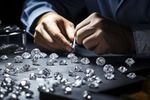
Lab Diamond Details: Manufacturing Methods, Diamond Grades, Shapes and Jewelry Applications
Lab diamonds, also called laboratory-grown diamonds, are diamonds created through controlled technological processes rather than geological processes deep within the Earth. They are made from carbon and have essentially the same crystal structure and many of the same physical and optical properties as natural diamonds. The main difference is their origin and the conditions under which the crystal develops.
Modern laboratory-grown diamond production mainly uses two methods: High-Pressure High-Temperature (HPHT) and Chemical Vapor Deposition (CVD). Both methods begin with a small diamond seed and create additional diamond material around or on that seed under carefully controlled conditions.
The technology has roots in industrial diamond research from the twentieth century. Early laboratory diamonds were generally intended for industrial applications, while improvements in growth technology later made larger gem-quality crystals possible for jewelry. GIA notes that gem-quality laboratory-grown diamonds became increasingly available from the 1990s onward.
A laboratory-grown diamond should not be confused with diamond simulants such as cubic zirconia or moissanite. Simulants may resemble diamonds visually, but they have different chemical compositions and physical properties. Laboratory-grown diamonds are diamond material produced through a laboratory growth process.
Importance
Understanding lab diamond details matters because the category includes several different manufacturing methods, grades, shapes, treatments, and jewelry applications. A basic understanding helps readers interpret grading information and distinguish characteristics that relate to the diamond itself from characteristics related to its manufacturing process.
One important consideration is identification. Laboratory-grown diamonds can look very similar to natural diamonds when viewed without specialized equipment. Gemological laboratories use advanced instruments to identify growth patterns and other characteristics that indicate whether a diamond was produced through HPHT, CVD, or geological formation.
The topic also matters to the jewelry industry, gemologists, manufacturers, and consumers because laboratory-grown diamonds are now available in a broad range of sizes, colors, clarity grades, and shapes. Improvements in growth technology have also expanded the range of applications.
For general readers, several factors are useful to understand:
- Origin describes whether the diamond formed naturally or through laboratory growth.
- Growth method identifies whether HPHT or CVD was used.
- Diamond grades describe characteristics such as color, clarity, cut, and carat weight.
- Shape describes the outline of the polished stone.
- Treatment information can explain whether additional processing was used after growth.
- A laboratory report provides documented information about the examined stone.
Manufacturing Methods
HPHT diamond growth
HPHT stands for High-Pressure High-Temperature. This method recreates some of the high-pressure and high-temperature conditions associated with natural diamond formation.
A typical HPHT process places a diamond seed, a carbon source, and a metallic growth medium inside a specialized growth cell. The equipment applies pressures of roughly 5–6 GPa and temperatures commonly around 1,300–1,600°C. Carbon dissolves into the metallic medium and then crystallizes around the diamond seed as conditions are controlled.
HPHT growth can produce colorless or colored diamonds. Nitrogen and other elements present during growth can influence color, while additional treatment may also alter the final appearance.
CVD diamond growth
CVD means Chemical Vapor Deposition. Instead of using the extreme pressure associated with HPHT, CVD uses a controlled chamber containing carbon-containing gases. Microwave energy or another energy source creates a plasma, allowing carbon-containing particles to deposit onto diamond seed plates layer by layer.
CVD growth generally takes place at lower pressure than HPHT growth. Depending on the production process, CVD crystals may initially have brown or other color characteristics and can undergo subsequent treatment to modify their color. GIA research indicates that CVD has become a major source of laboratory-grown diamonds submitted for gemological examination.
HPHT and CVD comparison
| Characteristic | HPHT | CVD |
|---|---|---|
| Full name | High-Pressure High-Temperature | Chemical Vapor Deposition |
| Starting material | Diamond seed and carbon source | Diamond seed plates and carbon-containing gases |
| Main environment | Very high pressure and temperature | Low-pressure controlled chamber |
| Growth pattern | Crystal grows from a seed under pressure | Carbon deposits in layers |
| Possible colors | Colorless and various fancy colors | Colorless and various colors |
| Post-growth treatment | May be used in some cases | May be used to modify color |
| Common jewelry use | Center stones and accent stones | Center stones and accent stones |
The two methods create genuine diamond material, but their growth conditions leave different internal characteristics. Gemological laboratories can use these characteristics as part of laboratory-grown diamond identification.
Diamond Grades and Characteristics
Color grade
Diamond color grading describes how much body color is visible in a diamond within a standardized grading system. For many colorless-to-light diamonds, grading scales commonly run from D through Z, with D representing the highest point on that particular scale for colorlessness.
Laboratory-grown diamonds can also have fancy colors, including yellow, pink, blue, and other hues. Color may result from elements incorporated during growth or from later treatment.
Clarity grade
Clarity describes internal and surface characteristics known as inclusions and blemishes. Common clarity categories include Flawless, Internally Flawless, Very Very Slightly Included, Very Slightly Included, Slightly Included, and Included.
The visibility and location of characteristics can vary from one diamond to another. A laboratory-grown diamond can have growth-related features that are different from those normally seen in natural diamonds.
Cut grade
Cut refers to how a polished diamond's proportions, angles, symmetry, and finish affect its interaction with light. Cut should not be confused with shape. A round diamond, for example, describes its shape, while its cut assessment describes aspects of its faceting and proportions.
Some grading laboratories provide specific cut assessments for round brilliant diamonds and use shape-specific approaches for fancy shapes. IGI reports, for example, include information relating to shape, measurements, the 4Cs, polish, symmetry, and other characteristics.
Carat weight
Carat is a unit used to describe diamond weight. It does not directly describe visual dimensions because two diamonds with the same carat weight can have different measurements depending on their shape and proportions.
For this reason, carat weight is normally considered alongside measurements, cut characteristics, color, and clarity when interpreting a grading report.
Diamond Shapes
Round brilliant
The round brilliant is a circular outline with a faceting arrangement designed to interact strongly with light. It is widely used in rings, earrings, pendants, and other jewelry designs.
Princess and cushion
Princess shapes are generally square or rectangular with pointed corners. Cushion shapes have a rectangular or square outline with rounded corners and can use different faceting patterns.
Emerald and Asscher
Emerald shapes are rectangular with cropped corners and broad step facets. Asscher shapes are generally square and also use step-cut faceting, creating a different visual pattern from brilliant-cut designs.
Oval, pear, marquise, and heart
Oval diamonds have an elongated rounded outline. Pear shapes combine a rounded end with a pointed end, while marquise shapes have two pointed ends and an elongated profile. Heart shapes use a symmetrical outline with a central cleft.
The shape selected for a diamond is separate from its laboratory growth method. An HPHT or CVD diamond can be polished into various shapes depending on the rough crystal and cutting plan.
Jewelry Applications
Rings
Laboratory-grown diamonds are used in engagement rings, fashion rings, anniversary jewelry, and other ring designs. Round, oval, cushion, emerald, princess, and pear shapes can all be incorporated into ring settings.
Earrings
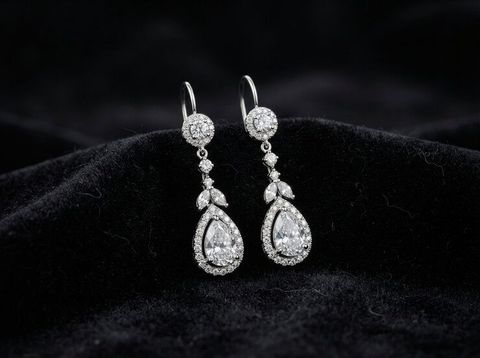
Diamond earrings commonly use pairs of matching or coordinated stones. Round brilliant shapes are frequently used, while other shapes can create different visual proportions.
Necklaces and pendants
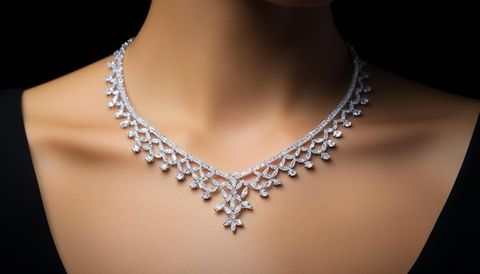
Diamonds used in pendants can range from small accent stones to larger center stones. Solitaire, cluster, halo, and geometric arrangements are examples of design approaches that can incorporate laboratory-grown diamonds.
Bracelets and other jewelry
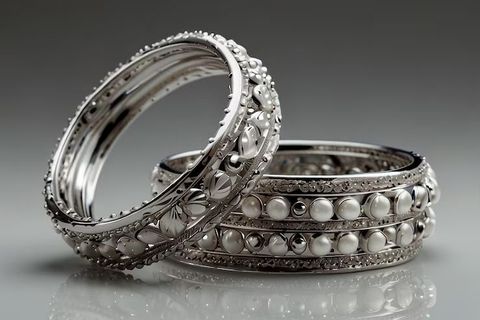
Bracelets may contain many smaller diamonds arranged along a metal structure, while brooches and other decorative pieces can use diamonds in varied shapes and colors. Laboratory-grown diamond melee stones may also be incorporated into larger jewelry patterns.
Recent Updates
Recent developments from 2024 through 2026 have focused largely on production scale, crystal size, identification methods, and manufacturing research rather than a fundamental change to the two main growth processes.
GIA's recent research describes CVD as the dominant growth method among laboratory-grown diamonds submitted to its laboratories and reports continued improvements in crystal size and quality. The research also notes that post-growth treatment is common among CVD-grown diamonds examined by GIA.
India has also continued research and development in laboratory-grown diamond technology. The Department of Commerce reports an India Centre for Lab Grown Diamond project involving IIT Madras, with research focused on CVD and HPHT systems, diamond seeds, equipment development, and related technology.
Another continuing development is improved laboratory identification. Modern reports can provide information about whether a stone is laboratory-grown and, depending on the grading laboratory and report type, may identify the growth method and evidence of post-growth treatment.
Laws or Policies
In India, diamond jewelry is affected by rules covering precious-metal hallmarking, product descriptions, consumer protection, and trade. BIS operates India's hallmarking framework for precious-metal articles, with gold and silver currently within its hallmarking scope. Hallmarking primarily concerns the purity of precious metals rather than determining whether a diamond was grown in a laboratory.
India has also developed standards addressing clear terminology for diamonds and diamond-like products. BIS documentation for IS 19469:2025 describes requirements concerning descriptions, labeling, and advertising, including distinctions between natural diamonds, laboratory-grown diamonds, treated diamonds, composite stones, and imitation products.
For jewelry containing precious metal, the metal hallmark and the diamond grading documentation serve different purposes. A hallmark relates primarily to precious-metal purity, while a diamond report can document characteristics such as origin, shape, color, clarity, measurements, and growth information.
India has also supported laboratory-grown diamond research through government-backed research and development initiatives. The Department of Commerce has reported measures relating to laboratory-grown diamond seeds and domestic development of CVD and HPHT technology.
Tools and Resources
Gemological reports
A laboratory report can provide documented information about a diamond's characteristics and laboratory-grown origin. GIA and IGI provide laboratory-grown diamond documentation that can include information such as shape, measurements, color, clarity, and growth method, depending on the report type.
BIS resources
The Bureau of Indian Standards provides information about hallmarking, standards, recognized laboratories, and consumer verification tools. The BIS Care app includes a feature for verifying HUID information on hallmarked gold jewelry.
Diamond grading references
Educational resources from gemological organizations can help readers understand the 4Cs, diamond shapes, growth methods, treatments, and laboratory identification. GIA's educational materials explain HPHT and CVD processes and the differences between laboratory-grown diamonds, natural diamonds, and simulants.
FAQs
What are the main lab diamond manufacturing methods?
The two primary lab diamond manufacturing methods are HPHT, or High-Pressure High-Temperature, and CVD, or Chemical Vapor Deposition. Both use a diamond seed but create crystal growth under different physical conditions.
How are lab diamond grades determined?
Lab diamond grades can describe color, clarity, cut, and carat weight. Grading laboratories examine these characteristics using standardized procedures, while reports may also identify the laboratory-grown origin and growth method.
What diamond shapes are available for laboratory-grown diamonds?
Laboratory-grown diamonds can be cut into round, oval, princess, cushion, emerald, Asscher, pear, marquise, heart, and other shapes. Shape depends on the rough crystal and the intended cutting pattern.
Can a lab diamond be identified without specialized equipment?
Visual inspection alone may not reliably distinguish a laboratory-grown diamond from a natural diamond. Specialized gemological instruments can examine growth patterns and other characteristics associated with HPHT or CVD production.
Are lab diamonds used in different types of jewelry?
Yes. Laboratory-grown diamonds are used in rings, earrings, necklaces, pendants, bracelets, and other jewelry. Their applications can include both center stones and smaller accent stones.
Conclusion
Lab diamonds are genuine diamond materials produced through controlled laboratory processes, primarily HPHT and CVD. Their characteristics can be described through color, clarity, cut, carat weight, shape, treatments, and growth method. Recent developments have expanded production capabilities and improved identification and reporting systems, while India has continued research into domestic laboratory-grown diamond technology. Understanding manufacturing methods, grading terminology, shapes, and applicable standards provides a clearer foundation for interpreting laboratory-grown diamond information.