Diamond Jewelry Explore: Rings, Earrings, Necklaces, Bracelets, Diamond Cuts and Settings
Diamond jewelry includes rings, earrings, necklaces, bracelets, pendants, and other decorative pieces that use diamonds as their main gemstone or as supporting stones. Diamonds have been used in personal adornment for centuries, with their role changing across different cultures, periods, and jewelry-making traditions. Modern diamond jewelry combines traditional craftsmanship with a wide range of metal types, diamond cuts, settings, and design structures.
A diamond is a naturally occurring crystalline form of carbon. Its appearance is influenced by factors such as cut, color, clarity, and carat weight. These characteristics are commonly discussed together when describing diamond quality, although each describes a different property. Lab-grown diamonds have also become part of the modern jewelry landscape, providing another category that readers may encounter when researching diamond jewelry.
Diamond cuts and settings have a direct effect on how a stone appears within a piece. A round brilliant cut, for example, uses a particular arrangement of facets intended to interact with light, while settings such as prong, bezel, halo, and channel settings determine how stones are positioned and secured.
Importance
Diamond jewelry matters because it combines several areas of interest, including design, materials, craftsmanship, personal style, cultural traditions, and gemstone identification. Understanding these areas can help readers interpret jewelry descriptions and distinguish between characteristics that relate to the diamond itself and those that relate to the surrounding metal or setting.
Different jewelry forms also serve different practical purposes. Rings are often designed around a central stone or repeated pattern, while earrings must account for weight and balance on the ear. Necklaces and pendants can use one prominent diamond or several smaller stones, and bracelets may use linked settings that allow movement around the wrist.
Understanding diamond characteristics
Four commonly discussed characteristics are:
- Carat weight describes the mass of a diamond rather than its visual size alone.
- Color describes how much body color is visible in a diamond within a particular grading system.
- Clarity concerns internal characteristics and surface features.
- Cut relates to the proportions, symmetry, and facet arrangement that influence the way a diamond interacts with light.
These characteristics should not be treated as interchangeable. Two diamonds with the same carat weight can have different appearances because their cut, color, clarity, proportions, and shape may differ.
Rings, earrings, necklaces, and bracelets
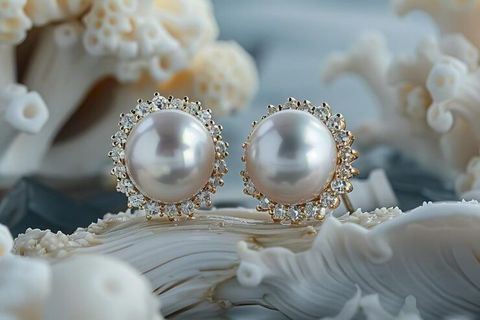
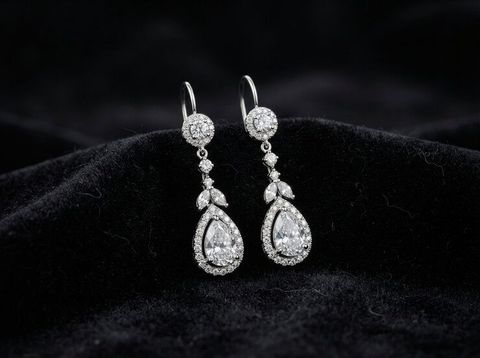
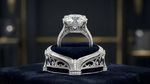
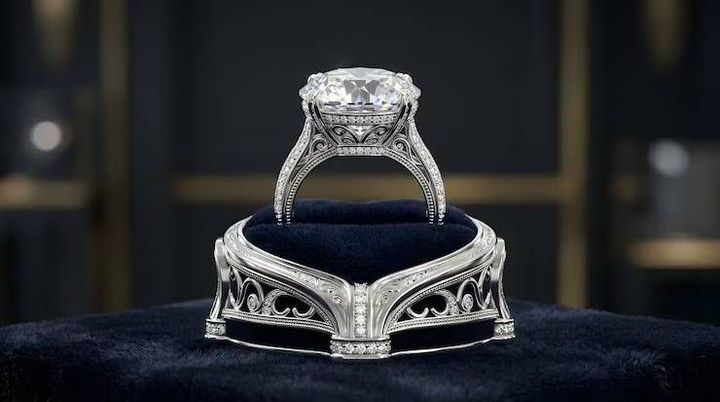
Diamond rings can include solitaire, three-stone, halo, cluster, pavé, and other layouts. Diamond earrings commonly use studs, hoops, drops, or multiple-stone arrangements. Necklaces can feature pendants, diamond stations, or continuous stone patterns, while bracelets can use individual links, rows of stones, or flexible settings.
The setting is important because it connects the gemstone with the jewelry structure. Prong settings hold a stone with small metal supports, bezel settings surround the stone with metal, and channel settings place stones within a groove between metal walls. Each approach has different visual and structural characteristics.
Recent Updates
Diamond jewelry has continued to develop through changes in manufacturing, identification, design, and consumer information. One notable development has been the increasing visibility of lab-grown diamonds alongside naturally formed diamonds. Lab-grown diamonds have the same basic chemical composition and crystal structure as natural diamonds, but their origin is different.
Digital identification tools have also become more relevant. Diamond grading reports, laser inscriptions, digital records, and online educational resources can help people understand gemstone characteristics. The exact information available depends on the laboratory, manufacturer, and jewelry item.
Another continuing development is greater attention to metal purity and jewelry identification in India. BIS has expanded the geographic coverage of mandatory gold hallmarking through amendments during 2024–2026. The BIS website lists amendments to the mandatory hallmarking order during this period, including changes issued in 2026.
Diamond cuts and setting trends
Modern jewelry includes a wide range of shapes beyond the traditional round form. Common diamond shapes include:
- Round
- Princess
- Cushion
- Oval
- Emerald
- Pear
- Marquise
- Radiant
- Asscher
- Heart
Some designs combine several shapes to create contrast. For example, an elongated center stone can be surrounded by smaller round stones, while geometric settings may use rectangular or square shapes.
Personalized design has also become more accessible through computer-aided design and digital modeling. These technologies allow jewelry structures to be visualized before manufacturing, although the final appearance can vary depending on materials, craftsmanship, and finishing.
Laws or Policies
In India, regulations concerning precious-metal jewelry are particularly relevant when a diamond is mounted in gold or silver. The Bureau of Indian Standards, or BIS, administers India's hallmarking framework for gold and silver jewelry. Hallmarking records the proportion of precious metal in an article and is intended to help identify its purity or fineness.
A gold hallmarked article generally carries the BIS Standard Mark, the purity or fineness indication, and a six-digit alphanumeric Hallmark Unique Identification number, commonly called HUID. The BIS Care application includes a feature for verifying HUID information on applicable hallmarked gold jewelry.
It is important to distinguish diamond identification from metal hallmarking. A gold hallmark primarily relates to the purity of the gold article; it does not by itself establish the diamond's carat weight, clarity, color, origin, or grading characteristics.
BIS also maintains rules concerning registered jewellers, recognized assaying and hallmarking centers, and mandatory hallmarking coverage. The applicable requirements can change through government notifications and BIS amendments, so current official information should be checked when a specific legal question arises.
Common jewelry information
| Jewelry information | What it generally describes |
|---|---|
| Carat weight | Weight of the diamond |
| Diamond shape | Outline or geometric form |
| Diamond cut | Facet arrangement and proportions |
| Clarity | Internal and surface characteristics |
| Color | Degree of visible body color |
| Metal purity | Proportion of precious metal in an alloy |
| Setting | Method used to hold the stone |
| HUID | Identification number used for applicable hallmarked gold jewelry |
| Grading report | Document describing specified characteristics of a gemstone |
Tools and Resources
Several resources can help readers understand diamond jewelry without relying solely on product descriptions. Diamond grading reports can provide documented information about a particular stone, while educational guides from recognized gemological organizations explain terminology such as cut, clarity, color, and carat weight.
For gold jewelry in India, the BIS Care application can be used to verify HUID information on applicable hallmarked gold articles. BIS also publishes information about hallmarking requirements, registered jewellers, hallmarking centers, and consumer-related procedures.
Other useful tools include:
- Diamond measurement charts for understanding proportions and dimensions.
- Ring-size charts for interpreting standard sizing systems.
- Jewelry design software for viewing digital concepts.
- Diamond shape guides for comparing different outlines.
- Grading-report verification tools where supported by the relevant laboratory.
- Jewelry care guides explaining cleaning, storage, and handling practices.
When using online resources, readers should distinguish educational information from a formal gemstone grading report or government requirement. Terminology can also vary between laboratories, manufacturers, and jewelry retailers.
FAQs
What are the main types of diamond jewelry?
The main categories include diamond rings, earrings, necklaces, bracelets, pendants, and brooches. Each category can use different combinations of diamond shapes, settings, metal types, and design structures.
What should I know about diamond cuts and settings?
Diamond cuts describe the shape or facet arrangement of a stone, while settings describe how the stone is held within the jewelry. Round, oval, princess, cushion, emerald, pear, and marquise are common diamond shapes. Prong, bezel, channel, pavé, and halo are examples of setting styles.
Are lab-grown diamonds different from natural diamonds?
Yes. Both are crystalline forms of carbon with substantially the same basic chemical composition and crystal structure, but they have different origins. Natural diamonds form through geological processes, while lab-grown diamonds are produced through controlled technological processes.
Does a gold hallmark prove diamond quality?
No. A gold hallmark relates to the purity or fineness of the gold article. It does not independently establish a diamond's carat weight, color, clarity, cut, or geological origin. Diamond characteristics may instead be documented through an appropriate grading report.
How can diamond jewelry be identified or documented?
Documentation may include a diamond grading report, jewelry invoice, metal hallmark, HUID where applicable, laser inscription, or other identification information. The exact documentation depends on the jewelry item and the organizations involved in its testing or manufacture.
Conclusion
Diamond jewelry includes many forms, from rings and earrings to necklaces and bracelets, with differences created through diamond shapes, cuts, settings, and metal structures. Understanding carat weight, color, clarity, cut, and setting terminology provides useful background for interpreting jewelry information. In India, gold hallmarking and HUID identification provide a separate framework for documenting applicable precious-metal articles. Recent developments have also expanded the visibility of lab-grown diamonds, digital identification, and computer-assisted jewelry design.