Injection Moulding Machines Information With Plastic Processing and Engineering Knowledge
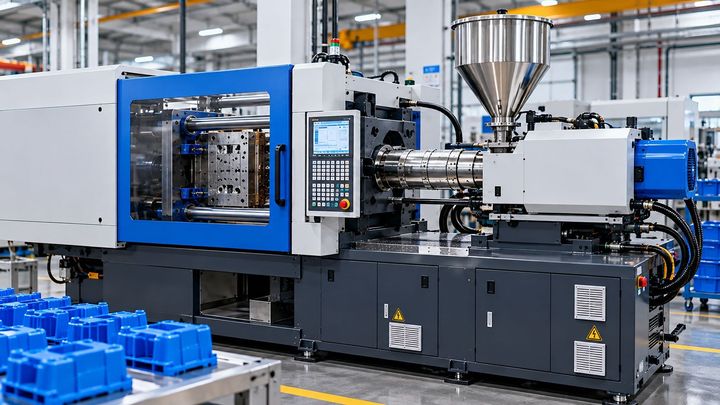
Injection moulding machines are widely used in plastic processing to produce parts with consistent shapes, dimensions, and surface finishes. An injection moulding machine combines a heating system, injection unit, mould, clamping mechanism, and control system to transform plastic material into finished components.
Injection moulding machines are found across packaging, automotive components, electronics, household products, medical equipment, and many other manufacturing areas. Understanding plastic processing and engineering principles helps explain how these machines operate and why different machine designs are used for different applications.
Context
What Is Injection Moulding
Injection moulding is a manufacturing process in which plastic material is heated until it becomes sufficiently fluid and then injected into a mould cavity under controlled pressure. After the material cools and solidifies, the mould opens and the formed component is removed.
The process developed from early plastic-forming technologies and gradually became more automated as hydraulic systems, electric drives, computer controls, and advanced mould designs were introduced. Modern injection moulding machines can control temperature, pressure, screw movement, clamping force, injection speed, and cooling conditions through electronic control systems.
Main Parts of an Injection Moulding Machine
An injection moulding machine normally contains several major assemblies.
- Injection unit: Melts and moves plastic material toward the mould.
- Screw: Transports, mixes, compresses, and prepares plastic material for injection.
- Barrel: Houses the screw and contains heating elements.
- Hopper: Holds plastic pellets before they enter the processing area.
- Clamping unit: Opens and closes the mould and maintains pressure during injection.
- Mould: Contains the cavity that determines the shape of the plastic component.
- Ejector system: Pushes the solidified component out of the mould.
- Controller: Coordinates machine movements, temperature settings, pressure, timing, and monitoring.
The interaction between these components determines the quality and repeatability of the moulded part.
How Plastic Processing Works
The basic injection moulding cycle begins when plastic pellets enter the hopper. The pellets move through the heated barrel while the rotating screw transports and melts them. The screw then moves forward and pushes the molten material through the nozzle into the mould cavity.
Once the cavity is filled, additional pressure may be applied to compensate for material shrinkage during cooling. The mould remains closed until the component reaches a suitable level of rigidity. The mould then opens, the ejector system releases the component, and another cycle begins.
Importance
Why Injection Moulding Machines Matter
Injection moulding machines allow manufacturers to produce complex plastic components repeatedly using controlled processing conditions. A single mould can contain one cavity or multiple cavities, depending on the required production arrangement.
The process is particularly useful when components need consistent dimensions, integrated features, thin walls, ribs, bosses, or detailed surfaces. Automated handling equipment can also move components between stages, reducing repetitive manual handling.
Industries Using Plastic Processing
Injection moulding machines are used in many sectors, including:
- Automotive components
- Consumer electronics
- Food and beverage packaging
- Household products
- Industrial equipment
- Electrical components
- Medical equipment
- Construction products
- Agricultural components
- Consumer goods
Different industries use different plastic materials and mould designs. Material selection depends on properties such as strength, flexibility, temperature resistance, chemical resistance, transparency, and dimensional stability.
Hydraulic, Electric, and Hybrid Machines
Injection moulding machines can use different drive technologies.
| Machine Type | Main Drive Approach | Common Characteristics |
|---|---|---|
| Hydraulic | Hydraulic pumps and cylinders | Strong clamping and injection capability |
| Electric | Electric servo motors | Precise movement and controlled energy use |
| Hybrid | Combination of hydraulic and electric systems | Balances different machine functions |
| Vertical | Vertical clamping arrangement | Useful for specific inserts and component designs |
Electric machines have received increasing attention because electronically controlled movements can provide accurate positioning and repeatable process control. Hydraulic and hybrid machines remain important for applications requiring particular combinations of force, flexibility, and machine configuration.
Engineering Factors That Influence Results
Several engineering variables affect injection moulding performance. These include mould temperature, barrel temperature, injection speed, holding pressure, cooling time, screw speed, back pressure, and clamping force.
Mould design is equally important. Gate position, runner design, cooling channels, venting, ejector placement, and cavity geometry can influence filling behavior and finished-part characteristics.
If processing conditions are poorly matched to the material or mould, defects such as short shots, sink marks, warpage, flash, burn marks, weld lines, or dimensional variation can occur.
Recent Updates
Automation and Digital Controls
From 2024 through 2026, injection moulding technology has continued moving toward greater automation, digital monitoring, electric drive systems, and integrated production data. Machine manufacturers have introduced control interfaces designed to simplify parameter management and provide more process information to operators. Industry exhibitions during this period have also highlighted automation and digitalization as important areas of development.
Robotic systems can be integrated with injection moulding machines for component removal, inspection, insert placement, stacking, and other repetitive activities. Proper guarding is necessary when robots operate around moulding equipment.
Energy and Process Efficiency
Electric and hybrid injection moulding machines are receiving attention for applications where accurate movement control and energy management are important. Modern systems can coordinate motor operation, heating, injection, clamping, and cooling more precisely than older control architectures.
Process monitoring is also becoming more common. Sensors can track pressure, temperature, screw position, cycle time, and other parameters. This information can help identify changes in processing conditions before they produce large quantities of defective components.
Recycled and Alternative Materials
Plastic processing is also being influenced by increased interest in recycled materials and material efficiency. Recycled polymers can have different moisture levels, melt behavior, contamination risks, and thermal histories compared with virgin materials. These differences can require adjustments to drying, temperature, pressure, and processing conditions.
Machine and mould development therefore increasingly considers material variability alongside traditional production requirements.
Laws or Policies
Machine Safety Requirements
Injection moulding machines contain moving moulds, high-temperature surfaces, electrical systems, pressurized fluids, and molten plastic. Regulations therefore commonly address machine guarding, emergency stopping, operator access, electrical safety, hazardous energy, and workplace training.
Requirements vary by country and jurisdiction. For example, U.S. occupational safety guidance addresses guarding for injection moulding equipment and identifies hazards involving moving moulds, high temperatures, electrical systems, and other machine components.
Guarding and Interlocks
Safety gates and interlocks are important components of injection moulding equipment. Interlocks can prevent certain machine movements when a guard or operator gate is open. Fixed guards may protect areas that do not normally require operator access.
During maintenance, hazardous energy may need to be isolated according to applicable workplace rules. Local regulations should always be checked because requirements differ between jurisdictions.
Environmental and Material Rules
Plastic processing facilities may also be subject to rules concerning emissions, waste handling, recycling, chemical management, energy use, and workplace exposure. Requirements depend on the material being processed and the location of the facility.
Material documentation can help identify appropriate processing temperatures, drying requirements, storage conditions, and handling precautions.
Tools and Resources
Engineering and Process Tools
Several tools can help people understand or manage injection moulding processes.
- Mould-flow simulation software can model filling, cooling, pressure, and potential defects before physical mould trials.
- Resin data sheets provide information about recommended processing ranges and material characteristics.
- Machine manuals explain controls, operating procedures, machine specifications, and maintenance requirements.
- Energy meters can measure electricity consumption associated with individual equipment or production cycles.
- CAD software helps engineers design moulds, runners, gates, cooling channels, and plastic components.
- Statistical process control templates can help track dimensions, cycle times, temperatures, and other measurable variables.
- Material drying calculators can assist with determining drying conditions for moisture-sensitive polymers.
- Process monitoring systems can record production parameters and identify changes between cycles.
Important Machine Specifications
When studying injection moulding machines, several specifications are particularly useful. Clamping force indicates the force available to keep the mould closed during injection. Injection capacity describes how much material the injection system can deliver under specified conditions.
Other important specifications include maximum injection pressure, screw diameter, screw stroke, mould thickness range, platen dimensions, injection speed, cycle time, and control-system capabilities.
These specifications should always be interpreted together rather than individually because machine suitability depends on the material, mould, component geometry, and processing conditions.
FAQs
What is an injection moulding machine?
An injection moulding machine heats plastic material and injects it into a mould under controlled conditions. After cooling, the mould opens and the finished plastic component is ejected.
How does plastic processing work in an injection moulding machine?
Plastic pellets enter the barrel, where heat and mechanical action from the screw prepare the material for injection. The molten plastic enters the mould cavity, cools, and becomes the required component shape.
What are the main types of injection moulding machines?
Common types include hydraulic, electric, hybrid, horizontal, and vertical injection moulding machines. Each configuration uses a different combination of drive technology and machine arrangement.
Why are injection moulding machines used for plastic components?
They can produce repeated components with controlled dimensions and complex shapes. The process can also be integrated with automated mould handling, inspection, material feeding, and component removal.
What safety features are used on injection moulding machines?
Common features include guards, safety gates, interlocks, emergency stops, protective barriers, and controls for hazardous energy. Proper procedures and training are also important when operating or maintaining the equipment.
Conclusion
Injection moulding machines combine material heating, screw movement, mould filling, clamping, cooling, and ejection into a controlled plastic processing cycle. Hydraulic, electric, hybrid, horizontal, and vertical configurations support different engineering requirements. Recent developments have emphasized automation, digital controls, process monitoring, energy management, and compatibility with changing material requirements. Safety regulations, machine guarding, material handling, and process control remain important considerations throughout injection moulding operations.