Industrial Welding Equipment Guide: Machines, Welding Methods, Applications, Features and Selection
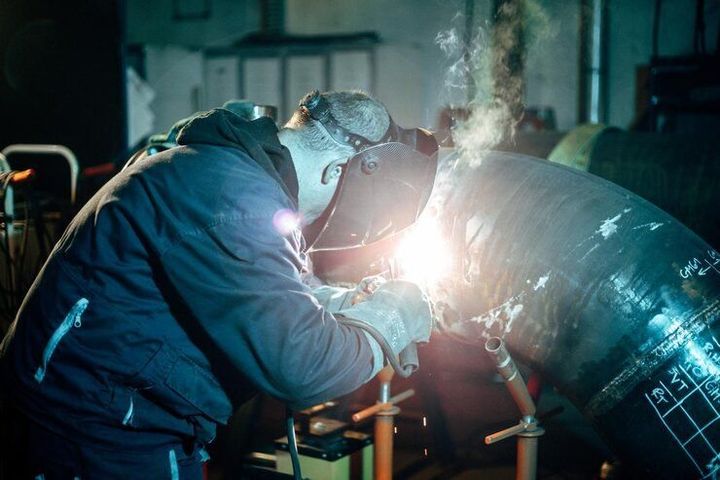
Industrial welding equipment includes machines and supporting tools used to join metals through controlled heat, pressure, or both. Common examples include arc welding machines, MIG and TIG systems, stick welders, resistance welding equipment, and plasma-based systems.
Context
What industrial welding equipment does
Welding creates a joint by bringing material surfaces together under a defined process. Depending on the method, an electric arc, electrical resistance, or a gas flame can melt or soften the joining area.
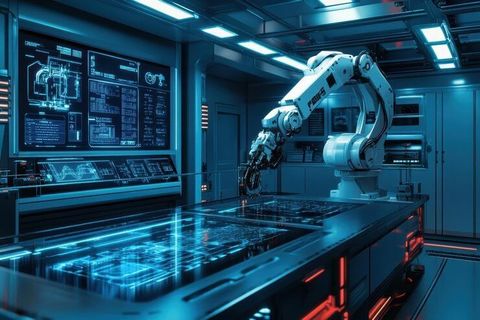
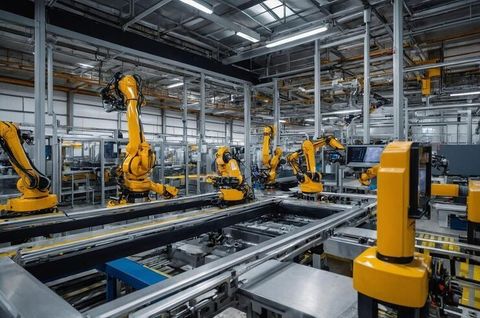
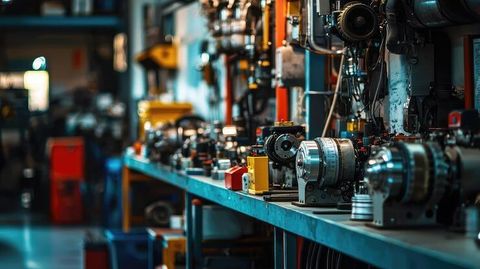
Industrial welding equipment generally includes the power source, torch or electrode holder, cables, grounding equipment, shielding arrangements, controls, and related protective items. Automated systems may also include robotic arms, positioners, sensors, wire feeders, and digital control units.
Main welding methods
MIG welding, formally known as gas metal arc welding, uses a continuously fed wire electrode and shielding gas. It is commonly used for fabrication where steady wire feeding and controlled weld deposition are useful.
TIG welding, or gas tungsten arc welding, uses a non-consumable tungsten electrode. It provides precise control and is often associated with stainless steel, aluminium, and applications where weld appearance and heat control matter.
Stick welding, also called shielded metal arc welding, uses a coated consumable electrode. It can be used in varied working environments and does not require a continuous wire-feed system.
Resistance welding uses electrical resistance and pressure to create a joint, often between sheet-metal components. Spot welding is a familiar example in vehicle and appliance manufacturing.
Other processes include submerged arc, flux-cored arc, plasma arc, and oxy-fuel welding, each with different equipment requirements.
Importance
Why welding equipment matters
Welded joints are part of many everyday products and structures. They can be found in construction frameworks, agricultural machinery, transport equipment, storage systems, pressure-related components, industrial enclosures, and metal furniture.
Equipment selection depends on material compatibility, joint design, production volume, operator control, electrical requirements, and workplace conditions. A mismatched process can contribute to distortion, incomplete fusion, excessive heat input, or other weld defects.
Factors that influence equipment selection
Several factors are commonly considered:
- Material type: Steel, stainless steel, aluminium, and other alloys can require different processes and settings.
- Material thickness: Thin sheet and thick plate may need different current ranges, electrodes, wire sizes, or heat-control approaches.
- Joint design: Butt, lap, fillet, and other joint types influence access and process selection.
- Production level: Manual equipment may suit variable fabrication, while automated equipment can support repeatable production.
- Working environment: Indoor fabrication, outdoor construction, confined areas, and clean production spaces create different requirements.
- Power supply: Equipment must match the available electrical supply and its voltage, phase, and capacity.
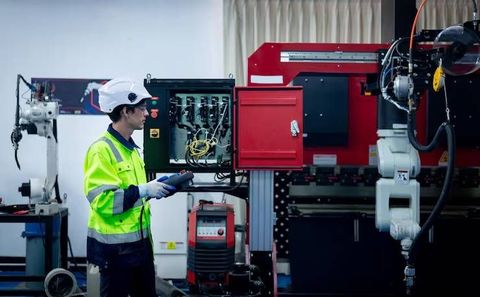
- Safety controls: Ventilation, shielding, grounding, protective equipment, and fire precautions are important parts of the welding setup.
Common equipment comparison
| Equipment or process | Typical use | Main characteristic |
|---|---|---|
| MIG/GMAW machine | Fabrication and sheet-metal work | Continuous wire electrode |
| TIG/GTAW machine | Precision welding | Tungsten electrode and controlled arc |
| Stick/SMAW machine | Construction and fabrication | Coated consumable electrode |
| Resistance welder | Sheet-metal assemblies | Heat from electrical resistance |
| Submerged arc system | Long industrial welds | Flux-covered arc |
| Robotic welding cell | Repetitive production | Programmed movement and process control |
Recent Updates
Digital controls and automation
From 2024 through 2026, industrial welding has continued moving toward digital controls, automation, and data collection. Modern equipment can include programmable settings, digital displays, waveform controls, wire-feed monitoring, and interfaces that help operators maintain consistent process parameters.
Robotic welding is also becoming more closely connected with sensors and machine controls. Collaborative robotic systems are another area of development, with suitability depending on the task, risk assessment, workspace, and safety requirements.
Energy and process efficiency
Manufacturers are also focusing on inverter-based power sources, improved electrical efficiency, and more precise control of heat input. These developments can support controlled electrical characteristics and reduce unnecessary material or energy use when the process is correctly configured.
Standards and documentation
Standards continue to be reviewed across welding-related fields. In India, the Bureau of Indian Standards maintains standards covering welding processes, electrodes, safety practices, weld inspection, and related subjects. BIS records show a 2024 amendment to IS 814:2004 covering covered electrodes for manual metal arc welding, while the standard was reaffirmed in 2026.
Laws or Policies
Indian workplace requirements
In India, welding activities in factories and other industrial workplaces are influenced by occupational safety requirements, applicable state rules, and relevant Indian Standards. The Occupational Safety, Health and Working Conditions Code, 2020 provides a national framework covering workplace safety and health. Draft central rules for factories under the Code were published for consultation in 2025, so organizations should check the current rules applicable to their location and type of workplace.
Welding areas can involve heat, electrical energy, fumes, gases, arc radiation, sparks, and fire hazards. The Code includes provisions concerning dangerous operations and protective measures, while specific workplace obligations can depend on the applicable rules and circumstances.
BIS lists IS 818 as a code covering safety and health requirements for electric and gas welding and cutting operations. Other Indian Standards address welding symbols, electrodes, inspection, training, and particular welding applications.
Practical safety considerations
General welding safety practices include:
- Using suitable eye and face protection for the process.
- Maintaining appropriate ventilation or fume-control arrangements.
- Inspecting cables, holders, torches, regulators, hoses, and connections.
- Keeping combustible materials away from sparks and hot work.
- Handling gas cylinders according to applicable requirements.
- Using suitable grounding and electrical protection.
- Following equipment instructions and established workplace procedures.
These points are general information and do not replace a site-specific safety assessment or applicable legal requirements.
Tools and Resources
Standards and technical references
The BIS “Know Your Standard” portal allows users to search Indian Standards by standard number or keyword and review related information. It can help readers identify standards relevant to welding equipment, electrodes, safety, and fabrication.
Useful technical resources can also include equipment manuals, welding procedure specifications, joint-design references, electrode or filler-metal data sheets, inspection checklists, and training materials. Manufacturer documentation is useful for understanding a machine's rated output, duty cycle, input requirements, compatible accessories, and operating controls.
Measurement and planning tools
Welding calculations may involve current, voltage, travel speed, wire-feed rate, heat input, material thickness, and joint dimensions. Spreadsheet templates can organize these values for production records or technical comparisons.
Digital weld monitors can record selected process parameters, while automated systems may connect welding equipment with production tracking and quality-control software.
FAQs
What is industrial welding equipment?
Industrial welding equipment is a group of machines, power sources, torches, electrodes, wire feeders, cables, controls, and related tools used for joining materials in fabrication and manufacturing. The equipment varies according to the welding method and application.
Which welding machine is used for different materials?
The suitable machine depends on material type, thickness, joint design, and required process control. MIG and TIG equipment are commonly used for several steel and aluminium applications, while stick equipment is widely used with suitable steel electrodes. The correct electrode, filler, shielding arrangement, and settings must match the specific application.
What safety equipment is needed for welding?
Common protective items include an appropriate welding helmet or face protection, protective clothing, gloves, safety footwear, and hearing or respiratory protection when the workplace assessment indicates a need. Ventilation, fire precautions, and electrical protection are also important.
What is the difference between MIG and TIG welding equipment?
MIG equipment continuously feeds a wire electrode while shielding gas protects the welding area. TIG equipment uses a tungsten electrode and gives the operator more direct control of the arc and filler addition. The two methods therefore differ in equipment arrangement, operation, and typical applications.
How is welding equipment maintained?
Maintenance generally includes checking cables and connections, cleaning appropriate components, inspecting torches or electrode holders, checking cooling arrangements, and following the equipment manufacturer's maintenance schedule. Any damaged electrical or gas-related component should be handled according to applicable workplace procedures.
Conclusion
Industrial welding equipment covers a wide range of machines and supporting tools used for joining metals in manufacturing, construction, repair, and fabrication. MIG, TIG, stick, resistance, submerged arc, and automated systems each have different operating characteristics and application areas. Recent developments have emphasized digital controls, automation, process monitoring, and improved control of electrical and thermal conditions. In India, welding activities are also shaped by occupational safety requirements and relevant BIS standards, making equipment selection, operation, and workplace controls important parts of the overall process.