Industrial Nut Bolts Guide: Designs, Thread Types, Strength Grades and Uses
Industrial nut bolts are mechanical fasteners used to connect, secure, and assemble components in machinery, buildings, vehicles, and industrial equipment. A bolt generally has a head and an externally threaded shaft, while a nut has an internally threaded hole that engages with the bolt. When tightened together, these components can clamp parts securely and help maintain a stable connection under suitable operating conditions.
Context
Industrial nut bolts are mechanical fasteners used to connect, secure, and assemble components in machinery, buildings, vehicles, and industrial equipment. A bolt generally has a head and an externally threaded shaft, while a nut has an internally threaded hole that engages with the bolt. When tightened together, these components can clamp parts securely and help maintain a stable connection under suitable operating conditions.
The development of standardized fasteners made it easier to manufacture, assemble, repair, and maintain equipment across different industries. Modern industrial fasteners are produced in various sizes, materials, thread forms, and strength grades to suit different loads and environmental conditions. Understanding industrial nut bolts, including their designs, thread types, strength grades, and uses, helps explain how mechanical assemblies are designed and maintained.
Understanding Industrial Nut Bolt Designs
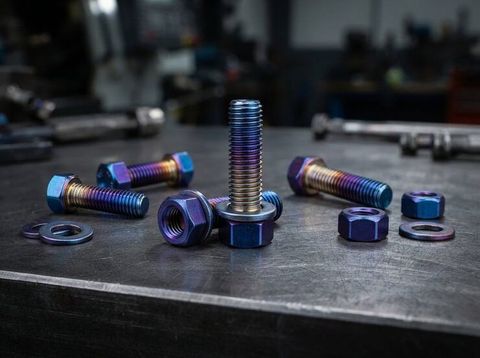
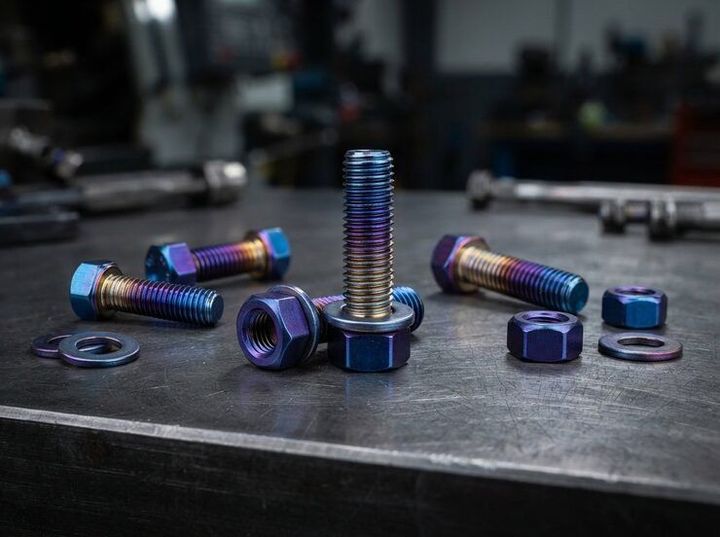
Nut and bolt designs vary according to the application, the shape of the connected components, and the space available for installation. Common bolt designs include hex bolts, carriage bolts, flange bolts, socket head bolts, and eye bolts.
Hex bolts: Feature six-sided heads that can be tightened with a suitable wrench or socket.
Carriage bolts: Commonly have rounded heads and a square section beneath the head that helps resist rotation in suitable materials.
Flange bolts: Include a flange beneath the head that distributes pressure across a wider area.
Socket head bolts: Use a recessed drive that accepts a compatible hex key or tool.
Eye bolts: Include a loop-shaped head for specified lifting, anchoring, or attachment applications, subject to the design rating.
Nuts also have several designs. Hex nuts are widely used for general fastening, locknuts help resist loosening under specified conditions, and flange nuts distribute clamping pressure over a wider surface. Cap nuts cover exposed bolt ends, while wing nuts allow hand adjustment in applications designed for that purpose.
Importance
Industrial nut bolts play an important role in equipment reliability, structural stability, and routine maintenance. They are used in manufacturing plants, construction projects, agricultural machinery, transport systems, energy installations, and household equipment. Incorrect fastener selection can lead to loose joints, damaged threads, excessive deformation, or connection failure.
The appropriate fastener depends on more than its physical dimensions. Engineers and maintenance personnel consider the applied load, vibration, temperature, corrosion exposure, installation method, and material of the connected parts. A bolt that is suitable for a light equipment cover may not be appropriate for a heavily loaded structural connection.
Thread Types and Their Functions
Threads are the helical ridges formed around a bolt's shaft or inside a nut. They allow the components to engage and convert rotational movement into clamping force when assembled correctly.
Common thread types include:
Metric threads: Use millimetres for nominal diameter and thread pitch. ISO metric threads are widely used in industrial equipment worldwide.
Unified threads: Include Unified National Coarse (UNC) and Unified National Fine (UNF) forms, commonly encountered in equipment designed around inch-based standards.
Coarse threads: Generally have a larger pitch than fine threads of the same nominal diameter and are commonly used for general fastening.
Fine threads: Have a smaller pitch and may be selected where the design requires particular adjustment, engagement, or strength characteristics.
Pipe threads: Used in specified pipe and fitting connections, with sealing behaviour depending on the thread standard and connection design.
Thread pitch is the distance between corresponding points on adjacent threads. Metric fasteners usually specify pitch directly in millimetres, while Unified threads commonly specify threads per inch. Matching the thread standard, diameter, pitch, and tolerance is necessary for proper engagement.
Industrial Nut Bolt Strength Grades
Strength grades describe mechanical properties such as tensile strength and yield or proof strength, depending on the applicable standard. The grade marking on a fastener can help identify its intended mechanical classification, but the meaning depends on the material system and governing specification.
For example, ISO 898-1 defines mechanical and physical properties for specified carbon steel and alloy steel bolts, screws, and studs. Property class 8.8 is commonly used in machinery and structural equipment, while classes such as 10.9 and 12.9 represent different mechanical property requirements. These classifications do not mean that every fastener in a higher class is suitable for every application.
| Property class | General description | Selection consideration |
|---|---|---|
| 4.6 | Lower-strength carbon steel fastener class | Suitable only where design requirements permit |
| 8.8 | Common medium-to-high strength class | Machinery and general engineering assemblies |
| 10.9 | Higher-strength class | Applications designed for its specified properties |
| 12.9 | High-strength class | Specified machinery and precision assemblies |
This table is a general guide, not a design specification. Exact mechanical properties depend on the applicable standard, fastener dimensions, and product requirements. Stainless steel fasteners use different property designations under relevant standards, so their markings should not be interpreted using carbon steel classes.
Materials and Protective Coatings
Industrial fasteners are manufactured from carbon steel, alloy steel, stainless steel, and other materials for specific operating conditions. Carbon and alloy steels are used in many load-bearing applications, while stainless steel may be selected for corrosion resistance in suitable environments. Material choice must account for the surrounding chemicals, moisture, temperature, and contact with other metals.
Protective finishes include zinc coatings, hot-dip galvanizing, and other specified treatments. These can reduce corrosion under appropriate conditions, but their performance depends on coating thickness, environment, maintenance, and installation. Coatings can also affect thread fit and friction during tightening, which may influence the resulting clamp load.
Recent Updates
From 2024 through 2026, industrial fastening continues to reflect broader manufacturing trends, including digital quality records, automated assembly, improved material traceability, and tighter process control. These developments are particularly relevant in industries where joint integrity and consistent assembly procedures are important. Specific technologies and requirements vary by manufacturer and application.
Manufacturing and Quality Control
Computer-controlled machining, automated inspection, and optical measurement systems can help manufacturers check thread dimensions, head geometry, surface condition, and other product characteristics. Digital documentation may also connect fastener batches with material certificates, inspection results, and production records.
In automated assembly, torque-controlled and angle-controlled tightening tools can help maintain consistent installation procedures. However, a torque value alone does not establish the exact clamp force in every joint because friction, coatings, lubrication, and component geometry affect the relationship.
Traceability and Material Selection
Industrial buyers and maintenance teams increasingly consider traceability when specifying fasteners for safety-sensitive equipment. Batch identification and documented material properties can help distinguish compliant products from components with uncertain specifications.
Material selection also reflects operating environments and durability requirements. Corrosion-resistant alloys, protective coatings, and documented material testing may be considered for outdoor equipment, marine environments, chemical facilities, and energy infrastructure. The appropriate choice depends on engineering requirements rather than a general claim that one material suits every situation.
Laws or Policies
Industrial nut bolts are influenced by technical standards, product specifications, workplace safety requirements, and construction or machinery regulations. The applicable rules depend on the product, industry, installation, and country. Standards help define dimensions, mechanical properties, test methods, and identification practices, but their legal status varies by application.
Relevant Standards in India
In India, the Bureau of Indian Standards (BIS) publishes Indian Standards covering many mechanical fasteners. Relevant specifications may address dimensions, thread forms, mechanical properties, testing, and material requirements. Engineers and procurement teams should identify the standard applicable to the particular fastener and verify whether mandatory certification or other regulatory requirements apply.
International standards may also be referenced in industrial projects. Examples include ISO metric thread standards, ISO 898 for specified mechanical properties of steel fasteners, and ISO 4014 for certain hexagon head bolts with specified product characteristics. A project specification may instead require another standard, so the designation must be checked against the intended application.
Workplace and Structural Safety
Fasteners used in buildings, lifting equipment, pressure systems, vehicles, and industrial machinery may be subject to additional technical codes and safety requirements. For example, structural steel connections can be governed by project-specific structural design standards, while lifting attachments require components rated for their intended loads and configuration.
Compliance involves more than selecting a strength grade. Correct installation, suitable washers where specified, appropriate tightening procedures, inspection, and maintenance may all be necessary. Critical joints should follow the applicable engineering documentation and manufacturer instructions rather than relying on general-purpose tables alone.
Tools and Resources
Several technical resources help identify industrial nut bolts, compare specifications, and plan fastening work. The relevant resource depends on whether the task involves product identification, engineering design, procurement, or routine maintenance.
Fastener Identification and Calculation Tools
Thread gauges can help identify thread pitch and profile, while callipers and micrometers can measure dimensions such as nominal diameter and shaft length. Reference charts can assist with comparing metric and Unified thread specifications, although conversion between measurement systems does not automatically make two threads compatible.
Engineering calculations may consider tensile stress area, applied load, joint stiffness, tightening torque, and safety factors. Online calculators can provide preliminary estimates, but their assumptions may not reflect a particular joint's geometry, friction, loading, or operating environment.
Standards and Technical Documentation
The Bureau of Indian Standards provides information about Indian Standards and applicable certification arrangements. The International Organization for Standardization publishes standards covering fastener dimensions and specified properties. Manufacturer technical catalogues and material certificates can provide additional information about dimensions, grades, coatings, tolerances, and testing.
A practical specification record may include the following details:
Nominal diameter, length, thread pitch, and thread standard.
Bolt and nut material or property class.
Coating or corrosion-resistance requirements.
Applicable standard and required certification.
Installation method and specified tightening procedure.
Inspection records and batch traceability details.
FAQs
What are the common types of industrial nut bolts?
Common types include hex bolts, carriage bolts, flange bolts, socket head bolts, hex nuts, locknuts, and flange nuts. Each design serves particular assembly, access, load-distribution, or locking requirements.
What is the difference between metric and UNC threads?
Metric threads specify nominal diameter and pitch in millimetres, while UNC threads use inch-based dimensions and threads per inch. Their profiles and dimensions differ, so they should not be treated as interchangeable.
What do industrial nut bolt strength grades mean?
Strength grades or property classes identify specified mechanical properties under a relevant standard. For example, steel property class 8.8 has defined mechanical requirements under ISO 898-1, but selection depends on the complete joint design and application.
Which material is suitable for industrial nut bolts?
Carbon steel, alloy steel, and stainless steel are used in different applications. Selection depends on load, corrosion exposure, temperature, compatibility with connected materials, and the relevant technical specification.
How can the correct industrial nut bolt size be identified?
Measure the diameter and length, identify the thread pitch and profile, and check the head and nut dimensions. Confirm the material, property class, and governing standard against the equipment drawing or engineering specification.
Conclusion
Industrial nut bolts are available in different designs, thread types, materials, and strength grades for a wide range of mechanical and structural applications. Correct selection depends on dimensions, loading conditions, corrosion exposure, compatibility, and applicable technical standards. Manufacturing controls and traceability help document fastener characteristics, while proper installation remains important to joint performance. Understanding these factors provides a foundation for interpreting industrial fastening specifications and their uses.