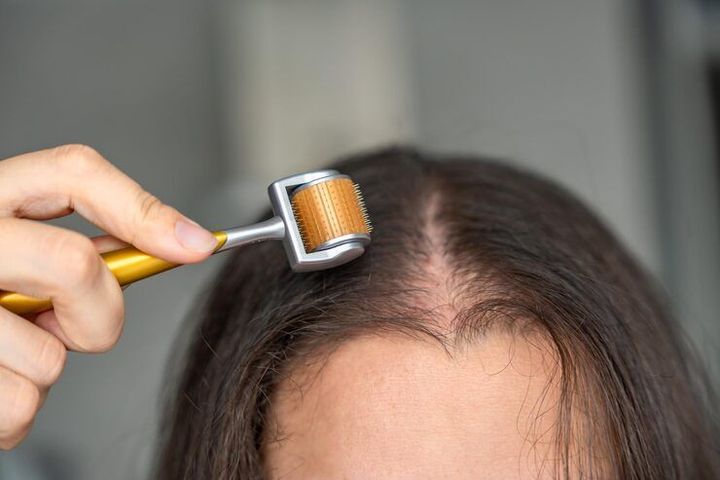
Hair Growth Guide: Growth Cycle, Dietary Factors, Scalp Care and Healthy Hair Practices
Hair growth is a continuous biological process controlled by activity within the hair follicles. Each strand develops through a repeating growth cycle, while factors such as genetics, age, hormones, nutrition, health conditions, and scalp environment can influence how the cycle progresses. Understanding this process helps explain why changes in hair thickness or shedding may occur gradually rather than immediately.
Context
The hair growth cycle is generally divided into three main stages: anagen, catagen, and telogen. Anagen is the active growth phase, catagen is a short transition period, and telogen is the resting phase. A strand eventually sheds and the follicle can begin another cycle.
Hair growth therefore involves more than the visible hair shaft. The follicle, surrounding scalp, blood supply, hormones, and nutritional status all have roles in maintaining normal hair production. When one or more of these factors changes, increased shedding or reduced hair density can sometimes occur.
Understanding the hair growth cycle
| Hair cycle stage | General description | Main characteristic |
|---|---|---|
| Anagen | Active growth stage | Hair-producing cells remain active |
| Catagen | Transition stage | Follicle activity decreases |
| Telogen | Resting stage | Hair remains in the follicle before shedding |
| Shedding | Release of an older strand | Follicle can eventually begin another cycle |
The length of each stage varies between individuals and between different areas of the body. Scalp hair generally remains in the growth phase for a much longer period than hair in many other locations.
Importance
Hair is influenced by many factors, so changes in appearance or shedding should not automatically be attributed to a single dietary deficiency or scalp-care practice. Temporary shedding can occur after physical or emotional stress, illness, major dietary changes, hormonal changes, or other events. Some forms of hair loss are also associated with genetic or medical factors.
Hair growth matters because changes in hair density can affect appearance and may sometimes indicate an underlying health issue. Understanding the difference between ordinary shedding, hair breakage, and persistent hair loss can provide useful context.
Hair growth and nutrition
Hair-producing cells divide rapidly, which means adequate nutrition is relevant to normal hair production. Protein provides amino acids used to build hair, while nutrients such as iron, zinc, vitamin D, and several B vitamins participate in biological processes related to hair and skin.
Research does not support the idea that taking large amounts of vitamins automatically increases hair growth in people who already have adequate nutrient levels. A 2024 systematic review found associations between several micronutrients and androgenetic alopecia but also noted that evidence across individual nutrients is inconsistent.
A 2025 systematic review examining dietary factors and hair health similarly identified relationships involving vitamin D and iron, while noting that the evidence base contains different study designs and does not establish that supplements will improve hair growth for everyone.
Dietary factors to consider
A balanced eating pattern can provide nutrients needed for normal body functions, including those involved in hair production. Useful dietary categories include:
- Protein-rich foods such as eggs, dairy products, legumes, fish, meat, nuts, and seeds
- Iron-containing foods such as legumes, leafy vegetables, meat, seafood, and fortified foods
- Zinc-containing foods such as meat, seafood, dairy products, legumes, and seeds
- Foods containing vitamin D, depending on dietary patterns and individual needs
- Fruits and vegetables that provide a variety of vitamins and minerals
Nutritional deficiencies are not the only explanation for hair loss. Taking supplements without identifying a deficiency can also be inappropriate, and excessive intake of some nutrients can cause health problems.
Recent Updates
Research from 2024 through 2026 has continued to examine the relationship between nutrition, scalp health, hair follicles, and different forms of hair loss. Recent reviews have placed particular attention on micronutrients such as iron, vitamin D, zinc, and B vitamins, although the strength of evidence varies between nutrients and hair-loss conditions.
Vitamin D and hair health
Recent research has examined vitamin D status in people with several types of alopecia. A 2024 systematic review and meta-analysis found that vitamin D deficiency was common among groups with different forms of alopecia, but the strength of the association differed between conditions. The authors noted that further research is needed to determine how vitamin D supplementation should be used in relation to hair loss.
This distinction is important because an association between low nutrient levels and hair loss does not necessarily demonstrate that supplementation will restore hair growth.
Biotin and supplements
Biotin has received considerable attention in hair-health discussions, but recent evidence does not support assuming that biotin supplements improve hair growth in people without a deficiency. A 2024 review found limited high-quality evidence supporting biotin supplementation for hair loss.
The broader trend in current research is toward identifying the underlying cause of hair loss rather than treating every form of shedding as a nutritional problem. This is particularly relevant when hair changes are persistent, sudden, or accompanied by scalp symptoms.
Scalp-care research
Scalp care has also received greater attention because inflammation, irritation, excessive oil, scaling, and certain scalp disorders can affect comfort and hair appearance. Gentle cleansing and avoiding practices that repeatedly irritate the scalp can form part of ordinary hair care, while persistent scalp symptoms may require clinical assessment.
Laws or Policies
Hair-care products, cosmetics, dietary supplements, and medical products can fall under different regulatory categories depending on their ingredients, intended use, and the jurisdiction in which they are marketed.
A key regulatory principle in many systems is the distinction between cosmetic claims and medical claims. For example, the U.S. Food and Drug Administration explains that a product marketed with claims to restore hair growth or affect the structure or function of the body may fall within the definition of a drug rather than being treated only as a cosmetic.
Cosmetic labeling also needs to avoid misleading claims. The FDA states that cosmetic claims must be truthful and not misleading, and that claims concerning the treatment or prevention of disease can change the regulatory classification of a product.
Dietary supplements are subject to separate rules. The FDA notes that vitamins, minerals, herbs, and other dietary supplements are not approved to treat or prevent disease in the same manner as approved medicines.
Because regulatory requirements differ internationally, the applicable national authority should be consulted for questions involving product labeling, health claims, manufacturing, or marketing.
Tools and Resources
Several practical resources can help people understand hair growth and organize information about changes in hair or scalp condition.
Hair and nutrition records
A simple record can help identify patterns over time. Information may include:
- Approximate changes in hair shedding
- Scalp symptoms such as itching, scaling, or redness
- Recent changes in diet
- Major illness or physical stress
- New hair-care practices
- Changes in medications or supplements
Such records do not establish a diagnosis, but they can provide useful background for a healthcare discussion.
Nutrition references
Nutrient reference databases and dietary assessment tools can help explain which foods contain protein, iron, zinc, vitamin D, and other nutrients. These resources are more useful when they provide established nutrient information rather than promising specific hair-growth results.
Hair-care product information
Ingredient lists and manufacturer instructions can help people understand how a shampoo, conditioner, styling product, or treatment is intended to be used. The FDA has also documented reports involving hair loss, breakage, itching, and rashes associated with certain hair-cleansing products and has investigated potential connections between reported reactions and particular products or ingredients.
When professional assessment matters
Persistent or sudden hair loss can have many possible causes. Medical assessment can be particularly relevant when shedding is accompanied by scalp inflammation, pain, scaling, scarring, patchy areas, or other changes in general health.
Identifying the underlying cause is important because nutritional deficiency, inherited hair loss, hormonal factors, inflammatory scalp conditions, and temporary shedding can require different approaches.
FAQs
What is the hair growth cycle?
The hair growth cycle consists mainly of anagen, catagen, and telogen phases. Anagen is the active growth period, catagen is a transition phase, and telogen is a resting period before the strand eventually sheds.
Can diet affect hair growth?
Diet can affect hair health, particularly when the body does not receive adequate amounts of essential nutrients. Research has identified associations between hair loss and nutrients such as iron and vitamin D, but supplementation is not automatically beneficial when a deficiency is absent.
Does scalp care help maintain healthy hair?
Regular, gentle scalp cleansing can help maintain scalp hygiene and reduce the buildup of oil and products. However, scalp care alone cannot address every cause of hair loss, particularly conditions involving genetics, hormones, inflammation, or other medical factors.
Does biotin improve hair growth?
Current evidence does not establish that biotin supplements improve hair growth in people without a biotin deficiency. A 2024 review found limited high-quality evidence supporting routine biotin supplementation for hair loss.
What can cause increased hair shedding?
Hair shedding can be associated with many factors, including normal changes in the hair cycle, illness, physical or emotional stress, nutritional deficiencies, hormonal changes, inherited patterns, medications, and scalp conditions. Persistent or unusual shedding may require assessment to determine the underlying cause.
Conclusion
Hair growth depends on a repeating follicle cycle involving active growth, transition, and rest. Nutrition, scalp condition, genetics, hormones, general health, and hair-care practices can all influence the appearance and behavior of hair. Recent research continues to investigate nutrients such as iron and vitamin D while finding limited evidence for routine biotin supplementation in people without deficiency. Understanding the underlying cause of hair changes is important because different forms of hair loss can have different contributing factors.