Guide to UV Curing Machines: Principles, Industrial Applications & Selection Tips
UV curing machines are specialized industrial equipment that use ultraviolet light to rapidly harden or “cure” coatings, adhesives, inks, resins, and other UV-reactive materials. Instead of relying on heat or solvent evaporation, these machines trigger a photochemical reaction that transforms liquid components into solid polymers in a matter of seconds. Industries manufacturing electronics, printing, packaging, automotive parts, medical devices, and decorative surfaces increasingly depend on UV curing machines to maintain high throughput, precision, and quality.
Recent technology developments have made UV curing machines more efficient, safer, and more versatile. UV LED light sources have gained popularity due to longer lifespan, lower heat output, and instant on/off control. Automated waste-reduction, energy efficiency, and environmental compliance have become critical design priorities. For engineers and makers interested in sustainable, fast, and precise curing solutions, it is important to understand how UV curing works, where it's most useful, and how to select the right machine for your specific needs.
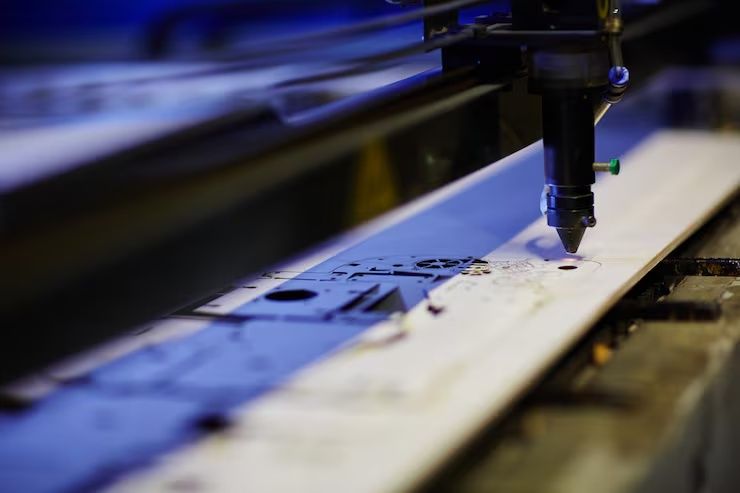
Importance of UV Curing Machines in Modern Manufacturing
Using UV curing machines offers several advantages over traditional curing methods:
-
Dramatically faster processing times, enabling higher production rates and reduced product lead times.
-
Lower energy consumption, especially with UV LED variants, which reduce operational costs and minimize heat damage to sensitive substrates.
-
Clean and environmentally friendlier operations by eliminating or reducing the need for solvents and volatile organic compounds (VOCs).
-
Improved product quality including better adhesion, surface hardness, scratch resistance, and uniform finish.
These benefits make UV curing machines essential for industries where speed, precision, sustainability, and product durability are important priorities.
How UV Curing Machines Work (Principles)
-
Materials (ink, adhesive, coating, resin) are formulated with photoinitiators which are compounds that react to specific UV wavelengths.
-
When exposed to UV light of correct intensity and wavelength, the photoinitiators are activated, producing reactive species (free radicals or cations) that cause cross-linking among monomers/oligomers.
-
This cross-linking transforms the material from a liquid or semi-liquid form to a solid polymer network almost instantly.
-
Key parameters include wavelength (e.g. 365-405 nm common for many UV LED systems), light intensity, exposure distance, and exposure time.
Types of UV Curing Machines & Key Components
| Type | Best For | Key Components / Features |
|---|---|---|
| UV LED Curing Systems | Heat-sensitive substrates, precision work, energy savings | LED lamp, narrow wavelength, instant on/off, long lifespan |
| Traditional UV Lamp Systems | Coatings needing broad spectrum, thick materials | Mercury or metal-halide lamps, higher power draw, more heat |
| Spot / Wand Curing Devices | Localised curing, small parts or repairs | Focused beam, adjustable distance, portable units |
| Conveyor / Flood UV Systems | Large-area curing, panel coatings, high volume operations | UV flood lamps, conveyors, uniform exposure, cooling systems |
Components typically include the UV light source, optical system (filters, lenses), cooling (air or water), control system (timers, safety interlocks), and handling system (conveyor or positioning jig).
Applications of UV Curing Machines
-
Printing & Packaging: Rapid curing of ink and varnishes on packaging materials, labels, signage.
-
Electronics & Circuit Boards: Coatings, encapsulation, adhesive bonding without damaging heat-sensitive parts.
-
Automotive & Aerospace: Durable coatings, component bonding, trim finishes.
-
Medical Devices & Pharmaceuticals: Sterile coatings, adhesive joints, plastic or glass component assembly.
-
Wood Coating & Furniture: Clear or decorative coatings that cure fast, resist scratches and chemicals.
Selection Guide: How to Choose the Right UV Curing Machine
-
Match the wavelength with the material’s photoinitiator requirements.
-
Consider UV LED vs traditional lamps based on heat sensitivity, energy costs, and maintenance.
-
Determine exposure time and intensity needed for full cure.
-
Check for cooling system design to avoid overheating.
-
Assess safety features (shielding, interlocks) to protect workers from UV exposure.
-
Evaluate throughput requirements — spot curing vs flood vs conveyor systems.
-
Consider life cycle cost (lamp or LED replacement, energy use) rather than just upfront price.
Maintenance, Safety & Regulatory Considerations
-
Lamps degrade over time; UV output drops — monitor intensity and replace parts as needed.
-
Clean optical surfaces and filters to maintain uniform cure.
-
Use proper PPE and protective shielding to guard against UV exposure.
-
Ensure machine meets relevant safety regulations and emission norms (especially for ozone or heat).
-
Maintain records of curing parameters if needed for quality control or regulatory compliance.
Trends & Recent Developments in UV Curing (2024-2025)
-
Widespread adoption of UV LED systems for lower energy use and less heat.
-
Integration of automation and robotics to incorporate UV curing directly into continuous production lines.
-
New formulations for low-VOC, solvent-free, or water-based UV-curable materials.
-
Real-time monitoring and adaptive control systems to ensure consistent curing across batches.
-
More compact, modular designs suitable for small workshops and scale-up applications.
FAQs
Q1. Can UV LED curing machines replace traditional UV lamp systems?
Yes, in many applications. LEDs offer energy efficiency, less heat, and lower maintenance. However, certain materials or coatings needing broad spectrum UV may still require traditional lamps.
Q2. How quickly does UV curing occur?
Often in seconds or fractions of a second, depending on UV intensity, wavelength, and material formulation.
Q3. Are UV curing machines safe to operate?
They can be safe when equipped with proper shielding, interlocks, and when operators use personal protective equipment (PPE). Direct exposure to UV light should be avoided.
Q4. When should the UV lamp or LED be replaced?
Replace when curing becomes inconsistent, output intensity drops, or visible degradation of lamp/LED components becomes apparent.
Q5. Is UV curing environmentally friendly?
Yes, generally. It reduces solvent use, lowers VOC emissions, and UV LED systems consume less energy and emit less heat.
Conclusion
UV curing machines offer a powerful alternative to heat- or solvent-based curing, delivering speed, precision, and sustainable performance. Whether for printing and packaging, electronics, automotive, or medical industries, properly selecting and using UV curing technology can improve product quality, reduce costs, and support regulatory compliance. As UV LED systems, automation, and material science continue to advance, UV curing machines will become more adaptable, efficient, and essential in modern manufacturing.