Guide to Industrial Sensors: Types, Applications, and Market Trends
Industrial sensors play a crucial role in modern manufacturing, automation, and digital transformation. As industries adopt IoT (Internet of Things), smart factories, and Industry 4.0 technologies, the demand for advanced sensors has grown significantly. These devices measure, monitor, and control processes in real-time, enabling businesses to improve productivity, safety, and efficiency.
This guide explores the types of industrial sensors, their applications across industries, and the key market trends shaping their future.
Importance of Industrial Sensors
Industrial sensors are essential because they:
-
Enable automation by providing real-time data for machines and systems.
-
Improve efficiency with accurate monitoring and control of processes.
-
Ensure safety by detecting hazardous conditions like gas leaks or overheating.
-
Support predictive maintenance through data-driven insights.
-
Enhance quality control by ensuring product consistency.
Types of Industrial Sensors
The variety of sensors available allows industries to address specific needs. Below are the most widely used categories:
-
Temperature Sensors
-
Measure heat levels in machinery and processes.
-
Examples: Thermocouples, RTDs, infrared sensors.
-
Applications: Food processing, chemical plants, HVAC systems.
-
-
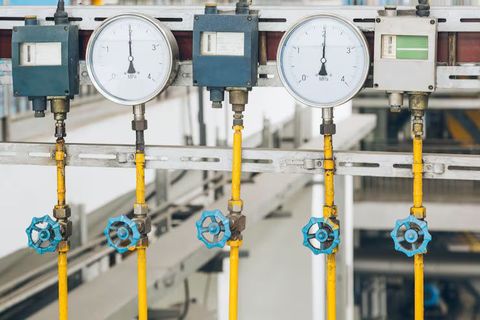
Pressure Sensors
-
Detect changes in gas or liquid pressure.
-
Applications: Oil & gas, automotive, hydraulic systems.
-
-
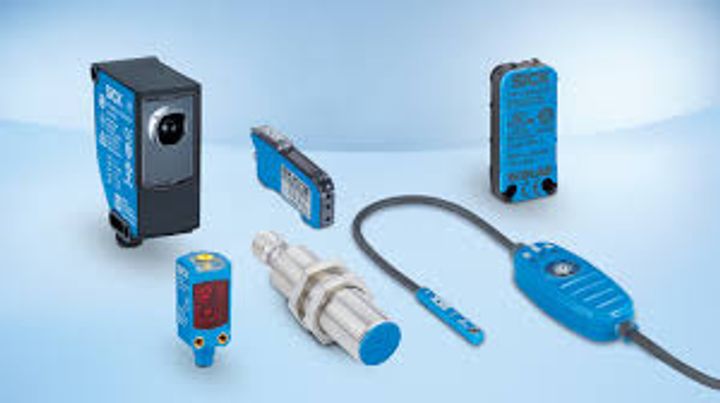
Proximity Sensors
-
Detect the presence or absence of objects without contact.
-
Applications: Robotics, packaging, material handling.
-
-
Level Sensors
-
Monitor the level of liquids, solids, or powders in containers.
-
Applications: Water treatment, pharmaceuticals, food industry.
-
-
Flow Sensors
-
Measure fluid or gas flow rate.
-
Applications: Chemical processing, energy plants.
-
-
Vibration Sensors
-
Detect irregular vibrations for predictive maintenance.
-
Applications: Heavy machinery, manufacturing equipment.
-
-
Gas and Chemical Sensors
-
Identify the presence of hazardous gases or chemicals.
-
Applications: Mining, oil refineries, safety systems.
-
-
Image and Vision Sensors
-
Capture visual data for inspection and automation.
-
Applications: Quality control, robotics, packaging.
-
Applications of Industrial Sensors
Industrial sensors are used across multiple sectors, including:
-
Manufacturing – Robotics, automation, process control.
-
Automotive – Engine monitoring, safety features, autonomous driving.
-
Oil & Gas – Pressure monitoring, leak detection, safety compliance.
-
Pharmaceuticals – Quality assurance, sterile processing, temperature control.
-
Energy & Utilities – Smart grids, renewable energy monitoring, power plants.
-
Construction – Equipment safety, environmental monitoring.
Market Trends in Industrial Sensors
-
Integration with IoT and IIoT
-
Sensors are now a backbone of Industrial Internet of Things (IIoT), providing real-time analytics.
-
-
Adoption of Wireless Sensors
-
Wireless technology reduces installation costs and increases flexibility.
-
-
AI and Machine Learning
-
AI-driven analytics help transform raw sensor data into actionable insights.
-
-
Miniaturization and Smart Sensors
-
Smaller, more efficient sensors are being developed for complex systems.
-
-
Growing Demand in Asia-Pacific
-
Manufacturing hubs like China and India are driving sensor market growth.
-
-
Focus on Energy Efficiency
-
Sensors are vital in sustainability efforts, reducing energy waste in operations.
-
Comparison Table: Common Industrial Sensors
| Sensor Type | Key Function | Industry Applications | Example Use Case |
|---|---|---|---|
| Temperature | Measure heat levels | Food, chemical, HVAC | Monitor furnace heat |
| Pressure | Detect gas/liquid pressure | Oil & gas, automotive | Pipeline safety monitoring |
| Proximity | Detect nearby objects | Robotics, packaging | Assembly line automation |
| Vibration | Identify irregular motion | Heavy machinery, maintenance | Detect motor malfunction |
| Vision/Image | Capture visual data | Robotics, quality control | Detect product defects |
How to Choose the Right Industrial Sensor
When selecting an industrial sensor, businesses should consider:
-
Application-specific requirements (temperature range, pressure, vibration level).
-
Environmental conditions (humidity, dust, chemical exposure).
-
Accuracy and reliability (precision required for the process).
-
Connectivity (wired vs wireless, IoT integration).
-
Cost and scalability (balancing performance with budget).
Checklist for Businesses
-
Identify critical processes requiring real-time monitoring.
-
Evaluate sensor compatibility with existing systems.
-
Ensure compliance with safety and industry standards.
-
Plan for predictive maintenance using sensor data.
-
Choose vendors offering long-term support and updates.
Conclusion
Industrial sensors are the backbone of modern automation and Industry 4.0. From improving efficiency and safety to driving predictive maintenance and data-driven decisions, sensors are transforming the industrial landscape. With emerging trends such as AI, IoT, and wireless connectivity, the future of industrial sensors points toward smarter, more connected, and energy-efficient solutions.
Businesses that invest in the right sensor technologies today will be better positioned for competitiveness and sustainability tomorrow.