Guide To Industrial IoT Sensors for Smart Factories
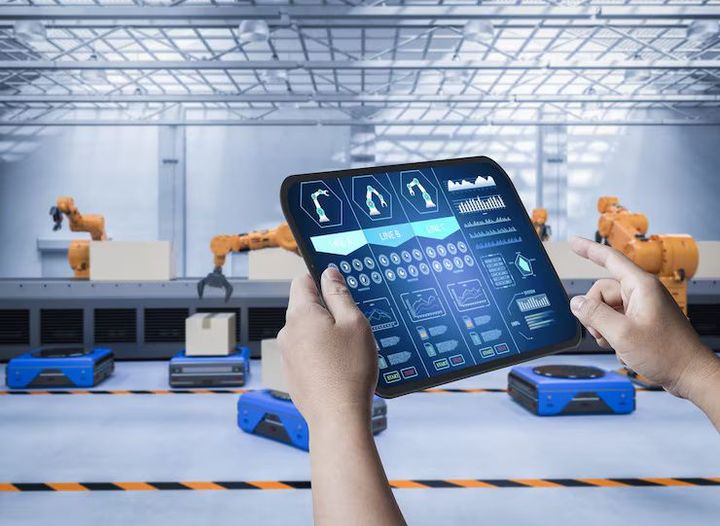
Industrial IoT (IIoT) sensors are devices that collect, measure, and transmit data from machines, equipment, and environments within manufacturing facilities. These sensors form the foundation of smart factories, where data-driven systems enable automation, monitoring, and optimization of industrial processes.
Traditionally, factories relied on manual inspections and isolated control systems. With the rise of digital transformation, industries now integrate sensors into production lines to capture real-time information such as temperature, pressure, vibration, humidity, and energy usage. This data is transmitted through connected networks and analyzed to improve efficiency and decision-making.
Smart factories use IIoT sensors as part of broader systems that include edge computing, cloud platforms, and industrial automation software. These sensors help create interconnected environments where machines communicate with each other, often referred to as machine-to-machine (M2M) communication.
Common types of industrial IoT sensors include:
-
Temperature sensors for thermal monitoring
-
Pressure sensors for fluid and gas systems
-
Proximity sensors for object detection
-
Vibration sensors for predictive maintenance
-
Optical sensors for quality inspection
Importance – Why Industrial IoT Sensors Matter Today
Industrial IoT sensors play a key role in modern manufacturing due to increasing demand for efficiency, precision, and scalability. As industries move toward Industry 4.0, these sensors help bridge the gap between physical operations and digital intelligence.
They are widely used across sectors such as:
-
Manufacturing and assembly plants
-
Oil and gas facilities
-
Automotive production lines
-
Food processing units
-
Pharmaceutical manufacturing
The importance of IIoT sensors can be understood through the problems they help address:
-
Operational inefficiency:Sensors provide real-time monitoring, helping identify bottlenecks and optimize workflows.
-
Unplanned downtime:Vibration and condition-monitoring sensors detect early signs of equipment failure.
-
Energy consumption:Energy sensors track usage patterns, enabling better resource management.
-
Quality control issues:Optical and vision sensors help maintain consistent product quality.
-
Safety risks:Environmental sensors detect hazardous conditions such as gas leaks or extreme temperatures.
Below is a simple comparison of traditional vs smart factory systems:
| Feature | Traditional Factory | Smart Factory (IIoT-Based) |
|---|---|---|
| Data Collection | Manual / Periodic | Real-time / Automated |
| Maintenance Approach | Reactive | Predictive |
| System Integration | Limited | Highly Integrated |
| Decision Making | Experience-based | Data-driven |
| Production Flexibility | Low | High |
Recent Updates – Trends and Developments (2025–2026)
Industrial IoT sensors have evolved significantly over the past year, with advancements in connectivity, intelligence, and deployment models.
-
Edge AI integration (2025):Many sensors now include embedded artificial intelligence, allowing them to process data locally and reduce latency. This is especially useful in time-sensitive applications such as robotics and automated inspection.
-
5G-enabled industrial connectivity (2025–2026):The adoption of private 5G networks in manufacturing environments has improved the reliability and speed of sensor data transmission. This supports large-scale sensor deployments without network congestion.
-
Wireless sensor networks expansion:Industries are increasingly adopting battery-powered and low-energy sensors to reduce wiring complexity and installation challenges.
-
Digital twin technology growth:Sensors are now used to feed real-time data into digital models of factories, enabling simulation and predictive analysis.
-
Cybersecurity enhancements:With increased connectivity, there has been a stronger focus on securing sensor data through encryption and authentication protocols.
The following table highlights key trends:
| Trend | Description | Impact on Industry |
|---|---|---|
| Edge Computing Sensors | Local data processing within devices | Faster decision-making |
| 5G Connectivity | High-speed, low-latency communication | Scalable sensor deployment |
| AI-Driven Analytics | Smart data interpretation | Improved predictive insights |
| Wireless Sensor Adoption | Reduced infrastructure dependency | Flexible installations |
| Cybersecurity Protocols | Enhanced data protection | Safer industrial networks |
Laws or Policies – Regulatory and Compliance Factors
Industrial IoT sensors are influenced by various regulations and standards that ensure safety, data security, and interoperability. These policies vary by country but often follow international frameworks.
In India and globally, the following areas are important:
-
Data protection and privacy:Regulations such as data protection laws require industries to secure data collected from sensors, especially when integrated with cloud systems.
-
Industrial safety standards:Sensors used in hazardous environments must comply with safety certifications such as ATEX or IECEx for explosion-proof equipment.
-
Environmental regulations:Sensors are used to monitor emissions and waste, helping industries comply with environmental standards set by authorities.
-
Interoperability standards:Protocols such as MQTT, OPC UA, and Modbus are commonly used to ensure compatibility between devices and systems.
-
Government initiatives:Programs supporting smart manufacturing and digital transformation encourage the adoption of IoT technologies, including sensors.
Compliance ensures that industrial systems operate safely and efficiently while minimizing risks related to data misuse and equipment failure.
Tools and Resources – Platforms and Technologies
Several tools and platforms support the implementation and management of industrial IoT sensors in smart factories. These resources help collect, analyze, and visualize sensor data.
Common tools include:
-
IoT platforms:
-
Cloud-based systems for managing sensor data
-
Provide dashboards, analytics, and integration capabilities
-
-
Edge computing devices:
-
Process sensor data locally before sending it to central systems
-
Reduce latency and bandwidth usage
-
-
Industrial communication protocols:
-
MQTT for lightweight messaging
-
OPC UA for secure and standardized communication
-
-
Data analytics software:
-
Tools for predictive maintenance and performance monitoring
-
Use machine learning algorithms to detect patterns
-
-
Simulation and digital twin tools:
-
Create virtual models of industrial systems
-
Use sensor data for testing and optimization
-
Below is a simplified overview:
| Tool Category | Function | Example Use Case |
|---|---|---|
| IoT Platforms | Data collection and visualization | Monitoring factory operations |
| Edge Devices | Local processing of sensor data | Real-time decision-making |
| Communication Protocols | Device connectivity | Machine-to-machine communication |
| Analytics Tools | Data interpretation | Predictive maintenance |
| Digital Twin Software | Simulation and modeling | Process optimization |
FAQs – Common Questions About Industrial IoT Sensors
What are industrial IoT sensors used for?
Industrial IoT sensors are used to monitor and measure physical conditions such as temperature, pressure, and motion within industrial environments. They help improve efficiency, safety, and productivity.
How do IoT sensors improve predictive maintenance?
Sensors detect early signs of wear or malfunction, such as unusual vibrations or temperature changes. This allows maintenance to be scheduled before equipment failure occurs.
Are wireless sensors reliable in industrial environments?
Modern wireless sensors are designed for industrial use and can operate reliably with strong connectivity protocols and secure communication standards.
What industries benefit the most from IIoT sensors?
Manufacturing, oil and gas, automotive, pharmaceuticals, and food processing industries benefit significantly from IoT sensor integration.
How is data from sensors analyzed?
Sensor data is processed using analytics software, often combined with machine learning, to identify patterns, predict outcomes, and support decision-making.
Conclusion
Industrial IoT sensors are a central component of smart factories, enabling real-time monitoring, automation, and data-driven insights. By connecting physical systems with digital technologies, these sensors help industries improve efficiency, reduce downtime, and enhance safety.
Recent advancements such as edge computing, 5G connectivity, and AI-driven analytics have further strengthened the role of sensors in industrial environments. At the same time, regulatory frameworks and standards ensure that these systems operate securely and reliably.