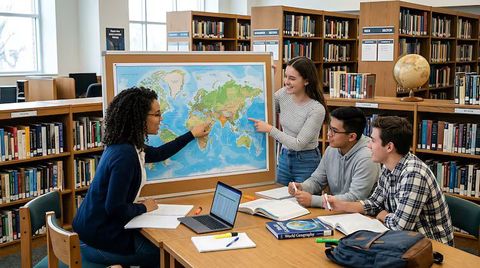
Global Study Programs Guide With International Education and University Insights
Global study programs are structured educational pathways that allow students to pursue learning in another country or participate in international academic experiences. They can include undergraduate and postgraduate degrees, exchange programs, short-term academic programs, research placements, pathway programs, and other forms of international education.
The growth of international education is connected to the increasing movement of students across borders. Universities have expanded international partnerships, while students increasingly consider academic programs based on subjects, teaching language, research opportunities, campus environments, and future professional pathways. OECD data shows that international student mobility expanded substantially over the past decade, although recent patterns have become more varied across destinations.
A global study programs guide therefore needs to consider more than university selection. Students also need to understand admission requirements, academic qualifications, language expectations, study permits or visas, housing, financial planning, health requirements, and rules affecting international students.
Common Types of Global Study Programs
International education can take several forms:
- Degree programs completed at an overseas university
- Student exchange programs between partner institutions
- Short-term academic or summer programs
- Research and postgraduate programs
- Foundation and pathway programs
- Professional and technical education
- Joint or dual-degree programs
- Online and blended international learning
The structure varies by university and destination. Some programs require students to spend their entire study period abroad, while others combine domestic and international study.
How University Selection Works
University selection generally begins with the subject or academic field a student wants to study. Students can then compare curriculum structure, entry requirements, teaching language, academic resources, location, campus environment, and qualification recognition.
A university should also be evaluated according to whether its program matches the student's previous education and long-term academic objectives. Rankings can provide additional information, but they represent selected indicators rather than a complete description of academic quality.
Importance
Global study programs affect students, families, universities, governments, and wider communities. For students, international education can involve adapting to a different academic system, communicating across cultures, and managing everyday responsibilities in a new environment.
International study also creates practical challenges. Students may need to understand application procedures, prepare academic documents, demonstrate language proficiency, arrange accommodation, and meet immigration requirements before travelling.
Why International Education Matters
International education can provide exposure to different teaching methods, academic perspectives, languages, research environments, and cultural settings. These experiences can contribute to broader educational development and international awareness.
International students are also an important part of higher education systems in many countries. OECD data indicates that international students are particularly concentrated in areas such as science, technology, engineering, mathematics, and doctoral education.
Who Is Affected
Global study programs can be relevant to:
- Secondary-school graduates considering undergraduate education
- University students seeking exchange opportunities
- Graduates preparing for postgraduate education
- Researchers pursuing international academic collaboration
- Families planning international education
- Universities developing international partnerships
- Governments managing student migration and education policy
Common Planning Factors
| Planning Area | What Students Usually Examine |
|---|---|
| Academic program | Curriculum, qualification, duration |
| Admission | Previous education, grades, documents |
| Language | Language requirements and assessment |
| Immigration | Visa or study permit rules |
| Housing | Campus and private accommodation options |
| Financial planning | Tuition, living expenses and required funds |
| Health | Insurance and destination requirements |
| Academic recognition | Recognition of the qualification |
| Student support | Academic, cultural and administrative assistance |
Careful planning is important because requirements can differ significantly between universities and countries.
Recent Updates
International education has changed noticeably during 2024–2026. One major development has been a shift from rapid post-pandemic growth toward more managed international student mobility in several major destinations.
OECD reporting indicates that more than 1.8 million new international tertiary students entered OECD countries in 2024, representing a decline of about 13% compared with 2023. The decline was particularly visible in several major destination countries, while some other destinations recorded continued growth.
More Selective International Student Policies
Several countries have introduced or adjusted policies concerning student numbers, financial requirements, application verification, dependants, and post-study pathways. These changes mean that students cannot assume that previous admission or visa conditions remain unchanged.
OECD analysis published in 2026 describes international student mobility as entering a more uncertain phase, with some countries tightening policies while others continue expanding international enrolment.
Growth of English-Taught Programs
English-taught programs have expanded across several non-English-speaking OECD countries. This has made international education accessible to students who may not speak the local language fluently, although some countries are now reviewing the balance between English-medium and national-language education.
Digital Application Processes
Digital tools are increasingly involved in university applications, document submission, identity verification, immigration procedures, and communication with institutions. OECD research also identifies growing use of digital technologies in migration administration.
Students should therefore check current institutional and government information rather than relying exclusively on older guides.
Laws or Policies
International education is strongly influenced by the laws and policies of the destination country. Because global study programs involve different jurisdictions, there is no single worldwide student-visa system.
Student Visa and Study Permit Rules
Students normally need authorization to study when their program and destination require it. Requirements can include:
- Confirmation of admission
- Valid identity documents
- Evidence of financial resources
- Health or insurance documentation
- Language evidence where applicable
- Background or security checks
- Biometric information in some systems
The exact requirements depend on the destination, study level, nationality, program duration, and immigration category.
Rules During and After Study
Some destinations permit international students to undertake limited employment during their studies, while others impose specific restrictions. Conditions can include limits on hours, permitted activities, academic status, or authorization requirements.
Post-study immigration policies also vary considerably. OECD research notes that some countries maintain pathways connected to employment or longer-term residence, while others have introduced more restrictive conditions.
Policy Changes Since 2024
Recent policy adjustments in several major destinations have included limits on student numbers, stronger application verification, changes to financial requirements, and revisions to post-graduation pathways. OECD research reports particularly significant policy tightening in Australia, Canada, the Netherlands, and the United Kingdom since 2024.
These rules can change independently of university admission policies. Students therefore need to distinguish academic eligibility from immigration eligibility.
Tools and Resources
Several categories of tools can help students organize international education planning.
University Search Platforms
University databases can help compare institutions by country, academic discipline, qualification level, language, duration, and admission requirements. Official university pages should be checked for the current program structure and application conditions.
Scholarship and Funding Databases
Scholarship databases can help students identify academic funding programs, institutional grants, government-supported programs, and research funding. Eligibility may depend on nationality, academic level, subject, academic performance, or other criteria.
Language Assessment Tools
Language assessment platforms can help students understand their current proficiency and prepare for examinations required by particular institutions or destinations.
Planning Templates
A study-abroad planning spreadsheet can organize:
- University names
- Program titles
- Application deadlines
- Required documents
- Language requirements
- Visa requirements
- Tuition information
- Housing information
- Funding options
- Application status
A document checklist can also reduce the risk of missing required materials.
Official Government Resources
Government immigration portals are important for checking current visa, study permit, financial, health, and employment rules. University international offices can provide additional information about institution-specific procedures and student support.
FAQs
What are global study programs?
Global study programs are educational pathways involving international universities, exchange arrangements, research programs, short-term academic experiences, or other forms of cross-border education.
How do I choose a university for international education?
Compare the academic program, entry requirements, teaching language, qualification recognition, location, study environment, available support, and applicable immigration requirements.
What documents are usually needed for global study programs?
Common documents include academic records, identity documents, application forms, language evidence where required, admission materials, and financial or immigration documents. Exact requirements vary by institution and destination.
Do international students need a study visa?
Many destinations require a student visa or study permit for international students, particularly for longer programs. Requirements depend on the destination, nationality, program, and duration.
Have international education policies changed recently?
Yes. Several countries have revised student immigration and international enrolment policies since 2024. Changes have included student-number management, stronger verification, financial requirements, dependant rules, and post-study pathways.
Conclusion
Global study programs connect students with universities, academic systems, cultures, and research environments around the world. International education planning involves academic selection as well as immigration, financial, housing, language, and documentation considerations. Recent developments show that international student mobility is becoming more varied, with some destinations tightening policies while others continue developing international education pathways.