Foundry Cooling Conveyors Guide: Designs, Working Principles, Materials and Industrial Uses
Foundry cooling conveyors are material-handling systems used to move and cool metal castings after they leave molding, pouring, or shakeout operations. A typical foundry process produces castings at high temperatures, so controlled cooling is needed before later stages such as inspection, cleaning, trimming, shot blasting, or machining. Depending on the production process, a cooling conveyor may use ambient air, forced airflow, vibration, enclosed cooling tunnels, or a combination of these methods.
What Is a Foundry Cooling Conveyor?
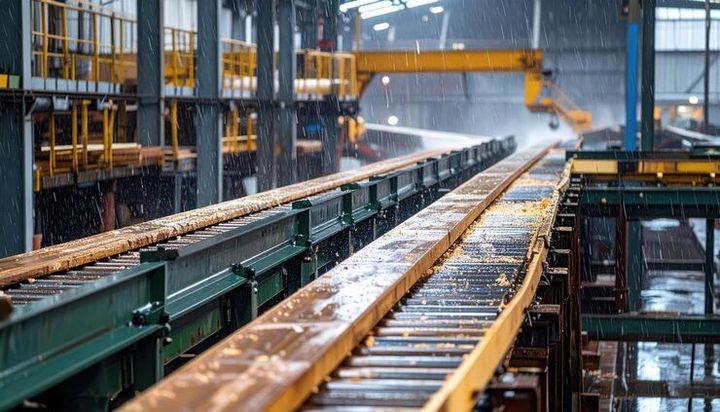
A foundry cooling conveyor is a conveyor system designed to transport hot castings while allowing heat to leave the metal gradually. Unlike ordinary material conveyors, these systems must operate around high temperatures, abrasive sand, metal particles, vibration, and heavy loads.
Castings can have different shapes, masses, wall thicknesses, and cooling requirements. A large iron casting may retain heat much longer than a small aluminum component. For this reason, conveyor length, conveying speed, airflow, surface design, and cooling time can vary according to the casting process.
Cooling conveyors are commonly positioned after molding and shakeout equipment. In some layouts, they form part of a continuous production line that connects molding, shakeout, cooling, cleaning, inspection, and finishing operations.
Where the Technology Comes From
Foundry cooling equipment developed from the need to handle hot castings more systematically. Earlier production arrangements often relied on cooling areas, baskets, manual movement, or long transport paths. As foundries became more automated, conveyors became an important part of continuous material flow.
Some systems cool the castings directly, while others use sand as part of the cooling process. In return-sand systems, heated molding sand can also be cooled and conditioned before being sent back toward the molding process. Research and industrial practice have demonstrated approaches involving rotary drums, vibrating systems, fluidized beds, and air-assisted cooling.
How a Basic Cooling Conveyor Works
The basic principle is straightforward. Hot castings enter the conveyor at one point and travel at a controlled speed while heat is transferred from the metal to the surrounding air or another cooling medium.
The main stages can be described as:
- Loading: Hot castings are transferred onto the conveyor.
- Transport: The conveyor moves the castings through a defined cooling path.
- Heat transfer: Heat moves from the casting surface into surrounding air or another medium.
- Temperature reduction: The casting gradually reaches a lower temperature.
- Discharge: The cooled casting moves toward cleaning, inspection, separation, or another process.
The actual cooling rate depends on casting material, geometry, starting temperature, airflow, surface area, conveyor speed, and surrounding conditions.
Importance
Why Cooling Matters in Foundries
Controlled cooling affects several stages of foundry production. Castings that remain excessively hot can be difficult to handle, inspect, clean, or transfer to downstream equipment.
Cooling also affects the physical behavior of metal during processing. Uneven or very rapid temperature changes can influence thermal stresses, particularly in castings with complicated shapes or different section thicknesses. The appropriate cooling approach therefore depends on the casting and the production process rather than on one universal conveyor design.
Benefits for Production Flow
A cooling conveyor can create a defined transition between casting and later operations. Instead of moving hot castings randomly through a plant, the conveyor provides a predictable path and controlled residence period.
It can also integrate with equipment such as shakeout systems, sand separators, shot-blasting machines, inspection stations, and automated handling equipment. Some enclosed cooling systems use controlled airflow and temperature monitoring to manage the cooling environment.
Common Industrial Applications
Foundry cooling conveyors can be used with different types of castings and production lines, including:
- Automotive and transportation components
- Pump and valve castings
- Industrial machinery components
- Agricultural equipment castings
- Construction equipment components
- Ferrous metal castings
- Non-ferrous metal castings
- Small and medium-sized production components
- Heavy castings requiring extended cooling paths
The conveyor arrangement depends on the material, casting dimensions, production volume, available floor area, and downstream process requirements.
Main Design Factors
| Design factor | What it affects |
|---|---|
| Conveyor length | Available cooling time |
| Conveyor speed | Residence time of castings |
| Airflow | Rate of heat removal |
| Casting mass | Amount of heat retained |
| Surface area | Contact with surrounding air |
| Conveyor material | Heat and abrasion resistance |
| Load capacity | Maximum casting weight |
| Layout | Integration with other equipment |
| Enclosure | Airflow and dust control |
| Temperature monitoring | Process observation |
Recent Updates
Increased Automation
From 2024 through 2026, the broader foundry sector has continued moving toward automation, energy monitoring, environmental controls, and data-based process management. The trend is particularly relevant to cooling equipment because conveyors can be integrated with sensors, variable-speed drives, temperature monitoring, and automated material handling.
The Bureau of Energy Efficiency's foundry-sector program in India highlights energy audits and energy-efficient technologies as areas of attention for foundry clusters. Its current sector information identifies energy consumption and environmental performance as continuing challenges for Indian foundries.
Temperature Monitoring
Modern cooling arrangements can incorporate temperature measurement at different points along a conveyor. Optical temperature sensors, infrared instruments, or other measurement systems can help operators observe how castings change temperature during transport.
Temperature data can also be used with automated controls. For example, a conveyor system may adjust its movement or airflow according to defined process conditions. The exact control strategy depends on the equipment and foundry process.
Compact Conveyor Layouts
Factory floor space has become an important design consideration. Cooling equipment can use straight conveyors, serpentine paths, inclined sections, rotary arrangements, or enclosed tunnels to provide sufficient residence time within a particular plant layout.
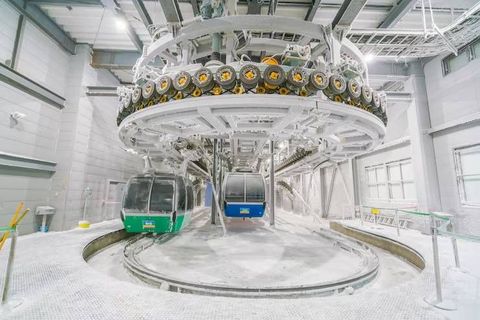
Some systems use spiral or compact configurations to provide a longer cooling path without requiring the same straight-line floor arrangement. The underlying principle remains the same: the casting must remain in the controlled cooling environment for an appropriate period.
Greater Attention to Dust and Air Management
Foundry operations can generate dust from sand, shakeout, cleaning, and casting handling. Cooling systems are therefore increasingly considered as part of the overall plant air-management arrangement rather than as isolated conveyor equipment.
Enclosed equipment and controlled airflow can help manage where heated air and dust move. Any dust-control arrangement still needs to be designed around the particular foundry process and applicable environmental requirements.
Laws or Policies
Occupational Safety in India
Foundries are specifically identified as hazardous-process industries under India's Occupational Safety, Health and Working Conditions Code, 2020. The schedule includes both ferrous and non-ferrous foundries, including casting and related cleaning activities.
The Code came into force on November 21, 2025, according to a Central Government notification. The Ministry of Labour and Employment also maintains the current Labour Codes, rules, notifications, and related guidance.
For cooling conveyor operations, workplace safety considerations can include guarding of moving parts, protection from hot surfaces, safe access, emergency stopping arrangements, suitable personal protective equipment, and controls for dust, noise, and other workplace hazards. Specific requirements depend on the facility and applicable rules.
Air Pollution Requirements
Foundries are also subject to environmental regulation. India's air-pollution framework gives the Central Pollution Control Board and State Pollution Control Boards responsibilities for prevention and control of industrial air pollution.
India has notified emission standards for certain foundry furnace operations. For fuel-based foundry furnaces, the notified standards include limits for sulfur dioxide and nitrogen oxides. These requirements concern furnace emissions rather than the cooling conveyor itself, but the conveyor forms part of the wider foundry process and its dust and air-handling arrangement may need to be considered during plant planning.
Noise and Environmental Controls
Industrial facilities also need to consider applicable noise-control requirements. India's Noise Pollution (Regulation and Control) Rules, 2000 address noise-producing sources, including industrial activities.
Because foundry layouts differ considerably, operators should consult the applicable central and state requirements, plant approvals, and current technical rules before changing equipment or production arrangements.
Tools and Resources
Temperature Measurement Tools
Infrared thermometers and thermal imaging equipment can help observe casting temperatures without direct contact. For continuous production, fixed temperature sensors may be integrated into conveyor systems.
Conveyor Calculation Resources
Basic conveyor calculations can help estimate conveying speed, residence time, loading, and required conveyor length. A simplified relationship is:
Cooling residence time = Conveyor length ÷ Conveyor speed
For example, a longer conveyor operated at a controlled speed can provide more time for heat transfer. Actual cooling calculations require additional information about casting material, mass, geometry, airflow, and starting temperature.
Energy and Environmental Resources
The Bureau of Energy Efficiency provides information related to energy efficiency in Indian industrial sectors, including foundry clusters. CPCB resources provide environmental standards and technical information relevant to industrial pollution control.
Engineering Documentation
Useful documents for evaluating a foundry cooling conveyor can include:
- Equipment layout drawings
- Conveyor capacity calculations
- Casting temperature records
- Airflow measurements
- Motor and drive specifications
- Material specifications
- Maintenance records
- Workplace risk assessments
- Environmental monitoring records
These resources help connect conveyor performance with the wider production process.
FAQs
What is a foundry cooling conveyor?
A foundry cooling conveyor transports hot metal castings while allowing heat to dissipate. Depending on the design, cooling can occur through ambient air, forced airflow, controlled ventilation, vibration, or an enclosed cooling tunnel.
How does a foundry cooling conveyor work?
The conveyor moves hot castings at a controlled speed through a defined path. During transportation, heat transfers from the casting to the surrounding environment, gradually reducing its temperature before the casting reaches the next production stage.
What materials are used for foundry cooling conveyors?
Materials depend on temperature, load, abrasion, and operating conditions. Common construction choices can include carbon steel, stainless steel, heat-resistant alloys, abrasion-resistant plates, specialized chains, and engineered conveyor surfaces.
What are the main types of foundry cooling conveyors?
Common arrangements include belt-based conveyors, chain conveyors, vibratory conveyors, spiral conveyors, rotary cooling systems, and enclosed air-cooling tunnels. The appropriate configuration depends on casting characteristics, required cooling time, plant layout, and production process.
Why is temperature control important in foundry cooling conveyors?
Temperature control helps provide a predictable transition between casting and later processing. Monitoring can also help identify variations in cooling conditions and support consistent process operation.
Conclusion
Foundry cooling conveyors are designed to transport hot castings while providing controlled heat removal before downstream processing. Their design can involve conveyor speed, airflow, cooling length, material selection, temperature monitoring, and plant layout. Current foundry trends increasingly connect cooling equipment with automation, energy monitoring, environmental controls, and data collection. In India, foundry operations are also shaped by occupational safety and environmental regulations that apply to the wider production facility.

You May Also Like