Explore Vehicle Assembly Line Automation With Industrial Robots and Production Systems
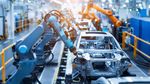
Vehicle assembly line automation combines industrial robots, automated machinery, conveyor systems, sensors, software, and production controls to organize how vehicles move through manufacturing facilities. Vehicle Assembly Line Automation is used for tasks such as body assembly, welding, painting, component installation, inspection, and material movement.
The development of these systems comes from the need to handle increasingly complex vehicles while maintaining consistent production processes. Modern factories can combine human workers with robotic cells, automated guided vehicles, machine vision, and connected production software to create coordinated manufacturing environments.
Context
What Vehicle Assembly Line Automation Means
A vehicle assembly line is organized around a sequence of manufacturing stages. Instead of completing an entire vehicle in one location, different stations perform specific operations as the vehicle body or chassis progresses through the factory.
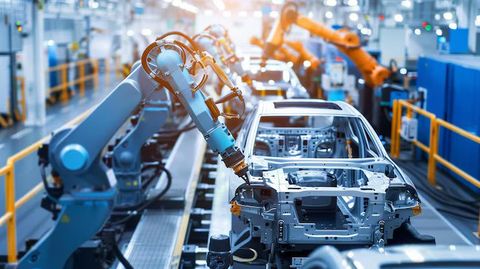
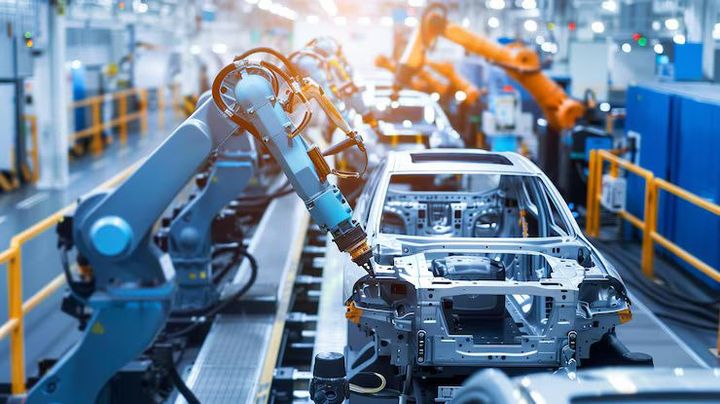
Vehicle Assembly Line Automation introduces automated equipment into these stages. Industrial robots may perform repetitive movements, while sensors and control systems coordinate equipment and monitor production conditions. Automation can range from a single robotic welding cell to a highly integrated production system covering multiple factory areas.
Common automated operations include:
- Body panel positioning
- Robotic welding
- Adhesive application
- Painting and coating
- Component handling
- Fastening and tightening
- Glass installation
- Inspection and measurement
- Material transportation
- Production data collection
Role of Industrial Robots
Industrial robots are programmable machines designed to perform physical operations with controlled movement. In vehicle manufacturing, robotic arms can handle components, position parts, weld assemblies, apply materials, and perform other repetitive operations.
The use of industrial robots is particularly relevant where processes require repeatable movement, controlled positioning, or work around equipment that may present physical hazards. Robots can also operate continuously within defined production cycles while human personnel supervise, maintain, program, and manage the surrounding systems.
Main Production Systems
Vehicle factories generally contain several connected production systems rather than one automated machine. These systems may include body-in-white production, paint operations, final assembly, inspection, logistics, and factory information systems.
A simplified production flow can look like this:
| Production Stage | Common Automation | Main Purpose |
|---|---|---|
| Body Assembly | Welding robots, fixtures | Join structural components |
| Paint Preparation | Handling robots, conveyors | Move and prepare vehicle bodies |
| Painting | Robotic applicators | Apply controlled paint layers |
| Component Assembly | Robots, fastening tools | Install vehicle components |
| Material Handling | AGVs, conveyors | Move parts and assemblies |
| Inspection | Vision systems, sensors | Detect dimensional or assembly issues |
| Final Testing | Test equipment, data systems | Check vehicle functions |
The exact configuration depends on vehicle design, factory layout, production volume, component complexity, and manufacturing strategy.
Importance
Why Automated Vehicle Production Matters
Vehicle manufacturing involves thousands of components and numerous assembly operations. Consistency becomes increasingly important when production requires repeated positioning, joining, fastening, and inspection.
Vehicle Assembly Line Automation can help organize these operations by connecting machines and production stations. Automated systems can also collect information about equipment conditions and production activities, allowing manufacturers to identify process interruptions and quality deviations more systematically.
Effects on Manufacturing Personnel
Automation does not remove the need for people from a vehicle factory. Instead, responsibilities can shift toward programming, equipment supervision, maintenance, engineering, inspection, logistics coordination, and production management.
Personnel may interact with robotic cells through control interfaces, safety systems, programming environments, and diagnostic tools. Training requirements can therefore change as factories introduce more connected equipment and software-controlled production processes.
Production Challenges Addressed
Automated production systems are designed to address several recurring manufacturing challenges:
- Repetitive manual movements
- Difficult component positioning
- Variation between assembly operations
- Material transportation delays
- Production tracking
- Inspection consistency
- Coordination between multiple machines
- Equipment downtime
- Increasing vehicle configuration complexity
Automation also supports traceability by allowing production systems to record information associated with particular stations, components, or manufacturing stages.
Recent Updates
Growth of Connected Production Systems
From 2024 through 2026, vehicle manufacturing has increasingly incorporated connected automation, machine vision, industrial data platforms, collaborative robotics, and artificial intelligence-based analysis. Rather than treating individual machines as isolated units, manufacturers are connecting equipment to broader production networks.
Industrial Internet of Things technologies allow sensors and machines to generate operational data. Manufacturing execution systems can then organize information about production orders, equipment activity, quality checks, and material movement.
Machine Vision and Inspection
Machine vision has become an important part of automated inspection. Cameras and image-processing systems can examine components for defined visual or dimensional characteristics.
Modern inspection systems may combine cameras, lighting, sensors, and software-based analysis. These technologies are useful for identifying conditions that could be difficult to detect consistently through visual inspection alone.
Autonomous Material Movement
Automated guided vehicles and autonomous mobile robots are increasingly used for internal material transportation. These systems can move components between storage areas, production stations, and assembly zones according to programmed or dynamically managed routes.
This trend is particularly relevant to factories where many components must arrive at specific production stations in a coordinated sequence.
Digital Twins and Simulation
Digital twin technology is also being applied to manufacturing planning. A digital representation of a production line can help engineers examine equipment layouts, production flows, robot movements, and potential bottlenecks before physical changes are introduced.
Simulation tools can model robotic reach, conveyor movement, station capacity, and material flows. This provides a way to evaluate production concepts before implementing them on the factory floor.
Electrified Vehicle Production
Electric and hybrid vehicle manufacturing has also influenced assembly-line design. Battery packs, electric motors, power electronics, and high-voltage components introduce different assembly and inspection requirements compared with conventional powertrain systems.
As vehicle architectures change, automated production equipment is being adapted to handle different component sizes, joining methods, inspection requirements, and production sequences.
Laws or Policies
Workplace Safety Requirements
Vehicle Assembly Line Automation is shaped by workplace safety rules covering machinery, industrial robots, electrical equipment, hazardous areas, and human-machine interaction. Requirements vary between countries and regulatory systems, but many frameworks address similar safety principles.
Automated robotic cells commonly use physical guarding, safety-rated sensors, emergency stopping systems, interlocks, and controlled access zones. Risk assessment is an important part of determining how equipment should be installed and operated.
Machinery and Electrical Safety
Factories must generally consider applicable machinery safety, electrical safety, electromagnetic compatibility, and equipment installation requirements. Automated production systems may contain robots, programmable controllers, motors, sensors, conveyors, and high-voltage equipment, so several regulatory areas can apply simultaneously.
For international manufacturing operations, organizations may also consider recognized technical standards for industrial robots, machinery safety, functional safety, and automated control systems.
Environmental Requirements
Vehicle manufacturing can also be affected by environmental policies concerning emissions, energy consumption, industrial waste, chemicals, water use, and material handling. Paint operations, metal processing, battery production, and other factory activities can have different environmental requirements.
Specific legal obligations depend on the country, facility type, production process, and applicable regulatory authority. Manufacturers generally need to assess the rules that apply to their particular location and operations.
Tools and Resources
Robot Programming and Simulation Software
Robot programming platforms allow engineers to define movement sequences, tool operations, production cycles, and safety-related operating conditions. Simulation environments can model robotic work cells before equipment is physically deployed.
These tools can also help analyze robot reach, cycle sequences, collision risks, and station layouts.
Manufacturing Execution Systems
Manufacturing execution systems connect production activities with factory-level information. They can track production orders, process steps, quality records, equipment information, and manufacturing data.
These platforms are often integrated with enterprise systems and industrial control environments.
Machine Vision Platforms
Machine vision tools typically combine industrial cameras, lighting, image processing, and inspection software. They can support automated identification, measurement, positioning, and quality inspection tasks.
Production Planning Templates
Production planning templates can help document:
- Assembly sequences
- Equipment requirements
- Production stations
- Material flows
- Inspection points
- Safety controls
- Maintenance schedules
- Production metrics
Industrial Data Platforms
Industrial data platforms collect information from machines, sensors, controllers, and other factory equipment. Data analysis can help identify equipment trends, production interruptions, and process variations.
FAQs
What is Vehicle Assembly Line Automation?
Vehicle Assembly Line Automation is the use of robots, machines, sensors, conveyors, software, and control systems to automate or coordinate vehicle manufacturing operations. It can cover body assembly, painting, component installation, inspection, and material movement.
How are industrial robots used in vehicle manufacturing?
Industrial robots are commonly used for welding, material handling, adhesive application, painting, component positioning, fastening, and other repetitive operations. Their movements are programmed according to the requirements of each production station.
What production systems are used with Vehicle Assembly Line Automation?
Vehicle Assembly Line Automation can include robotic cells, conveyors, automated guided vehicles, machine vision systems, programmable controllers, manufacturing execution systems, inspection equipment, and industrial data platforms.
Is automation used in electric vehicle assembly?
Yes. Electric vehicle factories can use automation for body assembly, battery-related manufacturing processes, electric motor production, component installation, inspection, and material transportation. The specific equipment depends on the vehicle architecture and factory process.
What safety measures are used around industrial robots?
Common measures include guarding, safety interlocks, emergency stopping devices, presence detection, controlled access, risk assessment, and procedures for maintenance and programming. The exact requirements depend on the machinery and applicable regulations.
Conclusion
Vehicle Assembly Line Automation brings together industrial robots, production equipment, sensors, software, inspection systems, and material-handling technologies. Modern developments increasingly focus on connected factories, machine vision, autonomous material movement, simulation, and data-driven production management. Industrial robots continue to perform many repetitive and controlled operations while people remain important for engineering, supervision, maintenance, inspection, and production management. Safety, environmental requirements, equipment integration, and changing vehicle designs remain important considerations for automated vehicle manufacturing.