Explore Robotic Welding Cells With Advanced Robotics and Welding Technology
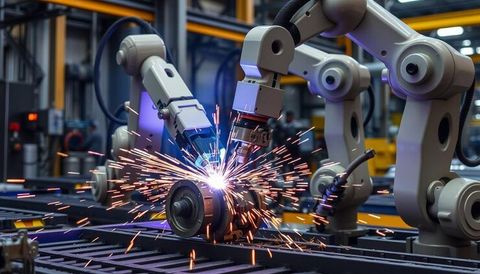
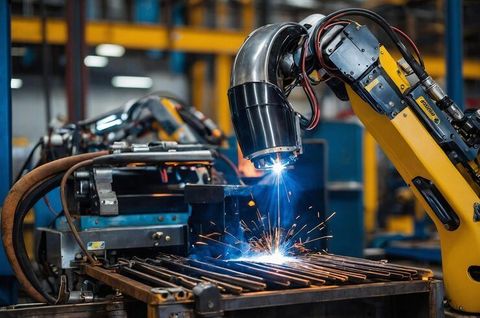
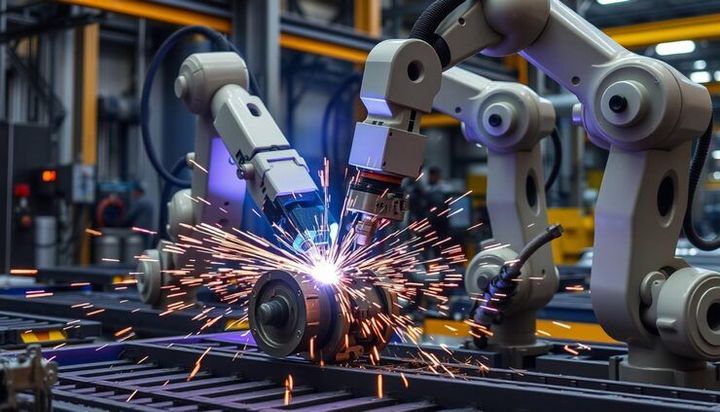
Robotic welding cells combine industrial robots, welding equipment, sensors, fixtures, controllers, and safety systems into a coordinated production area. A robotic welding cell is designed to move a welding tool along programmed paths while the surrounding equipment positions and secures the workpiece.
The development of robotic welding cells comes from the need to make repetitive welding operations more consistent and organized. Traditional manual welding remains important, but repetitive production can place physical demands on operators and may produce variations when working conditions change. Robotics provides programmable movement that can repeat defined welding sequences under controlled conditions.
Modern robotic welding technology is generally built around several connected components. These can include a robotic arm, welding power source, torch or electrode system, workholding fixture, robot controller, sensors, safety enclosure, and production monitoring equipment.
How a Robotic Welding Cell Works
A typical robotic welding cell begins with a workpiece being positioned in a fixture. The fixture holds components in a defined orientation so the robot can reach the required welding locations.
The robot controller then follows programmed movement instructions. Depending on the application, sensors can help identify the position of components, monitor welding conditions, or detect changes in the welding path.
A simplified operating sequence can include:
- Component loading and positioning
- Fixture clamping and verification
- Part identification or position checking
- Robot movement toward the welding area
- Welding process activation
- Continuous movement along programmed paths
- Inspection or process verification
- Completed component removal
The exact sequence varies according to the material, component geometry, welding method, production volume, and required quality controls.
Main Components
Robotic welding cells are not limited to the robot itself. Several systems must work together for reliable operation.
| Component | Primary Function |
|---|---|
| Industrial robot | Moves the welding tool through programmed paths |
| Welding power source | Generates the required welding energy |
| Welding torch or electrode system | Transfers energy to the welding area |
| Fixture | Holds components in a defined position |
| Robot controller | Coordinates robot movements and sequences |
| Sensors | Detect position, process conditions, or abnormalities |
| Safety system | Controls access and reduces exposure to hazards |
| Monitoring system | Records or displays selected production information |
The interaction between these components determines how effectively a robotic welding cell performs its intended operation.
Importance
Robotic welding cells matter because welding is used across many manufacturing activities, including structural components, transportation equipment, machinery, metal enclosures, agricultural equipment, and fabricated assemblies. Consistent welding can influence dimensional accuracy, joint quality, production flow, and downstream assembly.
For workers, automation can reduce exposure to repetitive movements, heat, welding fumes, arc radiation, and awkward working positions when appropriate engineering controls are applied. However, robotic systems do not remove workplace hazards entirely. Operators and technicians still need appropriate training, protective measures, and established safety procedures.
Problems Addressed by Robotic Welding
One important challenge is repeatability. A programmed robot can reproduce the same movement sequence many times when the fixture, programming, materials, and process conditions remain within their intended ranges.
Another challenge is access to difficult welding positions. A robotic arm can be programmed to approach certain joints from controlled angles, although complex geometries may still require specialized equipment or manual intervention.
Production planning is another consideration. Automated welding can coordinate welding sequences with fixtures, part handling, inspection equipment, and other manufacturing stages.
Where Robotic Welding Cells Are Used
Common applications include:
- Automotive and transportation components
- Metal frames and structures
- Heavy equipment components
- Machinery assemblies
- Industrial cabinets and enclosures
- Agricultural machinery
- Steel fabrication
- Repetitive tubular assemblies
- Metal furniture and fabricated products
The suitability of robotics depends heavily on repeatability. Parts with highly variable dimensions or inconsistent positioning may require additional sensing and adaptive controls.
Manual Welding and Robotic Welding
Robotic welding and manual welding are not necessarily competing approaches. Many manufacturing environments use both.
Manual welding can provide flexibility for prototypes, repairs, complex one-off assemblies, and components that change frequently. Robotic welding cells are generally more appropriate when welding paths are repetitive and the production process can be standardized.
The choice depends on production requirements, component design, workforce capabilities, available floor space, and the level of process automation required.
Recent Updates
From 2024 through 2026, robotic welding technology has continued moving toward greater integration between robots, sensors, software, and manufacturing systems. The emphasis has increasingly shifted from robot movement alone toward connected production processes.
Smarter Sensing and Adaptive Welding
Modern robotic welding cells increasingly incorporate vision systems, laser-based sensing, seam tracking, and other detection technologies. These systems can help identify changes in part position or welding geometry.
Adaptive welding technology can adjust selected process parameters when sensor information indicates that actual conditions differ from the programmed environment. This can be particularly useful where component positioning has small variations.
Easier Programming
Programming has also become more accessible. Graphical interfaces, simulation software, offline programming, and assisted programming tools can reduce the complexity involved in creating robot movement sequences.
Simulation allows manufacturers to evaluate robot reach, tool orientation, fixture placement, cycle sequences, and possible interference before physical production begins.
Connected Manufacturing
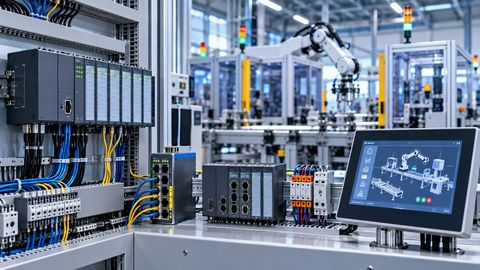
Industrial robots are increasingly connected with production monitoring systems and factory software. Data from robotic welding cells may be used to track production cycles, equipment status, alarms, process information, and maintenance requirements.
This development supports more structured production monitoring and can help technical teams identify recurring process issues.
Collaborative and Flexible Automation
Another developing area is the use of collaborative robotic technology in selected welding applications. Collaborative systems are designed around interaction between people and robots, but welding applications still require careful risk assessment because welding itself introduces heat, radiation, fumes, sparks, and other hazards.
Flexible robotic cells are also being developed for environments where product variations require faster changes in fixtures, programs, or tooling.
Laws or Policies
In India, robotic welding cells operate within a broader workplace safety and industrial compliance framework. The exact requirements depend on the facility, manufacturing activity, equipment configuration, workforce arrangements, and applicable state and central rules.
Workplace Safety
Industrial facilities are expected to manage hazards associated with machinery, electrical systems, welding operations, fire risks, fumes, noise, and moving equipment. A robotic welding cell therefore requires appropriate guarding, emergency controls, electrical protection, ventilation, and operating procedures.
Safety measures commonly include:
- Physical guarding around hazardous robot movement
- Interlocked access doors where appropriate
- Emergency stop controls
- Welding fume control and ventilation
- Fire prevention measures
- Electrical safety controls
- Operator and maintenance training
- Lockout and isolation procedures during maintenance
Indian manufacturers may also need to consider applicable requirements under occupational safety legislation, factory rules, electrical safety provisions, environmental requirements, and relevant technical standards.
Standards and Risk Assessment
International and Indian technical standards can also influence robotic welding cell design. Standards relating to industrial robot safety, machinery risk reduction, welding equipment, electrical systems, and protective measures may be relevant.
A risk assessment should consider robot movement, tooling, fixtures, welding energy, material handling, maintenance access, unexpected movement, and interaction between people and automated equipment.
Tools and Resources
Several technical resources can help people understand, plan, operate, and maintain robotic welding cells.
Robot Simulation Software
Simulation platforms allow engineers and planners to create virtual robot cells and examine movement paths, reach, tooling positions, cycle sequences, and potential collisions before implementation.
Welding Procedure Documentation
Welding procedure documents help organize information such as material type, joint design, welding process, process parameters, shielding arrangements, and inspection requirements. Proper documentation supports consistent process control.
Robot Programming Interfaces
Robot programming environments are used to create movement paths, welding sequences, tool positions, and operating logic. Modern interfaces may include graphical programming and simulation capabilities.
Inspection Equipment
Inspection resources can include visual inspection tools, dimensional measurement systems, weld monitoring equipment, and non-destructive testing methods. The appropriate method depends on the component and its quality requirements.
Maintenance Records
Maintenance schedules and equipment records help track robot condition, welding equipment performance, fixture alignment, consumables, sensors, cables, and safety systems.
FAQs
What is a robotic welding cell?
A robotic welding cell is an organized production area containing an industrial robot, welding equipment, fixtures, controllers, sensors, and safety systems. Together, these components automate programmed welding operations.
How does robotic welding technology improve consistency?
Robotic welding technology uses programmed movements and controlled process parameters to repeat defined welding sequences. Consistency still depends on correct programming, material preparation, fixture accuracy, equipment condition, and process control.
What types of welding can robotic welding cells perform?
Depending on the equipment, robotic welding cells can support processes such as arc welding, spot welding, laser welding, and other specialized methods. The appropriate process depends on the material, joint design, thickness, and production requirements.
Are robotic welding cells safe for workers?
Robotic welding cells can be designed with guards, interlocks, emergency controls, ventilation, and other protective measures. Workers still require appropriate training because robots and welding processes can create mechanical, electrical, thermal, optical, and airborne hazards.
What factors determine whether a robotic welding cell is suitable?
Important factors include part repeatability, welding complexity, production volume, component dimensions, fixture requirements, available space, welding process, programming needs, inspection requirements, and workforce capabilities.
Conclusion
Robotic welding cells combine industrial robotics, welding equipment, fixtures, sensors, controllers, and safety systems into an integrated manufacturing environment. Their role is particularly relevant for repetitive welding operations where controlled movement and consistent process sequences are important. Developments in sensing, simulation, adaptive controls, programming, and connected manufacturing are expanding the capabilities of robotic welding technology. Safe implementation requires appropriate equipment design, risk assessment, operator training, maintenance, and compliance with applicable industrial requirements.