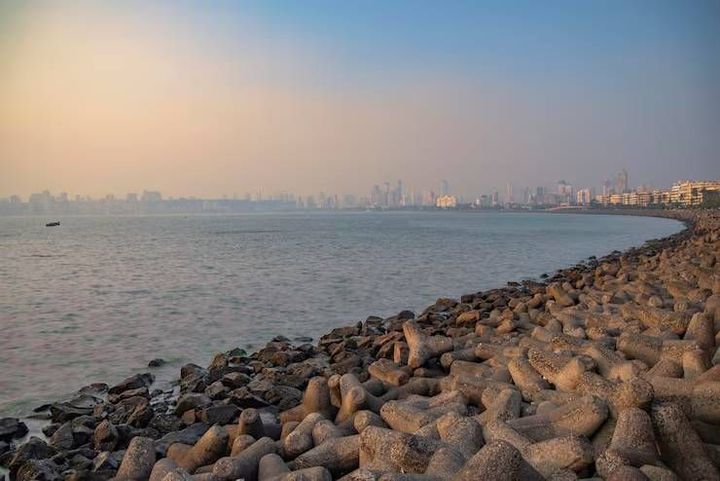
Explore Marine Drive Mumbai With Sunset Views, Photography, and Travel Resources
Marine Drive Mumbai is a 3-kilometre coastal road and promenade along the Arabian Sea in South Mumbai. Officially associated with Netaji Subhash Chandra Bose Road, it connects the Nariman Point area with the Malabar Hill and Babulnath side of the city.
The curved road, sea-facing promenade, Art Deco buildings, and evening lights have made Marine Drive an important part of Mumbai's urban landscape.
The area is commonly known as the “Queen’s Necklace” because its illuminated curve can resemble a necklace when viewed from elevated locations after dark. During the day, the Arabian Sea provides an open horizon, while the promenade gives visitors a place to walk, sit, observe the coastline, and photograph the surrounding city.
Marine Drive developed as part of Mumbai's changing coastal and urban infrastructure. Its location between major commercial, residential, cultural, and transport areas has helped it become both a practical city road and a public recreational space.
For travelers, Marine Drive is less about a single monument and more about the combination of coastline, architecture, city movement, changing light, and public space. A visit can therefore be short or incorporated into a broader Mumbai itinerary.
What Visitors Can See
Marine Drive provides several visual elements within a relatively compact area:
Arabian Sea and open coastal views
Curved promenade and roadway
Art Deco buildings along the eastern side
Evening street illumination
Changing sunset colors
Mumbai's urban skyline
Pedestrian activity along the promenade
Nearby Girgaon Chowpatty
The Maharashtra tourism department identifies Marine Drive as a destination associated with walking, sunsets, coastline views, and photography.
Understanding the Queen's Necklace
The Queen's Necklace description is mainly associated with the appearance of Marine Drive's streetlights after sunset. The curved alignment of the road creates a distinctive pattern when viewed from suitable elevated viewpoints.
The visual effect changes according to weather, visibility, lighting conditions, and viewing position. It is therefore useful to consider the term as a description of the landscape rather than a separate attraction.
Importance
Marine Drive is important as a public coastal space within one of India's largest metropolitan areas. It provides a place where residents and visitors can experience the sea without leaving the central urban environment.
The location also connects several aspects of Mumbai's identity. Its Art Deco surroundings reflect the city's architectural history, while the promenade represents its relationship with the Arabian Sea and its modern urban character.
Why Travelers Visit Marine Drive
Different visitors may use the promenade for different purposes. Some come for a quiet walk, while others focus on sunset views, photography, architecture, or combining the area with nearby attractions.
Common visitor interests include:
Sunset observation
Street and architectural photography
Coastal walks
Urban landscape photography
Evening city views
Art Deco architecture
Nearby food experiences
Combining Marine Drive with central Mumbai sightseeing
The area is also included within Maharashtra's wider coastal tourism material, which identifies Marine Drive among Mumbai's coastal attractions.
Sunset Views
Sunset is one of the most recognizable experiences associated with Marine Drive. The western-facing coastline provides an unobstructed direction toward the Arabian Sea, although actual sunset colors and visibility vary with atmospheric conditions.
Cloud cover can produce different visual effects. Clear conditions may provide a defined horizon, while clouds can create layered colors and reflections across the sky. Monsoon conditions can produce dramatic cloud formations but may also reduce visibility or bring rain.
Travelers planning sunset photography should allow enough time to reach the promenade before the desired viewing period. Crowds, traffic, weather, and local movement can affect the experience.
Photography at Marine Drive
Marine Drive provides opportunities for several types of photography. Wide-angle photographs can emphasize the curve of the coastline, while longer focal lengths can isolate buildings, people, or sections of the promenade.
Photography subjects can include:
Sunset over the Arabian Sea
Curved road and promenade
Art Deco façades
Streetlights after dark
Reflections and silhouettes
Moving traffic
Pedestrians along the sea wall
Changing skies during monsoon periods
A tripod may be useful for low-light photography, although photographers should ensure that equipment does not obstruct pedestrian movement. Respecting privacy is also important when photographing people at close range.
Recent Updates
Marine Drive remains an active public space while Mumbai's surrounding transport and coastal infrastructure continues to change. Recent municipal documents indicate ongoing attention to promenade illumination and the wider coastal road network.
Promenade Lighting
Municipal planning documents described work to improve illumination along sections of the Marine Drive promenade. The proposal addressed darker areas on the sea-facing side where trees could reduce existing illumination.
Lighting is relevant not only to the nighttime appearance of Marine Drive but also to how the promenade functions after sunset. Changes in lighting can affect photography, visibility, pedestrian movement, and the appearance associated with the Queen's Necklace.
Coastal Road Connectivity
Mumbai's Coastal Road project has also changed road connectivity around Marine Drive. Municipal records state that sections connecting Marine Drive with the wider coastal road network were opened progressively, including northbound and southbound sections during the project's phased development.
These transport changes can influence how visitors approach the area and how Marine Drive fits into a wider Mumbai itinerary. Road conditions and access arrangements can change, so current local information remains relevant when planning travel.
Tourism Planning
Maharashtra's tourism policy continues to recognize Mumbai's coastal position as part of the state's broader tourism landscape. The state's tourism planning also identifies Mumbai as an important point for coastal and cruise-related travel.
For visitors, this places Marine Drive within a larger network of Mumbai attractions rather than treating it as an isolated destination.
Laws or Policies
Marine Drive is a public urban and coastal area, so visitors need to follow applicable municipal rules, traffic regulations, public-safety requirements, environmental guidelines, and local instructions.
Public-Space Rules
The promenade is used by pedestrians, residents, photographers, tourists, and people exercising or relaxing. Visitors should avoid obstructing pathways, damaging public infrastructure, leaving waste, or creating hazards for other people.
Local authorities may impose temporary restrictions during public events, infrastructure work, weather conditions, or crowd-management situations. Such restrictions can change according to circumstances.
Photography Considerations
Casual photography for personal travel is generally different from commercial photography, professional filming, or organized production activity. Larger equipment setups, crews, lighting equipment, or controlled shoots may require permissions depending on the location and circumstances.
Photographers should also avoid blocking pedestrian areas or interfering with traffic. Privacy should be respected when identifiable people are photographed at close range.
Coastal and Environmental Awareness
Marine Drive faces the Arabian Sea and is exposed to changing weather and wave conditions. Visitors should remain within designated public areas and follow local warnings during rough weather.
Waste should be placed in appropriate collection points, and visitors should avoid throwing objects into the sea. Responsible behavior helps protect the public environment and coastal setting.
Tools and Resources
Several travel resources can help visitors plan a Marine Drive Mumbai visit. Digital mapping platforms can help identify the promenade, nearby railway stations, roads, hotels, restaurants, and connecting attractions.
Weather applications are useful for checking cloud cover, rainfall, humidity, wind conditions, and visibility. Photography applications can also provide sunset timing, compass information, camera settings, and light-position references.
Useful planning resources include:
Digital maps
Public transportation planners
Weather applications
Sunset and sunrise calculators
Photography light-meter applications
Digital itinerary planners
Mumbai tourism maps
Camera location-planning tools
Mobile navigation applications
Travel packing checklists
Local event calendars
A simple planning table can help organize a visit:
| Activity | Suggested Time Window | Main Consideration |
|---|---|---|
| Coastal Walk | Morning or evening | Weather and pedestrian activity |
| Sunset Viewing | Late afternoon into evening | Cloud and visibility conditions |
| Photography | Around sunset and after dark | Light and camera stability |
| Architecture Viewing | Daylight | Building details and shadows |
| Queen's Necklace View | After dark | Street illumination and viewpoint |
| Nearby Sightseeing | Daytime or evening | Travel time and traffic |
Combining Marine Drive With Nearby Attractions
Marine Drive can be incorporated into a wider central Mumbai itinerary. Nearby areas include Girgaon Chowpatty, Nariman Point, Colaba, and several historic architectural districts.
The Maharashtra tourism department lists Marine Drive alongside attractions such as Chhatrapati Shivaji Maharaj Terminus and the Gateway of India within its Mumbai tourism information.
Travelers interested in architecture can also explore Mumbai's Art Deco heritage around the Marine Drive area. The buildings provide an additional subject for photography and help explain the historical character of the surrounding urban landscape.
Planning Around Weather
Mumbai has a tropical climate with a pronounced monsoon period. Rain, humidity, cloud cover, and strong coastal winds can influence visibility and photography conditions.
Visitors carrying cameras or mobile devices should consider protection from rain and sea spray. During periods of heavy weather, the practical conditions along the waterfront can differ significantly from those on inland streets.
FAQs
What is Marine Drive Mumbai known for?
Marine Drive Mumbai is known for its Arabian Sea promenade, curved coastal road, Art Deco surroundings, sunset views, and the illuminated evening appearance commonly called the Queen's Necklace.
Is Marine Drive suitable for sunset photography?
Marine Drive provides an open western-facing coastal setting that can work well for sunset photography. Results vary according to weather, cloud cover, visibility, crowd levels, and the photographer's position along the promenade.
What can you photograph at Marine Drive?
Common subjects include sunsets, the Arabian Sea, the curved promenade, Art Deco buildings, streetlights, silhouettes, traffic, and evening city scenes. Different lenses and shooting positions can produce substantially different compositions.
What travel resources are useful for visiting Marine Drive?
Digital maps, public transport planners, weather applications, sunset calculators, photography planning tools, and local tourism information can help organize a visit. Current municipal information can also be useful when infrastructure or access conditions change.
What should visitors know before visiting Marine Drive?
Visitors should follow local public-space instructions, maintain clear pedestrian pathways, respect other people, manage waste responsibly, and pay attention to weather or temporary access restrictions. Conditions can change during public events, infrastructure work, or severe weather.
Conclusion
Marine Drive Mumbai combines a coastal promenade, Arabian Sea views, Art Deco architecture, public recreation, and distinctive evening illumination within South Mumbai. Sunset viewing and photography are among the activities associated with the location, while the Queen's Necklace appearance provides a recognizable nighttime visual feature. Recent municipal infrastructure work and wider coastal-road development continue to influence the surrounding area. Travel planning can be supported by maps, weather tools, photography applications, and current local information.