Explore Laser Welding Machines With Automated Welding Systems and Process Details
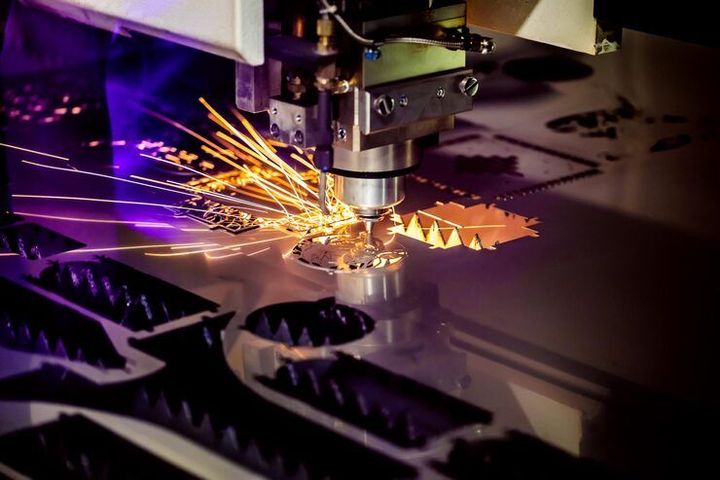
Laser welding machines are industrial systems that use a concentrated laser beam to join two or more material surfaces. Instead of relying mainly on an electrical arc or mechanical pressure, laser welding directs controlled light energy onto a specific area.
Laser welding developed from advances in industrial laser technology, optics, automation, and materials engineering. Early systems were mainly associated with specialized manufacturing environments, while modern laser welding machines can be integrated with robotic arms, automated positioning equipment, sensors, vision systems, and computer-based controls.
The basic laser welding process begins with material preparation and positioning. A laser source generates the beam, an optical system guides and focuses it, and a welding head directs the energy toward the joint. Depending on the material and application, shielding gas may be used to reduce unwanted reactions around the heated area.
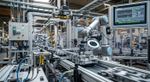
Modern automated welding systems can coordinate several functions at the same time. A production system may control laser power, travel speed, beam movement, workpiece positioning, shielding gas, inspection, and process records through an integrated control platform.
Common laser welding machine configurations include:
- Fiber laser welding systems for metal joining applications
- Robotic laser welding cells for repeated production tasks
- CNC laser welding machines for programmed movement
- Automated laser welding lines for integrated production
- Laser welding workstations for controlled individual operations
- Hand-operated laser processing equipment for applications requiring manual guidance
Materials frequently associated with laser welding include steel, stainless steel, aluminum, copper, titanium, and selected engineered alloys. The actual suitability depends on material composition, thickness, surface condition, joint design, laser characteristics, and process parameters.
Importance
Laser welding matters because manufacturers often need controlled joining processes for components with small dimensions, demanding tolerances, or repeated production requirements. A concentrated laser beam can place heat into a relatively localized region, which can help control the size of the heat-affected area.
The technology is used across automotive components, electronics, industrial equipment, medical-device manufacturing, energy equipment, aerospace components, appliances, and other engineered products. The exact process differs considerably between industries because each material and component has different joining requirements.
How laser welding machines work
A typical laser welding process contains several connected stages:
- Preparation: Surfaces are cleaned and positioned according to the joint design.
- Alignment: The laser head and workpiece are positioned relative to the intended weld path.
- Beam generation: The laser source generates concentrated optical energy.
- Focusing: Lenses or other optical components focus the beam on the welding region.
- Melting: The concentrated energy raises the material temperature until a localized molten region forms.
- Solidification: The molten material cools and forms the welded connection.
- Inspection: Visual, dimensional, sensor-based, or other inspection methods can be applied.
The interaction between laser power, beam diameter, travel speed, material properties, and joint geometry strongly affects the final weld.
Automated welding systems
Automation changes the way the welding process is controlled. A robotic arm can move the welding head along a programmed path, while sensors can help detect component position or monitor process conditions.
A more advanced automated welding system can connect several functions:
| System element | Main purpose |
|---|---|
| Laser source | Generates the welding beam |
| Welding head | Delivers and focuses the beam |
| Robot or motion stage | Controls movement |
| Vision system | Detects position or features |
| Sensors | Monitor selected process conditions |
| Shielding gas system | Protects the welding region |
| Controller | Coordinates machine functions |
| Fixture | Holds components in position |
| Safety enclosure | Helps contain hazardous laser radiation |
Automation can improve repeatability when the workpiece geometry, positioning, and process parameters remain consistent. However, automation does not remove the need for proper setup, inspection, maintenance, risk assessment, and trained personnel.
Recent Updates
Laser welding technology has continued moving toward greater automation, process monitoring, digital control, and integration with robotic manufacturing. During the 2024–2026 period, manufacturers have increasingly focused on connecting laser welding equipment with sensors, machine vision, programmable motion systems, and production-data platforms.
Fiber laser technology remains an important part of industrial laser welding because optical fiber delivery allows the laser source to be separated from the welding head. This configuration can support integration with robotic and automated movement systems.
Process monitoring and machine vision
Modern automated welding systems increasingly use cameras and sensors to observe components before or during welding. Vision equipment can help identify joint locations, component positioning, or geometric features.
Process monitoring can also record selected parameters during production. Depending on the system, collected information may include laser output, movement characteristics, temperature-related measurements, or other process signals.
These technologies are particularly relevant where repeated production requires consistent positioning and traceability. They can also help identify deviations that require human review.
More flexible robotic systems
Robotic laser welding has expanded beyond fixed repetitive paths. Programmable robots and multi-axis motion systems can handle complex geometries and multiple welding directions.
Some systems combine robotic movement with adaptive control. In such arrangements, sensors can provide information to the controller, allowing selected process parameters or movement instructions to be adjusted according to predefined rules.
Developments in safety standards
Laser processing equipment continues to be covered by dedicated safety standards. ISO 11553-1:2020 addresses laser radiation hazards and safety requirements for laser processing machines and was confirmed as current in 2025.
A notable recent development is the publication of ISO 11553-2:2026, which addresses safety requirements for hand-held or hand-operated laser processing machines. The standard covers areas including laser radiation, electrical hazards, thermal hazards, control systems, materials, ergonomics, and risk reduction.
Welding personnel requirements have also developed. ISO 14732:2025 specifies qualification requirements for welding operators and weld setters involved with mechanized and automatic welding of metallic materials.
Laws or Policies
Laser welding machines are affected by workplace safety rules, machinery requirements, laser radiation controls, electrical safety provisions, ventilation requirements, and welding-related standards. The exact legal requirements depend on the country, workplace environment, machine design, and industrial application.
Because no specific target country is identified here, the following principles are presented globally rather than as country-specific legal advice.
Laser radiation protection
Laser radiation is one of the primary safety considerations. Industrial laser systems may require controlled access areas, protective enclosures, warning systems, interlocks, appropriate protective equipment, and documented operating procedures.
ISO 11553-1 establishes safety requirements for laser processing machines and addresses risk assessment, protective measures, verification, labeling, and information supplied for use.
Operator qualification
Training requirements can vary according to the jurisdiction and machine type. Some regulatory systems specifically require trained or qualified personnel for laser equipment. For example, United States workplace rules specify qualification and training requirements for certain laser equipment used in construction environments.
Manufacturing facilities should therefore identify the regulations applicable to their location before operating or modifying laser welding equipment.
Machine guarding and workplace controls
Automated laser welding cells commonly use physical barriers, enclosed work areas, access controls, emergency stopping systems, warning indicators, and interlocked doors. These measures are intended to prevent unintended exposure and reduce other machinery hazards.
Ventilation and extraction may also be relevant because welding can generate fumes, particles, and other process by-products. The required controls depend on the materials and process being used.
Tools and Resources
Several technical resources can help readers understand laser welding machines and automated welding systems. Manufacturer documentation, machinery manuals, welding procedure specifications, technical drawings, process-monitoring software, simulation platforms, and inspection equipment are commonly used during system planning and operation.
Laser welding calculators
Engineering calculators can help estimate parameters such as beam dimensions, energy density, travel speed, material thickness, and heat input. These calculations provide starting information rather than a universal welding recipe.
CAD and simulation platforms
Computer-aided design systems can be used to examine component geometry and joint locations before physical production. Robotic simulation platforms can also help evaluate movement paths, reach, collision risks, and cycle sequences.
Vision and inspection tools
Machine vision cameras, dimensional measurement equipment, optical inspection systems, and weld-quality inspection methods can help evaluate completed components. The appropriate inspection method depends on the required quality characteristics and applicable industry standards.
Welding documentation
Welding procedure specifications, equipment manuals, maintenance records, inspection forms, risk assessments, and operator training documents are useful resources for structured production environments.
FAQs
What are laser welding machines?
Laser welding machines use concentrated laser energy to heat and join materials. They can be configured as manual, semi-automated, CNC-controlled, or fully automated systems depending on the production requirements.
How do automated welding systems work?
Automated welding systems coordinate movement, laser operation, component positioning, and selected monitoring functions through programmed controls. Robotic systems may use sensors or vision equipment to improve positioning and process monitoring.
What materials can laser welding machines join?
Laser welding machines can process many metals, including steel, stainless steel, aluminum, copper, titanium, and selected alloys. Material thickness, reflectivity, surface condition, joint design, and laser parameters affect the process.
Are laser welding machines safe to operate?
Laser welding equipment requires appropriate safety controls because laser radiation can create serious hazards. Enclosures, interlocks, warning systems, risk assessments, protective equipment, and trained personnel may be required depending on the machine and workplace.
What is the difference between robotic and automated laser welding?
Robotic laser welding uses a programmable robot to move the welding head or workpiece. Automated laser welding is a broader term that can include CNC stages, automated fixtures, conveyor systems, robotic cells, sensors, and computer-controlled process functions.
Conclusion
Laser welding machines combine concentrated laser energy, optical systems, motion control, and material science to create controlled welded joints. Automated welding systems extend this technology by coordinating robotic movement, fixtures, sensors, vision equipment, and digital controls. Recent developments have emphasized process monitoring, flexible automation, and updated safety requirements. Understanding the welding process, machine components, material behavior, workplace controls, and applicable standards is important for responsible use of this technology.