Explore Industrial Edge Devices With Real-Time Analytics and Connected Manufacturing
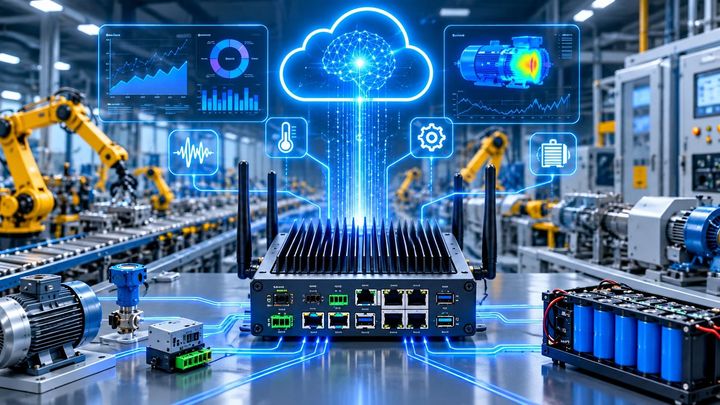
Industrial edge devices are computing and communication units placed close to machines, sensors, production lines, and other equipment. They collect operational information locally, process it near where it is created, and can exchange selected information with factory software or cloud platforms.
The idea developed from the wider growth of industrial automation, machine monitoring, and the Industrial Internet of Things (IIoT). Earlier industrial systems often depended on centralized computers or isolated control equipment. As factories added more sensors and connected machines, there was a growing need to process larger amounts of information quickly and reliably.
Industrial edge devices help bridge the gap between physical equipment and digital applications. A device may receive information from temperature sensors, motors, programmable logic controllers, cameras, meters, or other equipment and then analyze selected data locally.
How industrial edge devices work
The basic process is easier to understand as a sequence:
- Sensors and machines generate operational data.
- An edge device receives and organizes that information.
- Local software analyzes selected data.
- Important results can be sent to manufacturing applications or cloud systems.
- Operators can use dashboards, alerts, or reports to understand operating conditions.
This arrangement can reduce unnecessary data movement. For example, a temperature sensor may generate continuous readings, while an industrial edge device can identify an unusual pattern and transmit the relevant information rather than sending every measurement to a remote system.
Main components
An industrial edge environment can contain several connected elements. Edge gateways provide communication between older equipment and modern networks, while industrial computers can run more demanding analytics applications. Sensors provide measurements, controllers coordinate machine operations, and software platforms turn processed information into dashboards and reports.
Connectivity can use industrial Ethernet, Wi-Fi, cellular networks, fieldbus technologies, or other communication methods. The appropriate arrangement depends on the machinery, facility layout, data requirements, and existing control architecture.
Importance
Industrial edge devices matter because modern manufacturing environments generate information continuously. Machines can produce thousands of measurements related to temperature, vibration, pressure, speed, energy use, production counts, and operating conditions.
Sending all information to a central location can create communication and processing challenges. Local processing allows certain calculations and decisions to take place closer to the equipment.
Real-time analytics and manufacturing
Real-time analytics means examining information as it is generated or shortly afterward. In connected manufacturing, this can help teams understand production conditions while operations are taking place.
Examples include:
- Monitoring machine temperatures and vibration levels
- Tracking production quantities
- Identifying unusual equipment behavior
- Measuring energy consumption
- Comparing operating conditions across production stages
- Displaying current equipment status
- Supporting quality inspection processes
The purpose is not necessarily to replace existing control systems. Instead, edge computing can add a digital analysis layer around existing equipment.
Who is affected
The technology is relevant to many groups within industrial environments. Plant operators may use dashboards to observe equipment conditions, while engineers can analyze operational information. Maintenance teams can examine historical trends, and managers can review production and energy information.
It can also affect organizations that operate facilities with older machinery. Edge gateways can sometimes connect legacy equipment to newer digital systems without requiring every machine to be completely replaced.
Edge computing compared with cloud computing
Edge computing and cloud computing perform different roles. Edge systems process information close to its source, while cloud platforms generally provide centralized computing, storage, analytics, and application capabilities.
A connected manufacturing architecture can use both approaches. An edge device might filter and analyze machine information locally, while a cloud platform stores longer-term records for broader analysis.
| Capability | Industrial Edge | Cloud Computing |
|---|---|---|
| Data location | Near equipment | Remote data center |
| Response | Designed for local processing | Depends on network communication |
| Long-term storage | Usually limited | Generally extensive |
| Machine connectivity | Direct or through gateways | Usually through network connections |
| Real-time monitoring | Strong local capability | Depends on network conditions |
| Large-scale analysis | Possible, depending on hardware | Well suited |
| Typical role | Local processing and control support | Centralized analytics and storage |
Recent Updates
From 2024 through 2026, industrial edge computing has continued moving toward more capable local analytics, stronger cybersecurity, and closer integration with artificial intelligence. Industrial organizations are increasingly combining edge devices with machine learning, computer vision, digital twins, and centralized data platforms.
Edge AI and local intelligence
One important trend is the movement of selected artificial intelligence workloads toward the factory edge. Instead of sending every image or sensor reading to a remote platform, an industrial edge computer can process information locally.
For example, a camera-based inspection system may analyze images near a production line and transmit only inspection results or selected records. This can reduce network traffic and support applications where rapid processing is important.
Greater interoperability
Manufacturing environments often contain equipment from different generations and manufacturers. Current industrial edge architectures increasingly focus on interoperability, allowing information from multiple systems to be organized within a common digital environment.
Open communication standards and structured data models can help connect programmable controllers, sensors, industrial computers, manufacturing execution systems, and enterprise applications.
Cybersecurity receives greater attention
As more machines become connected, cybersecurity becomes an important part of industrial edge architecture. Security approaches increasingly include device authentication, encrypted communication, access controls, network segmentation, software updates, monitoring, and secure configuration.
Edge devices themselves can become security boundaries between operational technology and wider enterprise networks. Their configuration therefore needs to account for both computing requirements and industrial security practices.
Energy and operational analytics
Energy monitoring is another growing application. Edge devices can collect information from meters and equipment, analyze consumption patterns, and provide operational data for energy-management systems.
This can support broader efforts to understand electricity use, equipment efficiency, production conditions, and resource utilization without requiring every measurement to be processed centrally.
Laws or Policies
Industrial edge devices are affected by several categories of laws, standards, and organizational policies. Exact requirements depend on the country, industry, facility, type of information collected, and whether connected equipment forms part of critical infrastructure.
Data protection
When industrial systems collect information connected to identifiable people, workplace activities, access records, or other personal information, applicable privacy and data-protection rules may become relevant.
Organizations generally need to determine what information is collected, why it is processed, where it is stored, who can access it, and how long it is retained.
Cybersecurity requirements
Industrial cybersecurity policies may establish requirements for access control, incident response, vulnerability management, network protection, and system monitoring. Requirements can be particularly significant for facilities associated with energy, transportation, healthcare, water, telecommunications, or other critical infrastructure.
International cybersecurity frameworks and industrial standards can also influence system design. Examples include IEC 62443 for industrial automation and control-system security and ISO/IEC 27001 for information-security management.
Equipment and communications rules
Industrial equipment may also need to comply with electrical safety, electromagnetic compatibility, radio communication, machinery, and environmental requirements applicable to its operating region.
Because these requirements differ across jurisdictions, organizations normally determine which rules apply before deploying connected equipment at scale.
Tools and Resources
Several types of tools can help people understand, configure, or evaluate industrial edge environments.
Edge management platforms
Device-management platforms can provide centralized visibility into connected edge computers. Common functions include device inventory, configuration management, software deployment, health monitoring, and security administration.
Industrial protocols and communication tools
Protocols such as OPC UA, MQTT, Modbus, and industrial Ethernet technologies are frequently encountered in connected manufacturing. Protocol analyzers and diagnostic tools can help examine communication between equipment and computing systems.
Analytics and visualization platforms
Data visualization platforms can transform machine information into dashboards, trend charts, alerts, and reports. These tools can help users interpret production measurements without examining raw data manually.
Digital twin and simulation tools
Digital twin platforms can represent physical equipment or production processes digitally. When combined with edge information, they can provide a broader view of machine behavior and operating conditions.
Planning resources
Useful planning materials include:
- Network architecture diagrams
- Asset inventories
- Data-flow diagrams
- Cybersecurity checklists
- Edge-device configuration templates
- Equipment communication matrices
- Data-retention policies
- Maintenance and software-update schedules
These resources help organize technical information before an industrial edge deployment becomes more complex.
FAQs
What are industrial edge devices?
Industrial edge devices are computing units positioned near machines and industrial equipment. They collect, process, and analyze operational information locally before selected data is transferred to other systems.
How does real-time analytics work with industrial edge devices?
Real-time analytics processes machine or sensor information close to where it is generated. This allows current operating conditions, trends, and unusual patterns to be analyzed without relying entirely on remote processing.
Why are industrial edge devices important for connected manufacturing?
Industrial edge devices help connect physical equipment with digital manufacturing systems. They can support local data processing, machine monitoring, equipment integration, and communication with centralized analytics platforms.
Are industrial edge devices connected to the cloud?
They can be. A connected manufacturing system may use edge computing for local processing while sending selected information to cloud platforms for storage, reporting, machine learning, or broader operational analysis.
What cybersecurity issues affect industrial edge devices?
Common concerns include unauthorized access, insecure network connections, outdated software, weak authentication, improper configuration, and insufficient separation between industrial and enterprise networks. Security controls should reflect the equipment and environment involved.
Conclusion
Industrial edge devices connect physical manufacturing equipment with modern computing and real-time analytics. They can process information close to machines while working alongside cloud platforms, industrial networks, and manufacturing applications. Recent developments have expanded their role in edge AI, interoperability, cybersecurity, and energy monitoring. Connected manufacturing therefore increasingly combines local processing with centralized digital systems to manage industrial information across different operational environments.