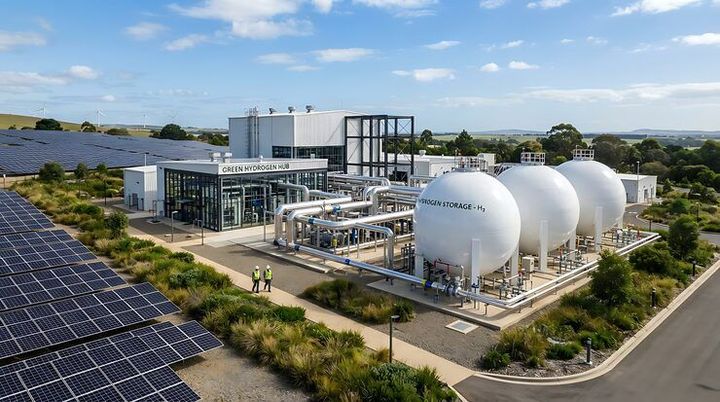
Explore Hydrogen Energy Equipment With Electrolysis, Compression, and Storage Systems
Hydrogen energy equipment includes the technologies used to produce, process, compress, store, transport, and use hydrogen as an energy carrier. Hydrogen can be produced through several pathways, with electrolysis gaining attention because it uses electricity to separate water into hydrogen and oxygen.
Other equipment, including hydrogen compressors, storage tanks, purification units, sensors, valves, cooling systems, and control systems, helps prepare hydrogen for different industrial and energy applications.
Context
What Hydrogen Energy Equipment Means
Hydrogen is a lightweight gas that can carry energy between production and end use. Unlike electricity, which generally needs to move through an electrical network, hydrogen can be stored and transported in suitable equipment for later use.
A hydrogen energy system normally contains several connected stages. These can include water treatment, electrolysis, gas separation, purification, compression, storage, distribution, and final conversion into electricity or industrial heat.
The equipment required depends on the hydrogen application. A small research installation may use compact laboratory-scale equipment, while an industrial hydrogen facility can contain multiple electrolysers, compressors, storage vessels, cooling units, sensors, and automated control systems.
How Hydrogen Is Produced
Electrolysis is one important method used to produce hydrogen. An electrolyser applies electrical energy to water, causing it to separate into hydrogen and oxygen.
Several electrolyser technologies are used or developed for different operating conditions:
- Alkaline electrolysers use an alkaline liquid electrolyte.
- Proton exchange membrane systems use a solid polymer electrolyte.
- Solid oxide electrolysers operate at high temperatures and can integrate heat with electrical energy.
- Anion exchange membrane systems are an emerging technology being developed for hydrogen production.
The electricity source influences the overall environmental characteristics of hydrogen production. When electricity comes from renewable generation, the resulting hydrogen is commonly discussed as renewable or green hydrogen, although terminology and classification can vary by policy framework.
Main Equipment in a Hydrogen System
Hydrogen energy equipment covers a broad range of components. A typical system may include:
| Equipment | Main Function | Typical Application |
|---|---|---|
| Electrolyser | Produces hydrogen from water | Hydrogen generation |
| Water treatment unit | Prepares suitable water | Electrolysis |
| Gas separator | Separates hydrogen and oxygen | Gas processing |
| Purification system | Removes unwanted substances | High-purity hydrogen |
| Hydrogen compressor | Raises hydrogen pressure | Storage and distribution |
| Storage vessel | Holds hydrogen | Stationary or mobile storage |
| Cooling system | Controls temperature | Compression and refueling |
| Sensors | Measures pressure and other conditions | Monitoring |
| Control system | Coordinates equipment operation | Automated facilities |
| Fuel cell | Converts hydrogen into electricity | Power generation |
These components are designed to operate as an integrated system. Pressure, temperature, gas purity, electrical input, and water quality can all influence equipment operation.
Importance
Why Hydrogen Systems Matter
Hydrogen can support applications where direct electrification may be difficult or where a chemical energy carrier is useful. Potential applications include industrial processes, long-duration energy storage, backup power, fuel-cell systems, and certain transportation applications.
Hydrogen energy equipment also matters because hydrogen has physical characteristics that require specialized handling. Its low density means that significant quantities require either compression, liquefaction, or alternative storage approaches.
The equipment must therefore manage hydrogen throughout its lifecycle. This includes production, conditioning, storage, movement, and final use.
Industrial Applications
Industrial facilities can use hydrogen in several ways. Existing industrial processes already consume hydrogen for activities such as chemical production and refining, while emerging applications include lower-carbon processes for certain metals and industrial materials.
Hydrogen can also be connected with fuel cells. A fuel cell combines hydrogen with oxygen through an electrochemical process to generate electricity, with water and heat produced as outputs in many common configurations.
Energy Storage Applications
Hydrogen can act as an energy storage medium. Electricity can be used to produce hydrogen during periods when electrical generation is available, after which the hydrogen can be stored and later converted back into electricity or used directly.
This approach is different from conventional battery storage. Batteries generally store electricity electrochemically, while hydrogen systems convert electricity into chemical energy and require additional equipment for production, compression, storage, and conversion.
Challenges for Everyday Understanding
Hydrogen energy equipment involves several technical considerations:
- Hydrogen has low volumetric energy density under ordinary atmospheric conditions.
- Compression requires specialized equipment.
- Storage materials and vessels must be compatible with hydrogen exposure.
- Hydrogen can interact with certain materials and may contribute to material degradation under particular conditions.
- Equipment requires monitoring for pressure, temperature, purity, and leakage.
- Overall system efficiency depends on the complete production-to-use pathway.
Understanding these factors helps explain why a hydrogen system involves much more than an electrolyser alone.
Recent Updates
Growing Electrolysis Development
From 2024 through 2026, hydrogen development has continued to focus on electrolyser deployment, renewable electricity integration, industrial decarbonization, and improvements in system efficiency. Research and industrial development have also continued across alkaline, proton exchange membrane, solid oxide, and anion exchange membrane technologies.
A major area of interest is flexible operation. Electrolysers can potentially adjust their electricity consumption according to available power, although operating flexibility depends on equipment design and operating conditions.
Improvements in Hydrogen Compression
Hydrogen compression remains an important part of many hydrogen energy systems. Conventional mechanical compressors are used in various applications, while other approaches, including electrochemical compression and advanced diaphragm technologies, continue to receive technical attention.
Compression equipment is being developed around requirements such as higher pressure, improved durability, reduced energy consumption, and integration with automated monitoring.
Storage Technology Development
Hydrogen storage is also developing across several technology categories. Compressed-gas storage remains widely relevant, while liquid hydrogen and solid or chemical storage approaches are being investigated for particular applications.
Storage research includes improved vessel materials, pressure management, thermal control, hydrogen carriers, and monitoring systems. The appropriate technology depends on the required storage duration, quantity, operating pressure, temperature, and application.
Digital Monitoring and Automation
Modern hydrogen facilities increasingly use sensors and digital control systems to track operating conditions. Data from pressure, temperature, flow, electrical, and gas-quality sensors can be integrated into control platforms.
Automation can help coordinate electrolysis, compression, cooling, storage, and safety systems. Digital monitoring also supports maintenance planning and operational analysis.
Laws or Policies
Regulatory Frameworks
Hydrogen energy equipment is influenced by different regulations depending on the country and application. Because no specific target country was provided, the following describes common policy areas rather than a country-specific legal interpretation.
Rules commonly address:
- Pressure equipment and storage vessels
- Electrical safety
- Gas handling
- Industrial facility design
- Hazardous-area classification
- Transportation and handling
- Environmental requirements
- Equipment testing and certification
- Worker and public safety
Hydrogen facilities may also need to comply with technical standards covering pressure systems, piping, electrical installations, ventilation, leak detection, and emergency controls.
Government Hydrogen Programs
Many governments have introduced hydrogen strategies or industrial programs covering production, infrastructure, research, and emissions reduction. Policy frameworks may distinguish between hydrogen production pathways according to electricity sources, emissions intensity, or lifecycle accounting.
The terminology used for hydrogen can therefore differ between jurisdictions. Developers and operators generally need to consider the rules applying to the specific production method and facility location.
Tools and Resources
Hydrogen Production Calculators
Hydrogen production calculators can help estimate electricity requirements, hydrogen output, water consumption, and operating parameters. These tools are useful for understanding how changes in electrolyser capacity or electricity input affect production.
Equipment Sizing Tools
Engineering calculators can assist with preliminary evaluation of compressor capacity, storage volume, pressure relationships, gas flow, and thermal requirements. Such calculations are normally starting points rather than substitutes for detailed engineering.
Technical Standards and Databases
Government energy departments, international organizations, standards bodies, research institutions, and technical databases provide information about hydrogen technologies and policy developments.
Useful resources can include:
- Hydrogen production calculators
- Electrolyser performance models
- Pressure and storage calculations
- Hydrogen safety guidance
- Equipment specification templates
- Energy-system modeling platforms
- Hydrogen project databases
- Technical standards and engineering references
Monitoring Systems
Industrial monitoring platforms can collect information from hydrogen sensors, compressors, electrolysers, storage systems, and electrical equipment. Common measurements include pressure, temperature, flow rate, electrical consumption, gas purity, and equipment status.
FAQs
What is hydrogen energy equipment?
Hydrogen energy equipment includes electrolysers, compressors, storage vessels, purification systems, cooling equipment, sensors, control systems, and fuel cells used across the hydrogen energy chain.
How does hydrogen electrolysis equipment work?
Electrolysis equipment uses electricity to separate water into hydrogen and oxygen. The hydrogen is then conditioned and may be purified, compressed, and stored depending on the intended application.
Why is hydrogen compression important?
Hydrogen compression increases its pressure, allowing more hydrogen to be contained within a given storage volume. Compression is therefore important for many storage, transportation, and refueling systems.
What types of hydrogen storage systems exist?
Common approaches include compressed-gas storage and liquid hydrogen storage. Other approaches use materials or chemical carriers that can hold hydrogen under particular conditions.
Is hydrogen equipment regulated?
Yes. Hydrogen facilities can be subject to rules covering pressure equipment, electrical installations, gas handling, environmental requirements, transportation, and safety. Specific requirements depend on the country, facility type, and application.
Conclusion
Hydrogen energy equipment forms an interconnected system covering hydrogen production, purification, compression, storage, monitoring, and energy conversion. Electrolysis, hydrogen compressors, storage systems, sensors, and control technologies each perform different functions within this chain. Developments from 2024 through 2026 have continued to emphasize electrolysis, flexible operation, storage technologies, digital monitoring, and industrial integration. Regulations and technical standards remain important because hydrogen systems operate with specialized pressure, electrical, thermal, and gas-handling requirements.