Diamond Solitaire Rings: Shapes, Settings, Materials and Guide
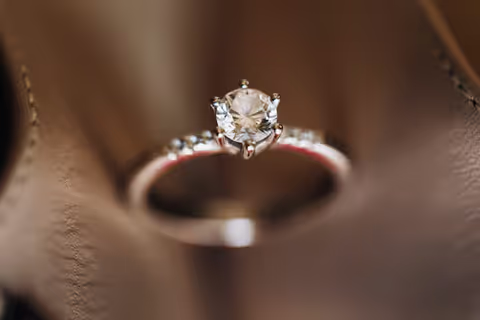
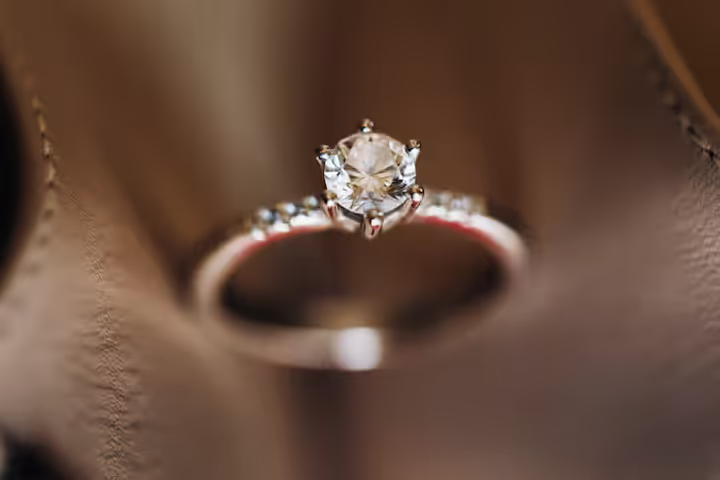
Diamond Solitaire Rings are jewelry designs featuring one principal diamond as the central visual element.
The diamond is usually held in a setting attached to a metal band, allowing its shape, proportions, and optical characteristics to remain the main focus of the ring. Solitaire designs have become closely associated with engagement jewelry, although the style can also be used for anniversaries, personal milestones, and other occasions.
Context
What Are Diamond Solitaire Rings?
A solitaire ring contains one principal gemstone without a surrounding arrangement of multiple prominent stones. The central diamond can be round, oval, princess, cushion, emerald, pear, marquise, or another recognized shape.
The design is relatively straightforward in structure, but many details influence its appearance. Diamond proportions, setting height, band width, metal color, prong arrangement, and overall ring dimensions all contribute to the finished design.
Historical Development
Solitaire jewelry has a long history within European and wider jewelry traditions. The rise of diamond engagement rings during the nineteenth and twentieth centuries helped establish the single-stone ring as a recognizable engagement design.
The solitaire format has remained adaptable because the central diamond can be paired with different metals, settings, band profiles, and decorative details. Modern production methods have also made it possible to create highly precise settings based on digital measurements and three-dimensional designs.
Main Parts of a Solitaire Ring
A solitaire ring normally contains several structural elements. The center diamond is held by a setting, which connects to the band that surrounds the finger. The shoulders connect the central setting to the rest of the ring.
Common components include:
- Center diamond
- Ring band or shank
- Prongs or another retention system
- Basket or gallery beneath the diamond
- Shoulders connecting the setting and band
- Optional engraving or surface detailing
The design of these components affects both appearance and physical stability.
Diamond Shapes
The shape of a diamond is different from its grading characteristics. A round brilliant diamond, for example, has a different outline from an oval or emerald-cut diamond, while each can have different color, clarity, cut, and carat-weight characteristics.
Some common shapes include:
| Diamond shape | General appearance | Common design characteristic |
|---|---|---|
| Round brilliant | Circular outline | Faceted appearance with symmetrical proportions |
| Oval | Elongated rounded outline | Creates a lengthened visual profile |
| Princess | Square or rectangular | Angular outline |
| Cushion | Rounded square or rectangle | Softer corners |
| Emerald | Rectangular with stepped facets | Emphasizes clarity and broad reflections |
| Pear | Teardrop outline | Combines rounded and pointed ends |
| Marquise | Long shape with pointed ends | Elongated visual profile |
Importance
Understanding Diamond Characteristics
Diamond Solitaire Rings place visual attention on one central stone, making the characteristics of that diamond particularly noticeable. Understanding the four Cs—cut, color, clarity, and carat weight—can help readers interpret laboratory documentation and diamond descriptions.
Cut relates to how a diamond's proportions, symmetry, and facets interact with light. Color describes the degree of color present in a diamond, while clarity concerns internal and external characteristics. Carat weight refers to mass rather than visual dimensions alone.
Setting and Security
The setting holds the diamond in position and affects how much of the stone is visible. Prong settings use small metal projections around the diamond, while bezel settings surround part or all of the stone with metal.
A setting also influences maintenance and everyday wear. The appropriate design depends on the diamond shape, dimensions, metal properties, lifestyle, and physical conditions in which the ring will be worn.
Metal Selection
Gold and platinum are commonly used for solitaire rings. Gold can be alloyed with other metals to create yellow, white, or rose-colored alloys, while platinum has different density and material characteristics.
Metal selection can influence the appearance of the diamond and the overall structure of the ring. The purity, alloy composition, hardness, and maintenance requirements should be considered alongside the design.
Ring Proportions
The relationship between the diamond and band affects the overall appearance. A large central stone on a narrow band creates a different visual balance from the same stone on a wider band.
Setting height also matters. A high setting can allow more light around the diamond but may interact differently with clothing or surrounding objects than a lower-profile setting.
Natural and Laboratory-Grown Diamonds
Diamonds can have different origins. Natural diamonds form through geological processes over very long periods, while laboratory-grown diamonds are produced using technological processes that create diamond material with essentially the same chemical composition and crystal structure.
Both types can be evaluated using gemological characteristics. Documentation should clearly identify the diamond's origin category and relevant grading information.
Certification and Documentation
Gemological reports can provide information about diamond identity, measurements, grading characteristics, and other observations. The information included depends on the laboratory and type of examination.
For a significant jewelry purchase, documentation can help distinguish the physical stone from descriptions used in listings or records. Report numbers and identifying characteristics can also be compared with the actual diamond where applicable.
Recent Updates
Digital Diamond Selection
Digital tools have become increasingly integrated into diamond and jewelry research. Online viewing systems can display diamonds from multiple angles, while digital measurements can provide information about proportions and dimensions.
Three-dimensional jewelry design can also show how a particular diamond may appear within different ring settings. Digital visualization is useful for comparison, although screen appearance can differ from viewing a diamond in person.
Laboratory-Grown Diamond Technology
Laboratory-grown diamond production has become a more established part of the diamond industry. Two widely recognized production methods are chemical vapor deposition and high-pressure, high-temperature technology.
Gemological laboratories can identify laboratory-grown diamonds using specialized examination techniques. Clear disclosure of origin remains important when comparing natural and laboratory-grown stones.
Digital Jewelry Design
Computer-aided design is increasingly used to develop ring settings. A designer can create a three-dimensional model showing the center stone, prongs, band, gallery, and other structural elements.
Digital manufacturing can then be integrated with casting, machining, or other production processes. Hand-finishing and gemstone setting remain important stages for many jewelry designs.
Material Traceability
Jewelry documentation increasingly includes information about metal composition, gemstone origin categories, treatments, and supply-chain practices. The level of available documentation varies according to the material and the organization providing the information.
Readers may encounter terms related to recycled metals, responsible sourcing, laboratory-grown stones, and gemological identification. These terms should be interpreted according to their documented definitions rather than assumed meanings.
Customization Trends
Contemporary solitaire designs can incorporate variations in band shape, setting height, engraving, metal combinations, and diamond shape. Some designs use hidden details beneath the central stone or modified gallery structures while retaining the basic solitaire concept.
Digital design tools make it easier to visualize these changes before physical production. The final design still needs to account for structural dimensions and gemstone-setting requirements.
Laws or Policies
Hallmarking in India
Precious-metal jewelry in India is subject to hallmarking requirements under the framework administered by the Bureau of Indian Standards. Hallmarking provides information about the purity of applicable precious-metal articles.
Requirements and hallmarking procedures can change, so current BIS information should be checked when examining a particular piece of jewelry.
Diamond Disclosure
Diamond descriptions should accurately identify relevant characteristics and origin. Natural diamonds and laboratory-grown diamonds are distinct categories, and documentation should not create confusion between them.
Gemological reports can provide information about the stone examined. A report should be reviewed alongside the physical diamond and other applicable jewelry documentation.
Consumer Protection
India's consumer-protection framework includes provisions concerning accurate representation of products and consumer rights. Jewelry documentation may include metal purity, gemstone characteristics, measurements, identification information, and applicable transaction details.
Tax treatment and documentation requirements can depend on the particular transaction and current regulations. Government sources should be consulted for current legal information.
Standards and Gemological Information
The Bureau of Indian Standards and recognized gemological laboratories provide technical information relating to jewelry materials, hallmarking, diamonds, and gemstones. Different standards can apply to different products and materials.
Readers should distinguish between a laboratory grading report, a metal hallmark, and general product descriptions because each serves a different purpose.
Tools and Resources
Diamond Proportion Tools
Diamond proportion calculators can help users understand relationships between measurements such as length, width, depth, and table dimensions. These calculations provide a technical reference rather than a complete assessment of visual appearance.
Ring Size Guides
Ring-size charts can provide an initial measurement reference. Finger size can change with temperature, time of day, and other conditions, so measurements should be interpreted carefully.
Gemological Reports
Reports from recognized gemological laboratories can provide information about diamond characteristics and, where applicable, origin category. Report databases may allow identification details to be checked against a laboratory's records.
Jewelry Design Software
Computer-aided design platforms can model ring settings and allow changes to band width, prong arrangement, gemstone dimensions, and other structural features.
Planning Checklist
A simple Diamond Solitaire Rings research checklist can include:
- Diamond shape
- Carat weight
- Cut characteristics
- Color and clarity information
- Natural or laboratory-grown origin
- Gemological documentation
- Metal type and purity
- Setting style
- Ring size
- Band dimensions
- Hallmark information
- Design specifications
Keeping these details together can make technical comparisons easier to understand.
FAQs
What are Diamond Solitaire Rings?
Diamond Solitaire Rings feature one principal diamond as the central gemstone. The diamond is generally mounted on a metal band using a setting such as prongs or a bezel.
Which diamond shapes are used in Diamond Solitaire Rings?
Common shapes include round brilliant, oval, princess, cushion, emerald, pear, and marquise. Each shape has different proportions, facet arrangements, and visual characteristics.
Are laboratory-grown diamonds used in Diamond Solitaire Rings?
Yes. Laboratory-grown diamonds can be incorporated into solitaire ring designs. They have essentially the same chemical composition and crystal structure as natural diamonds, while their formation process and origin are different.
What metals are commonly used for Diamond Solitaire Rings?
Yellow gold, white gold, rose gold, and platinum are commonly used. Their color, alloy composition, density, hardness, purity, and maintenance characteristics differ.
What does a diamond grading report show?
A grading report can document characteristics such as diamond measurements, carat weight, color, clarity, cut-related information, and other identifying observations. The exact information depends on the laboratory and report type.
Conclusion
Diamond Solitaire Rings use one principal diamond as the central element of a ring, with the setting and band providing structural support. Diamond shape, grading characteristics, metal selection, setting design, proportions, and documentation all influence how a solitaire ring is understood and evaluated. Recent developments include digital design, laboratory-grown diamond technology, online visualization, and expanded material documentation. In India, hallmarking and consumer-information requirements also form part of the broader jewelry framework.