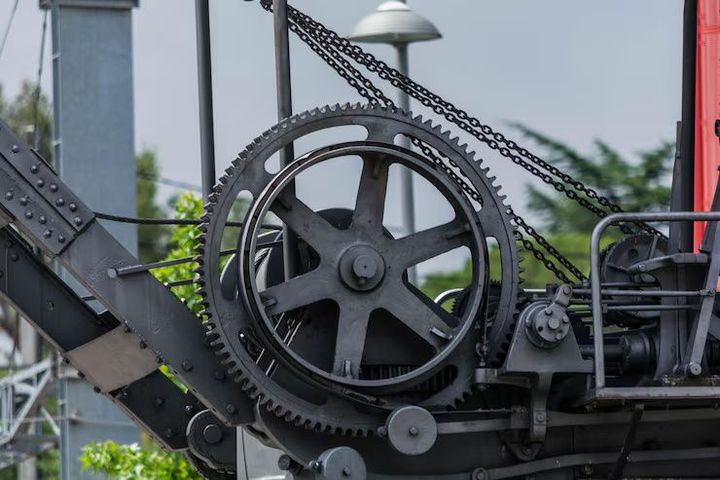
Chain & Sprocket Manufacturing Machines Guide With Modern Engineering and Manufacturing Technology
Chain and sprocket manufacturing machines are industrial systems used to produce the components that transfer mechanical motion between rotating shafts. Chains consist of interconnected links, while sprockets are toothed wheels designed to engage with those links.
Together, they are widely used in conveyors, agricultural machinery, motorcycles, industrial equipment, material-handling systems, and many other mechanical applications. Modern chain and sprocket manufacturing machines combine forming, cutting, machining, heat treatment, inspection, and automation technologies to produce components with consistent dimensions. Understanding how these machines work provides useful background for anyone interested in mechanical engineering, industrial manufacturing, factory automation, or production technology.
Context
Origins of Chain and Sprocket Manufacturing
Mechanical chains have existed in different forms for centuries, but industrial roller-chain systems developed significantly alongside modern machinery. As factories, transportation systems, and agricultural equipment became more mechanized, manufacturers needed reliable methods for transferring rotary motion over distances.
Sprockets developed alongside these chain systems. Their teeth are shaped to engage with chain rollers or other link structures, allowing rotational movement to pass from one shaft to another. Manufacturing methods gradually moved from basic manual machining toward specialized production equipment capable of creating repeatable shapes and dimensions.
What Chain and Sprocket Machines Do
A chain and sprocket manufacturing line can contain several types of equipment. The exact configuration depends on the chain type, sprocket design, material, production volume, and required dimensional accuracy.
Common equipment includes:
- Wire forming machines for shaping chain components from metal wire or rod.
- Stamping presses for producing plates and other formed components.
- Chain assembly machines for joining pins, bushings, rollers, and plates.
- Gear hobbing machines for creating sprocket teeth.
- CNC turning and milling machines for machining sprocket bodies and related components.
- Heat-treatment equipment for changing the hardness and wear characteristics of selected parts.
- Grinding machines for achieving specific surface dimensions and finishes.
- Automated inspection systems for checking dimensions, tooth profiles, surface conditions, and assembly quality.
The production process usually begins with material preparation. Metals such as carbon steel, alloy steel, or stainless steel may be selected according to the mechanical requirements of the finished component.
Typical Production Flow
Chain manufacturing and sprocket manufacturing follow different processes, although both rely on accurate machining and inspection.
| Manufacturing Stage | Chain Components | Sprocket Components |
|---|---|---|
| Material preparation | Wire, rod, steel strip | Steel bar, plate, forged material |
| Forming | Link plates, pins, bushings | Blank shaping |
| Machining | Pin and bushing finishing | Turning, milling, hobbing |
| Heat treatment | Selected wear components | Teeth and body areas |
| Finishing | Grinding and surface treatment | Grinding and deburring |
| Assembly | Pins, rollers, plates | Usually assembled with shaft systems |
| Inspection | Dimensions and movement | Tooth profile and dimensions |
This sequence can be adjusted depending on the design and production requirements.
Importance
Role in Modern Machinery
Chains and sprockets remain important because they can transmit mechanical motion without requiring direct contact between two shafts. Their use can simplify mechanical layouts where shafts are separated by a significant distance.
They are found in many applications, including:
- Conveyor and material-handling equipment
- Agricultural machinery
- Industrial production equipment
- Motorcycles and other vehicles
- Packaging machinery
- Food-processing equipment
- Printing and converting machinery
- Construction and material-handling systems
The reliability of these systems depends partly on accurate component geometry. A sprocket with an incorrectly shaped tooth profile can interact poorly with a chain, while inconsistent chain dimensions can affect movement, alignment, noise, and wear.
Manufacturing Accuracy and Quality Control
Modern manufacturing places considerable attention on dimensional consistency. CNC machining allows programmed cutting paths to be repeated across multiple components, while automated measurement systems can compare manufactured parts against defined specifications.
Quality control can include measurements of:
- Sprocket outside diameter
- Tooth spacing
- Tooth profile
- Bore diameter
- Chain pitch
- Plate thickness
- Pin diameter
- Roller dimensions
- Surface roughness
- Hardness after heat treatment
Inspection data can also be integrated into digital production records. This makes it easier for manufacturing teams to identify variations and investigate process conditions.
Automation and Production Efficiency
Industrial automation has changed how chain and sprocket manufacturing machines are integrated into production environments. Robots can move components between machining stations, while sensors can monitor position, temperature, tool conditions, and production status.
Computer numerical control, machine vision, programmable logic controllers, and industrial communication systems can work together within a manufacturing cell. These technologies help reduce repetitive manual handling and provide greater process visibility.
Recent Updates
Growth of CNC and Automated Manufacturing
From 2024 through 2026, the general direction of chain and sprocket manufacturing has continued toward greater automation, digital monitoring, and flexible production. CNC machining remains central to precision component manufacturing, while automated loading and unloading systems are increasingly integrated with machining equipment.
Manufacturers are also using connected sensors to collect information from production equipment. Machine condition data can help identify unusual vibration, temperature changes, tool wear, or production interruptions.
Advanced Inspection Technology
Machine vision and coordinate measurement technologies are becoming more important for component inspection. Instead of depending entirely on manual measurements, cameras and measurement equipment can examine multiple features using predefined inspection parameters.
Digital inspection systems can support dimensional verification, defect identification, and production documentation. These technologies are particularly useful when components have many repeated features, such as sprocket teeth.
Energy and Material Considerations
Another continuing development involves more efficient manufacturing processes. Equipment designers are examining spindle efficiency, automated machine operation, heat-treatment energy use, cutting-tool performance, and material utilization.
Material selection is also receiving attention because chain and sprocket components need an appropriate balance of strength, hardness, toughness, and wear resistance. The exact material and treatment depend on the intended application.
Digital Manufacturing Systems
Modern factories increasingly connect machines with production-management and monitoring platforms. Manufacturing execution systems can collect information about production stages, equipment status, inspection results, and material movement.
Digital models and computer-aided manufacturing software also allow engineers to simulate machining operations and evaluate component geometry before physical production begins.
Laws or Policies
Industrial Machinery Requirements
Rules affecting chain and sprocket manufacturing machines vary according to jurisdiction and application. Industrial equipment commonly needs to address requirements involving machine safety, electrical protection, guarding, emergency controls, noise, workplace exposure, and safe operation.
Manufacturers and operators generally need to identify applicable machinery and workplace-safety requirements before equipment is installed or operated. The precise obligations depend on the equipment design and the location where it is used.
Material and Product Standards
Chain and sprocket dimensions may be designed according to recognized engineering standards. Standards organizations publish specifications covering areas such as chain dimensions, sprocket geometry, materials, tolerances, testing, and terminology.
Using an appropriate standard can make it easier to define component dimensions and maintain compatibility between related mechanical parts. However, the applicable standard should be confirmed for the particular machine, industry, and jurisdiction.
Environmental Considerations
Manufacturing facilities may also be subject to rules concerning industrial waste, metalworking fluids, emissions, noise, wastewater, and hazardous materials. Heat-treatment operations can have additional environmental and workplace considerations.
Because requirements differ between jurisdictions, manufacturers normally need to review the rules applicable to their facility and manufacturing processes.
Tools and Resources
Engineering and Design Software
Computer-aided design software is commonly used to create sprocket geometry, chain components, machine layouts, and production drawings. Computer-aided manufacturing software can then convert approved designs into machining instructions for compatible CNC equipment.
Simulation tools can also help engineers examine tool paths, material removal, machine movement, and potential interference before production.
Measurement and Inspection Tools
Common inspection resources include digital calipers, micrometers, hardness testers, surface-finish instruments, optical measurement systems, and coordinate measuring machines.
For sprockets, inspection may focus on tooth spacing, pitch diameter, bore dimensions, concentricity, and tooth form. For chains, pitch, pin dimensions, plate geometry, and roller dimensions can be examined.
Maintenance and Production Resources
Machine manuals, engineering drawings, preventive-maintenance schedules, tooling records, calibration documentation, and production checklists are useful resources for manufacturing environments.
Digital dashboards can also provide information about equipment status and production measurements. When properly configured, these systems can help teams understand equipment performance and identify process changes.
FAQs
What machines are used for chain manufacturing?
Chain manufacturing machines can include wire forming equipment, stamping presses, pin and bushing machining equipment, assembly machines, heat-treatment systems, grinding equipment, and inspection systems. The exact combination depends on the chain design and production requirements.
How do sprocket manufacturing machines work?
Sprocket manufacturing machines create the central blank and then machine the required tooth geometry. CNC turning, milling, hobbing, broaching, and grinding can be used for different designs. Inspection equipment verifies dimensions and tooth characteristics.
What materials are commonly used in chain and sprocket manufacturing?
Carbon steel, alloy steel, stainless steel, and other engineering metals can be used. Material selection depends on factors such as load, speed, environment, wear, corrosion exposure, and required mechanical properties.
Why is CNC technology important for sprocket manufacturing machines?
CNC technology allows programmed machining operations to produce repeated geometric features with controlled dimensions. This is particularly useful for sprockets because tooth spacing and profile accuracy affect how the component interacts with a chain.
How is automation changing chain manufacturing?
Automation is being used for material handling, machine loading, inspection, process monitoring, assembly, and production data collection. Robots, sensors, machine vision, and connected control systems can be combined into integrated manufacturing cells.
Conclusion
Chain and sprocket manufacturing machines support the production of mechanical components used across many industrial applications. Modern production combines forming, machining, heat treatment, automation, and inspection to achieve consistent component geometry and mechanical properties. Recent manufacturing developments have placed greater emphasis on CNC technology, digital monitoring, automated inspection, and resource efficiency. Applicable machinery, workplace, environmental, and engineering standards vary according to the manufacturing process and jurisdiction.