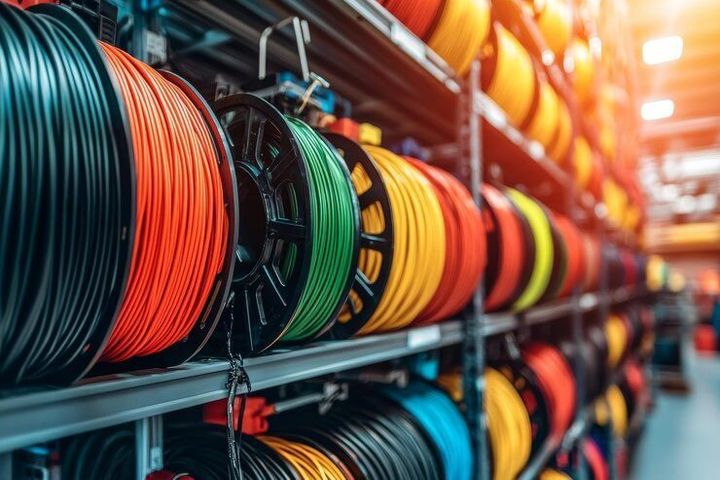
Cable Manufacturing Guide: Conductors, Insulation, Designs, Production Methods and Applications
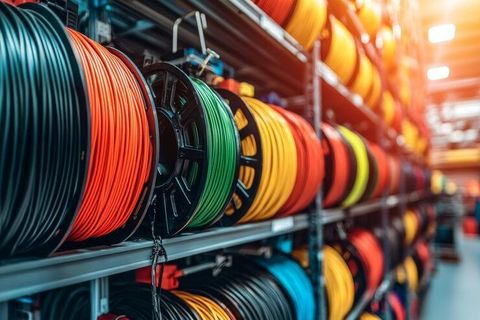
Cable manufacturing is the process of turning conductive metals and insulating materials into cables used to carry electrical power or signals. A typical cable may contain a copper or aluminium conductor, insulation, protective layers, shielding, and an outer sheath. Cable designs vary according to voltage, current, flexibility, environment, mechanical stress, and the application in which the cable will operate.
Context
What cable manufacturing involves
The basic purpose of a cable is to provide a controlled path for electrical energy or information while separating the conductor from its surroundings. Cable manufacturing combines material preparation, forming, insulation, assembly, testing, and finishing into a sequence of controlled production steps.
Copper and aluminium are common conductor materials because they can carry electrical current efficiently. Copper is widely used where conductivity and flexibility are important, while aluminium is used in many power applications where its lower density is useful. The conductor may be solid, stranded, compacted, or specially shaped.
Insulation surrounds the conductor and limits unwanted electrical contact. Common insulation materials include PVC, cross-linked polyethylene (XLPE), rubber-based compounds, and halogen-free formulations. The choice depends on voltage rating, temperature, flexibility, fire behavior, moisture exposure, and mechanical conditions.
Main cable layers
A cable can have several layers, and each has a specific purpose. A simple low-voltage cable may contain only a conductor and insulation, while a power cable may include additional protective layers.
- Conductor: carries electrical current.
- Insulation: separates the conductor from other conductors and surrounding materials.
- Screen or shield: helps control electromagnetic interference in suitable cable designs.
- Filler and bedding: help maintain the intended shape of multi-core cables.
- Armour: provides mechanical protection in demanding installations.
- Sheath: forms the outer protective layer against environmental exposure.
Importance
Why cable design matters
Cable design affects how safely and reliably electrical energy moves through a building, machine, vehicle, power network, or communication system. An unsuitable conductor size can create excessive heating, while unsuitable insulation can deteriorate under heat, chemicals, moisture, or repeated movement.
For everyday users, cable performance is connected with lighting, appliances, charging equipment, industrial machinery, transportation, telecommunications, and renewable-energy installations. Behind these applications are manufacturing controls that determine conductor dimensions, insulation thickness, mechanical strength, electrical resistance, and other characteristics.
Cable manufacturing also has to address different installation environments. Underground power cables may require moisture resistance and mechanical protection. Solar cables may need resistance to sunlight and outdoor conditions. Flexible cables used in equipment may need repeated bending without rapid physical damage.
Common design factors
Several factors are considered when developing or selecting a cable:
- Voltage rating determines electrical insulation requirements.
- Current capacity influences conductor size and heat management.
- Temperature range affects insulation and sheath selection.
- Flexibility determines conductor construction and material choice.
- Installation environment influences protection against water, chemicals, sunlight, abrasion, and mechanical forces.
- Fire behavior can influence insulation and sheath materials.
- Signal requirements can determine shielding, pair construction, or other specialized designs.
Recent Updates
Developments from 2024 to 2026
Cable manufacturing has continued to evolve alongside electrification, renewable power, electric mobility, automation, and expanding digital infrastructure. These areas require different combinations of power capacity, flexibility, thermal performance, signal integrity, and environmental resistance.
Standards activity has also remained relevant. In India, BIS records show recent reviews and revisions covering several cable-related standards. IS 8130 for conductors was reviewed in 2025, while IS 7098 Part 1 for XLPE insulated cables was revised in 2025. IS 9968 Part 1 for elastomer insulated cables was also revised in 2025 and received an amendment in 2026.
Fire behavior and installation safety are receiving continued attention. BIS lists IS 12459:2024 for fire safety in cable runs, while testing references include insulation resistance, thermal ageing, cold bend, heat shock, and other cable tests.
Another general trend is greater process monitoring. Manufacturing systems increasingly use automated extrusion controls, dimensional measurement, spark testing, resistance measurement, and production records to maintain consistent cable characteristics across batches.
Laws or Policies
Indian standards and certification
In India, cable manufacturing is shaped by standards issued by the Bureau of Indian Standards (BIS) and applicable electrical safety requirements. The relevant standard depends on cable type, voltage, insulation, conductor construction, and intended use.
The BIS compulsory-certification list includes several cable categories under the Cables Quality Control Order, including PVC-insulated heavy-duty electric cables covered by IS 1554. Other cable standards have their own certification or conformity requirements, so the applicable standard needs to be identified for each cable category.
BIS guidance states that manufacturers applying for certification need suitable manufacturing infrastructure, process controls, quality-control arrangements, and testing capabilities. Assessment can include examination of manufacturing facilities and evidence of product conformity through appropriate testing.
For photovoltaic cables, BIS documentation for IS 17293 describes quality-assurance planning, control units, testing frequency, sampling, and record maintenance. This illustrates how production control can be linked to a particular Indian Standard rather than treated as one procedure for every cable type.
Why compliance matters
Compliance requirements help define measurable characteristics such as conductor dimensions, insulation properties, electrical resistance, mechanical behavior, and test methods. Requirements vary by product, so technical teams generally consult the current applicable Indian Standard and related regulatory documents before production or installation.
Tools and Resources
Useful technical resources
Several resources can help readers understand cable manufacturing and cable selection:
- BIS standards database: useful for checking Indian Standards, revisions, and related technical information.
- Cable sizing calculators: help estimate conductor requirements using voltage, current, length, installation conditions, and allowable voltage drop.
- Voltage-drop calculators: illustrate how conductor resistance and circuit length affect voltage at the load.
- Cable ampacity tables: provide reference values for current-carrying capacity under specified installation conditions.
- Manufacturer datasheets: provide construction details, dimensions, temperature limits, voltage ratings, and test information for particular cable designs.
- IEC standards resources: provide international references for many cable categories and test methods.
These tools should be considered together with the applicable standard and installation requirements. A calculator result depends on its input assumptions and does not replace the relevant technical specification.
Production Methods
From conductor to finished cable
Cable manufacturing commonly begins with metal rod or wire preparation. Copper or aluminium may undergo drawing, which reduces the conductor to the required diameter. Annealing can be used in suitable copper processes to adjust mechanical properties and improve flexibility.
The next stage is conductor assembly. Individual wires may be twisted together to form stranded conductors. Compaction can reduce spaces between wires and create a more controlled overall shape.
Insulation is generally applied through extrusion. In this process, a prepared polymer compound is heated and formed around the conductor through a die. Cooling then stabilizes the insulated conductor while production equipment monitors dimensions and other parameters.
For multi-core cables, insulated cores may be laid together. Depending on the design, fillers, binders, screens, metallic layers, or armour can then be added. The final sheath is applied to create an outer protective layer.
Typical production sequence
| Production stage | Main purpose | Common control |
|---|---|---|
| Wire drawing | Reduce conductor diameter | Diameter and surface condition |
| Annealing | Adjust suitable metal properties | Temperature and process time |
| Stranding | Assemble multiple wires | Lay length and geometry |
| Insulation extrusion | Cover the conductor | Thickness and concentricity |
| Core assembly | Form multi-core construction | Alignment and dimensions |
| Shielding or armouring | Add specialized protection | Coverage and dimensions |
| Sheathing | Protect the completed cable | Thickness and surface condition |
| Testing | Verify specified characteristics | Electrical and physical tests |
Testing can include conductor resistance, insulation resistance, dimensional checks, tensile properties, bending behavior, spark testing, thermal tests, and other procedures defined by the relevant standard. Production records help connect test results with the corresponding manufacturing batch or control unit.
Applications
Where manufactured cables are used
Cable designs are adapted to the needs of different sectors. Building wiring generally emphasizes electrical safety, manageable installation, and appropriate insulation. Industrial cables may require resistance to vibration, chemicals, oil, heat, or repeated movement.
Power networks use cables designed for specific voltage levels and installation conditions. Renewable-energy systems use specialized cable designs for outdoor exposure and electrical characteristics associated with photovoltaic equipment. Electric vehicles and charging infrastructure require cables suited to their electrical, thermal, mechanical, and environmental conditions.
Communication and data systems use cable constructions designed around signal transmission. These may include twisted pairs, coaxial structures, screened cables, or fiber-optic designs, depending on the type of information being transmitted.
FAQs
What is cable manufacturing?
Cable manufacturing is the controlled production of electrical or communication cables from conductors, insulation, and protective layers. Processes can include wire drawing, stranding, extrusion, assembly, sheathing, and testing.
What materials are used in cable manufacturing?
Copper and aluminium are common conductor materials. PVC, XLPE, rubber-based compounds, and halogen-free materials are among the insulation and sheath materials used for different cable designs.
How are cable designs selected?
Cable designs are selected according to voltage, current, temperature, flexibility, installation conditions, mechanical protection, fire behavior, and signal requirements. The applicable standard also influences construction and testing requirements.
What tests are used in cable manufacturing?
Common tests include conductor resistance, insulation resistance, dimensional checks, tensile testing, bending tests, thermal tests, and spark testing. The exact test program depends on the cable type and applicable standard.
What role do BIS standards play in cable manufacturing in India?
BIS standards define technical requirements and test methods for many cable categories in India. Certain products are also subject to compulsory certification or quality-control requirements, depending on the applicable order and standard.
Conclusion
Cable manufacturing combines conductive materials, insulation, protective layers, controlled production methods, and testing to create cables for many electrical and communication applications. Conductor material, insulation type, cable design, environmental conditions, and voltage requirements all influence the final construction. In India, BIS standards and applicable electrical rules provide an important framework for specified cable categories. Recent developments continue to focus on updated standards, fire safety, electrification, renewable energy, and greater production monitoring.