Automotive Battery Production Machines Guide With Manufacturing Technology Insights
Automotive battery production machines are specialized industrial systems used to manufacture, assemble, test, and finish batteries for vehicles. They support multiple stages, from preparing battery materials and forming individual cells to assembling modules and complete battery packs.
Modern automotive batteries can contain many individual cells connected in carefully controlled configurations. Manufacturing therefore requires equipment that can maintain accurate dimensions, consistent electrical connections, controlled environmental conditions, and repeatable testing procedures. Different battery chemistries and cell designs also require different production methods.
Automotive battery production machines may be used for cylindrical, prismatic, and pouch-style battery cells. Equipment can include electrode processing systems, coating machines, drying equipment, cell assembly machines, welding systems, formation equipment, inspection systems, and battery pack assembly equipment.
The overall production process normally combines mechanical automation, electrical measurement, software controls, material handling, and quality inspection. The objective is to create battery components that meet defined technical specifications while maintaining consistent production conditions.
Main production stages
Automotive battery manufacturing can be divided into several broad stages:
- Electrode preparation involves mixing active materials and applying them to metal current collectors.
- Coating and drying equipment controls the application and removal of solvents or moisture.
- Cell assembly machines position separators, electrodes, terminals, and other components.
- Sealing systems close cells according to their particular design.
- Formation equipment performs controlled charging and discharging cycles.
- Cell testing equipment measures electrical and physical characteristics.
- Module assembly connects multiple cells into larger units.
- Battery pack equipment integrates modules with structural components, electrical connections, cooling systems, and monitoring electronics.
Each stage has different equipment requirements, which means an automotive battery production line is usually a coordinated collection of machines rather than one individual machine.
Importance
Automotive battery production machines matter because batteries are a central component of many modern vehicle power systems. Their manufacturing process influences electrical performance, durability, consistency, thermal behavior, and overall system reliability.
For everyday users, battery manufacturing technology affects factors such as vehicle driving range, charging behavior, operating efficiency, and battery lifespan. Manufacturers and component producers also depend on controlled production processes to manage material use, quality inspection, workplace conditions, and production consistency.
Who uses automotive battery production equipment
Different organizations may use automotive battery production machines for different purposes:
- Battery manufacturers use complete production lines covering several manufacturing stages.
- Automotive manufacturers may operate battery assembly and testing systems.
- Component producers use specialized machines for electrodes, cells, modules, and battery components.
- Research facilities use smaller production equipment for developing new battery designs.
- Recycling facilities use specialized systems for recovering selected battery materials.
Battery production also creates challenges involving heat, moisture, contamination, electrical energy, chemical handling, and mechanical precision. Automated systems can help control repeatable manufacturing steps, while inspection equipment can identify variations that may require further examination.
Common machine categories
| Machine Category | Main Function | Typical Production Stage |
|---|---|---|
| Mixing Equipment | Combines electrode materials | Electrode preparation |
| Coating Machines | Applies electrode material | Electrode production |
| Drying Systems | Removes controlled moisture or solvents | Electrode processing |
| Calendering Machines | Controls electrode thickness and density | Electrode processing |
| Slitting Machines | Cuts coated material into required widths | Electrode processing |
| Cell Assembly Machines | Positions cell components | Cell assembly |
| Welding Systems | Creates electrical connections | Cell and module assembly |
| Formation Systems | Performs controlled charge and discharge cycles | Cell conditioning |
| Battery Testing Systems | Measures electrical characteristics | Quality testing |
| Module Assembly Machines | Connects multiple cells | Module production |
| Pack Assembly Systems | Integrates modules and other components | Battery pack production |
Recent Updates
From 2024 through 2026, automotive battery production technology has continued moving toward greater automation, improved inspection, higher process monitoring, and more flexible manufacturing systems. Equipment developers have increasingly focused on integrating sensors, machine vision, data collection, and automated handling into production lines.
Automation and digital monitoring
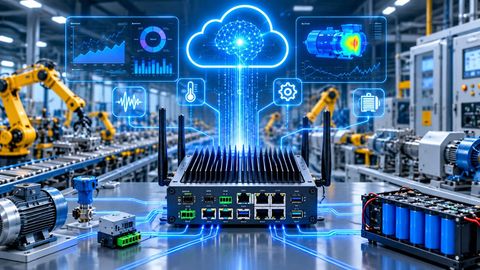
Modern production systems can collect information from multiple manufacturing stages. Sensors may monitor temperature, pressure, thickness, alignment, electrical characteristics, humidity, and machine operating conditions.
Manufacturing software can organize this information so operators can identify process variations. Digital monitoring also supports production records and traceability, allowing individual cells, modules, or batches to be associated with relevant manufacturing information.
Advanced inspection
Machine vision and automated inspection systems are becoming increasingly important in battery production. Cameras and sensors can examine surfaces, dimensions, weld areas, labels, component placement, and other characteristics.
Electrical testing adds another layer of examination. Systems may measure voltage, resistance, capacity-related characteristics, insulation behavior, and other defined parameters depending on the production stage.
Faster and more flexible production
Battery manufacturers are also developing production equipment that can accommodate different cell formats and changing manufacturing requirements. Modular machine designs can make it easier to configure production lines for specific battery architectures.
Robotic handling is another important development. Automated robots can transfer delicate components between production stages while reducing unnecessary manual handling. This can be particularly useful where precise positioning or controlled environmental conditions are required.
Dry manufacturing developments
Some battery manufacturing research and industrial development is focused on reducing or changing the use of liquid-based processing steps. Dry electrode approaches are receiving attention because they can alter the conventional electrode manufacturing sequence.
These systems require specialized equipment and process controls, and their implementation depends on battery chemistry, electrode materials, production scale, and technical requirements.
Laws or Policies
Automotive battery production is shaped by several categories of rules covering industrial safety, environmental protection, transportation, chemical handling, electrical equipment, and waste management. Exact requirements differ between countries and regions.
Manufacturing safety
Battery production facilities generally need procedures for handling electrical energy, machinery, heat, chemicals, compressed systems, and other workplace hazards. Production equipment may therefore include guarding, emergency controls, ventilation, monitoring systems, and automated shutdown functions.
Lithium-based battery manufacturing can require additional controls because damaged or improperly handled cells can present fire or thermal hazards. Facilities typically establish procedures for storage, handling, inspection, and incident response.
Environmental requirements
Battery manufacturing can involve solvents, metals, chemical compounds, wastewater, airborne emissions, and industrial waste. Environmental rules may regulate how these materials are handled, treated, stored, transported, and disposed of.
Battery recycling policies are also becoming more significant as governments introduce or strengthen requirements related to battery collection, material recovery, producer responsibilities, and end-of-life management.
Product and transportation requirements
Finished batteries can be subject to technical and transportation requirements concerning electrical safety, packaging, testing, labeling, and hazardous-material handling. Requirements depend on battery chemistry, configuration, intended use, and transportation method.
Manufacturers must therefore consider regulatory requirements during equipment selection and production planning rather than treating compliance as a separate final-stage activity.
Tools and Resources
Several tools can help readers understand automotive battery production machines and manufacturing processes.
Manufacturing planning tools
Production planning software can help organize machine capacity, material movement, production stages, maintenance schedules, and quality records. Manufacturing execution systems may connect equipment data with production information.
Battery testing instruments
Electrical testing instruments can measure characteristics such as voltage, current, resistance, insulation, and temperature. Specialized battery analyzers can perform controlled charge and discharge testing for cells, modules, and packs.
Engineering and design software
Computer-aided design software can be used to develop battery components, machine layouts, fixtures, enclosures, and production-line arrangements. Simulation tools can also help evaluate mechanical movement, thermal behavior, airflow, and manufacturing processes.
Technical resources
Useful resources include:
- Battery manufacturing manuals
- Equipment operating documentation
- Engineering standards
- Battery testing guidelines
- Manufacturing process templates
- Quality-control checklists
- Workplace safety documentation
- Environmental management resources
- Battery recycling guidance
- Industrial automation documentation
These resources can help non-technical readers understand how different machines fit together within an automotive battery production system.
FAQs
What are automotive battery production machines?
Automotive battery production machines are industrial systems used to manufacture battery cells, assemble modules, build battery packs, and perform quality and electrical testing. They can include coating, drying, assembly, welding, formation, inspection, and testing equipment.
How do automotive battery production machines work?
Automotive battery production machines perform individual manufacturing steps under controlled conditions. Automated handling, sensors, robotics, electrical controls, and inspection systems may work together to maintain repeatable processes throughout battery production.
What machines are used in battery cell manufacturing?
Common equipment includes mixing systems, coating machines, drying systems, calendering machines, slitting equipment, cell assembly machines, sealing systems, welding equipment, formation systems, and testing equipment. The exact combination depends on the battery chemistry and cell format.
What is the role of battery testing equipment?
Battery testing equipment measures electrical and physical characteristics at different stages of production. Testing can help identify variations in voltage, resistance, capacity-related performance, insulation, temperature behavior, and other defined specifications.
Are automotive battery production machines automated?
Many modern automotive battery production lines use automation for material handling, component placement, welding, inspection, testing, and data collection. The degree of automation varies according to production scale, battery design, manufacturing process, and facility requirements.
Conclusion
Automotive battery production machines combine material processing, automated assembly, electrical testing, inspection, and digital monitoring across multiple manufacturing stages. Recent developments have emphasized automation, machine vision, process data, robotics, and flexible production systems. Safety, environmental protection, battery handling, and transportation requirements also influence how production facilities are designed and operated. Understanding these machine categories provides a useful foundation for learning how modern automotive batteries move from raw materials to finished vehicle battery systems.