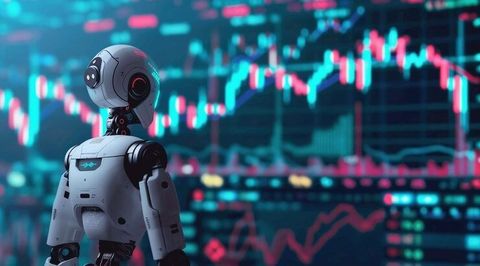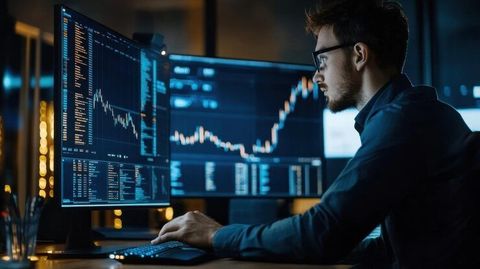
Algorithmic Trading Systems Explained: Strategies, Components, Markets, Data and Risk Management
Algorithmic trading systems are computer-based systems that use predefined rules, mathematical models, and market data to analyze financial markets and place orders. Instead of relying entirely on manual decisions, an algorithm can process information and execute instructions according to conditions established by its developer or user.
The concept developed alongside advances in electronic financial markets and computing. As exchanges moved from primarily manual processes toward electronic order systems, computers became capable of processing market information and responding to predefined conditions at much greater speed.
An algorithmic trading system can range from a relatively simple program based on technical indicators to a complex platform incorporating statistical models, historical datasets, machine learning, and automated risk controls. The complexity depends on the market, strategy, data, and infrastructure involved.
How Algorithmic Trading Works
A typical system follows a sequence of connected steps:
- Market data: The system receives information such as prices, trading volume, order-book information, or economic data.
- Strategy logic: Rules or models evaluate the available information.
- Signal generation: The system identifies conditions that correspond to a predefined trading decision.
- Order management: Instructions are prepared and sent to a trading venue through an appropriate connection.
- Execution: Orders interact with available market liquidity according to their instructions.
- Monitoring: The system tracks positions, orders, exposures, and potential errors.
- Risk management: Limits and controls can restrict activity when predefined thresholds are reached.
This process can operate automatically, although human supervision remains important for system maintenance, risk controls, and unusual market conditions.
Importance
Algorithmic trading has become an important part of modern electronic financial markets because computers can process large quantities of information systematically. A program can apply the same predefined rules repeatedly without changing its behavior because of short-term emotions or fatigue.
The technology affects several groups, including institutional investors, quantitative researchers, proprietary trading organizations, financial technology developers, and individual traders who use automated platforms.
Why Systems Need Structure
A trading idea alone is not necessarily a complete algorithmic trading system. A practical system needs rules that define how information is processed, when decisions are generated, how orders are handled, and how risk is controlled.
For example, a strategy based on moving averages may specify:
- Which financial instrument is analyzed.
- Which time interval is used.
- Which moving averages are calculated.
- What conditions generate a signal.
- How an entry or exit instruction is determined.
- How much exposure is permitted.
- When the strategy should stop operating.
Clearly defined rules make it possible to test the strategy using historical data and evaluate its behavior under different market conditions.
Major Applications
Algorithmic systems can be used across several financial markets, including equities, foreign exchange, futures, options, fixed-income instruments, and digital assets where applicable.
Different markets have different trading hours, liquidity characteristics, regulations, transaction structures, and data requirements. Therefore, an algorithm designed for one market may not behave in the same way when applied to another.
Recent Updates
Greater Use of Machine Learning
From 2024 through 2026, machine learning has continued to attract attention within quantitative finance. Researchers and developers have explored methods that can identify patterns in large datasets, estimate probabilities, classify market conditions, and support portfolio or execution decisions.
Machine learning does not automatically make a trading system reliable. Models can identify relationships in historical data that do not continue in future market conditions. Data quality, model validation, changing market behavior, and overfitting remain important considerations.
Alternative and Higher-Frequency Data
Algorithmic systems increasingly work with datasets beyond traditional price and volume information. Depending on the strategy, these can include economic indicators, company information, news-related datasets, market microstructure information, and other structured data.
The usefulness of alternative data depends on its accuracy, timing, consistency, and relevance to the specific strategy.
Cloud and Computing Infrastructure
Cloud computing and specialized hardware have expanded access to computing resources for research, simulation, and data processing. However, highly time-sensitive strategies can have different infrastructure requirements from longer-term quantitative strategies.
Latency, network reliability, data delivery, and system availability can influence execution behavior, particularly when strategies depend on rapid responses.
Greater Attention to Automated Risk Controls
As automated systems become more sophisticated, risk management remains a major area of development. Modern systems may include exposure limits, position limits, order-size restrictions, loss thresholds, connectivity monitoring, and automatic shutdown mechanisms.
These controls are intended to reduce the impact of programming errors, unexpected market behavior, or technical failures.
Laws or Policies
Algorithmic trading is subject to financial-market rules in the jurisdictions where trading takes place. Requirements can vary according to the market, financial instrument, trading venue, and type of participant.
Market Access and Trading Rules
Trading systems generally need to operate through authorized market infrastructure and follow applicable exchange and regulatory requirements. Rules can address order handling, market integrity, recordkeeping, system controls, and access to trading venues.
In India, electronic trading and algorithmic activity are subject to requirements established by financial-market regulators and exchanges. Participants should refer to current rules from relevant authorities, including the Securities and Exchange Board of India and applicable exchanges.
Risk and Operational Controls
Financial institutions using automated trading systems may have requirements relating to testing, monitoring, governance, and risk controls. The exact obligations depend on the participant and activity.
Systems can also need safeguards against erroneous orders. A programming error that generates unusually large or repeated orders can create significant operational and financial consequences.
Data and Recordkeeping
Trading organizations may need to maintain records concerning orders, transactions, system activity, and other relevant information. Data-handling requirements can also apply depending on the source and nature of the information.
Because financial regulations can change, current regulatory documentation should be checked before deploying an automated system in a live market.
Strategies
Algorithmic trading strategies differ according to the market assumptions and mathematical rules they use.
Trend-Following Strategies
Trend-following systems attempt to identify sustained movements in market prices. Common inputs include moving averages, momentum measurements, and price-breakout conditions.
These systems may perform differently during prolonged trends and periods where prices move within relatively narrow ranges.
Mean-Reversion Strategies
Mean-reversion strategies are based on the assumption that certain price relationships may move back toward a historical average or reference level.
The strategy might monitor deviations between related prices or between an asset and a calculated statistical measure. Such systems require careful testing because historical relationships can change.
Statistical and Quantitative Strategies
Statistical strategies use mathematical relationships between financial variables. They can involve regression models, probability distributions, correlation analysis, time-series methods, or more advanced quantitative techniques.
The underlying relationships need to be evaluated using appropriate datasets and validation procedures.
Execution Strategies
Some algorithms focus primarily on how an existing trading decision is executed rather than determining the investment idea itself. Execution algorithms can divide larger instructions into smaller orders according to predefined rules.
The objective may involve managing timing, liquidity, participation, or market impact within specified constraints.
Components
A complete algorithmic trading environment usually consists of several connected components.
| Component | Main Function |
|---|---|
| Market data feed | Provides prices and other market information |
| Strategy engine | Applies rules or mathematical models |
| Signal module | Converts analysis into trading signals |
| Order management system | Creates and manages orders |
| Execution interface | Connects the system with a trading venue |
| Risk engine | Monitors exposure and predefined limits |
| Database | Stores historical and operational information |
| Monitoring system | Tracks system activity and technical conditions |
| Backtesting environment | Evaluates strategies using historical data |
Each component can affect overall system behavior. A sophisticated strategy may still produce unreliable results if the underlying data is incomplete or the execution system is poorly configured.
Markets and Data
Equity Markets
Equity algorithms can analyze individual companies, indexes, sectors, and market-wide information. Common data includes price, volume, corporate events, and financial information.
Foreign Exchange
Foreign exchange systems operate in a market characterized by multiple trading centers and currency pairs. Algorithms may use price movements, volatility, economic information, and liquidity conditions.
Futures and Options
Futures and options systems require additional consideration of contract specifications, expiration dates, margin requirements, and derivatives pricing.
Data Quality
Data is one of the foundations of algorithmic trading research. Historical datasets can contain missing observations, incorrect values, duplicated records, changes in instrument definitions, or differences between historical and live data.
A strategy that appears successful because of inaccurate testing data may produce misleading results. Data cleaning and validation are therefore important parts of quantitative research.
Risk Management
Risk management is a central component of an algorithmic trading system. Automation can execute instructions rapidly, so an error may also be repeated rapidly if appropriate controls are absent.
Common Risk Controls
Systems may incorporate:
- Maximum position limits.
- Maximum order quantities.
- Exposure limits by instrument or market.
- Daily loss thresholds.
- Maximum order frequency.
- Price deviation checks.
- Duplicate-order protection.
- Connectivity monitoring.
- Automatic system shutdown conditions.
Backtesting and Validation
Backtesting evaluates how a strategy would have behaved using historical information. It can help researchers examine hypothetical performance under different market conditions.
However, historical results do not establish future performance. Common research problems include overfitting, look-ahead bias, survivorship bias, unrealistic assumptions about execution, and insufficient testing across different market environments.
Operational Risk
Technical failures are another important consideration. Internet interruptions, data-feed problems, software errors, exchange connectivity issues, and hardware failures can affect automated systems.
For this reason, monitoring and contingency procedures are important even when a system is designed to operate automatically.
FAQs
What is an algorithmic trading system?
An algorithmic trading system is a computer-based framework that uses predefined rules or mathematical models to analyze market information and manage trading instructions automatically or semi-automatically.
What data do algorithmic trading systems use?
Depending on the strategy, systems may use price, volume, order-book information, economic data, company information, volatility measures, and other structured datasets.
Which markets use algorithmic trading?
Algorithmic trading is used across markets such as equities, foreign exchange, futures, options, and other electronically traded financial instruments, subject to applicable market rules.
Does algorithmic trading eliminate financial risk?
No. Automation does not eliminate market, model, liquidity, execution, or operational risk. Risk controls can help manage predefined risks, but they cannot guarantee a particular financial outcome.
How are algorithmic trading strategies tested?
Researchers commonly use historical backtesting, simulation, validation datasets, and sometimes paper-trading environments. Testing should account for factors such as data quality, execution assumptions, and changing market conditions.
Conclusion
Algorithmic trading systems combine market data, strategy rules, software, order management, execution infrastructure, and risk controls. Their applications range from trend and statistical strategies to automated execution across several financial markets. Developments in machine learning, computing infrastructure, alternative data, and automated risk controls continue to influence the field. Historical testing and automation can support systematic analysis, but they do not remove market or operational uncertainty.
Disclaimer: The information provided in this article is for informational purposes only. We do not make any claims or guarantees regarding the accuracy, reliability, or completeness of the information presented. The content is not intended as professional advice and should not be relied upon as such. Readers are encouraged to conduct their own research and consult with appropriate professionals before making any decisions based on the information provided in this article