Air Pollution Control Systems Explained: Types, Components, Methods, Benefits and Applications
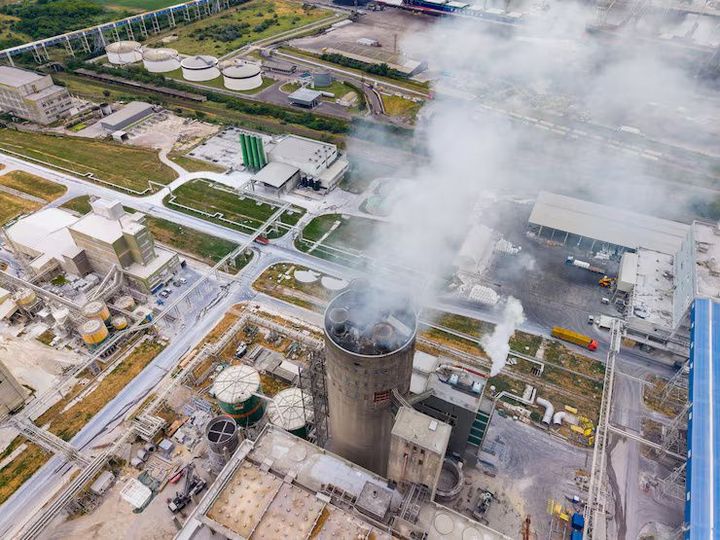
Air pollution control systems are technologies and processes used to capture, reduce, or manage pollutants released into the air. They are used in factories, power facilities, construction areas, waste facilities, laboratories, and other locations where activities can produce dust, smoke, gases, fumes, or fine particles.
The need for these systems developed as industrial activity, fuel use, transportation, and urban growth increased the amount of pollutants entering the atmosphere. An air pollution control system may work at the source, along a process line, or at an exhaust point before emissions enter the surrounding environment. The basic idea is to identify a pollutant, separate it from an air stream, and manage the collected material safely.
Common pollutants include particulate matter, sulfur compounds, nitrogen oxides, volatile organic compounds, carbon monoxide, and certain metal-containing particles. Different pollutants require different control methods, so system selection depends on the source, pollutant characteristics, airflow, temperature, moisture, and applicable emission limits.
Importance
Air pollution can affect outdoor air, indoor environments, workplaces, nearby communities, vegetation, buildings, and visibility. Fine particles and certain gases can travel through the atmosphere and may contribute to respiratory and cardiovascular problems. Controlling emissions at their source can therefore form an important part of broader air-quality management.
Air pollution control systems also help industrial operators manage process emissions and maintain consistent operating conditions. A system can include several stages rather than one device. For example, a process may first remove large dust particles, then capture finer particles, and finally treat specific gases.
Where these systems are used
Applications vary according to the type of activity. Examples include:
- Manufacturing plants that generate dust, fumes, or process gases
- Power and combustion facilities that produce particulate and gaseous emissions
- Cement, metal, chemical, and mineral processing facilities
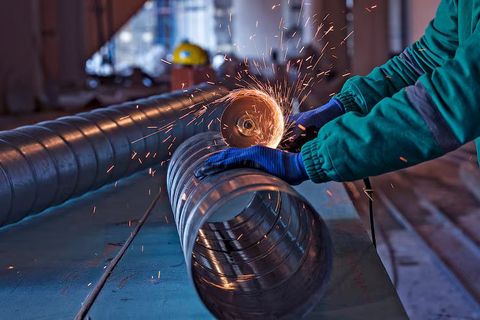
- Welding, cutting, grinding, and surface-treatment areas
- Waste treatment and thermal processing facilities
- Food, pharmaceutical, and agricultural processing environments
- Construction and material-handling locations where airborne dust can develop
Main benefits
The benefits depend on the equipment and operating conditions. In general, air pollution control systems can help reduce the quantity of pollutants released from a defined source, support compliance with applicable emission limits, improve workplace air conditions when properly designed, and provide data for environmental monitoring.
| Control approach | Main target | Common equipment | Typical application |
|---|---|---|---|
| Mechanical separation | Larger particles | Cyclone, settling chamber | Dust-heavy processes |
| Filtration | Fine particles | Baghouse, cartridge filter | Manufacturing and processing |
| Electrostatic separation | Fine particles | Electrostatic precipitator | Large combustion sources |
| Wet treatment | Particles and selected gases | Scrubber | Chemical and industrial processes |
| Gas treatment | Specific gaseous pollutants | Adsorber, catalytic unit | Solvent or combustion emissions |
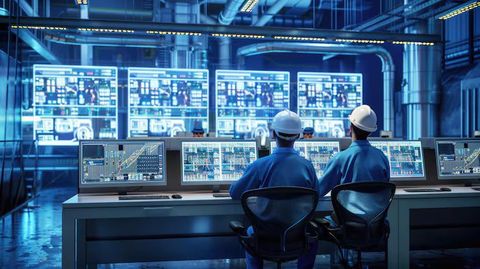
| Monitoring | Emission measurements | Sensors, analyzers, OCEMS | Regulated facilities |
Recent Updates
From 2024 through 2026, air pollution management has continued moving toward continuous measurement, digital monitoring, improved particulate capture, and source-specific control strategies. In India, the Central Pollution Control Board has maintained attention on online continuous emission and effluent monitoring systems, commonly known as OCEMS, alongside technical information concerning air pollution control devices. CPCB also published a list of empaneled original equipment manufacturers for air pollution control devices in late 2025. These developments reflect greater attention to measurable and traceable emission data.
Another continuing trend is the integration of air-quality monitoring with broader city and industrial pollution programs. CPCB describes monitoring networks, continuous ambient air-quality monitoring, and sensor-based approaches as parts of air-quality management. This allows pollution information to be examined over time instead of relying only on occasional measurements.
National and city-level planning has also become more integrated. India's National Clean Air Programme, launched in 2019, uses national, state, and city action plans covering areas such as transport, road dust, construction, solid waste, and industrial pollution. The Ministry of Environment, Forest and Climate Change reported that 130 cities had prepared city action plans under the programme.
For equipment users, this trend means that an air pollution control system is increasingly considered together with monitoring, records, maintenance, process conditions, and emission performance rather than as an isolated piece of machinery.
Laws or Policies
In India, air pollution control is shaped by national environmental laws, emission standards, and requirements administered through central and state pollution-control authorities. The Air (Prevention and Control of Pollution) Act, 1981 provides the main legal framework for prevention, control, and abatement of air pollution. It assigns functions to the Central Pollution Control Board and State Pollution Control Boards, including air-quality management and emission-related responsibilities.
The Environment (Protection) Act, 1986 is another important part of the framework. It provides powers for regulating environmental pollution and includes provisions concerning environmental standards, inspections, sampling, and directions. Section 7 addresses emissions or discharges of environmental pollutants beyond prescribed standards.
Requirements can vary by industry, pollutant, location, plant capacity, and applicable consent conditions. CPCB develops and maintains sector-specific emission standards, while State Pollution Control Boards and Pollution Control Committees have responsibilities for implementation and oversight within their jurisdictions.
The National Clean Air Programme is a policy programme rather than a single equipment standard. Its city action plans address multiple pollution sources and can include industrial emissions, road dust, construction activity, transport, and waste management. The Ministry's recent reporting describes a target framework involving PM10 reduction or achievement of national ambient standards in identified cities.
Because environmental requirements can change and site-specific conditions matter, the applicable consent documents, sector standards, and notifications should be checked with the relevant Indian authority before interpreting compliance requirements.
Tools and Resources
Several resources can help readers understand air pollution control systems and environmental measurements.
Monitoring and information resources
The Central Pollution Control Board website provides information on air quality, industrial pollution, standards, monitoring programmes, rules, and technical materials. Its resources can help readers understand how particulate matter and gaseous pollutants are measured and regulated.
The India Code platform provides the official text and legislative information for central laws such as the Air (Prevention and Control of Pollution) Act, 1981 and the Environment (Protection) Act, 1986.
Useful technical tools can include particulate-matter monitors, gas analyzers, airflow meters, differential-pressure gauges, temperature sensors, and data-logging systems. A pressure-drop reading across a filter, for example, can help indicate changes in airflow resistance, while an emission analyzer can provide measurements of selected gases.
Selection and evaluation resources
When comparing control methods, readers can organize information in a simple worksheet containing the emission source, pollutant type, gas temperature, moisture level, airflow rate, particle characteristics, required removal level, monitoring method, and maintenance requirements. This approach helps explain why a cyclone, fabric filter, scrubber, electrostatic precipitator, or gas-treatment unit may be used for different conditions.
Engineering calculations may also involve airflow, residence time, pressure drop, particle size, gas concentration, and collection efficiency. Such calculations are normally based on measured process data and equipment specifications rather than on a single universal formula.
FAQs
What is an air pollution control system?
An air pollution control system is a combination of equipment and processes used to capture, remove, or reduce pollutants from an air stream before they are released into the surrounding environment.
What are the main types of air pollution control systems?
Common types include cyclones, fabric filters, electrostatic precipitators, wet scrubbers, adsorption units, catalytic treatment systems, and other source-specific devices. The suitable approach depends on the pollutant and process conditions.
How do air pollution control systems remove particulate matter?
Particulate matter can be captured through mechanical separation, filtration, electrostatic attraction, or wet collection. Fine particles generally require a control method designed for their size and physical properties.
Why is monitoring important in an air pollution control system?
Monitoring provides information about emission levels and equipment operation. Continuous or periodic measurements can help identify changes in process conditions and support environmental reporting where required.
Are air pollution control systems required by law in India?
Certain industries and activities in India are subject to emission standards and environmental requirements, and specific control or monitoring arrangements may be required according to the applicable rules, standards, consent conditions, and regulatory directions.
Conclusion
Air pollution control systems use different physical, chemical, and electrical methods to manage particles and gases from industrial and other sources. Their design depends on the pollutant, process conditions, airflow, required emission limits, and monitoring needs. In India, these systems operate within a regulatory framework involving the Air Act, Environment Protection Act, CPCB, and State Pollution Control Boards. Recent developments have placed greater emphasis on continuous monitoring, digital data, source-specific controls, and coordinated air-quality planning.