AI Jewellery Design Guide: Technology, Design Methods, Customization, Features and Uses
AI jewellery design combines artificial intelligence with traditional jewellery concepts, digital drawing, computer-aided design, and visualization. It can help generate design ideas, explore different shapes, test visual styles, and create early representations of rings, earrings, necklaces, bracelets, and other jewellery pieces. The technology is mainly used as part of a design workflow rather than as a complete replacement for human design knowledge.
Context
What AI Jewellery Design Means
AI jewellery design refers to the use of artificial intelligence tools to assist with creating or developing jewellery concepts. A person can describe an idea using text, provide a sketch, or use an existing image as a starting point. An AI system can then generate variations based on the instructions, materials, shapes, gemstones, patterns, or visual style included in the input.
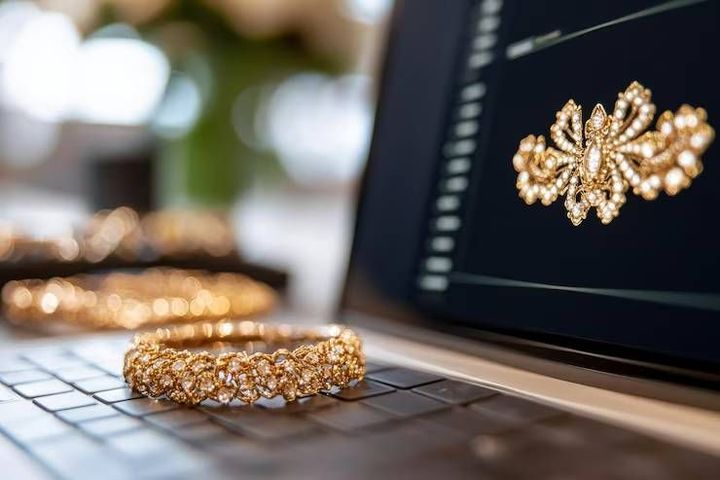
Traditional jewellery design has relied on hand sketches, physical models, carving, and later computer-aided design (CAD). CAD has become an important digital method because it allows designers to create detailed three-dimensional representations before physical production. Generative AI adds another stage by helping create visual concepts before or alongside CAD development.
How the Technology Developed
The current approach comes from the wider development of machine learning and generative AI. Image-generation systems identify patterns from large collections of training data and produce new visual results from text or image instructions. In jewellery, this can be applied to features such as gemstone arrangements, metal shapes, surface patterns, proportions, and decorative elements.
Research published by the Gemological Institute of America in 2024 examined generative AI applications for jewellery design and compared several image-generation systems. The research noted that AI can create design variations quickly, while also showing that generated images can contain structural inaccuracies that require human review.
Importance
Why AI Is Used in Jewellery Design
Jewellery design often involves repeated visual exploration. A designer may need to examine different stone shapes, metal appearances, settings, proportions, or decorative patterns before developing a detailed model. AI can assist during this early exploration by producing multiple visual concepts from a short description or rough sketch.
AI jewellery design can also help communicate an idea between a designer and another person who may not understand technical CAD drawings. A rendered image can make the general appearance of a proposed ring or pendant easier to understand before detailed modelling begins.
Who Uses It
The technology can be relevant to several groups:
- Jewellery designers exploring initial concepts
- CAD designers developing three-dimensional models
- Manufacturers reviewing design feasibility
- Students learning digital jewellery concepts
- Jewellery businesses preparing visual design references
- Individual users exploring customized jewellery ideas
- Researchers studying digital design and generative AI
AI-generated visuals should still be treated as concept material. A realistic-looking image does not automatically show that a piece can be manufactured, worn comfortably, or structurally supported.
Practical Design Challenges
One important challenge is accuracy. An AI image may show a gemstone floating above a setting, incorrectly shaped prongs, unusual connections, inconsistent symmetry, or metal that could not realistically be manufactured. The GIA research found similar issues in generated jewellery images and noted that human expertise remains important for translating an image into a physical design.
A practical workflow therefore separates visual ideation from technical development. The AI image can provide a starting point, while CAD modelling, material knowledge, manufacturing checks, and physical inspection address the technical requirements.
Recent Updates
Growth of Generative Design
From 2024 onward, generative AI has become more visible in jewellery design workflows. Text-to-image systems can produce several variations from one description, while image-to-image methods can modify an existing sketch or visual reference.
A method often described as “sketch to render” allows a hand-drawn or digital sketch to become a more detailed visual representation. This approach can help preserve the designer's initial concept while using AI to explore materials, lighting, surface appearance, and decorative variations.
Movement Toward Three-Dimensional Design
Another developing area is AI-assisted three-dimensional generation. Current research and software development are exploring methods that can transform text or images into 3D shapes. For jewellery, this remains technically demanding because a usable model needs accurate dimensions, connections, gemstone settings, thickness, tolerances, and manufacturing characteristics.
The GIA's 2024 research identified text-to-mesh and depth-based approaches as areas of continued development. It also noted that generated 3D models still require significant refinement before they can be treated as production-ready jewellery models.
Changes in Hallmarking Technology
Digital technology is also affecting the wider jewellery ecosystem. In India, the Bureau of Indian Standards has continued updating its hallmarking framework. BIS lists amendments to the mandatory hallmarking order through 2026, showing that the regulatory framework continues to evolve.
For silver jewellery, BIS introduced the revised IS 2112:2025 standard, including voluntary HUID-based hallmarking from September 2025. The system includes a BIS mark, purity grade, and HUID code, with information that can be checked through the BIS Care App.
Design Methods
Text-to-Image Design
Text-to-image generation uses written instructions to create jewellery concepts. A prompt can describe an item such as a geometric ring, floral pendant, gemstone earrings, or a bracelet with a particular metal appearance.
A useful prompt can include:
- Jewellery type
- Gemstone shape
- Metal appearance
- Setting style
- Surface pattern
- Symmetry or asymmetry
- Intended visual character
- Rendering perspective
The generated result can then be refined through additional instructions.
Sketch-to-Render Design
Sketch-to-render methods begin with a human-created drawing. AI can interpret the sketch and create a more detailed visual representation. This can be useful when the designer already has a specific concept but wants to examine different materials, colours, stone arrangements, or visual finishes.
Starting with a human sketch can also keep the original creative concept clearly connected to the designer. However, intellectual-property protection depends on the circumstances and applicable law.
AI-Assisted CAD Development
CAD remains important because jewellery must eventually be represented as an accurate three-dimensional object. AI can assist with concept generation, while CAD can define dimensions, geometry, stone positions, tolerances, and other technical details.
A common workflow can therefore be described as:
- Concept development
- AI-assisted visual exploration
- Human review
- CAD modelling
- Technical inspection
- Prototype or manufacturing preparation
- Physical quality inspection
Customization and Features
Personalization
AI can generate variations based on selected characteristics. For example, a basic ring concept can be explored with different stone shapes, band profiles, decorative patterns, or surface treatments.
Customization can also involve adapting a design to a particular occasion, preferred visual style, gemstone arrangement, or personal symbol. The AI output remains a visual interpretation, so measurements and technical specifications still need separate consideration.
Common Features
AI jewellery design systems may include combinations of:
| Feature | Typical Purpose |
|---|---|
| Text-to-image | Creates visual concepts from written descriptions |
| Image-to-image | Produces variations from an existing reference |
| Sketch-to-render | Converts sketches into detailed visual representations |
| Style variation | Explores different visual directions |
| Material visualization | Shows possible metal and gemstone appearances |
| 3D generation | Creates preliminary three-dimensional geometry |
| CAD integration | Supports later technical modelling |
| Iterative generation | Produces multiple versions from one concept |
The exact capabilities vary between platforms and software versions.
Laws or Policies
Intellectual Property in India
AI-generated jewellery designs can raise questions about copyright, design registration, originality, and ownership. In 2024, India's Ministry of Commerce and Industry stated that the existing intellectual-property framework was considered capable of addressing AI-generated works and that a separate category of rights for AI was not considered necessary at that time.
For industrial designs, India's Designs Act, 2000 provides a framework for registering new or original designs applied to articles. The Act covers features such as shape, configuration, pattern, ornamentation, and composition that are judged by the eye.
A design intended for registration generally needs to satisfy requirements concerning originality and prior publication. IP India explains that designs that have already been disclosed publicly or are not sufficiently distinguishable from known designs may not qualify for registration.
Hallmarking Rules
AI does not change the physical requirements that apply to jewellery under India's hallmarking framework. BIS states that gold and silver jewellery fall under the country's hallmarking system, with applicable requirements depending on the relevant rules and coverage.
For hallmarked gold jewellery, BIS identifies the BIS Standard Mark, purity or fineness information, and six-digit HUID as components of the hallmark. HUID information can be checked through the BIS Care App.
Because regulations can change, current BIS and IP India information should be checked when dealing with a specific design, registration, hallmarking requirement, or intellectual-property question.
Tools and Resources
AI and Design Software
Different tools can support different stages of jewellery design. Generative image platforms can assist with visual ideation, while CAD applications are more appropriate for developing measurable three-dimensional geometry.
Useful categories include:
- Generative AI image platforms for concept exploration
- CAD software for three-dimensional jewellery modelling
- Digital drawing applications for initial sketches
- Rendering software for material and lighting visualization
- 3D modelling tools for geometry development
- Gemology references for gemstone characteristics
- BIS resources for hallmarking information
- IP India resources for design registration information
The GIA research provides an overview of several generative AI approaches used for jewellery imagery and discusses their strengths and limitations.
Government Resources
The BIS website provides information about hallmarking requirements, HUID verification, jeweller registration, and related standards. IP India's official resources provide information about design registration, forms, classifications, and the Designs Act.
These resources are particularly useful when a digital jewellery concept moves toward physical production or intellectual-property protection.
FAQs
What is AI Jewellery Design?
AI jewellery design is the use of artificial intelligence to assist with creating jewellery concepts, variations, visualizations, or preliminary models. It can work with text prompts, images, sketches, and other design inputs.
How does AI Jewellery Design work?
AI jewellery design can use text-to-image, image-to-image, sketch-to-render, or AI-assisted 3D methods. The generated result is generally reviewed and refined by a human designer before technical CAD development or physical production.
Can AI create a complete jewellery design?
AI can create detailed visual concepts, but an image does not necessarily contain accurate manufacturing information. A designer or technical specialist may need to develop the geometry, dimensions, stone settings, structural details, and production specifications.
Can AI jewellery designs be protected in India?
Potential protection depends on the nature of the work and the applicable intellectual-property framework. India has copyright and industrial-design laws, while the Designs Act provides a registration framework for qualifying new or original designs.
What tools are used for AI jewellery customization?
AI image generators, digital drawing applications, CAD programs, rendering tools, and 3D modelling systems can all play different roles in AI jewellery customization. The appropriate combination depends on whether the goal is concept exploration, visualization, technical modelling, or physical production.
Conclusion
AI jewellery design combines generative technology with established creative and technical design methods. It can assist with concept development, visual variations, customization, sketch interpretation, and early-stage visualization. However, AI-generated images can contain technical inaccuracies, so human review, CAD development, material knowledge, and manufacturing assessment remain important. In India, intellectual-property rules and BIS hallmarking requirements continue to provide the broader legal and quality framework surrounding physical jewellery.