A Complete Guide to 5G: The Future of Connectivity Explained
5G, short for fifth-generation mobile network, is the latest advancement in wireless communication technology. It was designed to address the increasing demand for faster, more reliable, and higher-capacity connectivity across the globe.
From the earliest 1G analog mobile networks introduced in the 1980s to today’s 5G, each generation has offered significant improvements. While 4G brought us faster mobile internet and enabled services like high-definition streaming and mobile gaming, 5G is expected to dramatically expand what’s possible.
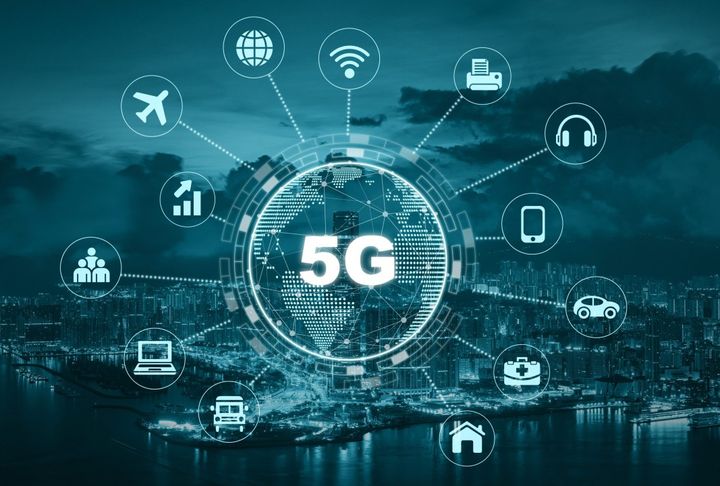
5G was developed to support not just smartphones but also a wide array of devices and applications, including autonomous vehicles, smart cities, remote surgeries, and industrial automation.
In essence, 5G exists to keep pace with the growing number of connected devices and the need for real-time data exchange.
Why 5G Matters Today
Who Benefits From 5G?
5G technology has far-reaching implications for individuals, businesses, and governments alike:
Consumers: Enjoy faster download and upload speeds, seamless streaming, and more stable connections, even in crowded areas.
Businesses: Enable advanced solutions such as virtual and augmented reality (VR/AR), remote machinery control, and advanced IoT (Internet of Things) applications.
Public Services: Improve emergency response, traffic systems, healthcare delivery, and more through real-time data and automation.
Problems 5G Helps Solve
The world is experiencing a surge in data consumption, with billions of devices accessing networks simultaneously. This creates congestion and slows down existing 4G networks. 5G addresses these challenges by:
Increasing network capacity to handle more devices
Reducing latency (the delay between sending and receiving data)
Offering faster and more consistent internet speeds
A practical example is in healthcare, where low-latency 5G connections allow for precise remote surgeries and real-time patient monitoring.
Recent Updates on 5G
Rollout Progress
In 2024 and 2025, countries worldwide continued to expand their 5G infrastructure. Major cities in the U.S., Europe, and Asia now offer widespread 5G coverage, and rural areas are gradually gaining access.
As of June 2025, more than 80 countries have commercial 5G services available, according to GSMA (Global System for Mobile Communications Association).
Trends and Developments
Standalone 5G Networks: Unlike early 5G deployments that relied on existing 4G infrastructure (non-standalone), standalone 5G networks have been rolling out since 2023. These networks allow for ultra-low latency and higher capacity, unlocking the full potential of 5G.
Private 5G Networks: Companies, especially in manufacturing and logistics, are building private 5G networks to enhance security, speed, and operational efficiency.
Device Evolution: More affordable 5G smartphones and connected devices have entered the market, making it more accessible to consumers globally.
Spectrum Allocations
Spectrum is a critical factor for 5G. Governments and regulatory bodies have been auctioning new spectrum bands, including high-frequency millimeter waves, which enable faster data transmission.
Regulations and Policies Affecting 5G
National Policies
Countries have different approaches to governing 5G development and deployment:
United States: The Federal Communications Commission (FCC) manages spectrum auctions and sets safety and security standards for 5G networks. The "5G FAST Plan" aims to facilitate rapid deployment.
European Union: EU policy encourages member states to coordinate 5G spectrum assignments and aims for full 5G coverage in urban areas by 2030 under the "Digital Decade" program.
Asia: Countries like South Korea, China, and Japan have aggressive government-led initiatives to accelerate 5G rollouts, supporting large-scale smart city and industrial projects.
Security and Privacy
Due to concerns over network security and potential espionage, many governments have introduced regulations regarding 5G equipment suppliers and cybersecurity protocols. Some have restricted certain vendors to safeguard national infrastructure.
Health and Environmental Considerations
Regulatory bodies worldwide (e.g., the World Health Organization and national radiation safety agencies) monitor and set limits on electromagnetic field exposure from 5G networks. Current research indicates that 5G is safe and within established health guidelines.
Tools and Resources for Understanding 5G
Whether you’re a consumer interested in using 5G services or a business planning to leverage its capabilities, several resources can help:
Coverage Maps
Ookla 5G Map: A global interactive map showing current 5G deployments.
GSMA Mobile Coverage Maps: Comprehensive maps for both mobile and fixed wireless networks.
Speed and Performance Tools
Speedtest by Ookla: Measure real-world 5G download and upload speeds.
OpenSignal App: Analyze signal strength, speed, and latency data.
Government and Industry Reports
FCC 5G Open Data: Data on U.S. deployments and spectrum usage.
European 5G Observatory: Updates on deployment progress and policy developments in the EU.
GSMA Intelligence: Reports and insights on global 5G adoption trends.
Educational Resources
ITU (International Telecommunication Union): Technical standards and global 5G reports.
IEEE Xplore Digital Library: Access to research articles and technical papers on 5G technology.
Business and Planning Tools
5G ROI Calculators: Tools provided by consultancies to estimate return on investment for adopting private 5G networks.
Edge Computing Simulators: Help businesses plan distributed applications that rely on 5G’s low latency.
FAQs About 5G
What speeds can I expect with 5G?
5G networks can theoretically reach speeds up to 10 Gbps. In practice, current 5G services often deliver speeds between 100 Mbps and 1 Gbps, depending on the network setup and location.
Is 5G safe for my health?
Yes. According to international guidelines and numerous studies, including those by the World Health Organization, 5G radiation levels are well within safe limits and do not pose health risks when networks comply with regulations.
Do I need a new phone to use 5G?
Yes. To access 5G networks, you need a 5G-compatible device. Most new smartphones released since 2021 have included 5G support.
Will 5G replace Wi-Fi?
Not entirely. While 5G offers faster and more flexible mobile connectivity, Wi-Fi remains cost-effective for local and indoor networks. Instead of replacing Wi-Fi, 5G complements it in many use cases, especially in mobility and wide-area coverage.
How does 5G impact battery life on devices?
5G can consume more battery than 4G when running at high speeds or constantly searching for a signal. However, manufacturers are improving battery technology and optimizing devices to handle 5G efficiently.
Conclusion
5G represents a major technological step forward, enabling faster, more reliable connections that support new innovations in nearly every sector. Whether you're a casual smartphone user or a business leader considering smart automation, understanding the basics of 5G helps you prepare for an increasingly connected future.
As 5G networks continue to expand and mature, staying informed about their progress, benefits, and potential challenges will empower you to make the most of this transformative technology.