What Is Kratom? How It Works, Effects, and Safety Risks
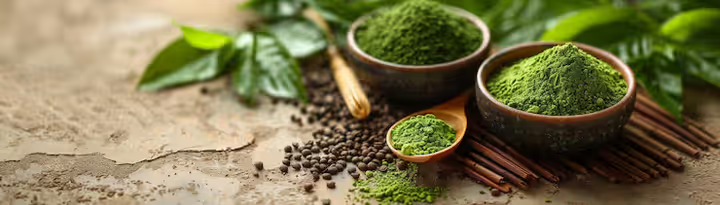
Kratom is a tropical tree native to Southeast Asia. Its scientific name is Mitragyna speciosa, and its leaves contain naturally occurring compounds that can affect the nervous system.
The plant has a history of traditional use in countries such as Thailand, Malaysia, Indonesia, and neighboring areas. Today, kratom is also discussed in scientific research and public-health settings because its compounds interact with several receptors in the human body.
The two compounds most frequently studied are mitragynine and 7-hydroxymitragynine. Their activity at opioid receptors is one reason researchers are examining how kratom works, what effects it can produce, and whether repeated exposure can result in tolerance or dependence. Kratom products can vary substantially in chemical composition, making it important to distinguish traditional leaf material from concentrated preparations.
Context
What Is Kratom?
Kratom is an evergreen tree belonging to the coffee family, Rubiaceae. It grows naturally in warm, humid parts of Southeast Asia, where communities have used its leaves in traditional practices for many years.
Fresh or dried leaves can be processed in different ways. Modern products may contain dried leaf powder, capsules, teas, extracts, or other preparations. These forms are not necessarily chemically equivalent because processing can change the concentration of naturally occurring alkaloids.
Traditional use and modern product use should therefore be considered separately. Historical use can provide cultural context, but it does not establish that a substance is medically effective or appropriate for every person.
How Kratom Works
Kratom contains several alkaloids, with mitragynine receiving considerable scientific attention. Laboratory research indicates that mitragynine interacts with multiple receptor systems, including opioid receptors.
7-hydroxymitragynine is another naturally occurring alkaloid. It occurs in much smaller amounts in ordinary leaf material than mitragynine, although concentrated preparations may have different chemical profiles.
Kratom's effects are therefore not explained by a single biological pathway. Researchers have identified activity involving several receptor systems, and the overall response can depend on the preparation, exposure, individual biology, and other substances present in the body.
Traditional and Modern Forms
Traditional preparations have commonly involved fresh or dried leaves. Modern commercial preparations may use powders or extracts with substantially different concentrations of active compounds.
This distinction matters when interpreting scientific information. A study involving a particular extract cannot automatically be applied to every form of kratom, just as findings involving ordinary leaf material may not describe concentrated preparations.
Importance
Why People Study Kratom
Kratom has attracted scientific and public-health attention because people report a range of effects after consuming it. Some reports describe increased alertness or stimulation, while others describe relaxation or drowsiness.
Reported effects do not necessarily establish medical benefits. Research involving humans remains limited for several questions, and results can vary according to study design and the specific preparation examined.
Reported Effects
Kratom effects can differ considerably between individuals. Factors such as the plant material, preparation, concentration, amount consumed, frequency of exposure, body chemistry, and simultaneous use of other substances can influence the experience.
Reported effects can include:
Increased alertness
Relaxation or drowsiness
Changes in mood
Reduced perception of discomfort
Nausea
Constipation
Dry mouth
Sweating
Dizziness
Increased heart rate
The presence and intensity of these effects can vary. Some people may experience unwanted effects even when another person reports a different response.
Safety Risks
Kratom safety risks are an important part of understanding the substance. Reported adverse outcomes include gastrointestinal symptoms, dizziness, confusion, changes in heart rate, and drowsiness. More serious medical events have also been reported, although determining the specific contribution of kratom can be difficult when several substances are involved.
Potential concerns include:
Excessive sedation or impaired alertness
Physical dependence after repeated exposure
Withdrawal symptoms after stopping regular use
Interactions with medicines or other substances
Contamination or inaccurate product composition
Greater uncertainty with concentrated extracts
A toxicology report that detects kratom does not necessarily prove that kratom alone caused a particular medical event. Many reported cases involve multiple substances, underlying health conditions, or products with uncertain composition.
Dependence and Withdrawal
Repeated kratom exposure can result in tolerance and physical dependence in some individuals. Physical dependence means that the body has adapted to repeated exposure, so stopping may produce withdrawal symptoms.
Reported withdrawal symptoms include irritability, restlessness, sleep disturbances, sweating, muscle discomfort, and changes in mood. Experiences can differ according to frequency of use, duration of exposure, individual characteristics, and the preparation involved.
Dependence and addiction are related but distinct concepts. Physical dependence concerns physiological adaptation, while a substance-use disorder involves a broader pattern of impaired control and harmful consequences.
Product Composition
One of the practical challenges surrounding kratom is variation between products. Alkaloid concentrations may differ according to plant material, growing conditions, harvesting, drying, extraction, and processing.
Contamination is another concern. Testing of some products has identified issues involving microorganisms, heavy metals, or other substances. Product labels may also provide limited information about the actual concentration of individual alkaloids.
| Factor | Potential significance |
|---|---|
| Plant source | Chemical composition can vary |
| Processing method | Can change alkaloid concentrations |
| Extract concentration | May differ substantially from ordinary leaf material |
| Product testing | Can identify certain contaminants or composition differences |
| Label information | May not fully describe chemical composition |
| Combined substances | Can complicate effects and health risks |
Recent Updates
Ongoing Scientific Research
From 2024 through 2026, scientific interest in kratom has continued across areas such as pharmacology, toxicology, dependence, product chemistry, and patterns of human use. Research has included laboratory studies, observational research, reviews, and investigations of reported adverse events.
Because the available evidence comes from different types of studies, conclusions need to be interpreted carefully. Laboratory findings can help explain mechanisms but do not automatically demonstrate a particular effect in humans.
Research on Alkaloids
Mitragynine and 7-hydroxymitragynine remain important subjects of investigation. Researchers are examining their receptor activity, metabolism, interactions with other compounds, and relationship to reported effects.
Researchers are also examining whether different preparations produce different biological responses. This is particularly relevant when comparing ordinary leaf products with concentrated extracts.
Product Testing and Contamination
Product composition remains an important public-health issue. Laboratory analysis can measure alkaloid concentrations and identify certain contaminants, although a test result applies only to the particular sample examined.
Researchers and health authorities have therefore continued to emphasize the importance of understanding product composition when evaluating reports about kratom effects or adverse events.
Evidence Gaps
Important questions remain about long-term exposure, interactions with medicines, pregnancy-related risks, effects in people with particular medical conditions, and differences among preparations.
The strength of available evidence also varies between topics. A reported effect, laboratory finding, or observational association should not automatically be interpreted as proof of a medical benefit or a specific cause of harm.
Laws or Policies
Kratom Regulation in India
The legal status of kratom in India should be assessed using current national and state rules and the specific preparation involved. India's principal framework for controlled narcotic and psychotropic substances includes the Narcotic Drugs and Psychotropic Substances Act, 1985, together with related rules and notifications.
A plant-derived substance should not automatically be assumed to have the same legal classification as a controlled substance simply because it has biological activity. Conversely, rules concerning a particular preparation, compound, importation, possession, or commercial activity may differ.
Because legal requirements can change, current notifications from relevant Indian authorities should be checked when a specific legal determination is necessary.
International Regulatory Differences
Kratom has different regulatory treatment across countries and jurisdictions. Some places have introduced restrictions on kratom or particular compounds, while others have used different regulatory approaches.
This variation is relevant for international travel. A substance that is permitted in one jurisdiction may be restricted in another, so local rules need to be considered separately.
Consumer and Product Rules
If a kratom-containing product is presented as a food, supplement, medicine, or another regulated category, additional requirements may apply according to its composition and intended use.
Health-related claims can also affect regulatory classification. A product's legal status cannot be determined only from its plant origin or the form in which it is packaged.
Tools and Resources
Scientific Information Sources
People researching what kratom is and how it works can consult established scientific and government resources. Useful sources include:
PubMed: A biomedical research database for locating peer-reviewed studies.
World Health Organization: Provides international scientific and regulatory information when relevant reviews are available.
National health authorities: May publish information about adverse events, toxicology, and public-health concerns.
Scientific journals: Provide research findings, study methods, and evidence assessments.
Indian government sources: Useful for checking current laws, notifications, and regulatory information.
How to Read Kratom Research
When reviewing research, first identify what type of material was studied. A paper involving dried leaf powder may not provide evidence about a concentrated extract, and laboratory experiments do not necessarily predict the same response in humans.
It is also useful to examine the number of participants, study duration, comparison group, measured outcomes, and stated limitations. Reviews and systematic analyses can help summarize multiple studies, although their conclusions depend on the quality of the underlying research.
Health and Safety Information
People experiencing serious symptoms after consuming kratom or a kratom-containing product should seek appropriate medical attention. Symptoms such as severe confusion, loss of consciousness, seizures, or difficulty breathing require urgent evaluation.
Healthcare professionals should be informed about kratom exposure when relevant, particularly when other medicines or substances are also being used. This information can help clinicians consider possible interactions and other explanations for symptoms.
FAQs
What is kratom and where does it come from?
Kratom is a tropical tree called Mitragyna speciosa that originates in Southeast Asia. Its leaves contain alkaloids, particularly mitragynine and 7-hydroxymitragynine, that can interact with several receptor systems.
How does kratom work in the body?
Kratom alkaloids interact with multiple biological receptors, including opioid receptors. The resulting effects can vary according to the preparation, exposure, individual factors, and other substances present in the body.
What are the effects of kratom?
Reported kratom effects include alertness, relaxation, drowsiness, mood changes, nausea, constipation, dizziness, sweating, and changes in heart rate. Individual responses can vary substantially.
What are the main kratom safety risks?
Important concerns include adverse physical effects, impaired alertness, dependence, withdrawal, interactions with other substances, contamination, and uncertainty about the composition of some preparations.
Can kratom cause dependence?
Yes, repeated exposure can result in physical dependence in some people. Withdrawal after regular use may involve restlessness, irritability, sleep problems, sweating, and other symptoms, with experiences varying between individuals.
Conclusion
Kratom is a Southeast Asian plant whose leaves contain biologically active alkaloids, particularly mitragynine and 7-hydroxymitragynine. These compounds interact with several receptor systems, which helps explain the range of reported effects and the continuing scientific interest in the plant. Safety concerns include adverse effects, dependence, withdrawal, interactions, contamination, and variation between preparations. Its legal treatment also differs across jurisdictions, so current local rules and authoritative health information are important when evaluating a specific situation.