Wastewater Recycling Guide With Treatment Technology and Environmental Insights
Wastewater recycling is the process of treating used water so that it can be used again for suitable purposes. The concept is closely connected with wastewater treatment, water conservation, pollution control, and environmental protection. Wastewater can come from homes, commercial buildings, factories, farms, and other activities where water becomes mixed with organic matter, chemicals, nutrients, or suspended particles.
Traditional wastewater treatment primarily focuses on reducing pollutants before treated water is discharged into the environment. Wastewater recycling goes a step further by treating water to a quality that allows another use. Depending on the treatment process and local requirements, recycled water may be used for landscape irrigation, industrial processes, toilet flushing, cooling systems, groundwater replenishment, or other controlled applications.
The need for wastewater recycling exists because usable freshwater resources are limited and unevenly distributed. Population growth, urban development, industrial activity, changing rainfall patterns, and periods of drought can place additional pressure on water supplies. Recycling creates another pathway for managing water resources while reducing the amount of treated wastewater that leaves a facility.
What wastewater contains
Wastewater is not a single type of water. Its composition depends on where it originates and what materials have entered it. Household wastewater can contain food residues, soaps, oils, nutrients, microorganisms, and human waste. Industrial wastewater may contain suspended solids, dissolved chemicals, metals, salts, oils, or other substances associated with specific manufacturing processes.
Wastewater treatment technology is designed around these characteristics. A treatment plant may use several stages rather than relying on one process. The overall objective is to remove or reduce unwanted substances while producing water appropriate for its intended destination.
Basic wastewater recycling process
A typical wastewater recycling system can include several treatment stages:
- Preliminary treatment removes large debris and materials that could interfere with later equipment.
- Primary treatment separates heavier solids and floating materials.
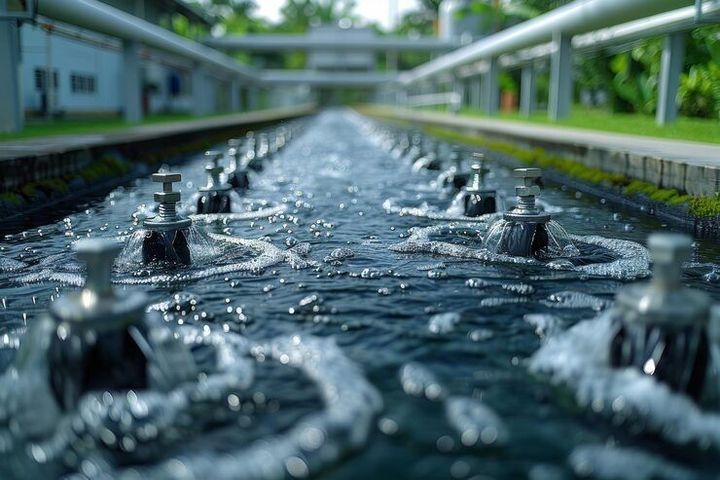
- Biological treatment uses microorganisms to reduce biodegradable organic matter.
- Secondary clarification separates biological solids from treated water.
- Advanced treatment can target nutrients, dissolved contaminants, microorganisms, and very small particles.
- Disinfection reduces disease-causing microorganisms before the water is reused or discharged.
The exact arrangement depends on the wastewater source, required water quality, available infrastructure, and intended reuse.
Importance
Wastewater recycling matters because water is involved in nearly every part of modern life. Drinking, food production, manufacturing, sanitation, energy production, and public infrastructure all depend on reliable water resources. When demand increases or natural supplies become less predictable, recycling can become part of a broader water management strategy.
The subject also affects communities indirectly. Effective wastewater treatment helps reduce pollution entering rivers, lakes, coastal waters, and groundwater. Recycling can reduce pressure on freshwater sources when treated water is suitable for non-potable applications.
Environmental considerations
Wastewater recycling can influence several environmental areas. Treating and reusing water can reduce the volume of wastewater discharged into receiving environments. It can also reduce the need to extract additional freshwater for certain applications.
However, recycling itself requires energy, equipment, chemicals, monitoring, and infrastructure. Advanced treatment can require more energy than conventional treatment because water may need to pass through additional filtration, membrane, or disinfection stages.
A balanced assessment therefore considers both water savings and the resources required to achieve the necessary treatment quality.
Who is affected
Wastewater recycling is relevant to many groups:
- Households depend on reliable sanitation and water systems.
- Communities are affected by the quality of nearby water resources.
- Agriculture can use appropriately treated water for certain irrigation applications.
- Industrial facilities may recycle water within production processes.
- Municipal authorities manage public wastewater infrastructure.
- Environmental organizations and researchers study the effects of treatment and reuse.
- Businesses and building operators may use recycled water for approved non-potable applications.
Recycled water and everyday use
Recycled water does not automatically mean drinking water. The appropriate use depends on treatment quality and regulatory requirements. Non-potable reuse generally involves applications where drinking-quality water is not required.
Potable reuse involves much stricter treatment and monitoring because the water is intended for human consumption. Such systems can include multiple treatment barriers and extensive water-quality controls.
Recent Updates
From 2024 through 2026, wastewater recycling has continued moving toward more advanced monitoring, resource recovery, energy efficiency, and digital process management. Treatment facilities are increasingly viewed not only as places for removing pollutants but also as systems that can recover useful water, nutrients, and energy from wastewater.
Smarter monitoring
Digital sensors and automated controls are becoming more important in modern treatment facilities. Continuous measurements can help operators track factors such as flow, temperature, dissolved oxygen, turbidity, conductivity, and other water-quality indicators.
Data systems can also help identify changes in treatment performance. Instead of relying entirely on periodic manual measurements, facilities can combine sensor information with process-control systems to support more consistent operation.
Membrane treatment developments
Membrane technologies remain important in advanced wastewater recycling. Microfiltration, ultrafiltration, nanofiltration, and reverse osmosis can provide different levels of separation.
Membrane selection depends on the contaminants being targeted and the quality required for reuse. Research and engineering development continue to focus on reducing energy requirements, managing membrane fouling, improving durability, and handling concentrated residual streams.
Resource recovery
Another growing trend is resource recovery. Wastewater contains materials that can sometimes be recovered rather than treated solely as waste.
Potential recovery areas include:
- Nutrients such as nitrogen and phosphorus
- Biogas generated from organic matter
- Reusable water
- Certain minerals and other materials
This approach supports a broader circular water management model in which water and other resources remain in productive use for longer periods.
Treatment technology comparison
| Technology | Main Function | Typical Role |
|---|---|---|
| Screening | Removes large solids | Preliminary treatment |
| Sedimentation | Separates suspended solids | Primary treatment |
| Biological treatment | Reduces biodegradable matter | Secondary treatment |
| Membrane filtration | Removes fine particles and microorganisms | Advanced treatment |
| Reverse osmosis | Removes many dissolved substances | High-quality reuse |
| Ultraviolet treatment | Inactivates microorganisms | Disinfection |
| Ozone treatment | Oxidizes selected contaminants | Advanced treatment |
| Activated carbon | Adsorbs certain dissolved compounds | Polishing stage |
The technologies in this table are not interchangeable. A recycling system may combine several methods to achieve the required water quality.
Laws or Policies
Wastewater recycling is strongly influenced by environmental and public health rules. The specific requirements vary between countries, regions, municipalities, and types of water reuse. Regulations may establish limits for pollutants in wastewater discharges and quality requirements for different categories of recycled water.
Water quality requirements
Rules can address physical, chemical, and biological characteristics of treated water. Depending on the intended reuse, requirements may cover pathogens, nutrients, suspended solids, dissolved substances, metals, and other contaminants.
Potable reuse generally involves more extensive treatment and monitoring requirements than applications such as industrial cooling or landscape irrigation.
Discharge and reuse controls
A wastewater facility may have separate requirements for water that is discharged into the environment and water that is intentionally reused. Permits or approvals can establish monitoring, reporting, treatment, and operational requirements.
Regulatory frameworks may also identify acceptable uses for recycled water and specify how recycled water systems must be designed, maintained, and monitored.
Public health protection
Public health is a central consideration in wastewater recycling policies. Treatment systems must account for microorganisms and contaminants that could create risks if recycled water is used incorrectly.
For this reason, regulations commonly emphasize treatment barriers, water-quality monitoring, system controls, and clear separation between potable and non-potable applications where appropriate.
Because rules differ considerably between jurisdictions, readers should consult the applicable environmental and water authorities when evaluating a specific recycling project.
Tools and Resources
Several types of tools can help people understand wastewater recycling and treatment technology.
Water-use calculators
Water-use calculators can estimate how much water is consumed by households, buildings, agricultural activities, or industrial processes. These estimates can help identify areas where water reuse may have practical relevance.
Treatment design references
Engineering manuals, environmental agency publications, academic databases, and technical standards can provide information about treatment processes, water-quality parameters, and system design principles.
Water-quality monitoring tools
Monitoring equipment can measure parameters such as pH, turbidity, conductivity, temperature, dissolved oxygen, and other indicators. More advanced facilities may use automated monitoring systems that collect and transmit measurements continuously.
Planning templates
Water balance templates can help organizations compare incoming water, wastewater generation, treatment volumes, recycled water, and discharge volumes. A basic water balance can show where water enters a system and where it leaves.
Other useful resources include:
- Wastewater treatment process diagrams
- Water-quality reference tables
- Environmental assessment frameworks
- Facility maintenance records
- Regulatory guidance documents
- Water reuse planning templates
- Academic research databases
These resources provide general information and should not replace requirements established by applicable authorities or qualified professionals.
FAQs
What is wastewater recycling?
Wastewater recycling involves treating used water so it can be used again for an appropriate purpose. The required treatment level depends on the original wastewater and the intended reuse.
How does wastewater treatment technology work?
Wastewater treatment technology uses physical, biological, chemical, membrane, and disinfection processes to reduce different types of contaminants. Multiple stages are often combined to achieve the required water quality.
Is recycled wastewater safe?
Safety depends on the treatment process, water quality, intended use, monitoring, and applicable regulations. Recycled water intended for drinking generally requires more extensive treatment and controls than water intended for approved non-potable applications.
What are the environmental benefits of wastewater recycling?
Wastewater recycling can reduce demand for freshwater in suitable applications and reduce the volume of treated wastewater discharged into the environment. Its environmental performance also depends on energy use, infrastructure, treatment requirements, and how residual materials are managed.
What is the difference between wastewater treatment and wastewater recycling?
Wastewater treatment focuses on reducing contaminants so water can meet discharge or reuse requirements. Wastewater recycling adds the objective of putting appropriately treated water back into another use rather than treating it only for discharge.
Conclusion
Wastewater recycling combines water treatment, resource management, environmental protection, and modern monitoring technologies. Treatment systems can range from basic physical separation and biological processes to advanced membranes and disinfection methods. Recent developments have placed greater attention on digital monitoring, resource recovery, energy efficiency, and circular water management. The appropriate recycling approach depends on wastewater characteristics, intended use, water-quality requirements, infrastructure, and applicable regulations.