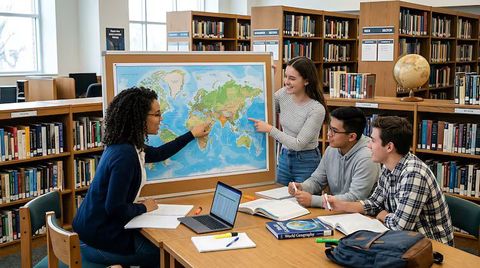
Student Exchange Travel Programs Information With Travel Planning and Education Details
Student exchange travel programs combine international travel with academic study, cultural participation, and everyday experiences in another country. Students usually spend a defined period living and studying outside their usual education environment while remaining connected to their home institution or academic program.
The idea of educational exchange developed from the broader practice of international academic cooperation. Schools, universities, educational organizations, and cultural institutions created exchange arrangements to help students experience different education systems, languages, communities, and cultural environments.
A student exchange program can range from a short academic visit to a semester, academic year, or another defined period. Depending on the program, students may attend a partner school, university, language institution, or specialized educational center.
Travel planning is an important part of the experience. Students may need to organize transportation, accommodation, documentation, insurance, academic records, local transportation, communication arrangements, and personal schedules before departure.
Types of Student Exchange Programs
Student exchange travel programs can take several forms. Secondary-school exchanges may involve students living with a host family while attending a local school. University exchanges may allow students to complete selected academic modules at a partner institution.
Other formats include language exchange programs, cultural exchange programs, short academic visits, research-oriented exchanges, summer study programs, and structured educational group travel.
The length and academic structure can vary considerably. Some programs involve formal academic credit, while others are primarily cultural or language-focused.
Main Elements of an Exchange Program
A typical program may involve:
Academic enrollment or classroom participation
Accommodation with a host family, residence, or other approved arrangement
Orientation before or after arrival
Local transportation planning
Cultural activities
Language practice
Academic documentation
Travel and identity documents
Health and travel insurance arrangements
Emergency contact procedures
Students and families generally need to understand which organization is responsible for each part of the program before departure.
Importance
Student exchange travel programs matter because education increasingly involves international collaboration, language learning, cultural understanding, and exposure to different academic environments. Living in another country can introduce students to different classroom practices, social customs, transportation systems, and everyday routines.
The experience also affects families, educational institutions, host communities, teachers, coordinators, and local organizations. Successful participation depends on cooperation between these groups.
Educational and Cultural Experience
An exchange can expose students to academic subjects from a different perspective. Classroom discussions, assessment methods, teaching styles, and academic expectations may differ from those students are familiar with.
The cultural component is equally significant. Students may experience local food, traditions, public spaces, festivals, community activities, and communication styles as part of ordinary daily life rather than simply seeing them during a short holiday.
Language immersion can also become part of everyday interaction. Students may use another language in classrooms, shops, public transportation, host homes, and social settings.
Travel Planning
Travel planning for students involves more than arranging transportation. Before departure, students may need to prepare:
Passport or identity documentation
Appropriate entry permission
Academic records
Accommodation information
Travel insurance
Emergency contacts
Transportation arrangements
Medication documentation where applicable
Financial planning
Communication arrangements
Copies of important documents
Requirements differ according to nationality, destination, age, program type, and length of stay.
Student Independence
Exchange programs can introduce students to practical responsibilities such as managing schedules, navigating unfamiliar locations, communicating across language differences, and adapting to different routines.
Younger students may have additional supervision requirements. University students may have greater independence but still need to understand institutional rules, accommodation arrangements, local laws, and emergency procedures.
Recent Updates
From 2024 through 2026, international education has continued to develop around blended learning, digital administration, student mobility, language education, and cross-border academic cooperation. Educational institutions increasingly use digital platforms for applications, orientation materials, academic documents, communication, and program coordination.
Digital Program Management
Many exchange programs now use online systems for applications, document submission, orientation, academic scheduling, and communication. Students may receive digital information about accommodation, arrival procedures, academic requirements, and local transportation before departure.
Digital communication can also help students remain connected with their home institutions during an exchange. However, students still need access to physical or securely stored copies of important travel documents where appropriate.
Short-Term International Programs
Shorter international education experiences continue to form part of the broader exchange landscape. Programs can include summer academic sessions, language immersion, cultural programs, study tours, and short university exchanges.
Short programs can involve different planning requirements from semester-long exchanges. Accommodation, academic credit, travel documentation, and supervision arrangements should be clearly defined before participation.
Hybrid and Technology-Supported Learning
Technology can connect students with their home institution while they are abroad. Online classrooms, learning management systems, digital libraries, and video communication tools can support academic continuity.
Hybrid arrangements may be useful when an exchange includes both physical attendance and online coursework. The exact academic structure depends on the participating institutions.
Greater Attention to Student Wellbeing
International education programs increasingly include orientation and guidance covering cultural adjustment, communication, emergency procedures, accommodation expectations, and personal wellbeing.
Students can experience homesickness, language difficulties, unfamiliar routines, or cultural differences. Preparation and access to appropriate institutional support can help students understand how to respond to these situations.
Laws or Policies
Student exchange travel programs are shaped by immigration rules, education regulations, child-protection requirements, accommodation rules, insurance arrangements, and institutional policies. Requirements differ substantially between countries and according to the student's age and program duration.
Immigration and Entry Requirements
Students traveling internationally may need a passport, visa, electronic travel authorization, student permission, or another form of entry documentation. The required document depends on nationality, destination, duration, and educational activity.
Students should distinguish between rules for ordinary tourism and rules that apply when undertaking formal study. Educational activities can have different immigration requirements from short-term sightseeing.
Education and Academic Credit
Academic institutions may have policies governing credit transfer, course selection, attendance, assessment, transcripts, and recognition of overseas coursework.
Before departure, students may need documentation confirming which courses or educational activities are recognized by their home institution. Academic arrangements can vary even when two institutions have an established exchange relationship.
Protection of Younger Students
Programs involving minors can be subject to additional requirements concerning supervision, accommodation, safeguarding, emergency contacts, parental consent, and host-family arrangements.
Parents or guardians may need to complete additional documentation for international travel. The exact requirements depend on the student's age, nationality, destination, and program structure.
Insurance and Safety
Travel and health insurance requirements can vary between programs and destinations. Students may also need information about emergency procedures, local healthcare access, transportation rules, and accommodation arrangements.
Program coordinators typically provide specific documentation where institutional requirements apply. Students should understand what circumstances are covered and which responsibilities remain with them.
Tools and Resources
Several tools can help students organize an exchange program. Digital calendars can track academic schedules, travel dates, orientation sessions, application deadlines, and important appointments.
Travel-planning applications can help organize transportation and accommodation information. Mapping tools can provide information about campuses, residences, airports, public transportation, and nearby facilities.
Useful planning resources include:
Academic course-planning templates
Travel itinerary planners
Digital maps
Currency calculators
Packing checklists
Language-learning applications
Document checklists
Academic credit worksheets
Budget-planning spreadsheets
Travel insurance documentation
Emergency contact templates
Student orientation materials
A simplified comparison of program types is shown below:
| Program Type | Typical Focus | Academic Structure | Common Duration |
|---|---|---|---|
| School Exchange | School and cultural experience | Local school participation | Term or academic year |
| University Exchange | Academic study | Partner institution courses | Semester or year |
| Language Exchange | Language development | Language classes and practice | Short or medium term |
| Cultural Exchange | Cultural learning | Structured cultural activities | Short term |
| Summer Program | Academic and cultural activities | Courses or workshops | Several weeks |
| Study Tour | Educational travel | Visits and guided learning | Days or weeks |
Students can also maintain a digital document folder containing copies of passports, admission documents, accommodation details, insurance information, emergency contacts, and academic paperwork. Secure access and appropriate privacy practices are important when storing personal documents.
FAQs
What are student exchange travel programs?
Student exchange travel programs allow students to study or participate in structured educational activities in another country while experiencing the local culture and daily environment.
How do student exchange programs work?
A student normally joins an approved program through a school, university, or educational organization. Depending on the arrangement, the student may attend a partner institution, live with a host family or residence, and participate in academic and cultural activities.
What travel planning is needed for a student exchange?
Planning may include passports, entry documentation, academic records, accommodation, transportation, insurance, emergency contacts, communication arrangements, and personal schedules. Requirements vary according to destination and program structure.
Can students receive academic credit during an exchange?
Some student exchange programs provide academic credit through agreements between participating institutions. Students generally need to confirm course recognition, assessment requirements, and transcript arrangements with their educational institution.
Are student exchange travel programs suitable for younger students?
Some programs are specifically designed for school-age students and include additional supervision, accommodation, safeguarding, and parental-consent arrangements. Requirements depend on the student's age and the program structure.
Conclusion
Student exchange travel programs combine education, international travel, cultural participation, and everyday experiences in another academic environment. Travel planning involves documentation, accommodation, transportation, insurance, academic arrangements, and emergency preparation. Recent developments include digital program management, short-term international education, hybrid learning, and increased attention to student support. Immigration, education, safeguarding, and travel requirements vary according to the student's circumstances and destination.