Smart Classroom Tools Details: Technologies, Features, Classroom Uses, Selection Factors, and Benefits
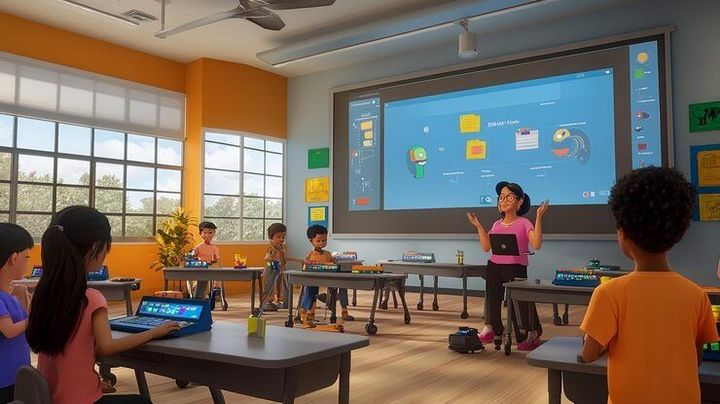
Smart classroom tools are digital technologies used to support teaching, learning, communication, assessment, and classroom management. A modern smart classroom may combine interactive displays, digital content, classroom audio, cameras, learning platforms, wireless presentation systems, educational applications, and connected devices. The purpose is not simply to replace a traditional board with a digital screen, but to create a learning environment where technology supports different teaching activities.
The concept developed alongside computers, projectors, internet connectivity, multimedia learning, and online education platforms. As educational technology expanded, classrooms began incorporating tools that allow teachers to display videos, annotate lessons, conduct digital activities, share resources, and communicate with students through connected systems.
Main Smart Classroom Technologies
A smart classroom can contain several types of technology. The exact combination depends on the age of students, curriculum, classroom size, teaching methods, and available infrastructure.
Common tools include:
- Interactive flat-panel displays or digital boards for writing, presentations, diagrams, and multimedia content.
- Projectors and projection screens for displaying lessons and visual materials.
- Document cameras or visualisers for showing books, experiments, physical objects, and handwritten work.
- Classroom audio systems containing microphones and speakers.
- Computers, laptops, tablets, or other source devices.
- Learning management systems for assignments, resources, communication, and assessment.
- Educational applications for quizzes, simulations, collaboration, and interactive activities.
- Cameras for remote participation, recorded lessons, or hybrid classrooms.
- Wireless presentation systems for sharing content from compatible devices.
- Internet-connected systems that allow access to digital educational resources.
Smart classroom technology increasingly combines several of these components rather than relying on one device. Recent research also describes the growing role of artificial intelligence, Internet of Things devices, sensors, analytics, and adaptive learning systems.
Importance
Smart classroom tools matter because teachers and students may need to work with different types of information during a lesson. Text, diagrams, videos, simulations, presentations, quizzes, and physical demonstrations can all be incorporated into one classroom environment.
Technology can also support different learning activities without requiring every lesson to follow the same format. A teacher might explain a concept using an interactive display, demonstrate an experiment with a document camera, conduct a digital quiz, and then share related material through a learning platform.
Classroom Uses
Smart classroom technologies can be used across many subjects and age groups.
In mathematics and science, interactive displays can show diagrams, formulas, animations, simulations, and step-by-step explanations. A document camera can also display physical experiments or handwritten calculations to the entire class.
In language and social science classes, teachers can use digital maps, historical documents, presentations, audio recordings, videos, and collaborative writing activities. Multimedia resources can provide additional context alongside textbooks and classroom discussion.
Teaching and Assessment
Smart classroom tools can also support formative assessment. Digital quizzes and response systems allow teachers to collect answers during a lesson and identify areas that may require further explanation.
Learning management systems can organize assignments, digital resources, submissions, and feedback. When these systems are integrated appropriately, teachers can spend less time moving between unrelated platforms and more time concentrating on classroom activities.
However, technology does not automatically improve learning. Research on smart classrooms continues to identify issues involving teacher preparation, infrastructure, privacy, scalability, and the relationship between technology and actual learning outcomes.
Recent Updates
Interactive Displays and Connected Classrooms
From 2024 through 2026, interactive flat-panel displays have become an increasingly visible component of smart classroom environments. These displays can combine touch interaction, digital writing, multimedia playback, screen sharing, and access to educational applications in one classroom device.
The broader trend is toward connected classroom ecosystems rather than isolated hardware. Current smart classroom discussions increasingly include learning management systems, digital content, analytics, cameras, wireless connectivity, and integrated classroom controls.
Artificial Intelligence and Analytics
Artificial intelligence is becoming part of educational technology research and classroom software. Potential applications include personalized learning, automated assessment support, content generation, learning analytics, and classroom management.
At the same time, AI introduces questions about accuracy, student data, privacy, bias, teacher oversight, and appropriate use. Recent research emphasizes that AI-based classroom systems require careful evaluation rather than assuming that automation alone will improve education.
Expansion of Digital Education in India
India has continued to expand digital education initiatives. Under Samagra Shiksha, the ICT and Digital Initiatives component supports ICT laboratories and smart classrooms, while the national framework also includes digital platforms such as DIKSHA. The Ministry of Education reported that 8,148 ICT Labs and 23,118 Smart Classrooms were approved for 2024–25.
The government also announced the provision of ICT laboratories and smart classrooms in functional Kasturba Gandhi Balika Vidyalayas and hostels, with the stated objective of strengthening digital access for students.
Changing Approach to Technology
A notable development is the shift from simply installing classroom hardware toward considering how technology fits teaching practices. Government guidance under Samagra Shiksha describes technology as a means to support educational goals rather than an objective by itself.
This approach places greater attention on teacher preparation, curriculum alignment, infrastructure, accessibility, maintenance, and actual classroom use.
Laws or Policies
In India, smart classroom development is influenced by national education policy and government education programs. The National Education Policy 2020 recognizes technology as an important part of education and discusses areas including artificial intelligence, machine learning, smart boards, handheld devices, adaptive testing, and educational software and hardware. It also emphasizes evaluating technology interventions in relevant educational contexts before wider adoption.
Samagra Shiksha
Samagra Shiksha is a major school education framework covering the period from pre-school through Class 12. Its digital education component supports ICT infrastructure and smart classrooms in eligible schools. The program identifies teachers and technology as important areas for improving education quality.
The framework includes digital boards, smart classrooms, ICT laboratories, DIKSHA, and other digital initiatives. Its implementation guidance also emphasizes that technology infrastructure should be adapted to the requirements and intended educational outcomes of each context.
Data and Privacy Considerations
Connected classroom systems may collect information such as student submissions, attendance records, account information, device activity, or learning data. Schools and institutions therefore need to consider applicable privacy, cybersecurity, access-control, and data-management requirements.
The exact legal obligations can vary according to the institution, technology, type of data, and circumstances. Educational institutions should follow applicable Indian laws, institutional policies, and official guidance when collecting or processing student information.
Tools and Resources
Several categories of tools can support a smart classroom without requiring every classroom to use the same technology.
Digital Learning Platforms
Learning management systems can organize lessons, assignments, digital resources, assessments, and student submissions. DIKSHA is one major national digital education platform in India and is designed to provide curriculum-related learning and teaching resources.
Interactive Teaching Tools
Interactive displays, digital whiteboards, document cameras, wireless presentation systems, and classroom response tools can support live teaching. Their usefulness depends on whether teachers can operate them comfortably and whether the content is appropriate for the lesson.
Classroom Audio and Video
Microphones, speakers, webcams, and cameras can support presentations, remote participation, recorded lessons, and communication between classrooms. Audio quality is particularly important because students need to hear explanations clearly from different seating positions.
Planning and Evaluation Resources
Schools can use technology assessment checklists, classroom inventories, network testing tools, lesson templates, digital accessibility checklists, and teacher training materials when planning a technology-enabled classroom.
A practical evaluation can consider the following factors:
- Classroom size and seating arrangement.
- Display visibility from different positions.
- Internet availability and network reliability.
- Compatibility with existing computers and software.
- Teacher familiarity with the technology.
- Accessibility for students with different learning needs.
- Data protection and account management.
- Maintenance and replacement planning.
- Curriculum alignment.
- Possibility of future expansion.
The following comparison summarizes common tools:
| Smart Classroom Tool | Main Function | Common Classroom Use | Important Factor |
|---|---|---|---|
| Interactive display | Digital writing and multimedia | Presentations, diagrams, activities | Screen visibility and touch response |
| Document camera | Displays physical materials | Demonstrations and written work | Image clarity |
| Learning platform | Organizes digital learning | Assignments and resources | Ease of use |
| Classroom audio | Distributes sound | Lectures and discussions | Voice clarity |
| Camera | Captures classroom activity | Hybrid lessons and recording | Privacy controls |
| Wireless presentation | Shares device screens | Student presentations | Network compatibility |
| Digital quiz tools | Collects responses | Formative assessment | Question design |
| Classroom sensors | Collects environmental data | Room monitoring | Data management |
FAQs
What are smart classroom tools?
Smart classroom tools are digital hardware and software used to support teaching, learning, communication, assessment, and classroom management. Examples include interactive displays, digital learning platforms, cameras, audio systems, and connected educational applications.
Which technologies are commonly used in a smart classroom?
Common technologies include interactive boards, projectors, computers, document cameras, classroom audio, learning management systems, wireless presentation systems, digital assessment tools, and internet-connected devices.
What are the benefits of smart classroom tools?
Smart classroom tools can support multimedia teaching, interactive activities, digital assessment, collaborative learning, and access to educational resources. Their practical value depends on appropriate implementation and teacher use.
How should schools select smart classroom tools?
Selection factors include classroom size, curriculum requirements, network infrastructure, accessibility, compatibility, teacher training, data protection, maintenance requirements, and long-term technology planning.
Are smart classroom technologies supported by Indian education policy?
Yes. India's National Education Policy 2020 recognizes technology as an important part of education, while Samagra Shiksha includes ICT infrastructure and smart classrooms among its digital education initiatives.
Conclusion
Smart classroom tools combine hardware, software, connectivity, and digital learning resources to support modern teaching environments. Interactive displays, learning platforms, audio systems, cameras, assessment applications, and connected technologies can be used for different classroom activities. In India, national education policy and Samagra Shiksha provide a framework for expanding digital education and smart classrooms. Effective implementation depends on matching technology with curriculum needs, teacher preparation, infrastructure, accessibility, privacy, and practical classroom requirements.