Silicone Molding Automation: A Complete Guide
Explore how silicone molding automation increases production efficiency, reduces labor costs, and improves product consistency across manufacturing operations.
Silicone molding automation has become essential for manufacturers seeking to scale production while maintaining consistent quality and controlling labor expenses. Unlike traditional manual molding processes that rely heavily on operator skill and hand-finishing work, automated systems handle material preparation, mold filling, curing, and part ejection with minimal human intervention. This shift enables manufacturers to produce components ranging from medical-grade seals to consumer electronics gaskets at volumes and precision levels previously impossible with manual methods. Understanding the mechanics of automated silicone molding—from equipment types to implementation strategies—is critical for manufacturers evaluating whether automation aligns with their production goals and capital constraints.
Core Advantages and Practical Limitations of Silicone Molding Automation
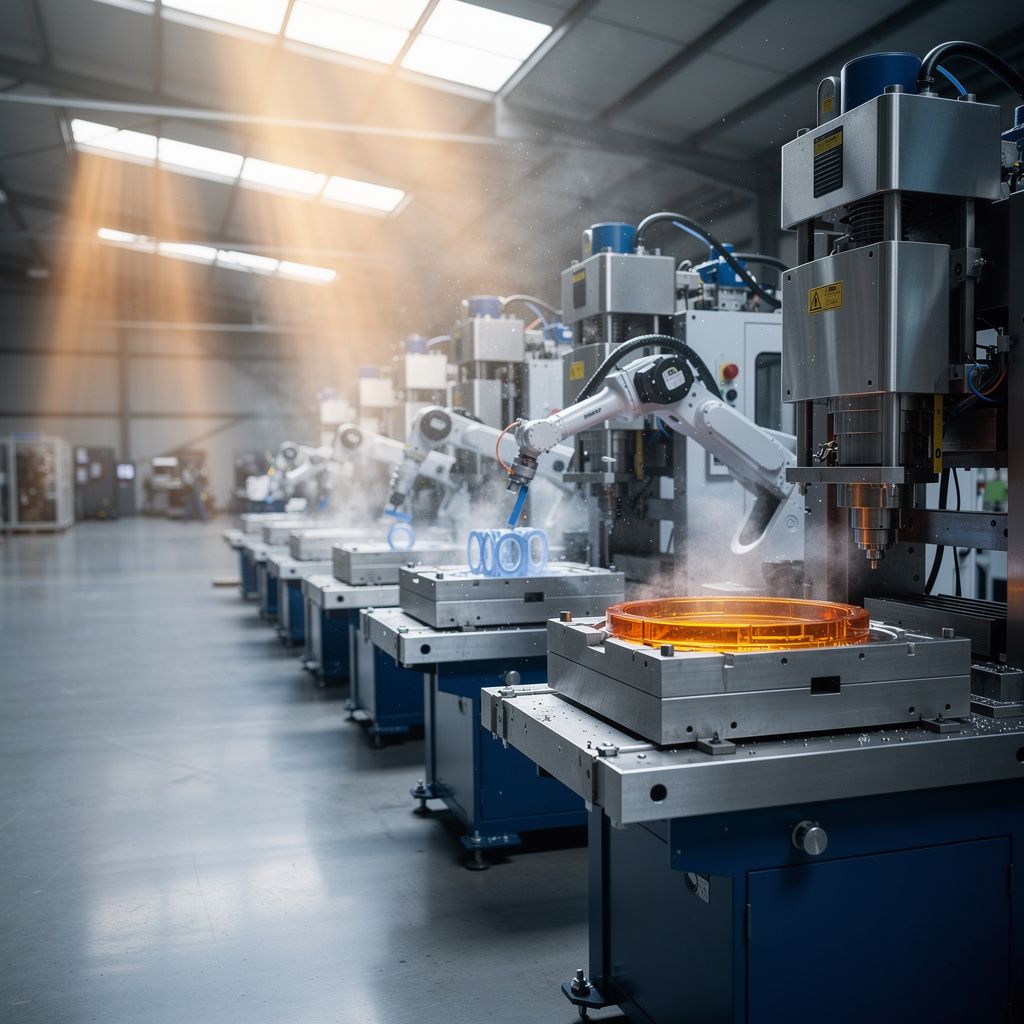
Automated silicone molding delivers measurable improvements across multiple operational dimensions. Production speed represents the most immediate benefit: automated systems process cycles 3-7 times faster than manual methods, with compression molding systems completing cycles in 30-90 seconds compared to 3-5 minutes for hand-molded parts. This acceleration directly translates to higher throughput—a single automated press can produce 500-2,000 parts daily depending on part complexity and mold design.
Labor efficiency improvements are equally substantial. Automated systems reduce direct labor requirements by 30-50% because operators transition from hands-on molding to supervisory roles managing multiple presses simultaneously. A single technician can monitor 3-4 automated stations, whereas manual molding requires dedicated operators per press. This restructuring lowers per-unit labor costs significantly, particularly for high-volume production runs exceeding 10,000 units monthly.
Quality consistency represents another critical advantage. Automated systems eliminate operator-dependent variables—inconsistent material temperatures, variable filling speeds, uneven pressure application—that cause dimensional variations and surface defects in manually molded parts. Tolerance consistency improves to ±0.05mm or better, reducing scrap rates from 5-8% in manual processes to 1-2% in automated operations. This consistency becomes essential for medical devices, automotive seals, and electronics components where specifications demand precise dimensional control.
Practical limitations exist alongside these advantages. Initial capital investment ranges from $150,000 for basic compression molding systems to $500,000+ for advanced liquid injection molding (LIM) setups with integrated robotics and quality control systems. This investment requires production volumes sufficient to achieve payback within 2-3 years. Manufacturers with annual volumes below 50,000 units often find automation economically marginal. Additionally, automation requires skilled maintenance technicians familiar with hydraulic systems, electrical controls, and mold mechanics. Setup time for new molds remains 2-4 weeks, making small batch production economically inefficient. Automated systems also demand consistent material quality—silicone compounds must meet strict viscosity and cure specifications, limiting flexibility in material sourcing.
Equipment Types and Technical Operating Mechanisms
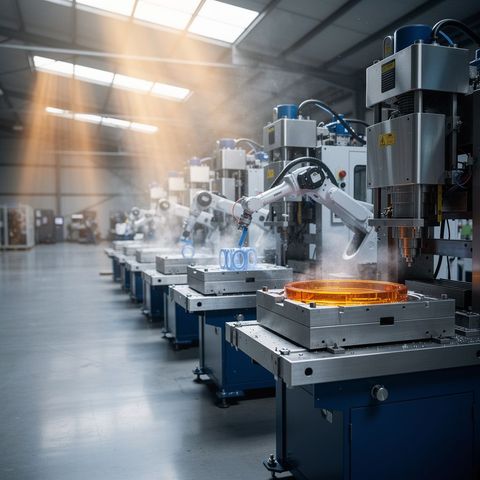
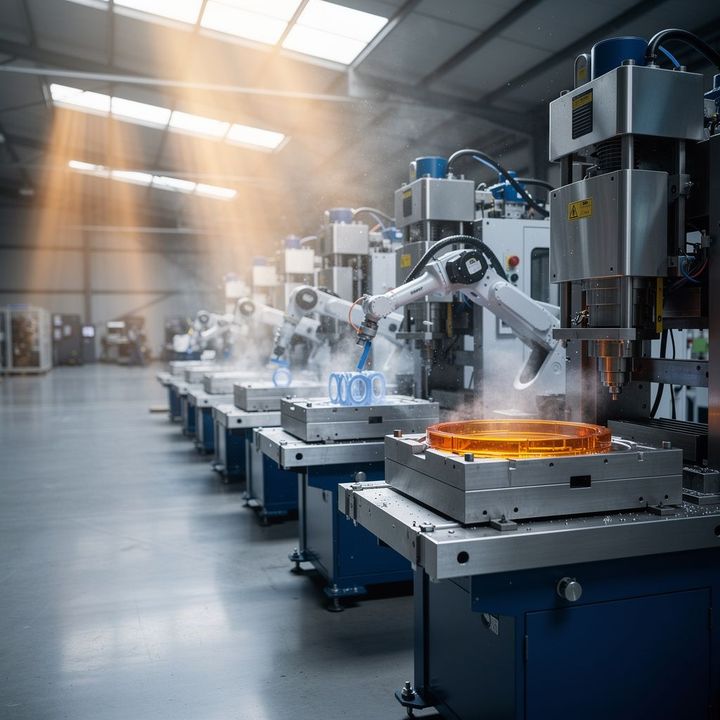
Compression molding automation represents the most common entry point for manufacturers transitioning from manual processes. These systems use heated metal molds mounted on hydraulic presses that apply 50-500 tons of closing force depending on part size and material requirements. The operator loads uncured silicone into the mold cavity, the press closes under controlled pressure, heat cures the material (typically 5-30 minutes at 150-200°C), and the press opens to eject the finished part. Automation adds robotic arms that load molds, transfer cured parts to cooling stations, and trim excess material (flash). Modern compression systems include pressure monitoring, temperature profiling, and cycle time tracking to maintain consistency. These systems suit medium-volume production (5,000-50,000 units monthly) and accommodate part geometries up to 12 inches in largest dimension.
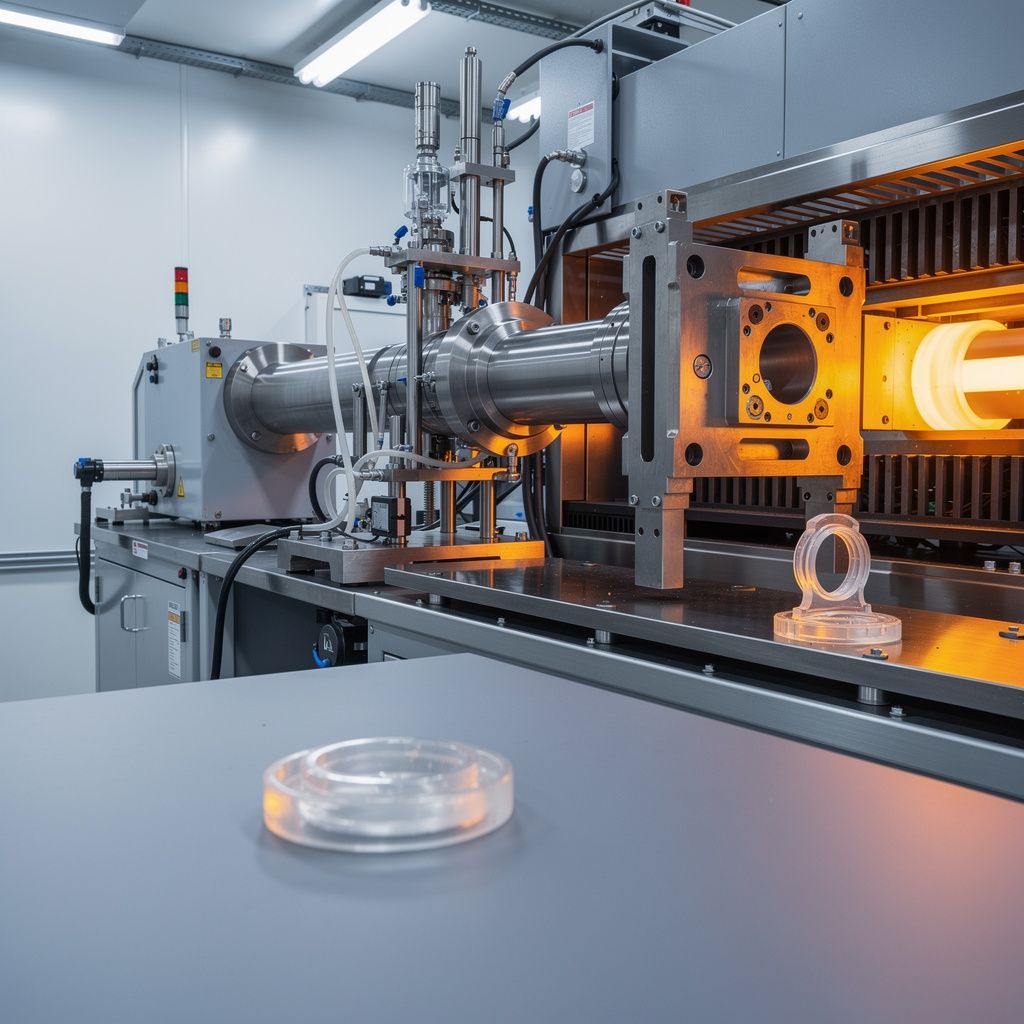
Liquid injection molding (LIM) automation handles more complex geometries and tighter tolerances than compression molding. LIM systems inject pre-mixed, two-part liquid silicone directly into closed molds at controlled temperatures and pressures. The material fills the mold cavity uniformly, cures in 1-3 minutes, and ejects as a finished part with minimal post-processing. Automated LIM systems include metering and mixing units that dispense precise silicone ratios (typically 1:1 by volume), heated mold stations, and robotic unloading. LIM automation excels for high-volume production (50,000+ units monthly) of small, detailed parts—medical tubing, electronic connectors, precision gaskets—because cycle times are 5-10 times faster than compression molding and part accuracy reaches ±0.02mm. However, LIM equipment costs $300,000-$700,000 and requires rigorous maintenance of metering components and mold cooling systems.
Multi-cavity automated presses increase throughput by molding multiple parts simultaneously. A single press might contain 4-16 cavities, each producing an identical part in a single cycle. This approach multiplies output without proportional increases in equipment cost or floor space. For example, a 4-cavity press produces 4 parts per 60-second cycle (240 parts/hour) versus 60 parts/hour from a single-cavity system. Multi-cavity automation requires sophisticated mold design to ensure uniform material flow to each cavity and balanced pressure distribution. Cavity count is limited by mold size, material flow dynamics, and equipment tonnage capacity.
Automated material handling systems integrate with molding presses to create end-to-end production lines. Robotic arms with specialized grippers load uncured silicone, transfer cured parts between stations, and position components for trimming or finishing. Vision systems inspect parts for defects, dimensional accuracy, and surface quality, automatically rejecting non-conforming units. Conveyor systems move parts through cooling, trimming, cleaning, and packaging stations. These integrated systems reduce manual handling by 80-90% and enable lights-out manufacturing—production continuing without operators present during night shifts.
Current Technological Innovations and Industry Trends
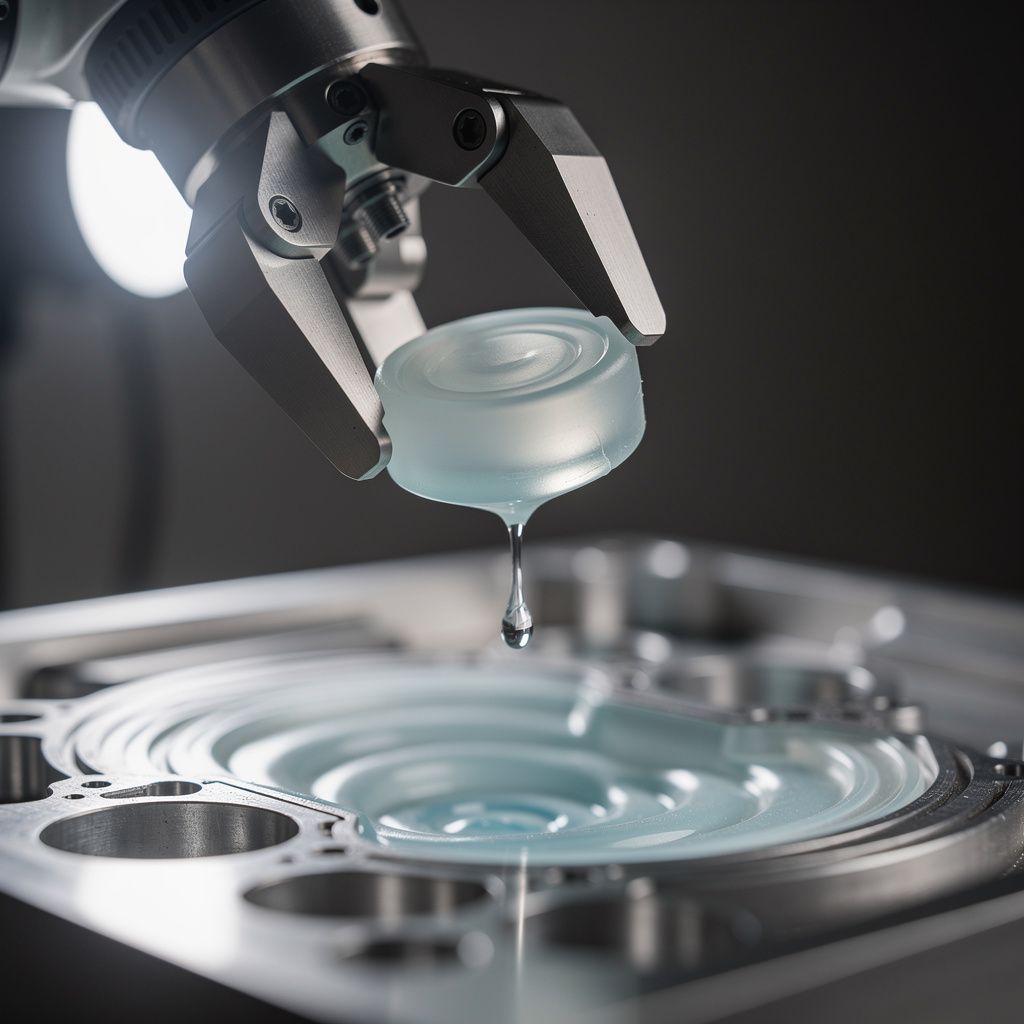
Artificial intelligence and machine learning are transforming silicone molding automation through predictive quality control and process optimization. Computer vision systems trained on thousands of images now detect surface defects, dimensional variations, and material flow issues in real-time, achieving 99.2% accuracy in identifying non-conforming parts. These systems learn from historical defect patterns, enabling predictive alerts that flag process drift before parts become defective. Some advanced systems adjust mold temperature, injection pressure, and cure time automatically based on detected variations, maintaining consistency across production runs.
Internet of Things (IoT) connectivity enables remote monitoring and data analytics across molding operations. Sensors embedded in presses track temperature profiles, pressure curves, cycle times, and equipment performance metrics. This data streams to cloud-based dashboards accessible to plant managers and engineers worldwide. Predictive maintenance algorithms analyze sensor data to forecast equipment failures 2-4 weeks in advance, preventing unplanned downtime. Manufacturers can optimize production scheduling based on real-time equipment utilization and identify bottlenecks limiting throughput.
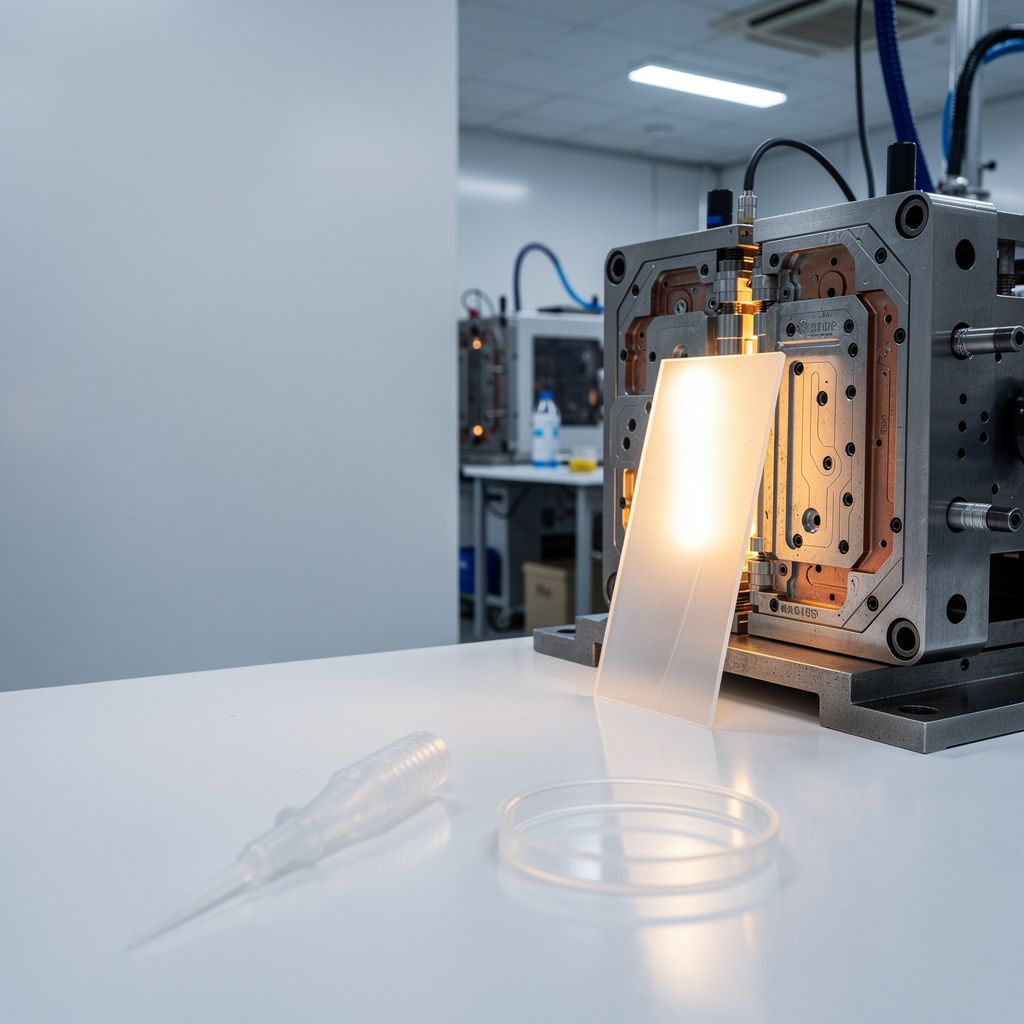
Advanced mold materials and cooling technologies are reducing cycle times and improving part quality. Conformal cooling channels—cooling passages that follow the mold cavity geometry rather than straight drilled holes—reduce cooling time by 20-40% while improving temperature uniformity. Beryllium copper and aluminum molds with enhanced thermal conductivity replace traditional steel in applications prioritizing speed. Some manufacturers employ cryogenic cooling systems that cool molds to sub-zero temperatures between cycles, enabling ultra-fast curing of medical-grade silicone components.
Hybrid molding approaches combine compression and injection techniques to leverage advantages of each method. Compression-injection hybrid systems apply initial compression to fill complex cavities, then switch to injection pressure to achieve dimensional accuracy and reduce cycle time. These systems handle geometries impossible with single-method approaches and achieve cycle times 30% faster than traditional compression molding.
Key Features and Technical Specifications for Equipment Evaluation
Mold clamping force directly determines what part sizes and geometries equipment can produce. Presses range from 50-ton capacity (small, simple parts) to 500+ tons (large, complex components). Calculate required tonnage as: (Part Area in sq. inches × Material Pressure in psi) ÷ 2. A part with 10 square inches of projected area molded at 2,000 psi requires minimum 10,000 pounds (5 tons) clamping force. Oversizing provides safety margin and accommodates future part variations.
Mold temperature control precision affects cycle time and part quality. Systems maintaining ±2°C temperature consistency throughout the mold enable faster, more reliable curing. Dual-zone or multi-zone heating allows different mold areas to operate at different temperatures, optimizing cure rates for complex geometries. Faster heating and cooling (molds reaching target temperature in 2-3 minutes) reduce overall cycle time and improve throughput.
Injection speed and pressure (for LIM systems) determine how quickly material fills cavities and how uniformly it distributes. Injection speeds of 40-100 cc/second suit most silicone applications. Pressure capability of 1,500-3,000 psi handles standard silicone compounds; specialty high-viscosity materials may require 4,000+ psi. Programmable pressure profiles that adjust injection speed and force during the fill cycle improve part quality and reduce material waste.
Cycle time encompasses loading, curing, cooling, and ejection. Faster cycles directly increase hourly output. Modern systems achieve 45-90 second cycles for compression molding and 20-45 second cycles for LIM. Cycle time depends on part thickness, material type, and mold design. Thicker parts require longer cure times; thinner parts cool faster. Material selection affects cure speed—fast-cure silicone compounds reduce cycle time 20-30% compared to standard formulations, though at higher material cost.
Automation integration capability determines whether equipment can connect to robotic systems, vision inspection, and material handling conveyors. Equipment with open control architectures and standard industrial interfaces (Ethernet, USB, pneumatic/hydraulic connections) integrates more easily than proprietary systems. Modular equipment design allows incremental automation—starting with basic press operation, then adding robotic loading, then vision inspection—rather than requiring complete system overhaul.
Industry Landscape and Real-World Implementation Examples
Medical device manufacturers represent the largest adopters of silicone molding automation. Companies producing silicone tubing, seals, and implant components operate fully automated production lines that meet FDA quality standards and traceability requirements. These operations employ LIM automation because medical applications demand tight tolerances (±0.05mm), consistent material properties, and documented process controls. A typical medical device facility operates 3-5 automated LIM presses running 20 hours daily, producing 500,000-1,000,000 units annually. The investment in automation is justified by regulatory compliance requirements and the high per-unit value of medical components.
Consumer electronics manufacturers use compression molding automation to produce gaskets, seals, and protective components for smartphones, tablets, and wearables. These applications tolerate slightly looser tolerances (±0.1mm) but demand high-volume production (10-50 million units annually). Manufacturers operate arrays of 8-16 automated compression presses in parallel, each running 24/7 with minimal downtime. Robotic material handling and vision inspection systems ensure consistency across massive production volumes. The economics favor automation because per-unit labor cost becomes negligible at these volumes.
Automotive suppliers employ silicone molding automation for engine seals, gaskets, and vibration dampers. These components must withstand extreme temperatures, pressures, and chemical exposure, requiring high-performance silicone compounds and precise molding. Automotive-tier suppliers typically operate 4-8 automated presses per facility, with production volumes of 500,000-5,000,000 units annually. Automation enables suppliers to meet just-in-time delivery requirements and maintain the quality consistency demanded by automotive OEMs.
Industrial equipment manufacturers producing seals, gaskets, and custom silicone components for pumps, compressors, and hydraulic systems use flexible automation capable of handling multiple part designs. These manufacturers typically operate 2-4 automated presses with quick-change mold systems that enable switching between different parts in 30-60 minutes. Production volumes range from 10,000-100,000 units per part design annually. The flexibility justifies automation investment because the same equipment produces multiple revenue-generating products.
Selection and Decision-Making Framework for Automation Investment
Evaluate automation suitability using a structured framework addressing production volume, part complexity, capital constraints, and operational readiness. First, calculate annual production requirements for your target parts. Automation becomes economically justified at volumes exceeding 50,000 units annually; below this threshold, manual molding or outsourcing typically offers better economics. For volumes of 50,000-200,000 units annually, compression molding automation provides acceptable return on investment (24-36 month payback). Volumes exceeding 200,000 units annually justify LIM automation or multi-cavity systems with faster cycle times.
Assess part complexity and dimensional requirements. Simple geometries with loose tolerances (±0.5mm) suit basic compression molding automation. Complex geometries with tight tolerances (±0.05mm) or thin-wall sections require LIM automation or advanced compression systems with sophisticated mold design. Medical and aerospace applications demand automation because manual molding cannot consistently achieve required tolerances and traceability.
Evaluate capital availability and payback requirements. Basic compression molding systems cost $150,000-$250,000; LIM systems cost $300,000-$700,000. Calculate payback period as: Equipment Cost ÷ (Annual Unit Volume × Gross Margin per Unit). A $200,000 compression system producing 100,000 units annually with $0.50 gross margin per unit pays back in 4 years. If gross margin is $1.00 per unit, payback occurs in 2 years. Payback periods exceeding 4 years indicate marginal automation economics unless strategic factors (quality requirements, supply chain resilience, growth trajectory) justify investment.
Assess organizational readiness for automation. Successful automation implementation requires: (1) Skilled maintenance technicians capable of troubleshooting hydraulic, electrical, and mechanical systems; (2) Quality control processes documenting process parameters and part specifications; (3) Supply chain stability for consistent silicone material sourcing; (4) Production planning discipline to maintain steady volumes justifying equipment utilization. Organizations lacking these capabilities should prioritize building foundational infrastructure before investing in automation.
Consider equipment flexibility and scalability. Modular systems allowing incremental automation—starting with a single press, adding robotic loading, then integrating vision inspection—spread capital investment across multiple years and reduce risk. Equipment designed for quick mold changeover (30-60 minutes) enables multi-product manufacturing, improving asset utilization. Systems with open control architectures integrate more easily with future technologies than proprietary platforms.
Actionable Tips and Best Practices for Maximizing Automation Performance
Invest in comprehensive operator and maintenance training. Equipment manufacturers typically provide 1-2 weeks of on-site training. Supplement this with ongoing internal training programs ensuring all operators understand equipment operation, safety procedures, and basic troubleshooting. Develop detailed standard operating procedures (SOPs) documenting optimal settings for each part design. Cross-train multiple technicians on equipment maintenance to prevent knowledge concentration and reduce downtime risk.
Implement preventive maintenance discipline. Establish daily, weekly, and monthly maintenance schedules addressing hydraulic fluid changes, filter replacements, mold cleaning, and component inspection. Track maintenance activities in a digital system enabling trend analysis and predictive maintenance. Many equipment failures result from deferred maintenance; consistent preventive care extends equipment lifespan 50% and reduces unexpected downtime by 70%.
Optimize mold design for automation compatibility. Work with mold designers experienced in automated molding. Automated systems require molds with consistent material flow characteristics, balanced cavity designs, and robust ejection mechanisms. Molds designed for manual molding often perform poorly in automated systems. Invest in mold trial runs and process optimization before full-scale production. Proper mold design reduces cycle time 15-25% and improves part consistency.
Establish rigorous material quality control. Silicone compounds must meet strict viscosity, cure time, and color specifications. Source material from qualified suppliers with documented quality certifications. Perform incoming material testing—viscosity measurement, gel time determination, color verification—before production. Material variation is the leading cause of automated molding defects; strict material control prevents 60% of quality issues.
Implement real-time production monitoring. Deploy sensors tracking cycle time, mold temperature, and equipment pressure. Monitor these metrics continuously, establishing alert thresholds that trigger investigation when parameters drift. Real-time monitoring enables rapid problem identification and prevents extended production of defective parts. Digital dashboards displaying equipment status, production rates, and quality metrics improve operational visibility and enable data-driven decision-making.
Develop rapid response protocols for equipment issues. Create troubleshooting guides and decision trees enabling operators to diagnose common problems (temperature fluctuations, pressure variations, ejection failures) and implement solutions within 15-30 minutes. Maintain spare parts inventory for critical components (heating elements, pressure sensors, hydraulic seals) enabling rapid repairs. Establish relationships with equipment suppliers for technical support access during complex troubleshooting.
Comprehensive Comparison Table: Automation Methods and Specifications
| Molding Method | Cycle Time | Production Volume | Tolerance Capability | Equipment Cost | Ideal Applications |
|---|---|---|---|---|---|
| Manual Compression | 3-5 minutes | 5,000-20,000/year | ±0.3mm | $30,000-$80,000 | Prototypes, low-volume custom parts |
| Automated Compression | 45-90 seconds | 50,000-200,000/year | ±0.05mm | $150,000-$250,000 | Medium-volume industrial seals, gaskets |
| Liquid Injection (LIM) | 20-45 seconds | 200,000-5,000,000/year | ±0.02mm | $300,000-$700,000 | High-volume medical, electronics components |
| Multi-Cavity Compression | 60-120 seconds (4-8 parts) | 100,000-500,000/year | ±0.05mm | $200,000-$350,000 | High-volume consumer products, automotive |
| Hybrid Compression-Injection | 30-60 seconds | 150,000-1,000,000/year | ±0.03mm | $250,000-$400,000 | Complex geometries, tight tolerances |
Automation Implementation Checklist
- Calculate annual production volume for target parts and confirm volume exceeds 50,000 units to justify automation investment.
- Define dimensional tolerance requirements and confirm automation method capability aligns with specifications.
- Obtain detailed equipment quotes from 3+ manufacturers, including installation, training, and 12-month support costs.
- Calculate payback period using: Equipment Cost ÷ (Annual Units × Gross Margin per Unit). Confirm payback occurs within 3-4 years.
- Assess internal maintenance capability and identify training needs for equipment operation and troubleshooting.
- Evaluate current mold inventory and determine which molds require redesign for automated compatibility.
- Establish material quality specifications and qualify suppliers capable of meeting viscosity, cure time, and consistency requirements.
- Develop standard operating procedures (SOPs) documenting optimal equipment settings for each part design.
- Plan facility layout addressing equipment placement, material handling flow, and operator workspace ergonomics.
- Schedule equipment installation and operator training with manufacturer, planning 2-4 weeks for setup and process optimization.
- Implement production monitoring systems (sensors, data collection, dashboard visualization) before full-scale production.
- Conduct pilot production run of 5,000-10,000 units, validating part quality, cycle time, and equipment reliability before scaling.
Comprehensive FAQ: Silicone Molding Automation
What production volume justifies silicone molding automation investment?
Automation becomes economically justified at volumes exceeding 50,000 units annually. Below this threshold, per-unit equipment cost typically exceeds savings from reduced labor and improved efficiency. For volumes of 50,000-200,000 units annually, compression molding automation provides 24-36 month payback. Volumes exceeding 200,000 units annually justify more advanced systems like LIM or multi-cavity presses. However, strategic factors beyond pure volume—quality requirements, supply chain resilience, growth trajectory—may justify automation investment at lower volumes in specific situations.
How much faster is automated molding compared to manual processes?
Automated compression molding achieves cycle times of 45-90 seconds versus 3-5 minutes for manual molding—a 3-7x speed improvement. Liquid injection molding (LIM) automation achieves 20-45 second cycles, 4-10x faster than manual compression. This speed improvement directly increases hourly output: an automated compression press produces 40-80 parts per hour versus 12-20 parts per hour manually. Multi-cavity automated systems multiply this further—a 4-cavity press produces 160-320 parts per hour. The speed advantage compounds over time: a single automated press producing 500 parts daily generates 125,000 parts annually, equivalent to 5-10 manual operators working full-time.
What tolerance accuracy can automated silicone molding achieve?
Automated compression molding achieves dimensional tolerances of ±0.05mm under optimized conditions. Liquid injection molding (LIM) automation achieves ±0.02mm tolerances due to more precise material metering and mold filling. Manual molding typically achieves ±0.3-0.5mm tolerances due to operator-dependent variables. The superior tolerance capability of automated systems becomes critical for medical devices, aerospace components, and precision electronics where specifications demand accuracy within 0.05mm. Tolerance consistency—the ability to repeatedly produce parts within specification—improves dramatically with automation, reducing scrap rates from 5-8% in manual processes to 1-2% in automated operations.
What are the main maintenance requirements for automated molding equipment?
Automated molding equipment requires daily, weekly, and monthly preventive maintenance. Daily tasks include visual inspection of hydraulic hoses, mold cleaning, and equipment temperature verification. Weekly maintenance includes hydraulic fluid level checks, filter inspection, and mold cavity cleaning. Monthly maintenance includes hydraulic fluid analysis, seal inspection, heating element testing, and complete mold disassembly and cleaning. Preventive maintenance prevents 70% of unexpected equipment failures and extends equipment lifespan 50%. Equipment manufacturers provide detailed maintenance schedules; following these schedules consistently prevents costly breakdowns and maintains production reliability. Most manufacturers recommend professional equipment servicing annually, costing $5,000-$15,000 depending on system complexity.
How do I determine if my current molds are compatible with automated molding?
Molds designed for manual molding often perform poorly in automated systems. Evaluate mold compatibility by assessing: (1) Ejection mechanism robustness—automated ejection requires reliable, repeatable ejection pins or stripper plates; manual molds sometimes rely on operator assistance for part removal; (2) Material flow characteristics—automated systems require consistent, predictable flow to all cavity areas; manual molds may have flow imbalances tolerable with operator adjustment; (3) Cooling uniformity—automated systems require balanced cooling throughout the mold; manual molds sometimes have inadequate cooling in certain areas; (4) Flash management—automated systems require controlled flash that ejects cleanly; manual molds may produce flash requiring hand trimming. Most molds designed for manual molding require modification costing $10,000-$50,000 to achieve automated compatibility. Consulting with mold designers experienced in automated molding prevents costly mistakes and ensures optimal performance.
What silicone material properties are most critical for automated molding?
Viscosity consistency is the most critical property—silicone compounds must maintain viscosity within ±5% of specification. Viscosity variations cause material flow problems and dimensional inconsistencies. Cure time must be consistent within ±10% of specification; variations cause incomplete curing or excessive curing that hardens parts prematurely. Shore hardness (material stiffness) must meet specification within ±5 points; variations affect part performance and dimensional stability. Color must match specification exactly—color variations are immediately visible and indicate material quality issues. Density should be consistent to ensure uniform part weight and material properties. Source silicone from qualified suppliers with documented quality certifications and perform incoming material testing—viscosity measurement, gel time determination, color verification, density measurement—before production. Material variation is the leading cause of automated molding defects; strict material control prevents 60% of quality issues.