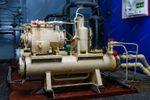
The main goal of filtration technology is to ensure that materials moving through industrial pipelines or systems maintain a required level of purity and consistency. During production, raw materials often contain solid particles, dust, microbes, or chemical residues that must be separated before the next stage of processing.
Industrial filtration equipment was developed to solve this challenge by using physical barriers, pressure differences, membranes, or mechanical separation methods to isolate contaminants.
Common filtration equipment used in industrial environments includes:
-
Bag filters
-
Cartridge filters
-
Membrane filtration systems
-
Cyclone separators
-
Electrostatic precipitators
-
Sand filters
-
Reverse osmosis filtration units
Each filtration system is designed for a specific type of contaminant and operational environment.
For example, air filtration systems are commonly used in factories to control dust emissions, while liquid filtration systems help purify process water, oils, and chemical solutions.
Industrial filtration plays a central role in maintaining production quality, protecting machinery, and ensuring environmental safety.
Why Industrial Filtration Equipment Matters Today
Filtration technology has become increasingly important as industries face stricter environmental standards, higher production volumes, and greater expectations for product purity.
Modern industries depend on filtration systems to maintain operational reliability and reduce risks associated with contamination.
Key reasons filtration equipment matters today include:
• Protection of sensitive machinery
• Improvement of product consistency
• Reduction of industrial pollution
• Compliance with environmental regulations
• Improved workplace air quality
Without effective filtration, contaminants can damage pumps, valves, and processing equipment. This can result in downtime, equipment failure, and reduced efficiency.
Filtration also plays a major role in environmental protection. Many industries produce emissions or wastewater that must be treated before release into the environment. Filtration systems help capture particles and pollutants before they enter air or water systems.
Industries that rely heavily on filtration technology include:
| Industry Sector | Filtration Purpose |
|---|
| Manufacturing | Remove metal particles and debris |
| Pharmaceuticals | Maintain sterile production environments |
| Food Processing | Ensure product purity |
| Oil and Gas | Remove solids and impurities from fluids |
| Water Treatment | Purify industrial and municipal water |
As global production expands, filtration systems have become essential infrastructure for safe and efficient industrial operations.
Recent Developments and Technology Trends
Over the past year, industrial filtration technology has continued to evolve with a focus on efficiency, sustainability, and automation.
Several technological trends have emerged in 2025 and early 2026.
Smart Filtration Monitoring
Modern filtration systems now include digital sensors that monitor pressure, flow rate, and filter condition. These sensors allow operators to detect filter clogging and performance changes in real time.
Smart monitoring systems help reduce maintenance delays and improve operational efficiency.
Energy Efficient Filtration
New filtration designs focus on reducing energy consumption during pumping and processing. Advanced membrane materials and optimized flow channels improve filtration performance while lowering operational energy use.
Advanced Membrane Technologies
Membrane filtration has seen rapid innovation in areas such as nanofiltration and ultrafiltration. These technologies allow industries to remove microscopic contaminants that traditional filters cannot capture.
Sustainable Filter Materials
Recent research has explored biodegradable filter materials and recyclable filtration components. These developments aim to reduce waste produced by disposable filter cartridges.
Industrial Automation Integration
Many filtration systems now integrate with industrial automation platforms that manage entire production lines. These systems automatically adjust filtration settings based on operational data.
The combination of automation and advanced materials is expected to improve filtration efficiency across many industries.
Laws, Regulations, and Environmental Policies
Industrial filtration systems are closely linked to environmental regulations and workplace safety standards in many countries.
Governments and regulatory bodies establish limits on industrial emissions, wastewater discharge, and air quality levels. Filtration equipment helps companies comply with these requirements.
In many regions, environmental regulations focus on controlling particulate matter, chemical contaminants, and hazardous emissions.
Examples of regulatory frameworks influencing industrial filtration include:
| Regulation Area | Purpose |
|---|
| Air Quality Standards | Control airborne particulate emissions |
| Industrial Wastewater Rules | Limit pollutants discharged into water systems |
| Occupational Safety Standards | Protect workers from hazardous airborne particles |
| Environmental Protection Laws | Reduce industrial pollution |
For example, many countries have adopted stricter particulate emission limits for manufacturing facilities. This has increased the use of high-efficiency air filtration technologies such as electrostatic precipitators and fabric filter systems.
Water discharge regulations also require industries to remove contaminants from wastewater before release. Filtration systems combined with chemical treatment processes help industries meet these requirements.
Government sustainability programs also encourage industries to adopt cleaner production technologies, including improved filtration infrastructure.
Tools and Resources for Understanding Industrial Filtration
Various tools and technical resources help engineers, researchers, and industry professionals understand filtration processes and system performance.
Some useful tools include:
Filtration Design Software
Engineering software allows professionals to simulate filtration performance under different flow conditions.
Examples include:
-
Aspen Process Simulation tools
-
COMSOL Multiphysics filtration modeling
-
Filtration process simulators used in chemical engineering
Particle Size Analysis Tools
Particle analyzers measure contaminant size distribution in liquids or gases. These measurements help determine the correct filtration technology for specific applications.
Flow Rate Calculators
Industrial flow calculators estimate fluid velocity and pressure drop across filters. These tools help optimize system design.
Engineering Databases
Technical databases provide reference data about filter materials, membrane types, and filtration performance characteristics.
Educational Platforms
Many engineering institutions publish technical guides and research papers on filtration technologies. These resources provide deeper insights into industrial separation processes.
Professionals working in filtration design often combine these tools to analyze system efficiency and optimize operational performance.
Frequently Asked Questions
What is the main purpose of industrial filtration equipment?
Industrial filtration equipment removes contaminants such as particles, dust, microbes, and chemical residues from liquids, gases, or air used in industrial processes. This ensures product quality, protects machinery, and reduces environmental impact.
What are the most common types of industrial filters?
Common types include bag filters, cartridge filters, membrane filters, sand filters, and electrostatic precipitators. Each type is designed for specific particle sizes and filtration environments.
How does membrane filtration work?
Membrane filtration uses semi-permeable materials that allow certain substances to pass through while blocking contaminants. Pressure forces liquids or gases through the membrane, separating impurities from the main flow.
Why is filtration important in manufacturing industries?
Filtration prevents contamination that could damage machinery or affect product quality. It also helps industries meet environmental standards for emissions and wastewater treatment.
How often should industrial filters be replaced or cleaned?
The replacement or cleaning schedule depends on operating conditions, contaminant levels, and filter design. Monitoring pressure drop across filters is a common method used to determine when maintenance is needed.
Conclusion
Industrial filtration equipment plays a crucial role in modern manufacturing and environmental protection. By removing unwanted particles and contaminants from industrial systems, filtration technologies help maintain product quality, improve operational efficiency, and protect natural resources.
As industries expand and environmental standards become stricter, the importance of reliable filtration solutions continues to grow.
Recent advancements in smart monitoring, advanced membranes, and energy-efficient filtration systems demonstrate how technology is improving industrial separation processes. At the same time, regulations and sustainability initiatives are encouraging industries to adopt cleaner production methods.
Understanding the fundamentals of industrial filtration equipment provides valuable insight into how modern industries maintain safety, efficiency, and environmental responsibility.
With continued research and technological innovation, filtration systems will remain a key component of industrial infrastructure worldwide.