Immersion Learning Explanation: Principles, Techniques, Environments, Activities and Learning Outcomes
Immersion learning is an educational approach in which learners gain knowledge and skills by engaging deeply with a subject, language, activity, or real-world environment. Instead of relying mainly on lectures or written material, immersion learning combines direct participation, observation, practice, interaction, reflection, and problem-solving. The approach is closely related to experiential learning, which India’s National Education Policy 2020 identifies as an important part of teaching across educational stages.
What Is Immersion Learning?
Immersion learning places learners in situations where they regularly interact with the subject they are studying. For example, a language learner may spend substantial time communicating in the target language, while a science student may investigate a practical problem through experiments and observation.
The central idea is that knowledge develops through meaningful participation. Learners do not simply receive information; they use information, examine results, make decisions, communicate with others, and reflect on what they have experienced.
Origins and Educational Foundations
Immersion learning has connections with several established educational approaches, including experiential learning, activity-based learning, project-based learning, inquiry-based learning, and language immersion. These approaches differ in structure, but they share an emphasis on active participation and learning through experience.
In India, the National Education Policy 2020 places particular emphasis on experiential learning, including hands-on learning, arts-integrated education, sports-integrated education, storytelling, exploration, and competency-based learning.
How Immersion Learning Works
A typical immersion learning cycle can include several connected stages:
- Preparation: Learners receive the background information and instructions needed to participate.
- Experience: Learners interact directly with an activity, environment, project, or practical situation.
- Observation: They examine what happens and collect relevant information.
- Reflection: Learners consider what they discovered and identify questions or difficulties.
- Application: They use their understanding in another activity or situation.
- Assessment: Teachers or mentors evaluate knowledge, skills, participation, and learning outcomes.
This cycle can be adapted for schools, universities, language programs, professional education, museums, laboratories, community projects, and digital environments.
Importance
Why Immersion Learning Matters
Traditional instruction can provide important theoretical knowledge, but some concepts become easier to understand when learners can see or use them in context. Immersion learning connects abstract information with practical situations and can therefore support deeper engagement with a subject.
The approach can also help learners develop skills that involve communication, collaboration, observation, problem-solving, decision-making, and reflection. These abilities are relevant across academic subjects and everyday situations.
Who Can Use Immersion Learning?
Immersion learning can be used with different age groups and learning objectives. Examples include:
- Children: play-based activities, storytelling, experiments, nature exploration, and classroom projects.
- School students: laboratory activities, field studies, simulations, vocational exposure, and interdisciplinary projects.
- University students: internships, research projects, laboratory work, community projects, and industry-linked activities.
- Language learners: conversations, cultural activities, reading, listening, and communication in realistic situations.
- Adult learners: workshops, simulations, practical exercises, and workplace-related projects.
The appropriate level of immersion depends on the learner's age, prior knowledge, learning objectives, available resources, and safety requirements.
Challenges Addressed
Immersion learning can address the gap between knowing a concept and applying it. It can also provide opportunities to practise communication and teamwork rather than studying these abilities only in theory.
However, immersion does not automatically produce better learning. Activities need clear objectives, suitable guidance, appropriate assessment, and enough time for reflection.
Recent Updates
Current Educational Trends
From 2024 through 2026, experiential and activity-based learning has continued to receive attention within Indian education. CBSE's current secondary curriculum describes experiential and activity-based learning as part of its pedagogical approach, while its 2024 circulars included initiatives related to experiential learning.
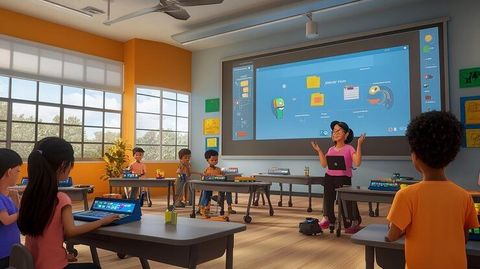
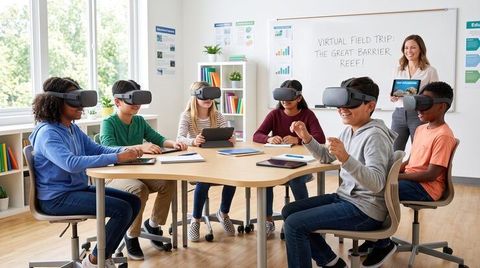
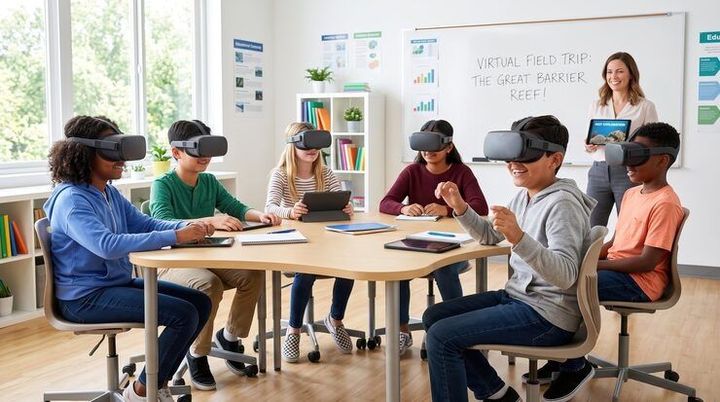
Digital environments are also expanding the ways immersion learning can be delivered. Virtual laboratories, simulations, interactive educational platforms, digital field experiences, and collaborative online projects can provide learners with situations that may be difficult to reproduce physically.
Greater Use of Practical Learning
Higher education has also placed greater emphasis on structured practical experiences. UGC's undergraduate internship guidelines describe internships as opportunities for students to participate in work experience, professional activity, or cooperative education under supervision.
The guidelines also identify activities such as experimentation, data collection, simulations, model development, report preparation, teamwork, critical thinking, and problem-solving as components that can contribute to research-oriented learning.
Blended Immersion Environments
A current trend is the combination of physical and digital learning environments. A learner may study background material online, participate in an in-person activity, use a simulation to examine a situation, and then complete a digital reflection or assessment.
This blended structure can make immersion learning more flexible while retaining direct participation as an important element.
Laws or Policies
National Education Policy
In India, immersion learning is not generally governed by one specific law. Instead, its educational use is influenced by national education policies, curriculum frameworks, institutional rules, and sector-specific regulations.
The National Education Policy 2020 explicitly calls for experiential learning across educational stages. It includes hands-on learning and other activity-based approaches within subject teaching and connects pedagogy with learning outcomes and competencies.
School Education
CBSE curriculum guidance incorporates experiential and activity-based approaches. Its curriculum also recognizes that children can learn through play, projects, collaboration, stories, arts, and other activities, particularly in early education.
The National Education Policy also describes practical exposure to vocational crafts for students in Grades 6–8, including activities involving local vocational experts and a designated bagless period.
Higher Education and Internships
UGC guidelines provide a framework for undergraduate internships and research internships. The guidelines describe supervision, mentoring, project work, evaluation, and institutional monitoring as parts of structured internship programs.
For some undergraduate programs, the guidelines describe internship credit arrangements and a 60–120 hour internship after the fourth semester. Exact implementation can depend on the applicable curriculum and institution.
Tools and Resources
Learning Platforms
Several types of tools can support immersion learning:
- DIKSHA: Provides educational content, teacher resources, and learning materials connected with Indian school education.
- NCERT resources: Curriculum materials, textbooks, activity resources, and educational guidance can support structured learning activities.
- CBSE Academic resources: Curriculum documents and pedagogical materials provide information about experiential and activity-based education.
- UGC resources: Higher education institutions can consult UGC guidelines covering internships, research internships, and related academic structures.
- Virtual laboratories: Simulations can allow learners to examine scientific processes, equipment, or experiments in a controlled digital environment.
- Project templates: Planning sheets, observation logs, reflection forms, assessment rubrics, and project journals can help organize immersion learning activities.
Common Immersion Learning Techniques
Different techniques can be selected according to the learning objective.
| Technique | Typical Environment | Main Learning Focus |
|---|---|---|
| Role play | Classroom or simulation | Communication and decision-making |
| Field study | Outdoor or community setting | Observation and application |
| Project work | Classroom or laboratory | Research and problem-solving |
| Language immersion | Classroom or real-world setting | Communication and comprehension |
| Simulation | Digital or physical environment | Practice and decision-making |
| Internship | Workplace or research setting | Practical and professional learning |
| Laboratory activity | Laboratory | Experimentation and analysis |
| Community project | Local community | Collaboration and social understanding |
Learning Environments
Immersion learning environments can be physical, digital, social, or a combination of these. A classroom can become an immersive environment through role play or project work, while a laboratory provides direct interaction with materials and equipment.
Outdoor environments, museums, cultural settings, workplaces, research facilities, and community locations can also provide meaningful contexts. Digital environments can supplement these experiences through simulations, interactive scenarios, virtual collaboration, and multimedia resources.
FAQs
What is immersion learning?
Immersion learning is an approach in which learners engage deeply with a subject through direct participation, interaction, practice, observation, and reflection. It can take place in classrooms, workplaces, laboratories, communities, or digital environments.
What are common immersion learning techniques?
Common techniques include role play, simulations, field studies, project work, laboratory activities, language practice, internships, collaborative projects, and guided problem-solving.
What are the main immersion learning environments?
Immersion learning environments include classrooms, laboratories, outdoor locations, workplaces, cultural settings, community spaces, and digital or virtual environments. The environment is selected according to the subject and intended learning outcomes.
What are the learning outcomes of immersion learning?
Learning outcomes can include stronger subject understanding, practical application, communication, collaboration, observation, critical thinking, problem-solving, and reflection. The specific outcomes depend on the activity and assessment method.
How does immersion learning relate to experiential learning?
Immersion learning is closely related to experiential learning because both involve learning through participation and experience. Experiential learning is a broader educational approach, while immersion generally emphasizes sustained or deep engagement with a particular subject, environment, or activity.
Conclusion
Immersion learning connects knowledge with direct experience through participation, observation, practice, reflection, and application. Its techniques can include projects, simulations, field studies, language activities, laboratory work, internships, and collaborative tasks. In India, experiential and activity-based education is supported through national education policy, school curriculum guidance, and higher education internship frameworks. The learning outcomes depend on factors such as the activity design, learner participation, guidance, reflection, and assessment.