Hydraulic Machinery Manufacturers Basics With Machinery Types, Uses, and Technical Insights
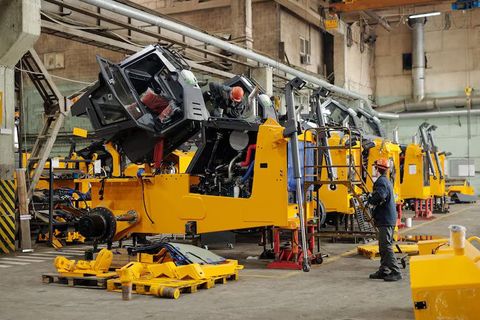
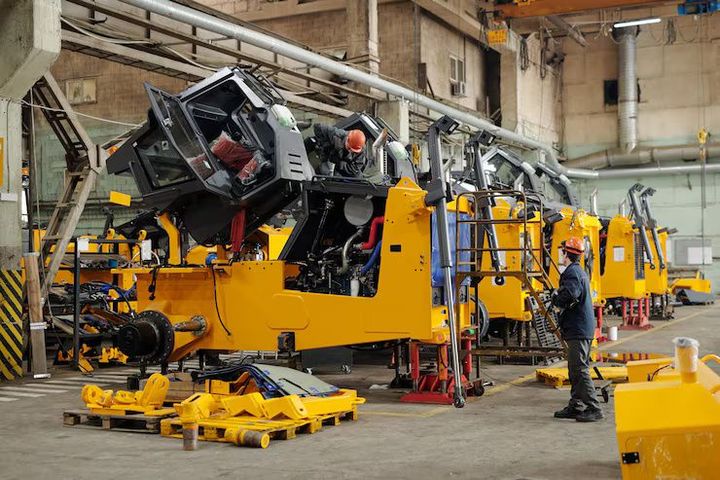
Hydraulic machinery manufacturers develop equipment that uses pressurized fluid to transmit power and create controlled movement. Hydraulic systems are built around components such as pumps, cylinders, motors, valves, reservoirs, filters, hoses, pipes, and control units. Together, these parts can convert mechanical input into controlled linear or rotary motion.
The basic idea behind hydraulic machinery comes from fluid power engineering. Instead of transferring force only through gears, chains, or mechanical linkages, a hydraulic system uses pressurized fluid. A pump moves the fluid, valves control its direction and pressure, and actuators convert hydraulic energy into movement.
Hydraulic machinery is used across construction, manufacturing, agriculture, material handling, transportation, energy, and industrial processing. Hydraulic machinery manufacturers therefore work with many different machine configurations, pressure ranges, control methods, and operating environments.
How Hydraulic Machinery Works
A typical hydraulic circuit begins with a reservoir containing hydraulic fluid. The pump draws fluid from the reservoir and sends it through the circuit under pressure.
Control valves determine where the fluid travels. When pressurized fluid enters a hydraulic cylinder, it pushes against a piston and produces linear movement. Hydraulic motors perform a similar function while producing rotary movement.
The main components generally include:
- Hydraulic pump for generating fluid flow
- Hydraulic cylinder for linear movement
- Hydraulic motor for rotary movement
- Valves for controlling flow, direction, and pressure
- Reservoir for storing hydraulic fluid
- Filters for controlling fluid contamination
- Hoses and pipes for fluid transfer
- Sensors and controllers for monitoring and automation
Main Machinery Types
Hydraulic machinery manufacturers produce equipment for different applications and operating conditions.
| Machinery Type | Main Function | Common Application |
|---|---|---|
| Hydraulic Press | Applies controlled force | Metal forming and molding |
| Hydraulic Excavator | Produces digging and lifting movement | Construction |
| Hydraulic Lift | Raises or positions loads | Material handling |
| Hydraulic Crane | Controls lifting and positioning | Industrial and construction work |
| Hydraulic Injection Machine | Controls molding pressure | Plastic manufacturing |
| Hydraulic Baler | Compresses materials | Recycling and material processing |
| Hydraulic Power Unit | Supplies hydraulic energy | Industrial machinery |
| Hydraulic Motor System | Produces rotary movement | Mobile and industrial equipment |
The exact configuration depends on the required force, speed, pressure, duty cycle, working environment, and control requirements.
Importance
Hydraulic machinery matters because it allows relatively compact equipment to generate substantial controlled force. This makes hydraulic systems useful when machinery needs lifting, pressing, pushing, bending, clamping, rotating, or positioning capabilities.
The technology also affects people indirectly through the machinery used to construct buildings, process materials, move heavy loads, manufacture products, and handle agricultural activities. A hydraulic system can be integrated into a larger machine so that an operator controls movement through mechanical, electronic, or computerized interfaces.
Problems Hydraulic Systems Address
One important advantage of hydraulic power is controllable force. A cylinder can apply force over a defined stroke, while valves can regulate movement and direction. This is useful when machinery must repeatedly perform similar movements.
Hydraulic systems can also accommodate different machine layouts. Components can be connected through hoses or pipes, allowing the power source and actuator to be positioned separately.
However, hydraulic machinery also presents technical challenges. Fluid contamination, leakage, excessive heat, incorrect pressure, poor component selection, and inadequate filtration can affect system operation.
Who Uses Hydraulic Machinery
Hydraulic machinery is found in several areas:
- Construction equipment such as excavators and loaders
- Manufacturing machinery such as presses and forming equipment
- Agricultural machinery such as tractors and harvesting equipment
- Material-handling equipment such as lifts and compactors
- Industrial machinery requiring controlled force or movement
- Marine and mobile equipment requiring hydraulic actuation
For general readers, the key point is that hydraulic machinery is not one single machine category. It is a broad group of machines that use pressurized fluid to perform mechanical work.
Recent Updates
Hydraulic technology has continued to develop through improvements in energy efficiency, electronic controls, measurement, and system design. During 2024–2026, attention has increasingly focused on reducing unnecessary hydraulic energy losses and making system performance easier to measure.
One notable development is ISO 18464:2025, which establishes a design methodology for hydraulic systems intended to operate with the lowest possible energy consumption while maintaining their intended function. The methodology considers the duty cycle of stationary and mobile machinery.
This development reflects a broader engineering trend toward evaluating hydraulic systems as complete systems rather than looking only at individual components. Pump selection, valve behavior, actuator sizing, pressure requirements, and operating cycles can all influence energy use.
Digital Hydraulic Controls
Modern hydraulic machinery increasingly combines hydraulic components with electronic sensors, programmable controllers, and digital monitoring. Sensors can measure variables such as pressure, temperature, position, flow, and speed.
These measurements can help operators and engineers understand how equipment is performing. In automated machinery, electronic controllers can also coordinate hydraulic movement with other machine functions.
Noise and Performance Measurement
Measurement standards are also evolving. ISO 10767-3:2025 specifies a method for determining pressure-ripple characteristics generated by positive-displacement hydraulic motors. Such measurements are relevant when engineers evaluate hydraulic motor behavior and system noise characteristics.
Another current area involves more systematic testing of pumps and motors. ISO 4409:2019, which was confirmed as current in 2025, defines methods for testing and presenting basic steady-state performance of positive-displacement hydraulic pumps, motors, and integral transmissions.
These developments show how hydraulic machinery manufacturers are working within an engineering environment that increasingly emphasizes measurement, energy efficiency, electronic control, and standardized testing.
Laws or Policies
Hydraulic machinery is affected by machinery safety requirements, pressure-related rules, environmental requirements, electrical regulations, and workplace safety provisions. The exact requirements vary according to the country, machine category, operating environment, and intended application.
There is no single worldwide law covering every hydraulic machine. Manufacturers and machinery users generally need to identify the rules applicable to the equipment's destination and application.
Hydraulic Safety Standards
ISO 4413 provides general rules and safety requirements for hydraulic fluid power systems and their components. It addresses hazards associated with hydraulic systems and covers areas such as design, construction, installation, adjustment, operation, maintenance, energy efficiency, and environmental considerations. The standard remains current according to ISO's published status information.
Standards such as ISO 4413 may become particularly relevant when hydraulic machinery is designed, assessed, documented, or integrated into larger equipment. Whether a standard is legally mandatory depends on the jurisdiction and the way local regulations or technical requirements reference it.
Pressure and Component Considerations
Hydraulic machinery operates under pressure, so component ratings and system design are important safety considerations. Cylinders, hoses, valves, pumps, fittings, and other components must be selected according to their intended operating conditions.
Cylinder design can also involve structural considerations. ISO/TS 13725:2021 provides a method for evaluating the buckling load of hydraulic cylinders and was confirmed as current following review in 2024.
For this reason, technical documentation should identify operating pressure, temperature range, fluid type, load conditions, component specifications, and applicable safety requirements.
Tools and Resources
Several technical tools can help readers understand hydraulic machinery and help engineers evaluate system requirements.
Hydraulic Calculators
Hydraulic calculators can be used to estimate relationships between pressure, force, flow rate, cylinder dimensions, and hydraulic power. A basic cylinder-force calculation can be expressed as:
Force = Pressure × Effective Area
For example, increasing hydraulic pressure or piston area generally increases the theoretical cylinder force, although actual system performance is affected by efficiency, friction, leakage, and operating conditions.
Circuit Diagrams
Hydraulic circuit diagrams show how pumps, valves, cylinders, motors, reservoirs, and other components are connected. They help readers understand fluid paths and control sequences without physically inspecting every component.
Manufacturer Technical Catalogs
Technical catalogs from hydraulic machinery manufacturers commonly contain dimensional information, pressure ratings, flow ranges, materials, mounting information, and application details. These documents can help readers understand how different machinery types are specified.
Digital Monitoring Platforms
Modern monitoring platforms can collect information from sensors installed in hydraulic equipment. Typical measurements include pressure, temperature, fluid condition, actuator position, and operating cycles.
Standards databases and engineering reference platforms are also useful for checking terminology, testing methods, safety requirements, and technical definitions.
FAQs
What do hydraulic machinery manufacturers produce?
Hydraulic machinery manufacturers produce equipment and systems that use pressurized fluid to create controlled movement or force. Their products can include hydraulic presses, excavators, lifts, power units, cylinders, pumps, motors, and integrated hydraulic systems.
What are the main types of hydraulic machinery?
Common types include hydraulic presses, excavators, cranes, lifts, injection machines, compactors, balers, and hydraulic power units. Each type is configured around its intended movement, load, pressure, and operating cycle.
How do hydraulic machinery manufacturers improve energy efficiency?
Hydraulic machinery manufacturers can improve efficiency through appropriate pump sizing, improved valve control, reduced pressure losses, optimized operating cycles, electronic controls, and system-level energy analysis. ISO 18464:2025 provides a methodology for designing energy-efficient hydraulic systems.
What safety standards apply to hydraulic machinery?
Requirements vary by jurisdiction and machine type. ISO 4413 provides general safety principles for hydraulic fluid power systems, while other standards address specific components, testing methods, measurements, or machine characteristics.
Where is hydraulic machinery used?
Hydraulic machinery is used in construction, manufacturing, agriculture, material handling, transportation, industrial processing, and other applications requiring controlled force or movement.
Conclusion
Hydraulic machinery manufacturers develop a broad range of equipment based on pumps, valves, actuators, motors, fluid circuits, and control systems. Hydraulic machinery remains important because it can provide controlled force and movement across many industrial and mobile applications. Recent developments emphasize energy-efficient design, electronic monitoring, standardized testing, and improved system analysis. Safety standards and local regulations also play an important role in hydraulic machinery design and operation.