Guide to Paper Bag Making Machines: For Modern Eco-Friendly Production
With increasing global awareness about plastic pollution, the demand for eco-friendly alternatives is rising fast. One of the front-runners in sustainable packaging solutions is the humble paper bag—recyclable, biodegradable, and renewable. As a result, paper bag making machines have become vital tools for businesses that wish to align with green production and modern packaging needs.
This guide provides a detailed overview of how paper bag making machines work, their benefits, industrial applications, and how to choose the right machine for your production needs.

Benefits of Using Paper Bag Making Machines
-
Sustainability: Paper bags are recyclable and biodegradable, making them a preferred alternative to plastic.
-
Customization: Modern machines support branding with printing options for logos and designs.
-
Automation Efficiency: Automatic machines can produce thousands of bags per hour, saving time and labor costs.
-
Regulatory Compliance: Many countries have banned plastic bags, boosting the legal need for paper bags.
Types of Paper Bag Making Machines
| Type | Description | Applications |
|---|---|---|
| Flat Bottom Machine | Produces bags with a flat base; supports printing | Grocery, fashion, food delivery |
| V-Bottom Machine | Makes sharp bottom-fold bags; lightweight | Small retail, bakery, pharma |
| Square Bottom Machine | Ideal for larger, heavy-duty bags | Shopping, industrial packaging |
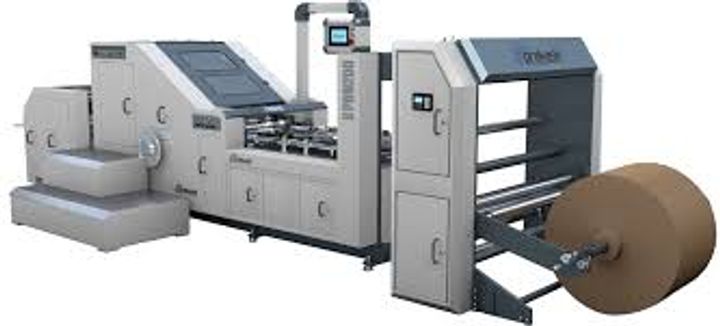
| Fully Automatic Machines | Integrates printing, cutting, gluing, and folding | Mass production units |
| Handle Bag Machine | Adds twisted or flat handles automatically | High-end retail stores |
Working Process of Paper Bag Machines
The typical workflow includes the following stages:
-
Feeding: Rolls of kraft or recycled paper are loaded into the feeder.
-
Printing (Optional): Flexographic or offset printers add brand logos or product info.
-
Folding & Gluing: Paper is folded into bag shapes and glued at seams.
-
Bottom Formation: Base folding and sealing happen here, including gussets if required.
-
Cutting & Output: Bags are cut to desired length and stacked for collection.
This entire process is highly automated in modern setups, requiring minimal human supervision.
Key Features to Consider in a Paper Bag Machine
-
Bag Size Range: Choose machines that support versatile bag sizes.
-
Material Compatibility: Ensure the machine works with kraft, coated, or recycled paper.
-
Speed: Look for machines with 100–300 bags per minute depending on your volume.
-
Handle Attachment: For premium bags, choose machines that integrate handle pasting.
-
Power Consumption: Energy-efficient models reduce operating costs.
-
Ease of Maintenance: Durable parts and modular designs simplify service.
Cost and Setup Requirements
While exact costs vary by brand and capacity, here’s a general idea:
| Machine Type | Approx. Starting Cost (USD) |
|---|---|
| Semi-Automatic | $8,000–$15,000 |
| Fully Automatic | $25,000–$70,000 |
| With Handle Attachment | $40,000–$90,000 |
Setup Needs:
-
3-phase power supply
-
300–800 sq. ft. production space
-
Skilled operator or technician
-
Access to printing supplies if needed
Popular Applications and Industries
-
Retail chains: Custom-branded carry bags
-
Food delivery services: Eco-friendly packaging for takeaways
-
Pharmaceuticals: Paper bags for prescriptions
-
Boutique brands: Designer and luxury paper bags
-
Event organizers: Promotional and giveaway bags
Top Manufacturers of Paper Bag Making Machines
| Company | Location | Special Features |
|---|---|---|
| Kraft Machinery | India | Automatic handle attachment, CE certified |
| Newlong | Japan | Precision folding, durable build |
| Zhejiang Ounuo Machinery | China | Affordable with multi-size adjustment |
| W & H | Germany | High-end automation and quality contro |
Trends in Paper Bag Machine Manufacturing
-
AI Integration: Smart sensors and diagnostics reduce downtime.
-
Eco-material Support: Machines now support bamboo paper and rice husk pulp paper.
-
IoT Monitoring: Remote maintenance and error alerts.
-
Multi-functionality: One machine handles multiple sizes and formats.
How to Choose the Right Machine
-
Estimate your daily production needs
-
Decide on bag formats (flat, V-bottom, handle)
-
Check for brand reputation and after-sales service
-
Ensure local parts availability and training
-
Factor in growth – choose machines that allow scalability
FAQs
Q1: What is the most popular type of paper bag in retail?
Flat-bottom bags with handles are most common for groceries and fashion stores.
Q2: Can I use recycled paper in these machines?
Yes, most machines support kraft or recycled paper rolls.
Q3: How long does it take to recover the machine investment?
For small setups, ROI is typically achieved in 8–12 months with good volume.
Q4: Do these machines support color printing?
Yes, many support up to 4-color flexographic printing for branding.
Q5: Is handle attachment automatic?
Only in mid to high-end machines. Semi-automatic models require manual pasting.
Conclusion
Paper bag making machines are not just tools of sustainability—they’re a gateway to modern, profitable, and responsible business models. As eco-packaging trends continue to grow globally, investing in the right machinery can offer long-term returns and environmental benefits.
Whether you’re a small entrepreneur or a large manufacturer, choosing the right machine can position your brand at the forefront of eco-conscious production.