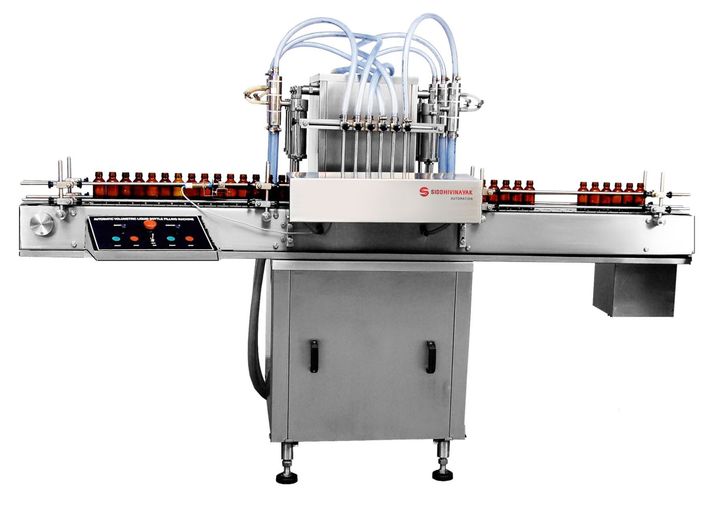
Guide to Bottle Filling Machines: How They Work and Industrial Uses
Bottle filling machines are essential equipment in industries where products need to be filled into containers or bottles with high accuracy and speed. Common in beverage, pharmaceutical, cosmetic, and chemical industries, these machines reduce human error, increase output, and maintain hygiene and product consistency.
In today’s automation-driven production lines, understanding how bottle filling machines function and which type suits your operations can help optimize costs and improve productivity.

Benefits and Limitations of Bottle Filling Machines
Benefits:
-
High-Speed Production: Capable of filling hundreds to thousands of bottles per hour.
-
Improved Accuracy: Reduces product wastage with precise volume control.
-
Consistency and Hygiene: Ideal for food and pharma industries that require sterile environments.
-
Scalability: Easily integrated into semi or fully automated packaging systems.
Limitations:
-
High Initial Investment: Especially for automated or multi-head systems.
-
Maintenance Required: Regular cleaning and calibration are essential.
-
Product Limitations: Some machines may not handle highly viscous or foaming liquids effectively.
Types of Bottle Filling Machines
| Type | Best For | Filling Method |
|---|---|---|
| Gravity Fillers | Thin liquids like water or juice | Uses gravity force |
| Piston Fillers | Thick liquids like sauces | Mechanical pistons |
| Overflow Fillers | Transparent bottles | Ensures equal fill |
| Pump Fillers | Customizable filling | Pump-controlled |
| Vacuum Fillers | Delicate or high-cost liquids | Vacuum suction |
| Net Weight Fillers | Products sold by weight | Weigh-based control |
Latest Trends and Innovations
-
Smart Filling Systems: Integration with IoT sensors for real-time monitoring.
-
Clean-in-Place (CIP) Systems: Enhances hygiene without manual cleaning.
-
Servo-Driven Technology: Improved precision and speed.
-
Modular Designs: Easier customization and scalability for startups and growing plants.
-
Eco-Friendly Systems: Low energy and minimal spillage machines are gaining traction.
Key Features to Consider When Buying a Bottle Filling Machine
-
Speed (Bottles Per Minute - BPM): Matches production targets.
-
Filling Accuracy: Especially critical in pharma and chemical sectors.
-
Material Compatibility: Food-grade stainless steel or chemical-resistant materials.
-
Automation Level: Manual, semi-automatic, or fully automatic.
-
Cleaning Requirements: Machines with CIP save time and effort.
-
Bottle Sizes and Shapes Supported: Ensure machine adaptability.
Top Companies Offering Bottle Filling Machines
| Brand/Company | Notable Features | Website |
|---|---|---|
| Krones AG | Advanced automation, beverage-focused | www.krones.com |
| Tetra Pak | Aseptic technology for dairy & juices | www.tetrapak.com |
| Bosch Packaging | High-end pharma filling systems | www.boschpackaging.com |
| ProMach | Modular, multi-industry options | www.promachbuilt.com |
| GEA Group | Precision filling with hygiene focus | www.gea.com |
How to Choose the Right Bottle Filling Machine
-
Identify Your Product Type: Viscous, foamy, or free-flowing?
-
Production Capacity Needed: Match machine speed with daily requirements.
-
Bottle Material and Shape: Plastic, glass, or special shapes?
-
Industry Compliance: Food, pharma, or chemical safety regulations.
-
Budget Range: Factor in not just machine cost but setup, maintenance, and training.
-
Scalability: Can the machine grow with your business?
Tips for Best Use and Maintenance
-
Routine Calibration: Maintain accuracy and prevent wastage.
-
Use Compatible Cleaning Agents: Protect internal components.
-
Train Operators Well: Reduce downtime due to handling errors.
-
Replace Worn Parts Promptly: Prevent bigger malfunctions.
-
Track Production Data: For maintenance and future planning.
Real-World Use Cases
| Industry | Application Example |
|---|---|
| Beverage | Soft drink bottling at 100 BPM |
| Cosmetics | Shampoo and lotion filling |
| Pharmaceuticals | Syrup and medical liquid packaging |
| Chemicals | Household cleaners or agricultural solutions |
| Food Products | Edible oils, sauces, and syrups |
FAQ: Common Questions About Bottle Filling Machines
Q1: Can one machine handle different bottle sizes?
Yes, many machines come with adjustable components or interchangeable parts.
Q2: What’s the typical ROI for automated machines?
Depends on production volume, but ROI is generally seen within 1–2 years for mid to high-scale production.
Q3: Are there portable filling machines for startups?
Yes, table-top semi-automatic machines are available and popular for small-batch production.
Q4: How often should a bottle filling machine be serviced?
Routine servicing is usually required monthly, with deep cleaning after every batch or daily shift for sensitive products.
Q5: Can filling machines handle both glass and plastic bottles?
Most can, but you need to ensure the grippers and conveyor systems support both safely.
Checklist Before Purchase
-
Defined your product type and viscosity?
-
Calculated daily and monthly production needs?
-
Determined bottle materials and shapes?
-
Reviewed budget for machine + setup?
-
Checked after-sales support and spare part availability?
-
Evaluated energy and water consumption?
Conclusion: Streamlining Packaging Through the Right Bottle Filling Solution
Choosing the right bottle filling machine is a key step in automating and scaling your product packaging process. From small-batch table-top models to fully automated high-speed systems, the correct match depends on your production goals, product characteristics, and budget.
Manufacturers across sectors—from beverages to cosmetics—can greatly benefit from modern bottle filling technology. Make sure to consider long-term efficiency, maintenance needs, and compatibility with your packaging line.